What's New in the Snoqualmie Watershed
In this edition...
A year of accomplishments assessing the North Fork Tolt River
2023 was a busy year for the North Fork Tolt River Assessment. As part of bringing the Snoqualmie Tribe Ancestral Forest (STAF) back under the Tribe’s stewardship, the Tribe’s Environmental and Natural Resources Department is working on a comprehensive assessment of the North Fork Tolt River and important tributaries within the STAF. Funded by a King County Parks Levy grant, along with a matching Cooperative Watershed Management grant from King County Flood Control District (allocated through the Snoqualmie Watershed Forum), this project will help the Tribe design two to four restoration projects within the Tribe’s Ancestral Lands. Accomplishments for 2023 included four snorkel surveys of the entire NF Tolt study reach, a large woody debris survey for the full Channel Migration Zone, finalizing a synthetic channel network model, geomorphic site visits, and implementing an initial temperature monitoring network with 24 data loggers.
Through its assessment, restoration design and other efforts, the Tribe is jump-starting work to restore and heal the land after centuries of the Tribe being excluded from management decisions. It’s all part of embodying the Native philosophy of reciprocity with the land, and we are grateful to our project funders for helping to make this project happen. This is the second update on our project, and we plan to keep providing information as we learn more. Stay tuned!
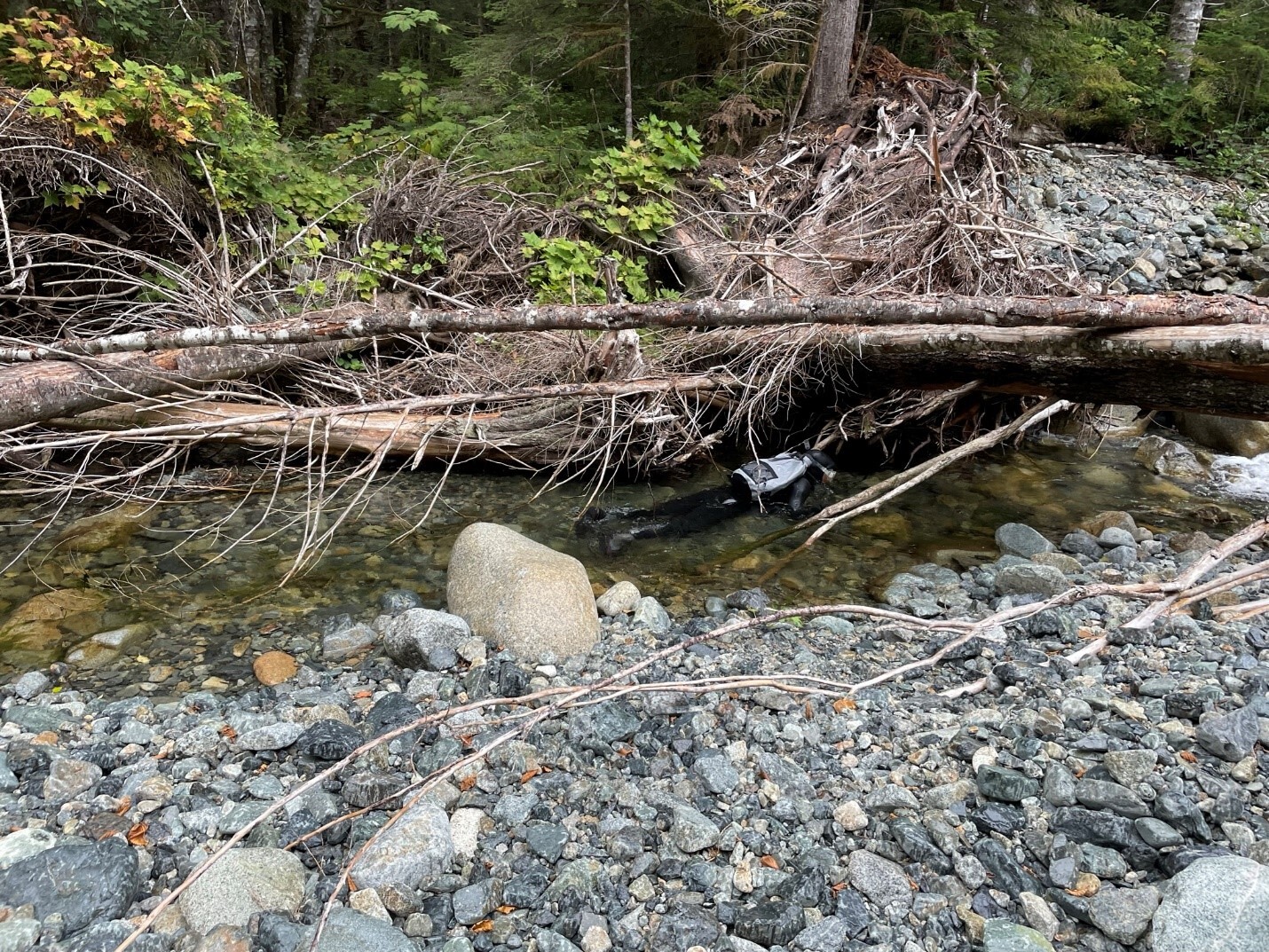 |
| Low water is challenging for snorkel surveys. Here, a snorkeler swims under a wood jam on the North Fork Tolt River. |
Everything's popping up rain gardens in Carnation
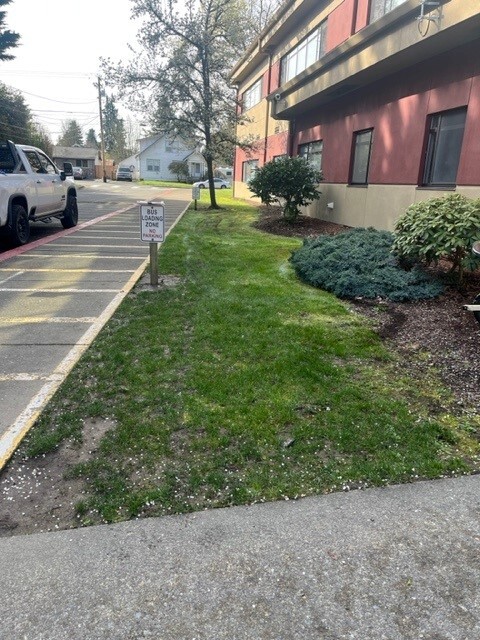
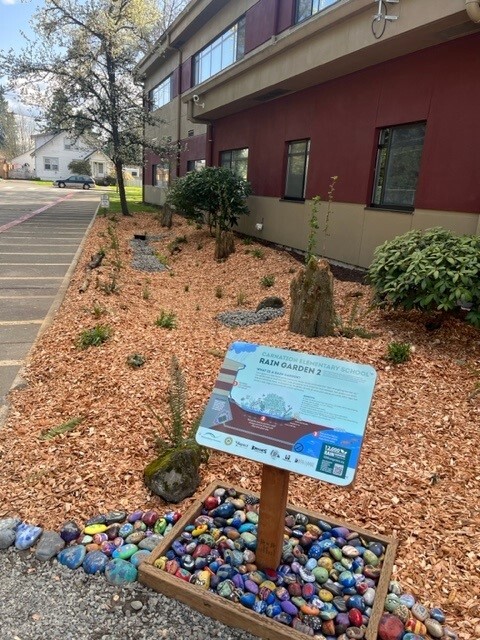
Stewardship Partners is known for working with agricultural landowners on stream and river restoration in the Snoqualmie Valley. But did you know they also specialize in green infrastructure? Starting with a bold idea at a public meeting, Stewardship Partners set out to build rain gardens in all of the Snoqualmie Valley Schools. Thanks to funding from the King County Flood Control District’s Flood Reduction fund and King County Council, the first rain garden went in at Carnation Elementary School. A second garden at the school and others at Carnation Library and Griffin Creek Farm soon followed. The rain garden at Griffin Creek Farm is HUGE in size at 3,000 square feet and manages water from a vegetable processing plant along with stormwater. It’s the biggest rain garden the organization has built so far, and the first on a Snoqualmie Valley, Salmon-Safe certified farm. But it won’t be the last, with plans underway at Carnation Farms! Stewardship Partners uses an outreach, education, and implementation model for rain gardens designed with the City of Carnation as its pilot and is now working on replicating the model with the City of Duvall.
Before & After Carnation Elementary Rain Garden 2:
For more about Stewardship Partners, please visit our website.
To learn more about Rain Gardens, Riparian Restoration, Adopt-a-Buffer, or to volunteer with Stewardship Partners, contact Chris LaPointe.
Don't wait to inflate!
Did you know that properly inflated tires last longer and help salmon? Drivers around Puget Sound can take a small action to help protect clean water: check car tire pressure monthly and if needed, add air as soon as possible to reduce tire wear. Don’tWaittoInflate.org shows you how to save money – and save salmon! We show drivers of any experience how easy it is to check and inflate their car tires for safer driving and cleaner water. Puget Sound and salmon are at risk from rainwater runoff that picks up pollutants like tire particles and washes them into local waterways. That runoff is carrying a newly identified toxic chemical from tires: 6PPD-q, that kills coho salmon. Tire tips and information are in English, Spanish/Español, Korean/한국어, and Vietnamese/Tiếng Việt.
Brought to you by the Puget Sound Starts Here city, county and nonprofit partners.
Read more on the Waterlog.
Learn how to check and fill your tires.
Snoqualmie Tribe’s Fall City Natural Area Restoration Project Nears Completion
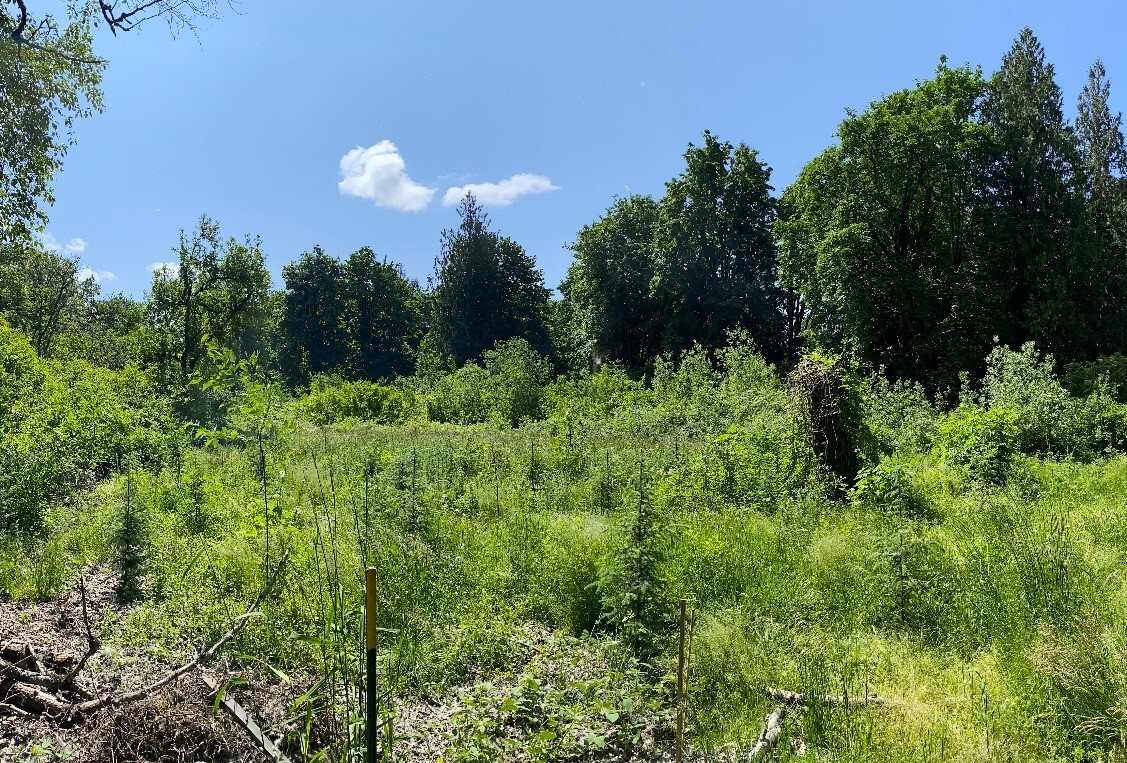 |
| A clearing at Fall City NA planted with native trees and shrubs, with an herbaceous layer of native grasses and forbs planted from seed. Prior to this project, this clearing was a solid monoculture of blackberry. |
The Snoqualmie Tribe’s Habitat Restoration Program is almost finished with a big floodplain restoration project at Fall City Natural Area. Since 2019, Tribe staff and Washington Conservation Corps (WCC) crews cleared and treated about 15 acres of invasive blackberry, and when the project is finished, they will have planted over 15,000 native plants. In addition to trees and shrubs, Tribe staff experimentally seeded large portions of the project site with native grass and forbs, with promising early results. We would like to thank our funders for this project, including the King County Flood Control District’s CWM program, the Northwest Indian Fisheries Commission, EPA Region 10, and the Bureau of Indian Affairs. We would also like to thank our partners at King County Parks, our WCC crews, and our many volunteers.
Stream health is improving throughout King County, according to bugs
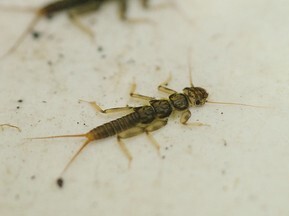 |
"Stream bugs" can tell us about stream health.
|
Despite the massive growth in our region’s human population, King County has found that several studies looking at the long-term health of local streams suggest that conditions are improving. These studies are based on benthic macroinvertebrates (or “stream bugs”) that we use as indicators of overall stream health. If the bugs are doing well, that suggests that other creatures and environmental processes might be too. Collectively, these studies suggest that policies and regulations enacted over the last several decades to protect stream health have had a positive effect.
Read more about what the “bug score” says about our streams and watch a great video of King County’s Stream Team at work.
It's a pink year on the Snoqualmie River
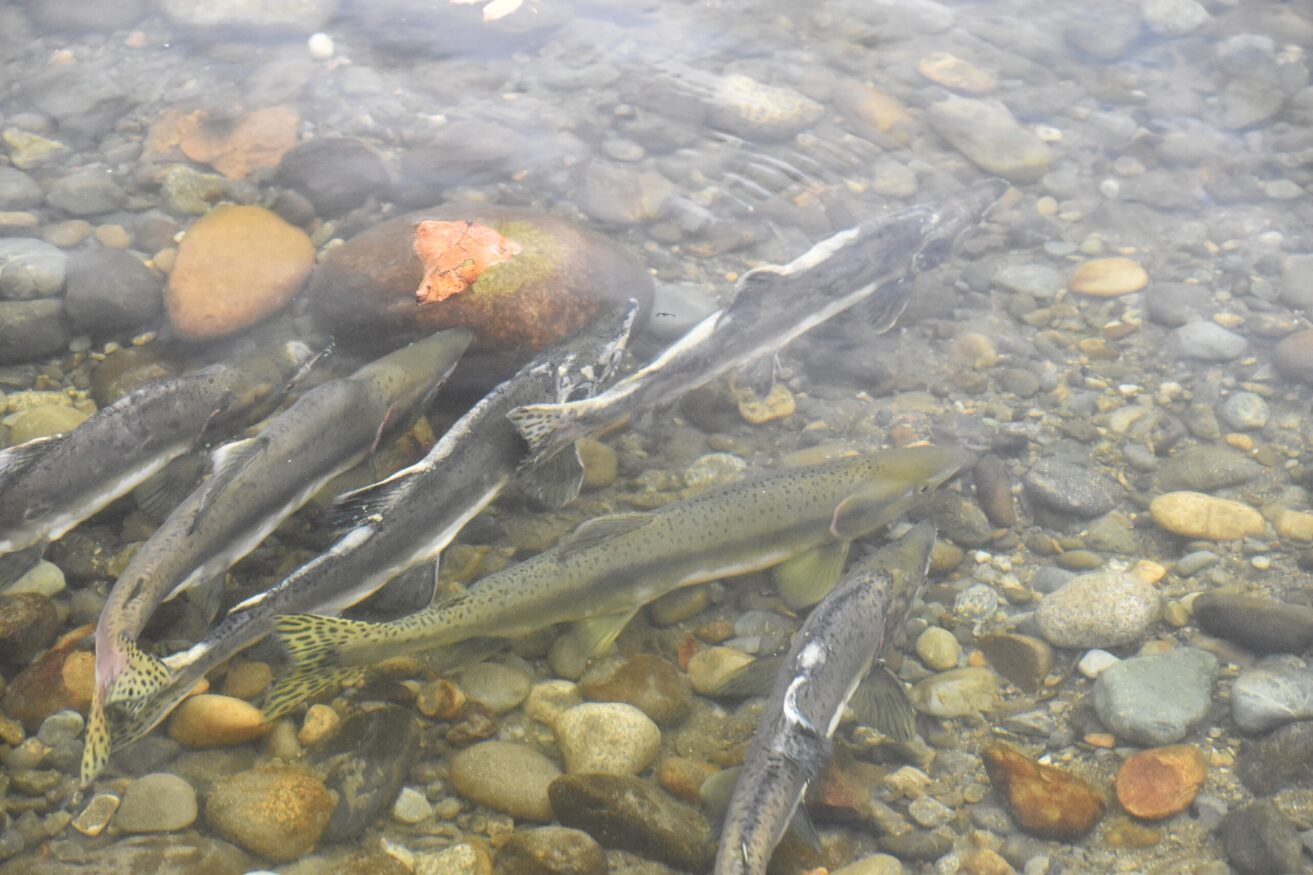 |
Pink salmon gathering in a gravelly spot.
|
Pink salmon (Oncorhynchus gorbuscha) make their journey from the ocean back to the Snoqualmie watershed spawn in huge numbers during odd years, and they are very rare in even years. This fall (2023) pink salmon could be seen – and smelled – throughout the Fall City Floodplain Restoration Project, including the newly excavated side channel.
Pinks are the most abundant salmon in the Pacific, and there is some recent concern that their success may be at the expense of other salmon. See the article (also linked below) from Salish Sea Currents Magazine.
It's Salmon SEEson!
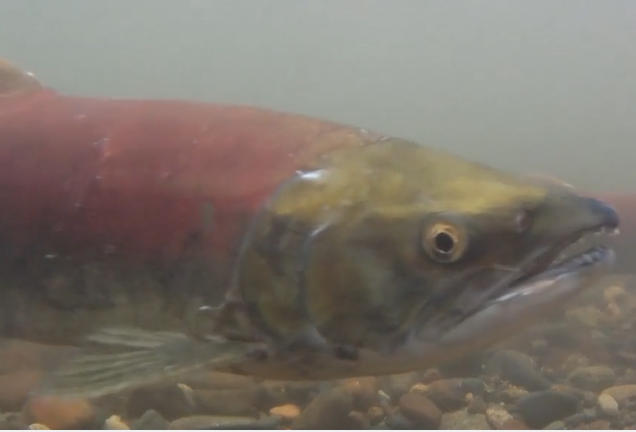 |
Catch a glimpse of spawning salmon near you!
|
The Salmon SEEson program shares the best stream and river locations in King County where people can see salmon as they return from the ocean in late summer and fall. Some locations are self-guided, while others feature volunteer naturalists to guide visitors in seeing salmon and learning about their lifecycle, efforts to protect them, and restoring habitat. Through December, you can try to catch a glimpse of spawning salmon in the Snoqualmie Watershed from spots like the Tokul Creek Bridge near Snoqualmie, Tolt-MacDonald Park, and the Tolt River Footpath in Carnation.
Check out the Salmon SEEson map.
King County's Fall City Floodplain Restoration Project completed
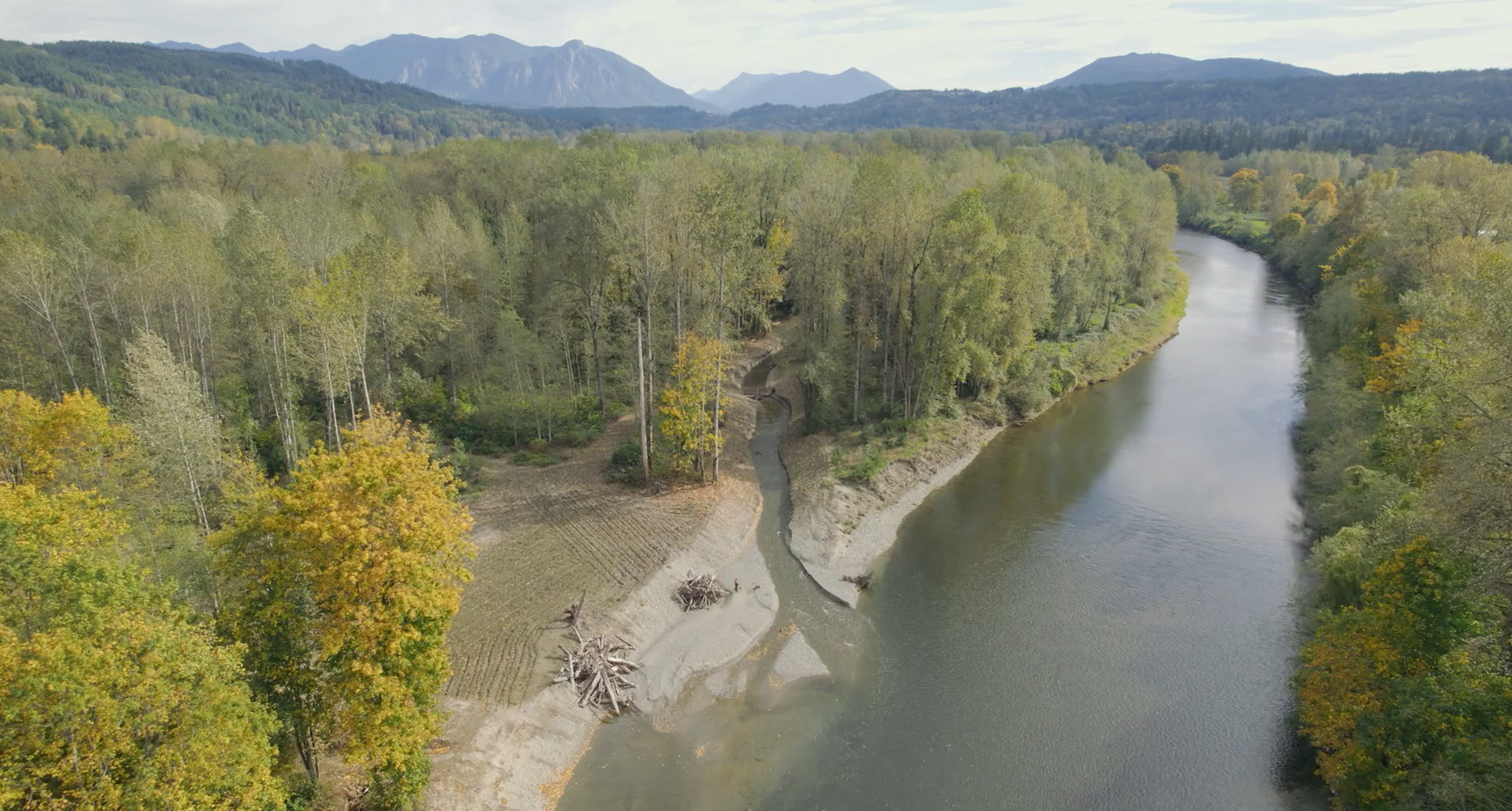
King County wrapped up construction of the Fall City Floodplain Restoration Project in October. Crews will be working all winter to plant thousands upon thousands of native trees and shrubs throughout the project site. The photo above shows the outlet of the newly excavated right bank side channel in the Fall City Natural Area.
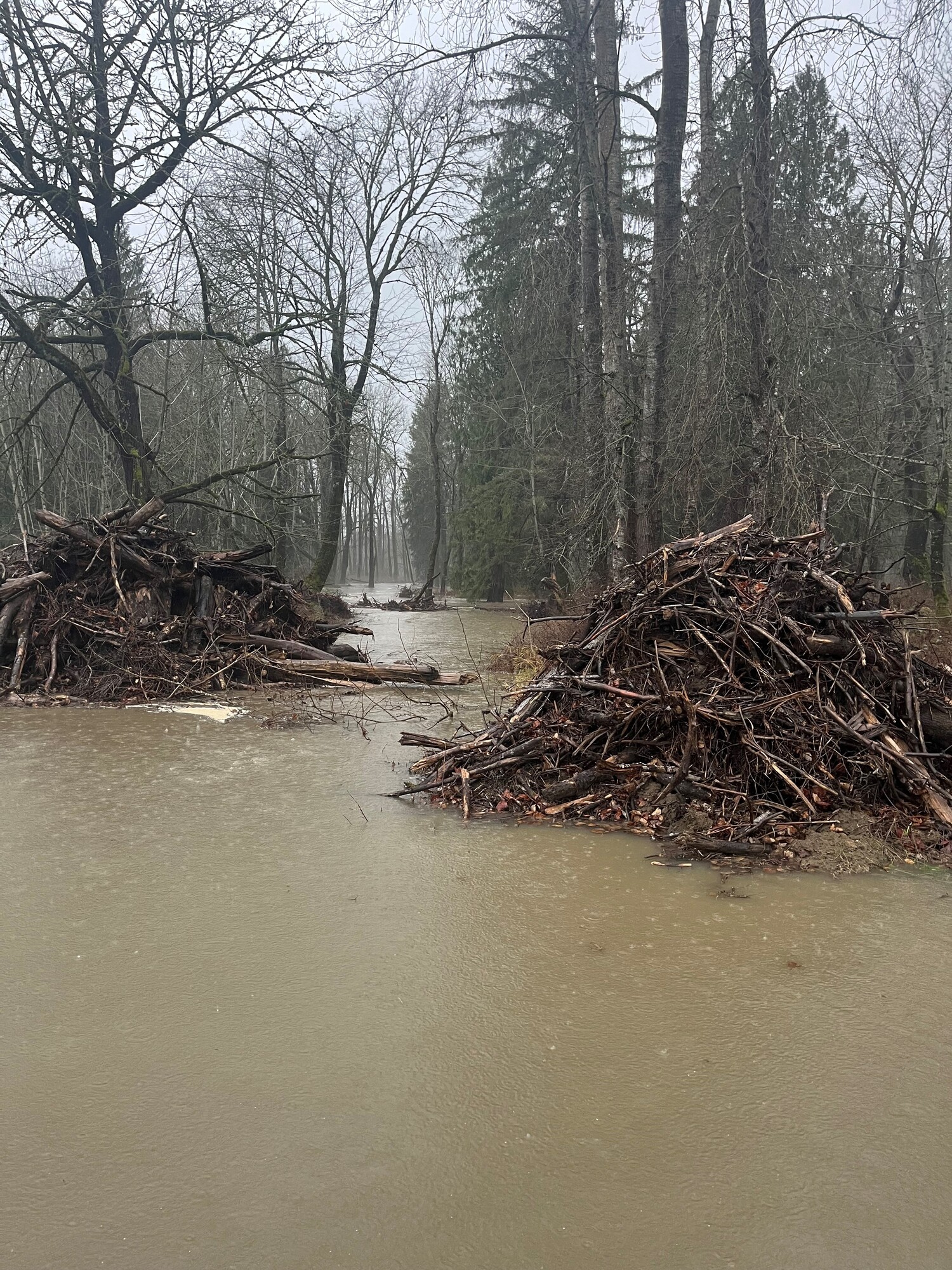
After last week's heavy rains, our team's early look at the site and feedback from neighbors suggests that the project is performing well so far. In the photo below, flood waters filled the new side channel and we're excited by what we see!
Events and Job Announcements
Fall City Natural Area Volunteer Event
Please join the Snoqualmie Indian Tribe’s Habitat Restoration Team to restore riparian habitat in the Fall City Natural Area on Saturday, December 16th from 10am to 1pm! We will plant trees and shrubs to expand and diversify floodplain forest habitat near the shores of the Snoqualmie River. As these young trees grow into forests, they will help create much-needed shade and structure in the floodplain, keeping out harmful exotic plants and creating space for native plants and resources to thrive. Come learn about the work the Snoqualmie Tribe is doing in the area, how this work connects to a $19 million salmon habitat investment and reflect on the work you may have helped with here before!
Learn more and register here.
King County is hiring a Technical Coordinator with our neighbors in WRIA 8.
Sound Salmon Solutions is hiring a Salmon Habitat/Fish Passage Project Manager.
King Conservation District is hiring a Shoreline and Riparian Program Manager.
Nature Vision is hiring an Environmental Educator.
Mountains to Sound Greenway Trust is hiring for a variety of seasonal positions.
Funding Opportunities
Cooperative Watershed Management Grant Program - now open!
Restoration & Protection - Education & Outreach - Monitoring & Assessments
Each year, the King County Flood Control District (FCD) allocates a portion of its capital budget to fund implementation of Water Resource Inventory Area (WRIA) Forum priority activities via the Cooperative Watershed Management Grant Program (CWM). For the 2024 grant round, the FCD has approved $2,227,652 to fund watershed restoration and protection projects in the Snoqualmie & South Fork Skykomish Watersheds – King County portion of WRIA 7.
Project Sponsors are asked to submit a Notice of Intent to Apply by January 16, 2024. Check out the website for details or contact Erin Ryan-Peñuela, Project Coordinator.
Snohomish Basin 2024 Salmon Recovery Grant Round Request for Proposals will open mid-December 2023!
The Snohomish Basin Lead Entity will be soliciting proposals for projects that implement strategies identified in the Snohomish River Basin Salmon Conservation Plan. The LE expects to allocate upwards of $3.3M in state Salmon Recovery Funding Board (SRFB) and Puget Sound Acquisition and Restoration (PSAR) funding including ~$640K targeting riparian work*.
Notices of Intent to apply will be due in mid-winter 2024. Visit the 2024 Snohomish Basin Grant Round webpage for full details.
*Exact available amount may change
Other relevant grant opportunities:
Brian Abbott Fish Barrier Removal Board (BAFBRB):
A biennial grant cycle focused correcting fish passage barriers that impact salmonids. The BAFBRB 2025-2027 funding cycle is currently open with applications due January 18, 2024.
Floodplains by Design (FbD):
A biennial grant cycle focused on re-establishing floodplain functions in Washington’s major river corridors. The FbD 2025-27 funding cycle is currently open with pre-applications due January 12, 2024.
Streamflow Restoration
A biennial grant cycle focused on improving streamflows, such as altered water management; water right acquisition; water storage; feasibility studies; and floodplain, riparian, and wetland restoration. The Streamflow Restoration 2025-27 funding cycle will open January 2, 2024.
The Terry Husseman Account (THA) Grant Program:
Grant round focused on locally sponsored projects that restore or enhance the natural environment. The 2024 grant round will open January 2, 2024.
The Washington Native Plant Society will accept grant applications for projects that promote native plants and their habitats within the State of Washington starting February 1, 2024, until midnight March 1, 2024. Successful projects must provide public benefit and must support the WNPS mission to promote the appreciation and conservation of Washington’s native plants and their habitats through study, education, and advocacy. Applications will be accepted in three categories: Conservation, Education, and Research & Plant Inventory. Please review the committee description and grant criteria for each program to determine the best fit for your project or program before applying. Please visit our website for application information and contacts for conservation grants, education grants, and research.
King County Conservation Futures Policy Updates
The Conservation Futures grant round is now open, and applications are due February 12, 2024. Contact Ingrid Lundin with questions. King County Conservation Futures acquisition grants can help governmental agencies and qualified conservation nonprofits buy or preserve open spaces and parks. Grants may help purchase or conserve urban greenspaces, natural areas, forests, community gardens, farms, and trails – including stormwater parks or parks near affordable housing.
This year, the required project match has been reduced to 25% of total project costs for future awards; opportunity area projects may qualify for a match waiver. Initial site stabilization costs related to public safety or resource protection are now an eligible cost, such as structure demolition, signage, fencing.
Federal/National Funding Opportunities:
There are a variety of federal/national funding opportunities through a variety of federal agencies. Below are three portals that list the programs and associated funding opportunities for this upcoming year:
United States Department of Transportation:
Example funding programs include Reconnecting Communities Pilot Program, Pipeline Safety and Damage Prevention Grants, and others.
Bureau of Reclamation - WaterSMART:
Example funding programs include WaterSMART Planning and Project Design (collaborative planning and design projects to support water management improvements), Water and Energy Efficiency Grants, Aquatic Ecosystem Restoration Projects (study, design, and construct aquatic ecosystem restoration projects that are collaboratively developed, have widespread regional benefits, and result in the improvement of the health of fisheries, wildlife, and aquatic habitat through restoration and improved fish passage), and others.
National Fish and Wildlife Federation:
Example funding programs include America the Beautiful Challenge, Conservation Partners Program (support organizations that provide staff and technical assistance to private landowners in order to maximize the benefits of Farm Bill programs on working lands), Bring Back the Native Fish, and others.
Salmon and Orca in the News
Take Toxins out of Tires to Protect Salmon and Other Wildlife | Seattle Times
King County’s urban streams are showing signs of improving health. Just ask the bugs. | Seattle Times
Huge Spike in Costs to Help Salmon Could Derail WA Transportation Budget | Seattle Times
Quinault Nation Calls Off Fall Coastal Coho Fishery For Conservation | Seattle Times
A Major Rebuilding Milestone: 50th Fish Stock Rebuilt | NOAA Fisheries
Surging numbers of pink salmon raise ecological concerns | Salish Sea Currents Magazine
And, as always, remember that the beautiful "From Mt. Si to Wild Sky" watershed posters – featuring the photography of talented Valley residents – are available FREE from Renee Leichliter or by calling 206-848-0836.
|