What to expect with Metro's regular fall service change and how it may affect your commute
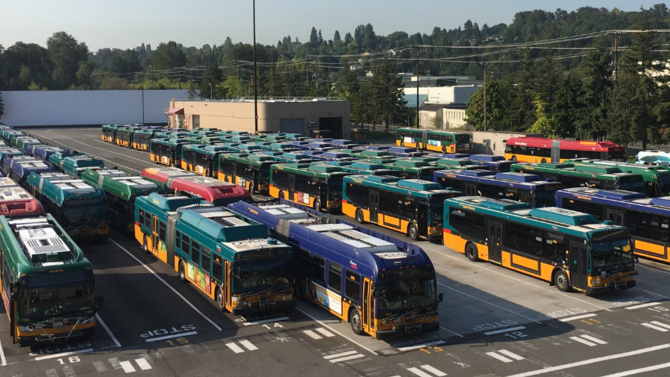 As customers look to return to transit, Metro is preparing for this fall’s regular service change in September. Due to reduced revenue, the September change will include cuts and suspensions to routes while maintaining a countywide transit network and its commitments to safety, equity, and sustainability. In the short term, however, Metro has restored some transit service as more industries reopen and restrictions are gradually lifted. Below is information regarding our next steps. Further information can be found on the Metro Matters blog. Riders also can call customer service for trip planning assistance at 206-553-3000 from 6 AM to 8 PM Monday through Friday.
September’s reductions to transit service are unfortunate but necessary due to economic realities. Metro seeks to be both responsive and responsible in light of changes to revenue and ridership. Working closely with our partners in the region, Metro is rebuilding a mobility system that’s engineered to emerge stronger from the pandemic within the financial constraints of the ensuing economic recession.
The latest financial forecast reflects the dire economic repercussions Metro faces due to the COVID-19 crisis. The unfortunate results are reductions not only to service, but also to our workforce. Metro is exploring the nature and timeline of reductions needed in the coming weeks and months.
Our commitment to riders, equity, climate action, and our community remains. Consistent with King County policy and Metro’s values, September’s reductions were designed to lessen the impacts to priority populations as much as possible and to maintain service in areas of our region where social needs are greatest, while continuing to provide competitive commuting options for those who are unable to telecommute.
However, reductions of this size will have impacts across the county and even cause cancelations of some routes and services. During COVID-19, ridership has remained strongest in areas with the greatest social needs. As Metro moves forward with service reductions, we will prioritize retaining service in areas with higher proportions of people with lower incomes and people of color.
Our goal is to balance temporary and longer-term service cuts with the need to serve customers who rely on public transportation as an essential service. As commuters and other riders return to public transportation, we continue to plan for a safe, equitable, and sustainable system that expands opportunity, provides a competitive alternative to the single-occupant vehicle, and advances economic growth.
Planned service cuts and revisions in September
The transit services in operation in September will be about 85% of pre-COVID levels, providing an estimated 11,000 weekday trips on 121 bus routes. Service will focus primarily on a network of all-day routes throughout King County, including preserving frequent service on Metro’s busiest routes, while restoring peak service sufficient to meet returning demand to the extent possible given the current financial challenges. The cuts are made with direction from the City of Seattle in expectation that the Seattle Transportation Benefit District will discontinue revenue collections at the end of the year.
While some weekday peak-period commuter routes will be restored, many peak routes will remain suspended in anticipation that long-term commuter ridership demand will take time to recover as many large employers continue having employees telework. Night, evening, and weekend service also will be significantly reduced.
At the same time, Metro will move forward with our Renton-Kent-Auburn Area Mobility Plan, which restructures and adds service in South King County. Moving forward with these changes reflects Metro’s commitment to providing improved service based on work done in partnership with communities, customers, and cities over the past two years. Customers will benefit as we provide service in areas of the county where the proportion of customers continuing to ride transit has remained high, reflecting a high need for transit to make essential trips.
A list of routes affected by the changes coming in September is now available (see below), and details to clearly explain what trips are operating on those routes will be available in the coming months. This information will help prepare riders in advance of changes coming in September.
During our reduced schedule as part of our COVID-19 response, Metro added about two dozen buses to operate more than 100 daily trips on some bus routes as some trips consistently reached social distancing passenger limits. In September, Metro will continue to monitor and respond where possible with added trips on the busiest routes and restoration of some additional peak period commuter routes where needed, and where possible at times to support social distancing as more customers take transit and travel demand increases.
Unless additional funding sources are identified, further transit service reductions are planned throughout 2021 and 2022 similarly due to lower revenue projections from Metro’s major funding sources of sales tax and fare revenues.
Metro routes facing revisions in September 2020
Per the categories below, many of these routes will either be revised, suspended, reduced, or canceled in September 2020 due to losses in revenue. Details about service levels will be provided in coming months.
Routes operating at full service levels (53 routes, primarily all-day routes operating at pre-COVID-19 levels):
- RapidRide A, B and F lines, 21X, 24, 101, 107, 111, 128, 131, 132, 153, 156, 182, 187, 193, 224, 230, 231, 239, 257, 303, 304, 309, 311, 330, 346, 347, 348, 631 (Burien Community Shuttle), 635 (Des Moines Community Shuttle), 773, 775, 901, 903, 907, 930
- Routes operating at full service levels that were restructured through the Renton, Kent, and Auburn Area Mobility Plan: Routes 102, 105, 148, 150, 160 (new), 161 (new), 162 (new), 165 (new), 168, 181, 183, 184 (new), 906, 914, 915, 917
Routes operating with reduced service levels (68 routes), including long-term reductions due to the loss of Seattle Transportation Benefit District (STBD) funding:
- RapidRide C, D and E lines, 1, 2, 3, 4, 5, 7, 8, 10, 11, 12, 13, 14, 21, 26, 27, 28, 31, 32, 33, 36, 40, 41, 43, 44, 48, 49, 50, 55, 56, 57, 73, 60, 62, 64, 65, 67, 70, 74, 75, 106, 118, 119, 120, 124, 125, 204, 208, 212, 218, 221, 225, 226, 240, 241, 245, 250, 255, 269, 271, 301, 331, 345, 372, 373
Routes suspended/not operating (50 routes):
- 5X, 9, 15, 17, 18, 19, 22, 29, 37, 47, 63, 71, 76, 77, 78, 113, 114, 116, 118X, 119X, 121, 122, 123, 143, 154, 157, 167, 177, 178, 179, 190, 197, 200, 214, 216, 217, 219, 232, 237, 246, 249, 252, 268, 308, 312, 316, 342, 355, 630 (Mercer Island Community Shuttle), 931
Routes deleted (13 routes):
- Renton-Kent-Auburn Area Mobility Plan: 158, 159, 164, 166, 169, 180, 186, 192, 908, 910, 913, 916, 952, under an approved restructure plan
- Some routes and services not mentioned above remain in discussion as revenue and ridership projections evolve.
 Metro & SDOT seeking rider feedback on Route 40 improvements at an online open house on June 30
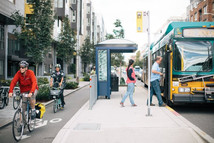
King County Metro and SDOT are hosting an online open house to get public feedback on improvements on the Route 40 Transit-Plus Multimodal Corridor project. We are hosting a virtual meeting on Tuesday, June 30 from 5 – 6 PM to share what we’ve heard so far to improve the Route 40 and outline our initial concept ideas.
Prior to COVID-19, Route 40 was one of Metro’s highest ridership routes, serving some of the busiest parts of Seattle including South Lake Union, Fremont, Ballard, Aurora, and Northgate neighborhoods. As part of the Route 40 Transit-Plus Multimodal Corridor Project, your feedback will help make corridor improvements to Route 40 to make it faster and more reliable.
We are in the early planning phase of the Route 40 Transit Plus Multimodal Corridor project, with construction anticipated for completion in 2024.
Join us on Tuesday, June 30 at 5 PM to learn more about the potential improvements and share your feedback with us!
|
Commuting During Phased Re-Opening: What You Need to Know
Many businesses have shared their concerns around transit safety and availability. Join the first of Commute Seattle's webinar series to learn about the current outlook of transit availability, what you should be thinking about over the coming months, and guidance as you develop plans to return to your workplace.
A few of the questions covered will include:
- How can you educate your employees on the changes to the transportation landscape?
- How can you emphasize active commuting such as walking and biking?
- What should you be thinking about surrounding parking?
The ORCA Business Portal (www.orcacard.biz) is currently unable to process credit/debit card payments. We are actively troubleshooting the issue and will update the website banner once it is fixed. Please reach out to your lead agent for assistance or if you have questions.
|