|
As of January 1, 2019, residential customers currently enrolled in ProviderOne, EBT, or ORCA LIFT who haul their garbage and/or recyclables to a King County recycling and garbage transfer facility are eligible to receive a discount of $12 off the disposal cost of each type of waste, each visit. Show your card at the facility entrance to receive the discount. This discount is not offered at City of Seattle transfer stations and is not available to businesses. To learn more, visit https://kingcounty.gov/cleanup-lift.
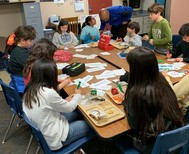
During the 2018-2019 school year, 82 groups of eager students registered as elementary Green Teams and conducted a variety of environmental projects, some lasting the whole school year. Many of the Green Team groups support their schools’ participation in the King County Green Schools Program by educating their peers on proper waste sorting, monitoring school lunches, encouraging energy and water conservation, and sponsoring waste-free lunches. We applaud their efforts in conserving natural resources and acting as environmental stewards. Listed below are some of the projects conducted this year.
Andrea Wolfe’s Green Team at Apollo Elementary noted overall improvements in their weekly waste free lunch program by creating more signs and acting as lunchroom helpers to remind students and staff how to sort their lunch waste correctly.
The Green Team at Ben Franklin Elementary School, advised by teacher Jen Alexander, conducted a Refuse Single-use Plastics (SUP) campaign throughout May 2019. The campaign encouraged the school community to find alternatives to plastic bags, straws, bottles, and other single-use plastics. During a Green Team workshop, students learned about natural resources, how these plastics and other disposable products impact the environment, and easy ways to rethink and find reusable alternatives. Students also made their own reusable t-shirt bag as a plastic bag replacement. Each school day, Green Team members shared a new tip for refusing single-use plastics and modeled their reusable t-shirt bags during lunch announcements. The Green Team hopes this campaign will encourage others to make less garbage and save valuable natural resources.
The second-grade Green Team and the parents at Carl Sandburg Elementary, led by Heidi Yamamoto, supports the school policy of being herbicide-free by regularly pulling weeds along with their parents on weekends.
According to advisor Amy Bogaard, students involved in the Chautauqua Elementary School Green Team not only learned the value of caring for the environment, but they had fun along the way. Students participated in recycling programs, conservation information, gardening and composting, planning and delivering outreach events. They showcased their ideas and knowledge during school assemblies, Earth Day events and classroom visits. The school district posted videos about their activities.
|
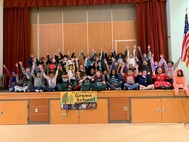
Alice Carillo’s Green Team at Covington Elementary were leaders in the school recycling program by giving presentations to other classrooms on what can be recycled, making 3-D posters, and acting as monitors at breakfast and lunch. Team members emphasized “empty milk cartons only.” Recycling increased and contamination in the recycling bin decreased. On Earth Day, the team created posters that included three important facts and presented why this day is important with actions on how to protect the planet.
The Ilako Elementary Green Team, supported by parent volunteer Vinnette Lang, collected gently used jeans to be donated to homeless teens. The students requested donations by visiting classrooms and in the school newsletter. Green Team members also picked up litter around the school grounds and planted flowers and plants to improve the campus. Both these projects were in addition to their regular lunchroom monitoring and upcycle craft projects using toilet paper rolls, plastic bottles, plastic bags, and second-hand tiles.
Kim Baker’s Green Team at Jenkins Creek Elementary led recycling education efforts through making informational signs for the liquids, recycling and garbage containers in the lunchroom and helping direct their peers on proper sorting during lunch.
Jesse Flinkelstein’s Green Team at Kenmore Elementary conducted a garbage reduction project for their school. They created an education and collection plan and then encouraged their peers to collect “shiny wrappers” school-wide. The team also encouraged families to collect wrappers at home as well.
Because lunch is eaten in classrooms at Lake Youngs Elementary, recycling has been a challenge. With support from head custodian and advisor Thomas Ho, the Green Team worked to improve this situation. First, the team learned the “dos” and “don’ts of recycling at lunchtime They then set up two recycling stations during lunch, one for clean/dry recyclables and one for “messy” recyclables covered in food. The students held an all-school assembly to share what they learned and taught their fellow students their new recycling protocols. The students gave short follow up presentations in individual classrooms and made posters for the school hallways to reinforce their new lunchtime recycling system. They also monitored the recycling stations to help students who still had questions.
On Earth Day, students at Neighborhood House and teacher, Vanessa Church, participated in a Green Team workshop to learn how they can be leaders in waste reduction and recycling in their community. Students played games to learn about natural resources, the “lifecycle” of everyday objects like a piece of paper or a plastic bottle, and how we can protect nature by sorting our waste. At the end of the workshop students signed an Earth Day Pledge to protect the Earth by reducing, reusing, and recycling!
Alaura Keith’s Green Team at Lakeland Hills Elementary continues to find new environmental challenges. This spring, the students participated in a program focused on clean air. With support from the Puget Sound Clean Air Agency and Washington Green Schools, they borrowed hand-held monitors to measure air quality and conducted an anti-idling campaign that was highlighted on KOMO news. Students hand out friendly reminder cards they’ve created to any cars that idle. They also have been labeling storm drains and cleaning up trash on the school grounds.
The Green Team at Lockwood Elementary, advised by Jennifer Ekstrom, has focused on improving school waste reduction and recycling practices. They organized a whole school assembly, labeled recycling bins, conducted classroom presentations, and organized waste-free lunches.
|
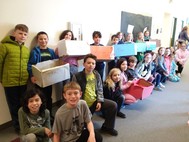
Anne Melgaard’s Green Team of 25 third-grade students at North Bend Elementary School has found success in diverting waste from the landfill by collecting plastic caps. Grades K-2 helped by sorting the caps and grades 3-5 are creating a recycled art project from the material by painting the caps and drilling them to boards in the shape of Mt. Rainier. The students at North Bend Elementary School plan to complete this impressive project by next October. The Green Team has also been educating the rest of the school on decreasing recycling contamination in the lunchroom and in classrooms.
The Green Team at Northwood Elementary, advised by teachers Tiffany Nelson and Kelsey Sims, created a video to explain the green features of their school such their waste sorting system, refillable water bottle station, green roof, and four additional features. They also created a video demonstrating how to sort correctly in the lunchroom to reduce food waste.
At Ridgecrest Elementary School, Mary Rae’s and RoseAnne Tombelaine’s Green Team has been hard at work to reduce waste schoolwide. Students in grades 1-6 pitched in to create an educational video about recycling and composting in the lunchroom and created a second video about being a Green Team Hero. Every morning, students wrote and made WRR-themed and each Friday, students made videos to share a fact about recycling. They also created PowerPoint presentations to teach about lunchroom recycling and started a food share table in their lunchroom to reduce food waste. To round it all off, the sixth-grade students started a composting program in the teacher’s staff room.
The Rock Creek Elementary Green Team, advised by Dean of Students John Schuster, rewarded classrooms that showed improved recycling and conservation projects. They helped students take a pledge on PeoplePowerPlanet.com. When they completed the pledge, students colored a reused paper leaf. The Green Team displayed them in the hallway on a Conservation Tree.
The Green Team at Shadow Lake Elementary, led by teacher Danielle Boyles, implemented a recycling project for squeezable pouches. First, they made a collection bin to collect the pouches at lunch time and then rinsed the collected pouches, let them dry, and shipped them to Terracycle to be upcycled into new products such as pencil pouches.
Long-time Green Team advisor Jennifer Gjurasic at Snoqualmie Elementary broke the students into different groups who researched the harmful effects of plastic. Each team created a Google Slide that was then showcased on their school news. This project reached all grade levels and created awareness of how to reduce the use of plastics.
Jane Lambert’s Tiffany Park Elementary Green Team has been collecting bottle caps to create a recycling art project. The students wanted to raise awareness about the amount of plastic waste that goes into the landfill and encourage different purchasing choices. Students also collected over 500 used whiteboard markers, plastic coloring pens, and other plastic writing items and sent them to the Crayola Marker Recycling program. Students distributed collection bins into classrooms and reminded the school via announcements and emails to recycle their markers.
|
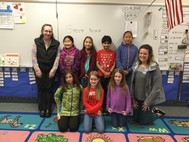
The West Mercer Elementary Green Team, advised by teachers Tara Johnson and Linda Wakeman, initiated paper towel composting collection in each classroom. They also collected used markers for recycling through the Color Cycle program.
|
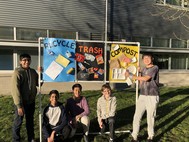
During the 2018-2019 school year, 45 groups of students and environmental clubs registered as King County Green Teams. Like at the elementary level, many of these students supported their school’s participation in the King County Green Schools Program. Several teams sponsored Trash on a Tarp events to demonstrate current waste patterns and then created videos, signs, announcements, and other techniques increase participation in their schools’ waste reduction, recycling, and composting programs. Other types of projects included creating edible gardens, removing invasive plants, identifying storm drains, and encouraging reduction of plastic waste. Students showed a wonderful commitment to making a difference at their schools.
|
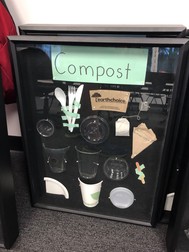
The Green Team at Eastside Prep, advised by teacher Burton Barrager, organized a Zero Waste potluck for their school community. The students started the potluck with a presentation on why zero waste with a particular focus on food waste throughout its life cycle. Students presented their meals and any waste produced, then shared the food with those that came to the event. While eating, the students lead discussions about composting, recycling, zero waste, food expiration dates, trash, and foreign policies relating to recycling and waste. Finally, they showed the shadow box signs on waste that they created for their cafeteria.
|
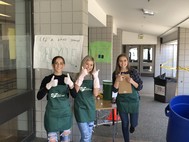
The student council at Enumclaw Middle School and advisor, Karl Karkainen, conducted a campaign to reduce food waste and improve waste sorting practices. They started with a Trash on a Tarp event to learn about the volume and composition of the school’s waste and to raise awareness about the environmental issues surrounding garbage. After all students had sorted their waste onto tarps, instead of their normal garbage, recycling, and compost containers, student council members, weighed and recorded data about the school’s waste. With the help of a Green Team Specialist and using the information collected during the event, the student council developed and then presented specific recommendations to help students and staff reduce waste and improve sorting practices. Students and staff learned that recycling needs to be empty, clean, and dry and that plastics should not be placed in the compost container. In the fall, student council will also plan an assembly, with an interactive recycling relay game, to introduce incoming students to Enumclaw Middle School’s waste reduction and recycling practices.
|
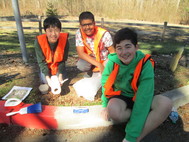
Brian Healey’s Green Team at the Environment and Adventure Middle School focused on their Level 3 Green Schools project on water conservation. Students broke into different work groups and researched, problem-solved, communicated with district personnel and community experts, made presentations to the school's students, created posters and pledges, encouraged peers, monitored, measured, and reported to back to the Green Team via weekly progress updates.
|
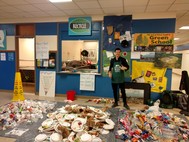
The Green Team at Evergreen Middle School and advisor, Paloma Benoliel, worked hard to improve waste reduction and recycling practices at their school. To celebrate Earth Day, the Green Team hosted a Trash on a Tarp event to provide a powerful visual, help other students better understand how to sort their waste, and encourage students to change the way they think about waste. As the garbage piled up, many students stopped to ask questions. Afterwards, Green Team members took measurements about the composition, weight, and volume of the school’s waste and created a plan to improve waste sorting at their school. During Eagle Time (homeroom), Green Team members presented their findings and encouraged students to sort their waste properly and even join the Green Team.
|
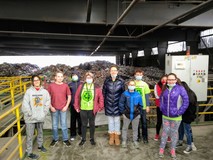
The Gibson Ek High School Green Team, advised by Rachel Rowland, was spearheaded by an active student who persuaded the school to purchase reusable lunch trays. She also takes donated food from students and the kitchen to the food bank once a week. The Green Team also organized Waste-Free Wednesdays and sponsored a sustainability month with a different focus each week, including immediate actions from students. The team highlighted different student projects each week to match the theme.
The students in Julia Vasiliauskas’s Green Team at International Community School addressed both waste reduction and energy use reduction this spring. With 25 students on board, the team presented lessons targeted for the school’s sixth- grade students on waste monitoring and education and created video and TV announcements for the school. The team started a marker collection program in each classroom and coordinated conservation pledges to reduce energy usage by teachers in their classrooms. Additionally, Green Team members acted as team leaders to small groups of sixth-grade students as they planted shade trees to help reduce energy use.
The Green Team at Kenmore Middle School, advised by Ulyana Babanova, was a small group of students dedicated to improving school recycling. After hosting a Trash on a Tarp program and touring a recycling center, the students created and showed the school a movie about proper recycling, created and conducted slide presentations about recycling, and made sure that all classrooms had an adequate amount of recycling bins. They also introduce a food donation program.
|
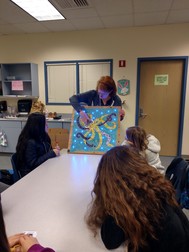
Deb Luehman’s Green Team group at Kings Junior High School dove into the issue of ocean plastic pollution this spring. During a Green Team leadership workshop, students learned about the Great Pacific Garbage Patch and the environmental impacts of single-use plastics. Students then worked together to design a creative way to teach and inspire others to reduce waste. Members created small art pieces from plastics waste (plastic packaging, bottle caps, straws, etc.) embedded with copper tape circuits and an LED light to draw more attention and displayed them in the school science building. These art pieces shared information on the Great Pacific Garbage Patch and tips for how to reduce plastic waste and to solve the problem of ocean pollution.
The Green Team at Kirkland Middle School, advised by Riley Roth, held a video and survey competition. The team made a PowerPoint presentation and gave a lesson to each class at our school to spread environmental awareness. They also administered a quiz and threw a party for the winning class. The team also made a video to show to elementary schools. The video won first place in the middle school category of the 2019 CTE Sustainability Video Challenge hosted by the Lake Washington School District Career and Technical Education Department. Students were instructed to (1) highlight green sustainability practices, (2) showcase examples of conservation/sustainability efforts, and (3) include a “call to action” targeted to K-5 elementary students and elementary Green Teams.
Maple View Middle School Green Team students and advisors, Treena Fritsch and Courtney Staley, led the charge to improve green efforts at their school, sharing their messages in a creative way. To celebrate Earth Week, Green Team students introduced their latest upcycling project that featured a technology component – an interactive trash timeline made from reused and repurposed plastic wrappers, copper wires, and LED lights. This trash timeline asked students to answer the question, How long will it last? The Green Team recreated five common waste items – an apple core, a milk carton, a shoe, an aluminum can, and a plastic bottle – using plastic wrappers. Using the interactive display, students guessed how long each item would take to decompose. If students selected the correct answer, the LED light would turn on. The display encouraged the school community to reduce their garbage, reuse as much as possible, and recycle and compost whenever they can.
Trudy Swain’s student Green Team at Northshore Middle School made a significant impact in how their school handles waste. After receiving a trash audit at their school, the students learned that one-third of their lunch waste was compostable material, one-third was recyclable, and one-third was trash. As a school without food composting collection in place, the Green Team they could reduce their carbon footprint by starting a program during the school’s three lunches. Through a presentation and puppet show, assigning compost monitors at lunch, and hosting a lunchtime compost competition, Northshore Middle School was able to proudly report a 50 percent reduction in waste sent to landfill once their composting program was put in place.
The Green Team at Pine Lake Middle School used humor and rewards to encourage their peers to sort their waste properly. Advised by Kristin Latousek, the team made posters and funny morning announcements on reducing lunchroom waste and assisted students to sort properly in the lunchroom, giving high fives and candy to those that improved. Students also made posters for Waste-Free Wednesdays.
Dawn McArthur’s Creative Living class and Green Team at Secondary Academy for Success learned about the dangers of chemicals in personal care products and then made their own safer hand lotion. They also made environmentally safe home cleaning sprays and are now paying attention to how they clean at home.
The Green Team at Sylvester Middle School, led by Joanna Rodriguez, created an edible garden as part of a focus on sustainability. Students learned how to test the soil pH and water absorption and observe plant life cycles as they grew edible produce.
Crystal Asplund advised the Green Team at Tahoma High School where students set up scrap paper bins and created signage for the trash, recycle, and compost bins in the school. Members also volunteered at local community gardens and the arboretum.
The Green Team at Two Rivers School, supported by teacher Elise Cooksley, removed invasive species and replaced them with native plants near the South Fork of the Snoqualmie River after learning about waste water treatment and runoff pollution. Members also worked on their community garden, investigating ways to build a sustainable garden system.
|
King County Green Schools Program provides hands-on help and the tools that schools need, such as recycling containers and signs, to make improvements. Sign up now to participate and take advantage of program assistance and recognition.
As of this spring, 306 schools – over 60 percent of the K-12 schools in King County outside City of Seattle -- have received assistance and resources from the program. More than 188,000 students in those 306 schools have had opportunities to learn about conservation and engage in conservation practices through the program.
Join those 306 schools! Get help to engage your school community in improving waste reduction, recycling, and other conservation practices.
Contact Dale Alekel (206-477-5267 or dale.alekel@kingcounty.gov) or visit www.kingcounty.gov/GreenSchools if you have questions about the program.
Congratulations to these 89 schools and two districts for educating students about conservation and taking action to reduce, reuse, recycle, and more!
Two districts were recognized for sustaining their waste reduction and recycling (Level One), energy conservation (Level Two), and water conservation (Level Three) practices, and for completing additional conservation actions.
- Issaquah School District
- Tahoma School District
-
Sixty schools were recognized as Sustaining Green Schools for maintaining Level One, Two, and Three practices, and completing an additional conservation action or educational strategy.
Auburn School District
- Ilalko Elementary School
- Lakeland Hills Elementary School
- Lea Hill Elementary School
Enumclaw School District
- Enumclaw Middle School
- Westwood Elementary School
Federal Way Public Schools
- Camelot Elementary School
Highline School District
- North Hill Elementary School
- Shorewood Elementary School
Issaquah School District
- Apollo Elementary School
- Beaver Lake Middle School
- Briarwood Elementary School
- Cascade Ridge Elementary School
- Challenger Elementary School
- Clark Elementary School
- Creekside Elementary School
- Discovery Elementary School
- Endeavour Elementary School
- Grand Ridge Elementary School
- Issaquah High School
- Issaquah Middle School
- Maywood Middle School
- Newcastle Elementary School
- Pacific Cascade Middle School
- Pine Lake Middle School
- Skyline High School
- Sunny Hills Elementary School
- Sunset Elementary School
Kent School District
- Lake Youngs Elementary School
Lake Washington School District
- Carl Sandburg Elementary/Discovery Community School
Mercer Island School District
- Island Park Elementary School
- Lakeridge Elementary School
- Mercer Island High School
- Northwood Elementary School
- West Mercer Elementary School
Northshore School District
- Moorlands Elementary School
- Secondary Academy for Success
- Skyview Middle School
Renton School District
- Tiffany Park Elementary School
Riverview School District
- Carnation Elementary School
Shoreline School District
- Echo Lake Elementary School
Snoqualmie Valley School District
- North Bend Elementary School
- Snoqualmie Elementary School
- Two Rivers School
Tahoma School District
- Cedar River Elementary School
- Glacier Park Elementary School
- Lake Wilderness Elementary School
- Maple View Middle School
- Rock Creek Elementary School
- Shadow Lake Elementary School
- Summit Trail Middle School
- Tahoma Elementary School
- Tahoma Senior High School
Private schools
-
Chestnut Hill Academy (Bellevue)
-
King’s Elementary School (Shoreline)
-
King’s High School (Shoreline)
-
St. Bernadette Parish School (Burien)
-
St. Luke School (Shoreline)
-
The Evergreen School (Shoreline)
-
The Jewish Day School (Bellevue)
-
The Overlake School (Redmond)
The following 11 schools were recognized as King County Level Three Green Schools for maintaining their Level One and Two practices, and engaging students and employees in water conservation and pollution prevention actions.
Auburn School District
Enumclaw School District
- Southwood Elementary School
Highline School District
Issaquah School District
- Cougar Ridge Elementary School
- Maple Hills Elementary School
Lake Washington School District
- Eastlake High School
- Environmental and Adventure School
- Redmond High School
Renton School District
- H.O.M.E. Program / Renton Academy
Riverview School District
- Eagle Rock Multi-Age Program
Private schools
- Woodinville Montessori School
The following seven schools were recognized as King County Level Two Green Schools for maintaining their Level One waste reduction and recycling practices, and learning about and engaging in energy conservation actions.
Highline School District
- McMicken Heights Elementary School
- Sylvester Middle School
Kent School District
- Park Orchard Elementary School
Lake Washington School District
- International Community School
- Lake Washington High School
Northshore School District
Shoreline School District
- Meridian Park Elementary School
This annual event focuses on children’s environmental health and safe school environments. Find information and resources at the Healthy Schools Network.
The following 11 schools were recognized as King County Level One Green Schools for initiating or improving waste reduction and recycling practices.
Issaquah School District
Lake Washington School District
- Alexander Graham Bell Elementary School
- Ella Baker Elementary School
- Emily Dickinson Elementary School
- Finn Hill Middle School
- Horace Mann Elementary School
- Mark Twain Elementary School
- Rosa Parks Elementary School
Northshore School District
- Lockwood Elementary School
- Northshore Middle School
Private schools
-
Valley Christian School (Auburn)
|