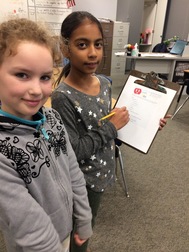
The Lake Wilderness Elementary Green Team, led by Susie Davidson, has many ongoing waste reduction projects. They continue to educate the community by making a bulletin board with signs about recycling and which items go into each can. They visit Kindergarten classes to show them how to recycle. Each lunch period Green Team members stand at the cans to help out where needed. Their hard work is really paying off as most days they report all food scraps going into the compost and all milk cartons recycled! In addition, the Green Team students visit offices and classes to conduct Power Patrols. They then leave a checklist to let the teachers know what power sources were left on. |
|
 |
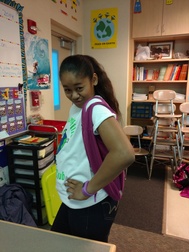
This year the Green Team at Lakeland Hills Elementary School has focused on reducing pollution from disposable plastics. Teacher Alaura Keith hosted a Green Team leadership workshop to teach students how disposable plastics contribute to large, visible environmental problems like the Great Pacific Garbage Patch. Through hands-on activities and games, the Green Team learned simple, reusable alternatives to some of the most prolific sources of plastic pollution – plastic grocery bags, sandwich bags, straws, water bottles, and utensils. The team then worked together to share easy waste reduction strategies with their school community. They crafted reusable bags out of old t-shirts, designed a reusable alternatives display and pledge wall, and reused disposable plastic wrappers to create a beautiful, ocean scene. This Green Team is fighting ocean plastic pollution by rethinking, reducing, and reusing!
Teacher Susanna Stratford and the Maple Hills Elementary Green Team selected the goal of educating the school community on how to use less plastic and be more mindful with waste for this school year. The team is presenting to every class about lunch time recycling, working with the PTA to reduce single-use plastics in the classroom and school-wide events, and collecting markers, pens, and glue stick containers for recycling. They are also creating 3-D posters to educate the community and writing to Trader Joe’s to request the elimination of plastic wrapped produce.
Two schools stand out with their efforts to help all members of the school community sort lunch time waste. Martin Sortun Elementary Green Team students with the guidance of assistant principal, Khadijah Al-Shami, work every day of the school year to teach others to sort their waste properly. This impressively large team of approximately 160 students works to clear up confusion about what can and cannot be recycled. The Sunny Hills Elementary Green Team, with help from PBSES coach Julie Harding, assists with recycling and composting every day at all lunches. One class from each grade level (about 130 students total) helps to make sure items go in the right bins and takes notes on any issues that need to be addressed.
Teacher Will Bland and the Newcastle Elementary Green Team conducted a video and poster campaign that invited the whole school to take the One Paper Towel Challenge. Their goal was to create a viral trend similar to the Ice Bucket Challenge that would encourage students to use only one paper towel each time they wash their hands. They created and starred in the video and developed mini posters to go on classroom paper towel dispensers and large posters to go in the bathrooms. Now the team is considering ways to measure the success of the campaign, such as measuring the change in paper towel roll replacement rates or the change in average bathroom trash weight.
The fifth-grade Green Team at North Hill Elementary School resolved to reduce waste through recycling leadership in 2019. Assistant principal, May Ovalles, and teacher, Sherry Edwards, worked together to host Green Team workshops to help students understand the problem of garbage. Students played games and challenged their knowledge in a speed- sorting activity to learn how garbage affects the environment and find everyday waste solutions. At the end, students brainstormed ideas for sharing their newfound knowledge with the school community. In the next two months North Hill students have committed to creating 3D posters with real-life examples of garbage and recyclable materials, monitoring lunch waste stations, and handing out coupons for great sorting. Outstanding student sorters can use the coupons to earn a fun reward.
Southwood Elementary Green Team members, with leadership from teacher, Jody Emerson, designed and completed a paper towel reduction campaign. They placed yellow buckets for recycling paper towels outside every restroom throughout the school after posting signage about their purpose. The Green Team presented this new composting at two assemblies and with follow-up announcements. The biggest surprise was the amount of paper towels collected. In addition to maintaining the paper towel project, the team is now starting to inform students and staff about recycling water bottles and using reusable water bottles instead. They have developed a slide show presentation about water conservation and a video about water bottles.
The schools mentioned above participate in and receive assistance from the King County Green Schools Program.
|
April is Earth month and a great time to try something new with your Green Team. We are so grateful for all the kids that monitor sorting in the cafeteria and the classroom. These leaders help the community make the right decisions to recycle more and waste less. Occasionally, teams get in a rut with monitoring and a short creative project can invigorate the team. Below are three ideas for spring time projects that can be prepared to share on or before Earth Day 2019. No matter what project the team chooses, be sure to promote the work over announcements and in the classroom. Reach out to King County Green Team specialists for support or call 206-583-0655.
-
Animal of the Week project: Choose four local animals to highlight and quickly research the habitat of that species. Based on where the animal lives, make a connection to a natural resource (trees/forest = paper, ocean = plastic, mountaintops = mining and metals). Finally, make one to three recommendations about how to reduce waste of this resource (reuse paper, stop using disposable plastic bottles, bags, utensils, recycle all metal). Make a poster for each focus animal to hang in the front office each week of April or each day of Earth Week.
-
Trash Art and the Great Pacific Garbage Patch: Learn more about the Great Pacific Garbage Patch. Resources include the PBS video How Much Plastic is in the Ocean and NOAA’s video Trash Talk: What is the Great Pacific Garbage Patch? Save and clean small plastic items like bottle caps, chip bags, and wrappers. Use these items to create art pieces like mosaic sea creatures. Display the art along with three to five actions every person can take to reduce plastic waste.
-
Green Scavenger Hunt: Draft ten questions and answers related to waste reduction and other environmental issues at the school. Create signs with the answers and “hide” them in plain sight around the school. Students then pick up a question sheet (on reuse paper) from the Green Team or front office. During Earth week, they work together with friends and peers to find all the answers. Reward all winners by displaying their name on a public banner or announcing them at an assembly or other special time. Example questions include, but are not limited to
-
Can straws and plastic utensils be recycled? ANSWER (with a picture of items): No, straws and plastic utensils cannot be recycled and must be thrown in the garbage. Pro Tip: choose no straw and metal utensils whenever possible.
-
Why do drink containers need to be EMPTY to be recycled? ANSWER (with pictures): When liquid is in a can, bottle, or carton it spills on the other recyclable materials. This is called contamination and makes materials that got wet garbage!
-
What is the name of the area of the Pacific Ocean where plastic trash is building up and harming sea life? ANSWER: The Great Pacific Garbage Patch.
-
Find additional trivia questions in the Green Team Quiz Show guide.
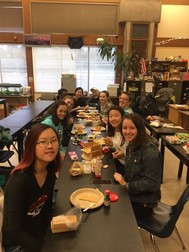
Students at Enumclaw Middle School are learning to rethink their food waste. Leadership teacher, Karl Karkainen, hosted Green Team workshops during the school day to teach students what goes into making our food, how food waste impacts the environment, and how to prevent food waste at school and at home. Leadership students worked together to assess their own “Foodprint” and generate ideas for sharing what they learned with the rest of the school community. During the next two months, students planned classroom waste audits to learn more about the composition of school waste and identify areas where waste could be reduced. In February, Leadership and ASB students worked together to plan and host a Trash on a Tarp event to allow to school community to visualize their waste and learn how everyone can play a role in using less, recycling and composting more, and wasting none.
Juanita High School Earth Corps, with help from Green Team leader Susan Vossler and teacher Jim Clark, have been exploring multiple ways to address waste. First, the team created and delivered a PowerPoint presentation on how to conserve water, reduce waste, promote carpooling, and pick up litter to local elementary and middle schools. They ended with a game that demonstrated how to properly sort items into the compost, garbage and recycling. For another project, they are collecting single-use plastic such as straws, bottle caps, and plastic bags. These items will be reused to create a marine animal sculpture to be displayed during Earth Week in April. To supplement the plastics, they reached out to local shops such as Starbucks and Shake It to collect straws used by their customers. Finally, the team worked with film student, Abby, to create a composting video for the culinary arts program.
The schools mentioned above participate in and receive assistance from the King County Green Schools Program.
|
Engage your peers to reduce plastic pollution
Schools all over the county struggle with recruiting and maintaining middle and high school Green Team members. King County specialists have been talking to students to learn more about the obstacles to being involved. Two themes have emerged from these conversations. First, students feel the problem is too big and they cannot make a difference. Second, the projects do not always seem relevant to their everyday interests.
Several schools have found success with the simple, “YouTube + Simple Steps” method. First, with your existing small team of students (and prospective members), watch several short YouTube videos about current environmental issues. Good examples include the Story of Stuff’s 3 Things You should Know About Plastic Pollution, The Ocean Cleanup’s The Great Pacific Garbage Patch, Explained, and Sucker Punch/ Lonely Whale’s For a Strawless Ocean.
Next, brainstorm (or research) up to three everyday actions each student could take that would help mitigate the problem of plastic pollution. Examples include, but are not limited to
- stop using single-use plastic items like bottles, straws, and bags
- replace plastic baggies with reusable containers
- switch to bar shampoo
- work to replace plastic utensils with durable or compostable utensils, and
- buy in bulk.
Finally, choose a portion of the video or specific facts from a video to share with the community. Accompany these facts with your easy action steps. Keep it short and easy to understand. If is simple and catches the eye, then students will be empowered to act instead of feeling burdened with information. Green Team specialists are available via email and phone (206-583-0655) to help you plan this simple, yet inspiring project.
Students in grades eight through twelve are invited to sign up to attend this year’s event scheduled for Friday, March 29 from 8:45 a.m. - 1:45 p.m. at the University of Washington’s Mary Gates Hall in Seattle. Attendees can participate in 50-minute workshops about a variety of environmental topics relevant to our community. A free lunch is provided. Register for the event by March 26 or sooner, since available spaces fill up quickly.
The King County Green Schools Program has now accepted its 300th school into the program. Join those 300 schools – 61 percent of the public and private K-12 schools in King County outside City of Seattle -- that have benefited from assistance, resources, and tools provided by the program! Get help to engage students and staff in improving waste reduction, recycling, and other conservation practices.
Your school does not need to have a student Green Team in place before it signs up to participate. After you sign up, if your school wants to form a student team, we’ll share what has worked well in other schools.
King County Green Schools Program provides hands-on assistance to help each school meet its conservation goals. The program also provides the resources and tools (including recycling containers and signs) schools need to make improvements.
Recognized schools receive a certificate, a "We are a King County Green School" banner – or a "Level Two" or "Level Three" sticker or "Sustaining Green School" ribbon to place on their banner – as well as a success story on the program web page and mention in a press release issued by King County. Recognized school districts receive a certificate, mention in a press release, and a success story on the program web page.
Check out the success stories of schools and districts recognized by the program.
For information about the King County Green Schools Program, contact Dale Alekel, 206-477-5267, or visit www.kingcounty.gov/GreenSchools. See the “Getting Started” page for the short application form.
Time to register for the fifth annual Carton 2 Garden Contest! Kids Gardening.org, in conjunction with Evergreen Packaging, are again awarding prizes between $1000 and $5000 to 15 schools for the best use of milk and juice cartons in the school garden. Collect at least 100 empty cartons from the cafeteria, homes, or community and design and repurpose them for useful garden items and structures. Get inspired by seeing last year’s winners and register to download free activities and lesson plans. Entries are due March 25, 2019.
Is your school or Green Team working on a service project related to environmental sustainability? Find out more and register your project by March 15, 2019 to be eligible for a mini-grant and Green Apple Awards. Green Apple Day of Service is an international movement of nearly a million volunteers in 80 countries helping to celebrate the central role schools play in preparing the next generation of global leaders in sustainability. See list of 99 ideas you can start any time.
This annual event focuses on children’s environmental health and safe school environments. Find information and resources at the Healthy Schools Network.
It isn’t too early to start thinking about what your school will do for Earth Day April 22. The national Earth Day Network has selected protecting our species as this year’s education focus and has resources on bees, giraffes, coral reefs, whales, elephants and other threatened species.
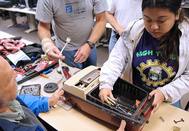
Again this year, the King County EcoConsumer program will offer free community repair events all over King County. Anyone can bring in items, from lamps to chairs to small appliances to clothing, and our experienced “fixers” will try to repair and mend them. Generally, they fix more than 70 percent of the items that come in. Events are scheduled in White Center and Bothell in March. Find the complete 2019 schedule of King County-sponsored free repair events here along with other area repair events offered by Seattle, Federal Way, Vashon Island, and in Snohomish and Pierce counties. For more information, contact King County repair events coordinator Tom Watson, 206-477-4481.
|
Remind students, teachers, and other staff members to recycle right. Avoid “wish-cycling” -- placing materials in a recycling bin because you hope they can be recycled! -- and only place accepted items in recycling bins. A recycling bin contaminated with unacceptable materials such as liquids and food can lead to an entire truckload of recyclable items being sent to a landfill.
-
Keep recycling! Recycling is the right thing to do because it saves energy and natural resources and decreases greenhouses gas emissions that lead to climate change.
-
Emphasize preventing waste in the first place. Examples of waste prevention: Limit paper use, and print and write on both sides of each piece of paper. Use durable trays, utensils, and water bottles which can be washed and used again. Reduce food waste by using one or more of the following strategies: Remind students to take what they will eat and to eat what they take, guide families on how to pack nutritious foods their students will eat, schedule recess before lunch in elementary schools, and, with permission from your district, set up Share Tables and/or donate packaged, unopened foods from the school lunch program.
-
Reduce contamination such as foods, liquids, and non-recyclable items in recycling bins. The cleaner the recyclable material, the more marketable it is. Students and staff members can help by following these simple guidelines.
-
No liquids in recycling bins. Place only EMPTY beverage containers (milk cartons, plastic bottles, aluminum cans) in recycling bins. Drink all the liquid in a container, or pour out leftover liquids into a “leftover liquids” bin in the cafeteria or into a sink. (Remember to “pour low, pour slow” to avoid splashing.)
-
No food in recycling bins. Place only empty recyclable food containers in recycling bins.
Examples of food-contaminated items that should be placed in garbage bins: Cheese and grease on pizza boxes means those boxes should be placed in a compost bin -- or in a garbage bin in schools that do not provide collection of compostable materials. Yogurt left in a yogurt container means that the yogurt container should be placed in a garbage bin. If teachers rinse out empty yogurt containers in a staff breakroom, then those yogurt containers can be placed in a recycling bin. But in school cafeterias where students typically do not eat all the yogurt and cannot rinse out containers, those containers should be placed in garbage bins.
-
Only place accepted recyclable materials in recycling bins. Check the recycling signs that should be on or above recycling bins. If your school does not have recycling signs, ask your King County Green Schools Program representative for signs.
-
When in doubt, find out. Ask the King County Green Schools Program for help!
If you have questions or need assistance educating your school community about what can be recycled, contact your King County Green Schools Program representative. If your school is not yet participating, sign up for assistance!
Nominate your Green Team for the President’s Environmental Youth Award, a program that recognizes student projects that highlight environmental sustainability. In 2010, the Tahoma High School Green Team was recognized for its significant waste reduction and recycling efforts. Through their participation in the King County Green Schools Program as well as weekly projects such as Adopt-a-Road litter collection, energy conservation, and restoration projects, Tahoma High School Green Team made substantial change in school. In 2016, students from the Tesla High School in Lake Washington School District won the award for their work educating their school and community on climate change. EPA will select both an elementary and a secondary winner for each of its 10 regions. Applications are due March 8, 2019.
Teachers in grades kindergarten through 12 can apply for this award that recognizes innovative approaches to environmental education and good uses of the environment as a context for learning. Winners receive up to $2500 to be used for professional development and their school a similar amount to fund environmental education activities. EPA will select up to two winners in each of its regions. Applications are due March 8.
|