|
Si gusta communicarse con la ciudad de Kenmore o revisar un documento en otro idioma, envie su solicitud con su información de conctacto a cityhall@kenmorewa.gov o llame al 425-398-8900.
FOR IMMEDIATE RELEASE
May 5, 2021
City of Kenmore Communications
communications@kenmorewa.gov
425-398-8900
Squire's Landing Park Renamed to Tl' awh-ah-dees (ƛ' a Xw a d i s) to Honor the Lands of the Coast Salish Peoples
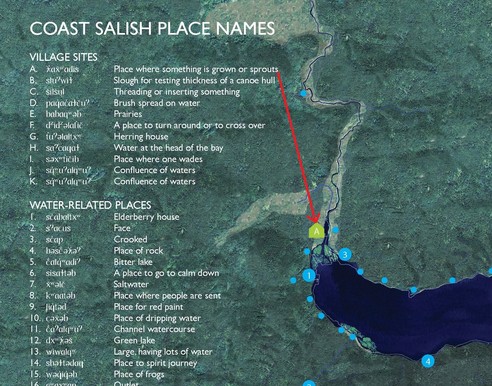
Kenmore City Council passed a unanimous motion on April 19, 2021 to change the name of Squire’s Landing Park to Tl' awh-ah-dees (ƛ' a Xw a d i s), the name of the Lushotseed village previously located in or near present-day downtown Kenmore. Tl' awh-ah-dees translates to “a place where something is grown or sprouts".
At the January 2020 Council retreat, the Kenmore City Council asked city staff to approach the Kenmore Heritage Society to lead a re-naming process that would include Native American input and participation. Following consultation with the Kenmore Heritage Society, Ray Fryberg (Tulalip Tribes) and Iissaaksiichaa Ross Braine (Kenmore Resident /Apsaalooke Nation) both recommended the name.
According to the Kenmore Heritage Society, for centuries, the Sts'ahp-absh - a subgroup of both the Duwamish and Sammamish tribes - inhabited the banks of the Sammamish River (known to them as Sts'-ahp). At the confluence of the Sammamish River and Lake Washington, the Sts'ahp-absh established the village of Tl' awh-ah-dees, which they used primarily as their winter quarters. In 1855, tribal leaders signed the Point Elliot Treaty, which relinquished most of their lands in northwest Washington in exchange for cash, relocation to reservations, and access to traditional hunting and fishing grounds. Most of the Sts'ahp-absh left the Sammamish River region, and their villages soon disappeared.
“The restoration of traditional place names is an acknowledgment of traditional society, an acknowledgment of their knowledge of the landscape and their history,” said Ty Juvinel, a local Coast Salish Artist from the Tulalip Tribes. “It is a way of honoring those who originally inhabited the area, giving people a sense of time that stretches back before the first European explorers.”
The City of Kenmore recognizes that Kenmore stands on the lands of the Coast Salish Peoples, and honors their ancestors who resided here, and the many Indigenous Peoples who still reside here, thriving and strong. The new name of the park will go into effect upon completion of the new Walkways and Waterways parks project improvements in late 2022 or early 2023.
Tl' awh-ah-dees - how to pronounce it:
ƛ' Somewhat like the ttle in little, but with a glottalized pop of air.
a Like the a in father.
Xw Like ch in German ach, only pronounced with rounded lips.
a Like the a in father.
d Like d in day.
i~e Like the i in police. In some dialects it is pronounced like the e in they.
s Like s in sing.
“A heart-felt thanks to the wonderful people of the Tulalip Tribes and also to the Kenmore Heritage Society,” said Mayor David Baker. “They have been so generous and gracious in helping us on this journey of remembering and honoring the sacred history of this land we all call home.”
|