Director's Note - Welcoming our New Commisioners
With a commission as large as ours, every year we have commissioners term off and be appointed, or re-appointed. On June 30th, the last remaining founding commissioners termed off of the commission; Matt Landers and Everett Maroon. Both of them have left a legacy and a foundation on which they, and their former colleagues, helped build. For that, I want to extend our deepest gratitude.
The WA State LGBTQ Commission is governed by law to recruit and recommend nominations to the Governor’s Office for commissioners based upon maintaining a balanced and diverse distribution of race and ethnic, geographic, gender identity, sexual orientation, age, socioeconomic status, and occupational representation, where practicable. We extend these traits to also include disability or disabilities, language, parents, caregivers, and HIV status. This is not intended to be an exhaustive list, rather examples of the various ways we define diversity.
Washington is a large state, and we strive to have our commission reflect rural, suburban, and urban cities and towns in as many regions as possible, along with diversity of multiple identities within the 2SLGBTQIA+ populations.
We’re excited to welcome four new commissioners who began their appointments on July 1st of this year. Below, you can learn more about each of them!
 Lisa Keating, Executive Director - Washington State LGBTQ Commission
Introducing Our New Commissioners!
To meet all 15 of our Commissioners, head to our website!
Vanessa Delgado (she/her/ella) - Spokane County
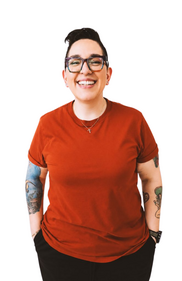
Vanessa Delgado is a border kid from El Paso, TX, raised at the intersection of cultures, languages, and identities. She holds a B.S. in Psychology from Texas A&M University and an M.A. in Mental Health Counseling from Northern Arizona University.
Today, she serves as a Co-Executive Director at Spectrum Center, a 2SLGBTQIA+ nonprofit serving Eastern Washington and North Idaho, where she also leads their education and development teams. Before this, she spent five years as the Director of Student Equity and Inclusion Services at Eastern Washington University, directing both the Multicultural and Pride Centers. Her path in higher education has taken her from the University of Kansas, where she managed the Center for Sexuality and Gender Diversity, to the University of Colorado Colorado Springs as the LGBT Program Director.
Throughout her career, she has designed and facilitated Queer competency workshops customized to meet the unique needs of each industry, such as LGBTQIA+ Advocate Training, Anti-Racism 101, UndocuALLY sessions and deep dives into microaggressions, unconscious bias, and systemic power. Education will always be her true passion. She genuinely believes no matter your age or field there is always room to grow personally and professionally, especially when learning about marginalized identities and our place in creating inclusion. When she's not at work, you’ll find her in Spokane with her wife and their son, trying to keep up with a preschooler!
|
Eve Hwang (she/her/hers) - King County
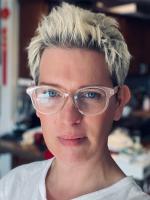
Eve Hwang is a Product Manager at Amazon, where she leads technology initiatives for the Community Delivery program—a partnership that has delivered over 60 million meals through more than 40 community organizations since 2020. She brings extensive experience in technology leadership and community impact, having previously served as Director of Technology at Food Lifeline and as a Program Manager at Slalom.
Eve previously served as Chair of the GSBA, Washington’s LGBTQ+ Chamber of Commerce, where she advanced economic opportunity and advocacy for LGBTQ+ businesses and professionals across the state. She lives in Seattle’s Capitol Hill neighborhood.
|
Joanna Turner (they/them/theirs, she/her/hers) - Klickitat County
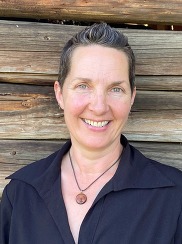
Joanna Turner is a queer, radical, eco-humanist who is passionate about racial and climate justice. They currently work for Washington Gorge Action Programs doing substance misuse prevention throughout Klickitat County. By hosting events like queer family game nights and grief circles, they bring resources to their various communities. For almost eight years, they have been elected to the Trout Lake Community Council and serve as the secretary. They are passionate about building connections wherever they go. As a single parent in a rural town, they are acutely aware of how challenging and rewarding it can be to live in such a remote area.
In 2017, Joanna left Minnesota with their three children in search of a place to call home and build a life. Through the World Wide Opportunities on Organic Farms (WWOOF) program, they landed in Trout Lake, Washington. They fell in love with the area and when their work on the farm ended, they stayed. Joanna is an entrepreneur who most recently owned and operated their own janitorial business.
Joanna loves to spend time in the Gifford Pinchot National Forest with their dog, grow food, play poker and write creatively. They are a huge fan of the insect Praying Mantis’ and dancing at the local music venue. They are also currently enrolled in the Ecological Chaplaincy masters program at Hartford International University for Religion and Peace. They are excited to serve their communities through fostering nature based spirituality and advocating for rural queer folks.
|
Linden Jordan (he/him/his) - Skagit County
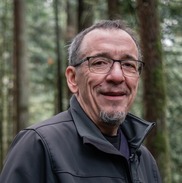
Linden Jordan’s story traces a lifelong commitment to advocacy, especially for women, children, and LGBTQ+ communities. From early anti–strip mining activism in his home state of West Virginia to work as a prosecutor, therapist, teacher, and transgender rights educator in Washington State, the common thread is service, reinvention and social justice.
He grew up in West Virginia, studied psychology obtaining a Masters Degree, and later earned a law degree in Washington State. His early work with the Huntington, WV police department as a crisis counselor led him after law school to pursue a position as a Deputy Prosecutor with the King County Prosecutor’s Office in 1979, where he focused on crimes against women and children. He eventually became Assistant Chief of the Juvenile Division and left there in 1986.
After leaving law, he moved to Skagit County to work as a therapist, helping victims of physical and sexual assault. He also saw clients from the LGBTQ+ community. In 2001, he moved into teaching Psychology at Skagit Valley College, where he became deeply involved with LGBTQ+ students and developed his “Science of Gender” curriculum. He found a receptive audience for this curriculum at a local chapter of PFLAG Skagit and began to do speaking engagements through their community education committee. He retired from the College in 2013. He is still very active with PFLAG Skagit.
If you look for some record of him during this time period, you won’t find anything under his current name. He likes to say that he spent many years “performing as a woman” before he could finally realize his true identity. Even though he knew at the age of 4 that the F on his birth certificate was a mistake, he would not become his authentic self until he retired from Skagit Valley College. He likes to ask audiences what they did when they retired. He gets many answers like golf, travel, gardening. He then reveals that when he retired, he began his transition—at the age of 63. The desire to be oneself never ends. His dream became a reality.
He now lives on eleven acres in the woods in Eastern Skagit County with his beloved spouse where he is very active with PFLAG Skagit, No Hate in Washington State, Washington Indivisible Network, and the North Cascades Wild Church. His presentation on The Science of Gender is very popular with groups that include activists, parents, teachers, law enforcement, mental health counselors, students at Western Washington University, medical professionals, religious organizations and all curious people.
He also shares his life with one very active border collie, five sassy ducks and two snobby chickens.
|
Dakota Steel (he/him/his) - Thurston County
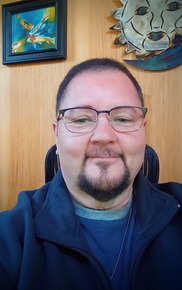
Dakota is a queer mixed-race transgender man, veteran, and public sector leader committed to advancing equity, accountability, and community-centered change across Washington State. With a background spanning behavioral health, advocacy, and systems leadership, Dakota is known for building trust in complex environments where policy, power, and lived and living experience intersect.
His work centers lived and living expertise as essential to systems change, focusing on strengthening ethical community engagement, shared governance, and co-design with communities most impacted by inequity. He is committed to ensuring that historically excluded voices are meaningfully included in shaping public systems and decisions, while advancing practices that reduce tokenization and support shared power, accountability, and long-term trust. Dakota brings a leadership style grounded in relational integrity, courage, and a deep commitment to belonging for Washington State communities, particularly transgender people, veterans, and communities of color.
As a commissioner, Dakota is committed to advancing dignity, visibility, and equity for 2SLGBTQIA+ Washingtonians while helping create spaces where people can safely and authentically belong.
|
What to know about the recent finalized rule from HHS around gender-affirming care:
The Washington State LGBTQ Commission has been playing close attention to any federal rulemaking that impacts the 2SLGBTQIA+ community. Earlier this month, the Department of Health and Human Services and the Center for Medicare and Medicaid Services released a finalized rule that will have devastating impacts on 2SLGBTQIA+ people across the country.
What is this rule?
-
The Center for Medicare & Medicaid Services (CMS) released a rule that bars Medicaid and CHIP from funding coverage of gender-affirming care for youth (under 18 for Medicaid and under 19 for CHIP).
-
This rule affects federal funds for Medicare/Medicaid plans and CHIP plans. It does not impact state funds for Medicare/Medicaid.
-
This rule is set to take effect on October 13th, 2026. Funding will be available “for a tapering-off period of up to six months” after this date for youth currently on hormone therapy.
-
Advocates expect this rule to be challenged in court.
How did this rule happen?
-
The federal administration has been utilizing multiple avenues, including federal rulemaking, to target science-backed gender-affirming care for young people.
-
This rule was first proposed by CMS in October 2025 and underwent the standard public comment period for agency rule changes to receive feedback.
-
Despite receiving over 30,000 comments opposing this proposed rule, the Department of Health and Human Services (HHS) and CMS are moving forward with this finalized rule.
What has Washington State already done?
-
The Washington State LGBTQ Commission alerted state leadership to this proposed rule when it was released and has been working alongside Governor Ferguson’s office and impacted state agencies to address the impacts this rule would have on Washington.
-
This rule was one of two rules that Washington opposed through a joint, statewide impact letter due to the devastating impacts it would have on Washington and the lack of scientific basis behind the proposal.
From the Washington State Health Care Authority:
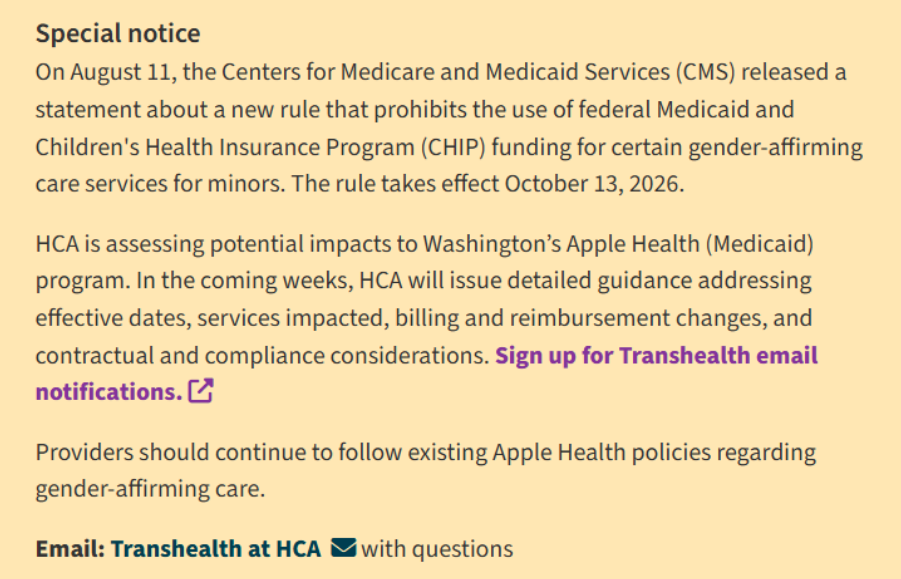 https://www.hca.wa.gov/billers-providers-partners/program-information-providers/transhealth-program
Image Text: Special Notice
On August 11, the Centers for Medicare and Medicaid Services released a statement about a new rule that prohibits the use of federal Medicaid and Children's Health Insurance Program (CHIP) funding for certain gender-affirming care services for minors. This rule takes effect October 13, 2026.
HCA is assessing potential impacts to Washington's Apple Health (Medicaid) program. In the coming weeks, HCA will issue detailed guidance addressing effective dates, services impacted, billing and reimbursement charges, and contractual and compliance considerations. Sign up for Transhealth email notifications.
Provides should continue to follow existing Apple Health policies regarding gender-affirming care.
Email: applehealth.transhealth@hca.wa.gov with questions.
What is Washington State doing now?
-
The Washington State LGBTQ Commission will continue to share information about impacts as soon as we are able.
-
The Commission, alongside the Governor’s office and many other state partners, are monitoring the ever-changing legal landscape and prioritizing solutions that make sure that all Washingtonians, including gender-nonconforming and transgender youth, are respected, affirmed, and able to access the care they need.
 2026 LGBTQ+ Youth Advisory Council Summit Recap
by Desi Quenzer (any pronouns) 3rd Year LGBTQ+ Youth Advisory Councilmember, Yakima County
The LGBTQ+ Commission's third annual Youth Advisory Council Summit took place this year on August 3rd – August 6th in Seattle, Washington at Seattle University. The Youth Advisory Council is made up of twelve youth ages 14-25 from across Washington.
This year, we appointed 5 new members to the council. It has been such an amazing experience, watching this council grow these last 3 years. With these new council members, we have been able to improve on the foundation and structure of the council as members leave and new members join. I’m so excited to get to know our new members better and watch them grow!
Every year, we kick off the summit with a banquet dinner. This is one of my favorite parts of the week because we get to chat with some really cool folks within government and different organizations. I had meaningful conversations surrounding education with Erin Okuno, Executive Director of the Office of the Education Ombuds. I also spoke to the Washington State Secretary of Health Dennis Worsham surrounding rural healthcare and made plans to meet with him in the future. I got to speak to everyone in attendance, some faces I recognized from previous years, others I had not met before but was eager to get to know! I look forward to watching the attendance grow in the coming years.
On August 4th, the council was able to meet for a few hours to discuss the history of the council, projects we can do as a council, how we want the council to function, and how commission staff can support us in our ventures. Sawyer Tuttle, commission staff, also did a training on LGBTQ+ policy in Washington. They taught us about public policy, politics, and other legislative processes. Sawyer also put together an activity to help us learn about how we can make meaningful change using policy. The problem I want to address most in my rural community in Yakima is the lack of healthcare resources, facilities, and workers. After identifying my problem, I came up with possible solutions to the problem and created a tangible policy with data to support. This brainstorming activity got me thinking deeper about issues surrounding healthcare and helped me organize my thinking in a way that allowed me to speak on the issue and possible solutions more confidently in Olympia the next day.
On August 5th, we traveled to Olympia. I love visiting the capital, touring the Archives, and meeting with elected officials and government employees. This year, we got to have two meetings and lunch with several people. Our first meeting was with policy advisors from the Governor’s Office, the Office of the Attorney General, and the Department of Health. In this meeting, I was able to advocate for rural healthcare, gender and sexuality inclusive healthcare, and the overall lack of resources for those living in rural areas throughout Washington. I also got to discuss my ideas for policy change that would better serve underserved communities such as Yakima. Other council members brought up issues surrounding a lack of representation within their communities, a lack of free and accessible community spaces, and LGBTQ+ curriculum in schools. We also learned more about what goes into state policy and the work that’s going on behind the scenes.
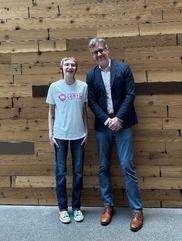
During lunch, I spent the whole time talking with Deputy Director of Federal Policy for the Governor, Nathan Bays, which was easily the highlight of the week for me. He shared some of his experiences and his journey leading up to working in Washington State government which was very inspiring as someone at the start of their career. I look forward to shadowing Nathan for a day this year as a council member and learn more about what goes into the work that he does!
Our second meeting was with Representatives Macri and Santos, and other legislative staff. During this meeting, we had open and honest conversations surrounding two upcoming bills affecting youth. Council members were able to share their perspectives as members of their communities, K-12 students, college students, and educators. I personally found this conversation to be extremely insightful, and Rep. Santos and Rep. Macri were engaged with us the entire time, asking questions and taking notes. I really felt the passion in the room between guests and council members alike. This was a very productive day that allowed council members to form meaningful relationships with state officials, as well as share their diverse perspectives. This experience was certainly my favorite part of the summit.
|
Our last day was spent meeting as a council to strategically plan our next year. We shared the things we would like to accomplish and narrowed it down to four main projects as a council. We also got to think about things we would individually like to do. We filled an entire whiteboard with ideas! It was especially exciting for me to hear what our new council members are interested in pursuing during their time on the council; from LGBTQ+ history projects to storytelling through their community to creating educational resources, this council is excited to hit the ground running!
Thank you so much Sam, Lisa, Sawyer, and Commissioner Ayanna Phillips for all the work you put into the summit this year! The summit is always such a magical experience, and it wouldn’t be possible without you all. I truly love the work that I get to do, advocating for LGBTQ+ rights, and I’m so happy to have found this council. I’m so excited to see what the future holds for us!
|