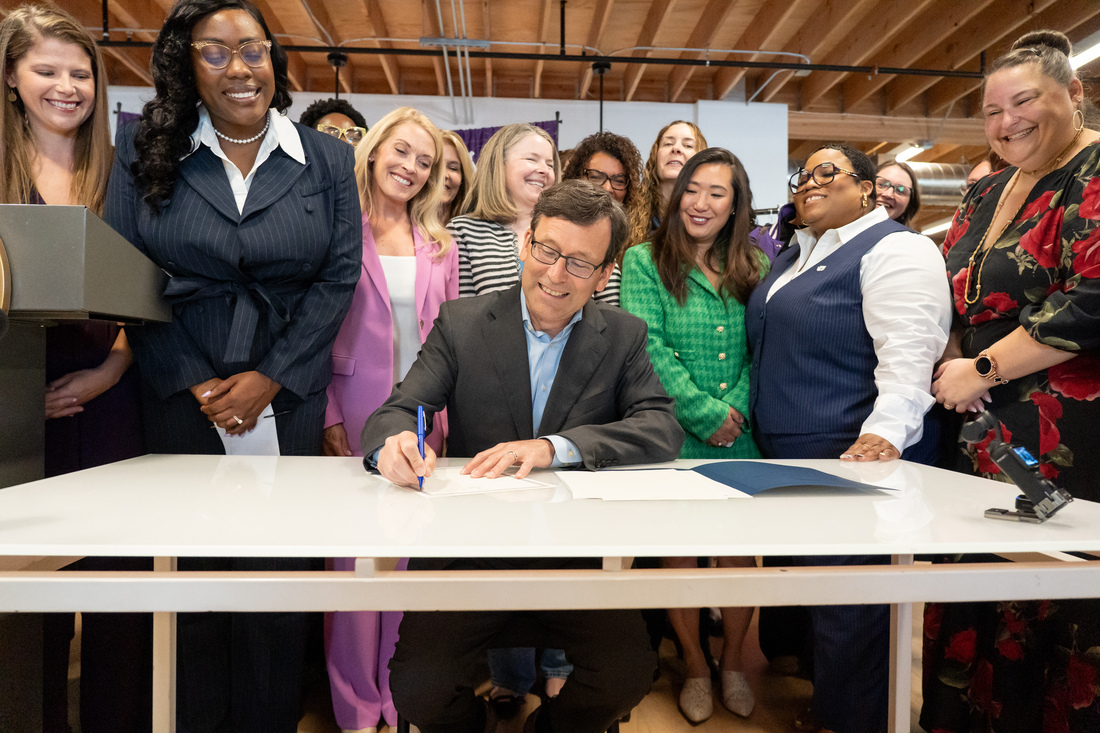
 SEATTLE – Today Governor Bob Ferguson announced an executive order supporting women in the workplace experiencing menopause. Executive Order 26-01 directs the Washington State Women’s Commission to work with cabinet agencies to implement appropriate accommodations for people experiencing menopause, as well as create guidance and training resources for state agencies and other public and private employers.
Video of the event is available here, and photos are available here.
In the United States, most women will work during their menopause years. Right now, 38% of working women in Washington are between the ages of 40 and 59 and may be experiencing symptoms of menopause and perimenopause, including insomnia, brain fog and hot flashes. Without support, these symptoms can disrupt work, limit career growth and affect long-term financial security.
The Mayo Clinic estimates productivity losses due to menopausal symptoms total approximately $1.8 billion nationwide. Two in five women considered leaving their job or did leave a job due to menopausal symptoms, and one in four considered not pursuing or did not pursue a leadership opportunity as a result, according to the Society for Women's Health Research.
“We are losing women in the workforce with tremendous knowledge and experience because we are not doing enough to prepare for a natural stage of life,” Governor Ferguson said. “As governor, my Administration will be a place where the best, most experienced workers can come serve the people of Washington, and know that they will be supported. We must do more to support women, and to support employers who want to keep their experienced staff in the workforce. This Executive Order ensures Washington will remain a leader in supporting our workers.”
The order directs the Washington State Women’s Commission to work with state agencies to review and strengthen existing policies and practices related to menopause and perimenopause accommodations. Recommendations will include practical, common-sense measures like telework options, flexible dress codes and access to cold water and temperature control.
The order also directs the Women’s Commission to work with the Department of Health, the Health Care Authority and the Bree Collaborative to draft guidance and training resources on menopause and perimenopause accommodations for state agencies and other public and private employers.
The Commission will ensure agencies’ management and employees are trained on their rights and responsibilities.
“Menopause has been invisible in workplace policy for too long,” said WSWC Executive Director Brittany Gregory. “These are not burdensome changes; they are smart workforce policy that ensure experienced workers can stay, grow and lead.”
Perimenopause and menopause in the United States
In the United States, 90 percent of women age 35-plus experience menopausal symptoms, some of which can be debilitating and interfere with work and other day-to-day activities, according to a national survey by AARP. Perimenopause can begin as early as a woman’s 30s.
Research indicates that Black, Asian and Latina women tend to enter menopause earlier than white women. Studies also show that women living in rural areas are more likely to reach menopause earlier than women living in urban areas.
###
|