Director's Note: Transgender Day of Visibility
Now more than ever, it is important to let trans and nonbinary youth know that they matter and that there are countless people they will never meet working on their behalf to protect their rights throughout Washington state. As access to gender affirming care is being removed and challenged, I regularly think about the critical importance this care has had on my own family and to families raising trans kids. This care allows trans individuals to live and build their lives as their authentic selves. Gender affirming care also allows families to thrive.
For Trans Day of Visibility, I asked my daughter, Stella, why Trans Day of Visibility is important to her.
Stella, tell us a little about yourself.
I am a transgender rights advocate. I have been working to help people better understand transgender people for the past fourteen years. I have seen firsthand how powerful visibility is. When I was sixteen years old, I had the opportunity of a lifetime to testify before the U.S. Senate in support of the Equality Act on March 17, 2021. It is a bill that would have codified gender expansive protections for housing, healthcare, and employment.
That experience led me to meet some incredible people. It also reinforces the importance of being myself, fully and openly, to disrupts stereotypes and replace misinformation about who trans youth are with real, lived experiences. All young people want opportunities to make friends, chase their dreams, and grow up surrounded by love.
Currently, I am in my third year of college studying political science. When I’m not studying, I’m playing video games, binging my favorite shows, and working for my college campus to engage students in local civic action.
What has it meant to you to be a visible advocate?
What I’ve been able to do in my life is incredibly special and not typical. Being a visible advocate is mostly about being myself unapologetically. Often, I have been the only trans person in my classes growing up. At first, this felt like a disadvantage, but I have since learned that it’s a strength. I can share my experiences and help others get to know a trans person better. In doing so, these spaces may be easier for the next trans or nonbinary person to navigate.
What are you proudest of?
I don’t think I have one thing I take the most pride in. I mostly feel proud of who I continue to become. I am proud of my resilience, the love in my life, and the ability to have a positive impact, especially now. No policy or law is going to change who I am.
Something that I love about TDOV is the beauty and diversity that there is within the trans community. It’s a unique celebration of identities and gender that spans generations. Countless people have contributed to my ability to live more freely and true. I would not be the woman I am today without my family, friends, and mentors.
What would you like young nonbinary and trans youth to know?
When I am asked this question, I like to think of my younger self. I imagine myself at five looking through my costume box for my next persona. I want to look in her eyes, give her a giant hug, and tell her that she is not alone. My hope is that all young trans people know that they are worthy of respect, love, and celebration. You never know the positive impact you can have by living your life as your true self. Visibility is a door into seeing yourself in the world around you. Be proud of who you are.
 Lisa Keating, Executive Director - Washington State LGBTQ Commission
Washington State Attorney General's Office Defends Gender-Affirming Care in the Ninth Circuit
On March 5th, 2026, the Washington State Attorney General's Office argued against two federal executive orders that attempt to revoke federal funding for clinics and hospitals providing gender-affirming care. Washington state was joined by Minnesota, Colorado, and Oregon, as well as individual doctors bringing claims on behalf of their practice and patients.
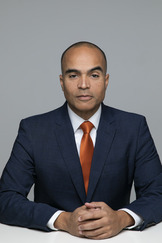
"This administration has attacked transgender Americans with a breathtaking cruelty and a disdain for Washington state law and our Constitution,” said AG Nick Brown. “Fortunately, we have repeatedly won in court and prevented these dangerous executive orders from taking effect. We are confident that the courts will continue to side with us and the Constitution".
The Washington State LGBTQ Commission would like to thank Attorney General Brown and his dedicated team for their work to protect transgender Washingtonians. We would like to extend a special thanks to the following attorneys and professional staff with the Attorney General's Office that worked on this case: Attorneys Will McGinty, Tera Heintz, Cristina Sepe, Cindy Alexander, Todd Bowers, May Che, Spencer Coates, Alexia Diorio, Lauryn Fraas, Teri Healy, Andrew Hughes, Neal Luna, Emily Nelson, Mitchell Riese, Sarah Smith-Levy, Raina Wagner, and Lucy Wolf; Paralegals Trista Friend, Victoria Johnson, Leena Vanderwood, Jessica Buswell, Ali Hollenbeck, Diane Hoosier, Connor Hopkins, Tally Locke, Alicia Nicole Stensland, Christine Truong, Jennah Williams, Jamie Wuco, and Logan Young; and Investigators Rebecca Pawul, Tony Perkins, Alma Poletti, Jennifer Sievert, and Jennifer Treppa.
For more information, read the full press release from the AG's office.
|
A History of Visibility: Transgender Life in Early Washington State
By Athena Ortega, LGBTQ Commission Graduate Intern - Evergreen State College
Long before Washington State codified protections for gender identity, Harry Allen walked the streets of early twentieth-century Seattle insisting on being recognized for who he was. Newspapers sensationalized his life, and courts repeatedly arrested him. Yet he continued to live openly as a man in a society that had no language for “transgender” and no laws protecting him.
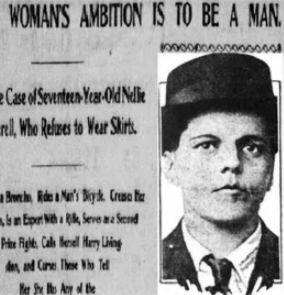
Born in 1882 in Indiana, Allen moved with his family to the Pacific Northwest as a teenager. By the early 1900’s, he had settled in Seattle, where he began living publicly as a man. He worked in traditionally masculine jobs such as bartending, ranch labor, and longshore work. Local newspapers documented his life in intrusive and often mocking detail, fascinated by what they described as a “woman posing as a man.” In a 1908 interview with the Seattle Sunday Times, he explained: “I did not like to be a girl and never did look like a girl. Sick at heart over the thought that I would be an outcast of the feminine gender, I conceived the idea of making myself a man.” Despite the scrutiny and legal challenges, Allen consistently asserted his identity.
Seattle at the turn of the century was a growing port city shaped by settler colonization, rapid industrialization, and migration. Gender norms reflected Euro-American social expectations and were enforced through morality laws, vagrancy charges, and public scrutiny. At the same time, rapid growth and migration meant those norms were not always uniformly enforced. Historians such as Peter Boag have documented hundreds of gender nonconforming people living in the American West during this era. Their research suggests that life in the developing West was not as closely monitored as in older cities, sometimes allowing limited but real space for individuals to live outside rigid expectations. Allen was arrested multiple times under vague statutes often used to police people who did not conform. His persistence in wearing men’s clothing, using a masculine name, and working in male-dominated spaces was not an act of formal political advocacy. It was an act of self-determination.
Transgender visibility in Washington did not begin with contemporary policy debates or social media movements. It began with people who insisted on living authentically even when the law offered no protections and the press offered little dignity. Allen's life was complicated, at times turbulent, and shaped by the biases of his era. Still, his refusal to disappear offers one of the earliest documented examples of transgender self-determination in Washington’s recorded history.
|
 Washington State LGBTQ+ Youth Advisory Council Applications OPEN NOW!
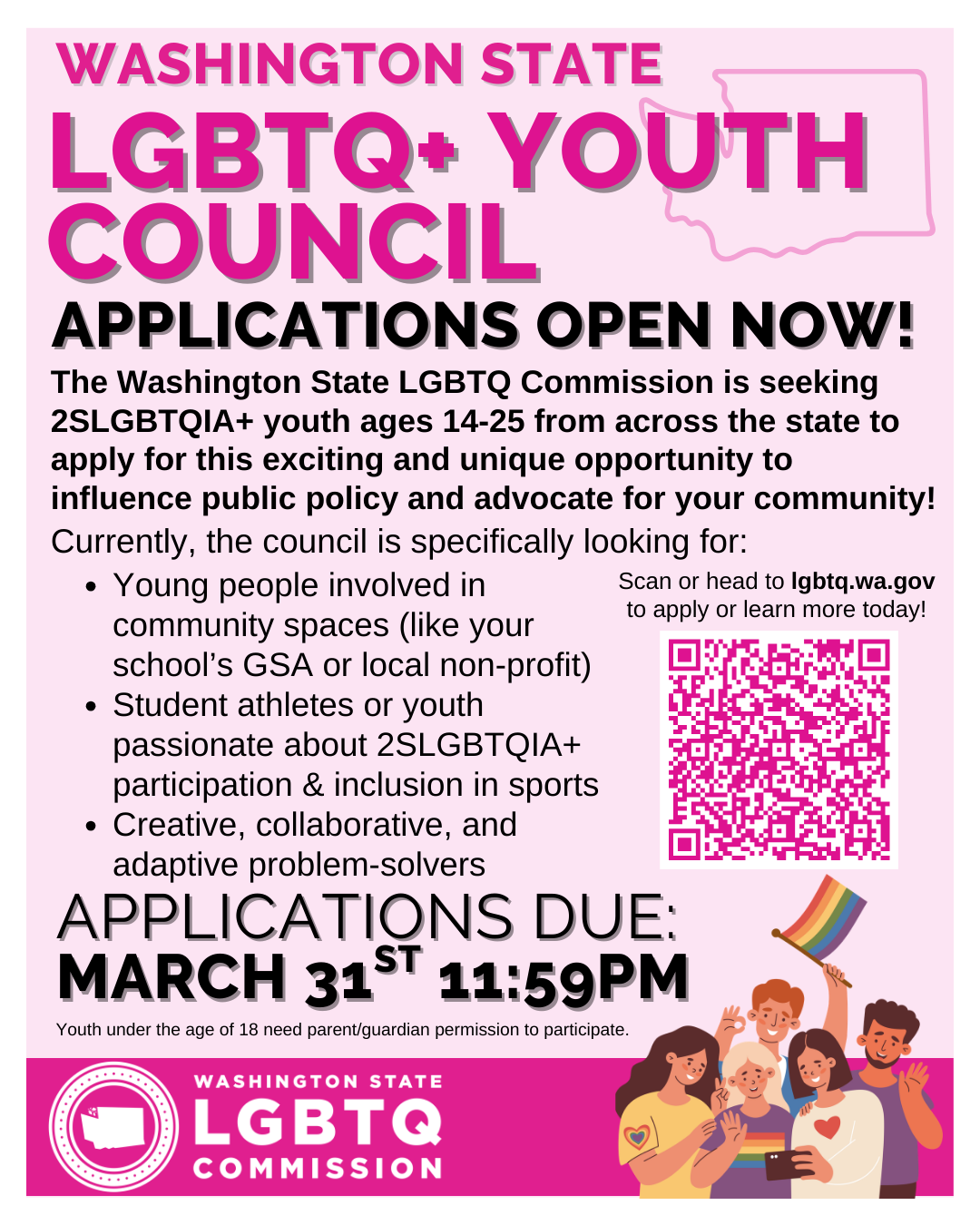 The Washington State LGBTQ Commission currently has applications open for our LGBTQ Youth Advisory Council! We are seeking 2SLGBTQIA+ youth ages 14-25 from all across the state to apply for this exciting and unique opportunity to influence public policy and advocate for our community in Washington.
The LGBTQ+ Youth Advisory Council is currently looking for:
- Young people involved in community spaces (like your school's GSA or local non-profit)
- Student athletes or youth passionate about 2SLGBTQIA+ participation & inclusion in sports
- Creative, collaborative, and adaptive problem-solvers
We strongly encourage youth who come from further marginalized backgrounds to apply, including but not limited to those who live in rural communities and places outside the 1-5 corridor, Two-Spirit and LGBTQ+ Indigenous youth, disabled and neurodivergent youth, and youth of mixed, Desi, Black, Latina/o/x, Asian-American, Native Hawaiian, or Pacific Islander racial and ethnic identities.
Youth under the age of 18 will need parent/guardian permission to participate.
Applications are due March 31st at 11:59pm PST.
There is a FAQ sheet on our website that answers some commonly asked questions. www.lgbtq.wa.gov/YAC
Questions? Please reach out to Sam, Commissions Operations and Policy Manager - samuel.fennell@lgbtq.wa.gov
LGBTQ Commission Public Meeting on Housing - March 27th & 28th, Seattle
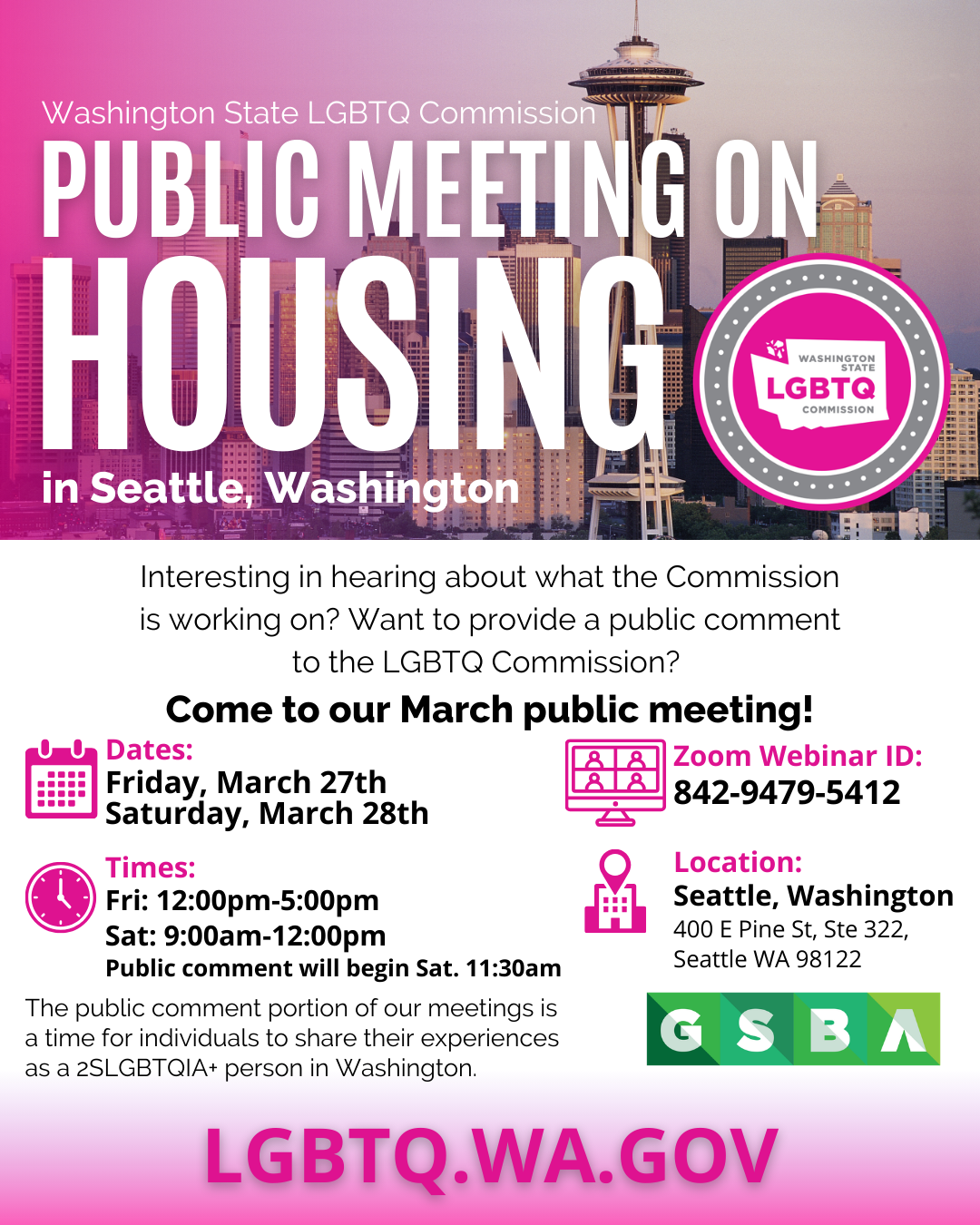 Interested in hearing about what the LGBTQ Commission is working on? Want to provide a public comment to the LGBTQ Commission? Come to our March public meeting in Seattle, Washington! Hear from state agency leadership and staff around Washington's response to 2SLGBTQIA+ housing concerns.
On Friday, March 27th from 12:00PM to 5:00PM and Saturday, March 28th from 9:00AM-12:00PM, the Washington State LGBTQ Commission will convene in Seattle and online for their second public meeting of 2026. We hope you are able to find some time join us to hear more about the Commission's work, and we highly encourage 2SLGBTQIA+ individuals around the state to tune in and share public comment with us, in-person or virtually. Public comment begins at 11:30AM on Saturday, but the public is always welcome to observe any portion of the meeting.
Thank you to GSBA, Washington State's LGBTQ+ and allied chamber of commerce, for providing the space to hold this meeting! Learn more about GSBA here.
Dates & Times:
Friday March 27th from 12:00PM to 5:00PM
Saturday March 28th from 9:00AM to 12:00PM
Location: GSBA Office in Seattle, WA or via Zoom
Zoom Information:
-
Zoom Link:
-
Meeting ID: 842-9479-5412
We hope to see you there!
2SLGBTQIA+ Housing Panel - March 25th
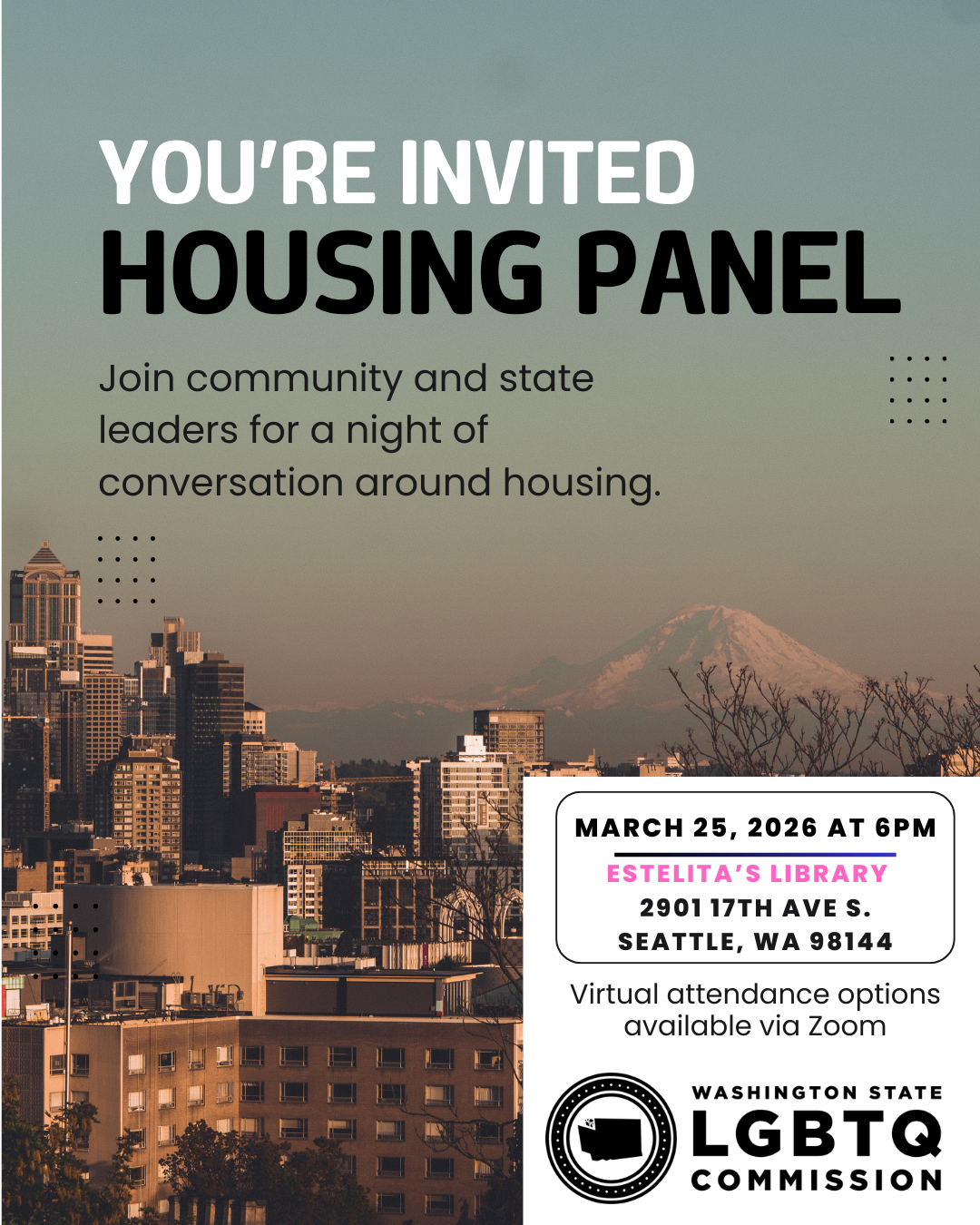 SAVE THE DATE! In anticipation of our March public meeting, the LGBTQ Commission and Estelita's Library are hosting a 2SLGBTQIA+ Housing Panel on March 25th. Come learn about accessible housing initiatives and the ways in which state, county, and community leaders are working towards housing solutions for the 2SLGBTQIA+ community.
Date: Wednesday, March 25th
Time: 6pm
Location: Estelita's Library. Beacon Hill Location - 2901 17th Ave S. Seattle, WA 98144 (directly across from the Beacon Hill branch of the Seattle Public Library and a few blocks from the Beacon Hill Lightrail Station.
This event will also be available to attend via Zoom. Zoom link will be shared on our website prior to the event.
Questions? Reach out to Commissioner Darlin Blanco Lozano (Seattle) - Darlin.Lozano@lgbtq.wa.gov.
 Western Washington LGBTQIA2S+ History Project with the Washington State Department of Archaeology & Historic Preservation
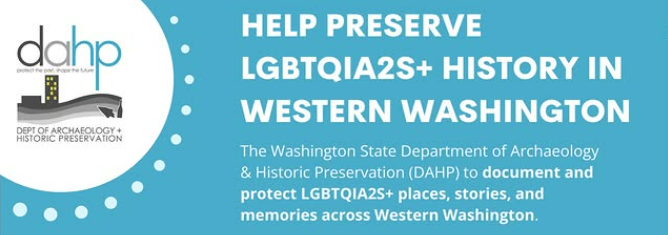 Help the Washington State Department of Archaeology and Historic Preservation (DAHP) to document and protect LGBTQIA2S+ places, stories, and memories across Western Washington. Many of these stories risk being lost - unless we preserve them together. Working under contract with the state, our project team, led by Susan Ferentinos, PhD, is seeking input from diverse LGBTQIA2S+ communities in the region about places that are important to their history.
Why it matters: LGBTQIA2S+ history is not always written in textbooks or marked by plaques. It is found in everyday places, like a former bar, a protest route, or the home of a local activist. By identifying and sharing these places, we can make sure our history is visible, valued, and preserved - for future generations to know we were here.
How you can help: Tell us:
- What places were important to you or your community?
- Why do they matter?
- What places can teach others about our shared history?
Led by the Washington State Department of Archaeology & Historic Preservation (DAHP), this project is taking steps to identify and record these important spaces. Sharing your story helps shape a growing public record of LGBTQIA2S+ presence, joy, and resistance in our region.
Your privacy matters. Any identifying details will only be shared if you’ve given us permission. You’re welcome to remain anonymous. We will not share your contact information without your consent.
What places were important to you or your community? Share your story or suggest a site by scanning the QR code on the flyer, or by visiting the link below! Want to learn more? Visit DAHP's LGBTQIA2S+ history page.
Washington State's 25th Annual Say it Out Loud Conference: Registration Open Now!
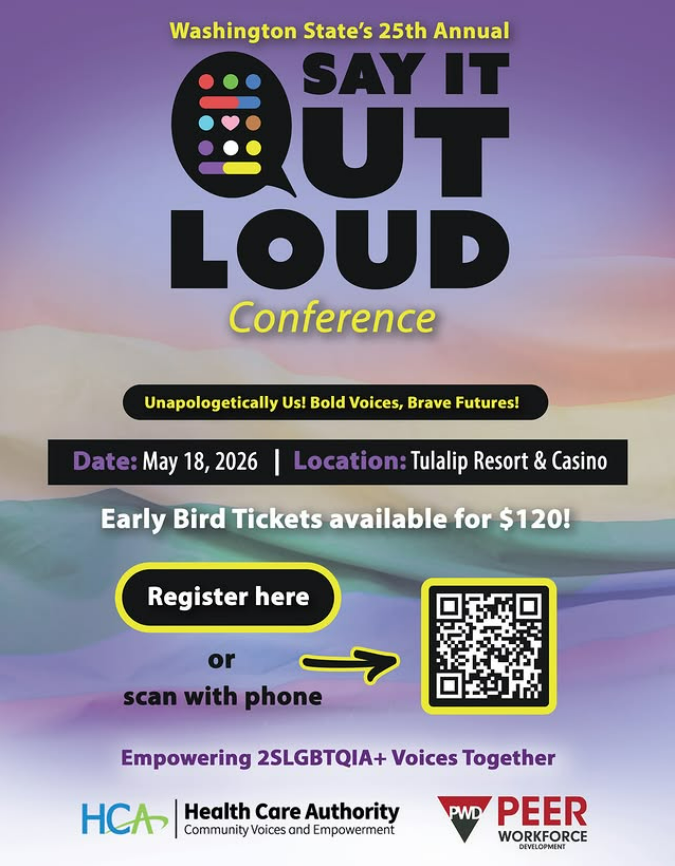 DATE: May 18th, 2026 | Location: Tulalip Resort & Casino
ABOUT THE CONFERENCE: For 25 years, the Say It Out Loud (SIOL) Conference has brought together behavioral health professionals, peer support specialists, community advocates, and individuals with lived experience to share knowledge, build connections, and strengthen services for 2SLGBTQIA+ people across Washington State. SIOL is grounded in the belief that culturally responsive, affirming care improves outcomes — and that the voices of those most impacted must be centered in that work. This is a space for learning, reflection, and practical tools you can take back to your workplace or community.
WHO SHOULD ATTEND: This conference is for you if you are:
-
A behavioral health or substance use professional seeking affirming, culturally responsive practices
-
A Certified Peer Support Specialist or peer professional whose lived experience is central to your work
-
A nonprofit, education, child welfare, or justice system professional serving 2SLGBTQIA+ communities
-
A community advocate, ally, or individual with lived experience who wants to strengthen systems of care
You do not need to be a clinician to belong here.
WHAT YOU’LL GAIN: By attending SIOL, you will leave with:
-
Practical tools you can apply immediately in your work or community
-
Increased confidence supporting 2SLGBTQIA+ individuals across systems
-
Connection with peers and professionals who understand the realities of this work
-
Continuing education credits (NAADAC-approved for applicable credentials)
-
Space to pause, reflect, and reconnect with the purpose behind your work
Early Bird Tickets are available for $120! Learn more about tickets, exhibitor tabling, and SOIL Conference Scholarship opportunities at Say It Out Loud Conference
Nomination Launch for QT+ Committee of the Washington State Minority & Justice Commission
The Minority and Justice Commission has launched the first standing sub-committee to a Supreme Court Commission developed to focus specifically on the experiences of Two Spirit, Lesbian, Gay, Bisexual, Transgender, Intersex, Asexual, and other (2SLGBTQIA+) users of the Washington State legal system, and particularly where 2SLGBTQIA+ identity and racial injustice uniquely impact access to justice.
ASK: We are seeking a wide range of community members to form the inaugural committee! In particular, we are seeking individuals with lived experience in Washington courts – for example, eviction proceedings, family law, or criminal matters – as well as court staff, lawyers, and judges. Please nominate individuals you think would be a good fit for membership on the committee, including yourself. Please use the form below.
QT+ Committee Membership – Nomination Form
What to expect after nomination: After completing the nomination form, the nominator and nominee will be contacted by a member of our steering committee. We will meet (virtually or in person) to get to know each other, and nominees may begin attending meetings right away.
Expectations of membership include:
- Regular attendance at virtual monthly meetings;
- Contributing to Committee projects, which may include community outreach, researching and proposing policy and court rule amendments, judicial education, artistic design and storytelling, and other skills;
- Periodic attendance at Minority and Justice Commission meetings; and
- Developing a Washington Supreme Court Symposium curriculum centered on uplifting the contributions of QTBIPOC people in the broader LGBTQIA+ rights movement.
The Minority and Justice Commission’s policies allow for compensation of committee members with lived experience in Washington’s courts. For reference, please consult the Washington State Office of Equity’s Community Members as Experts page and contact Molly Gough (molly.gough@courts.wa.gov) with any questions.
About the Committee: As a standing subcommittee of the Minority and Justice Commission, the QT+ Committee will focus specifically on information, data, and recommendations related to BIPOC members of the broader 2SLGBTQIA+ community and issues which lie at the intersection of racial justice and 2SLGBTQIA+ experiences.
Our goal is to establish and design a committee that amplifies the leadership of the people who appear most often in our courts, and particularly transgender and QTBIPOC people, with technical support and advocacy from lawyers and judges. In building this committee, we recognize that many community members impacted by the legal system have not had experience on committees like this, and we are striving to use the Queer communities' unique practices to build this space differently. In particular, we find that the experiences of 2SLGBTQIA+ people in criminal court, and then incarceration, are not well understood or amplified.
|
Black Women in the Public Sector Survey
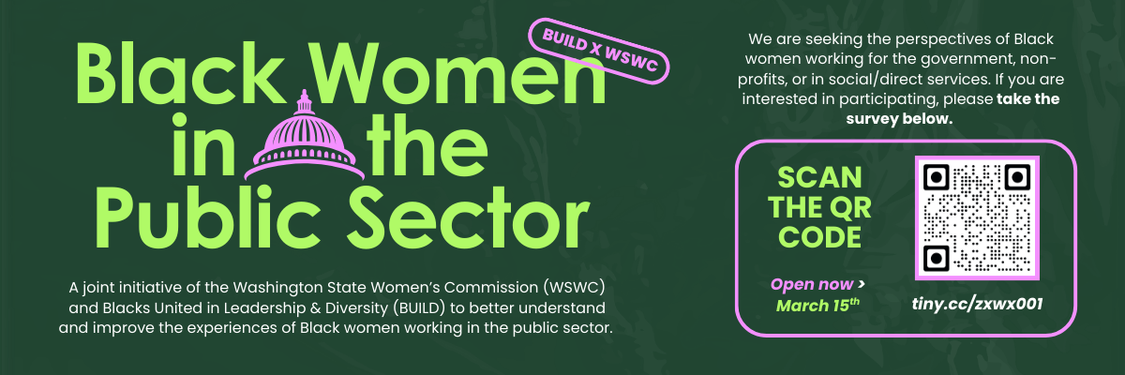 Black women are deeply represented in public sector jobs across government, nonprofits, and social and human services. Yet many navigate systems that fail to account for the “double tax” of race and gender, often leaving Black women under-supported.
The Washington State Women’s Commission (WSWC) and Blacks United in Leadership & Diversity (BUILD) are collecting stories from Black women working in the public sector to turn lived experience into practical guidance for change.
Take the survey by March 15: tiny.cc/zxwx001
 The Washington State LGBTQ Commission has compiled the following state agency statements that might relate to the 2SLGBTQIA community. These are agency statements that have been released since our last newsletter. To look at our previous newsletters, click here.
-
Washington State Governor's Office:
-
Washington State Attorney General's Office:
- In Ninth Circuit argument, Washington defends gender-affirming care against unconstitutional attacks, March 5
-
Washington-led coalition wins Ninth Circuit ruling for school mental health grants, Feb. 24
-
AG Brown co-leads amicus brief defending birthright citizenship at U.S. Supreme Court, Feb. 26
-
AG Brown names Patricio Marquez new head of Wing Luke Civil Rights Division, Feb. 27
-
Claims process open for farmworkers under Cornerstone settlement, March 2
-
O’Reilly will pay $5.6M for widespread denial of pregnancy and nursing accommodations to Washington workers, March 4
-
Washington secures court order to enforce ruling that requires FEMA to restore billions in disaster mitigation funding, March 6
-
AG Brown vows to continue case against Live Nation for illegally monopolizing live entertainment industry, March 9
-
AG Brown sues Department of Education for unlawful data demand to colleges and universities, March 11
-
Legislature passes AGO-request bill strengthening probate law to protect grieving families, March 11
-
Legislature passes AGO-request Immigrant Worker Protection Act, March 12
-
Washington State Office of Superintendent of Public Instruction:
-
Washington State Office of the Insurance Commissioner:
-
Washington State Secretary of State:
-
Washington State Department of Health:
-
Washington State Health Care Authority:
-
Washington State Commission on Asian Pacific American Affairs:
-
Washington State Women's Commission:
 March 2026
-
MONTH LONG
- March: Bisexual Health Awareness Month
- March: National Women's History Month
- March: Developmental Disabilities Awareness Month
- March: Gender Equality Month
-
WEEK LONG
- March 16 - March 20: 24th Annual National LGBTQ Health Awareness Week
-
DAYS
- March 8: International Women's Day
- March 10: National Women & Girls HIV/AIDS Awareness Day
- March 20: National Native HIV/AIDS Awareness Day
- March 25: International Day of Remembrance of the Victims of Slavery and the Transatlantic Slave Trade
- March 31: International Transgender Day of Visibility
|