 A Note from the Director - HIV/AIDS Awareness
I remember the first friend I had who had been diagnosed with AIDS in the early 1990's. We grew up singing in choir together. He was soft-spoken and endlessly kind. By the time my 10-year high school reunion happened in 2000, it was haunting how many of my classmates had died from AIDS. They did so in the shadows. We didn't know until they were already gone that they were sick. I often think about how suffocating the secrecy and shame must have been. There were so many things many of us were re-learning to do and navigate in rapid time in the earlier years of the HIV/AIDS crisis. Asking someone's status came with a new meaning and purpose. The fragmentation of being young and having a sense of invincibility while also facing one's mortality and relationships had lasting generational impacts.
Breaking through misinformation, bigoted rhetoric, and stigma still remains after forty-five years. The need for HIV prevention and education is as important as ever. This edition of our newsletter is dedicated to the lived experiences, voices, and advocacy surrounding HIV and AIDS. Fortunately, an HIV diagnosis is no longer considered a death sentence. But that does not mean those with HIV don't experience discrimination and barriers. Education is a critical tool to bodily autonomy and safety.
Please visit our Rainbow Resource Hub to learn more about HIV and AIDS resources in within the state, and through local, national and international organizations.
 Lisa Keating, Executive Director - Washington State LGBTQ Commission
Messages from our Commissioners - World AIDS Day
Monday, December 1st, 2025, was World AIDS Day. This is a day to acknowledge and raise awareness for HIV and AIDS and mourn those we have lost. While the federal government has announced that it will not be recognizing World AIDS Day for the first time since 1988, Washington state will not be backing down from continuing to honor and fight for those living with HIV. The Washington State LGBTQ Commission would like to share the thoughts of some of our commissioners on this occasion:
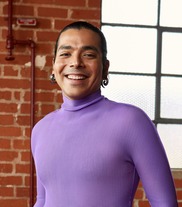
"This year is my 10th year living with HIV. When I was first diagnosed in Pasco, WA, my doctor refused to meet with me and shared my diagnosis over the phone. It took me 4 years to the break the silence that ensued. I wouldn't have made it without friends like Joaquin and Marco, leaders like Judith and Louie, and organizations like the Gran Varones, the Positive Women's Network, the Sero Project, and the US People Living with HIV Caucus. As, Funders Concerned about AIDS continues to document inequities in HIV/AIDS services across the globe, now is a time to remember that what the HIV Racial Justice movement teaches us, is that healing is where power meets love. When our communities turn on each other, we must remember that our greatest stength is not perfection, but our borderless interconnection.
- Commissioner Omni Romero - Tri-Cities, Washington
|
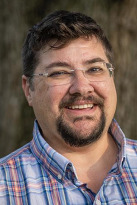
"Coming out as a queer person in the 90s I learned the need for solidarity around the HIV crisis. So much of that crisis was about intentional inaction and stigma, even as it was about a new pathogen. Solidarity between people across the LGBTQ community became a force for change, targeting the institutions that had abdicated their responsibilities. I will never forget standing on the steps of the Capitol with friends who needed assistance to stand up with us, and I marvel at that level of determination. Direct action against discrimination has saved thousands of lives by changing systems, and our ancestors who fought so hard for their lives have given us important liberatory tools, for which we should always be thankful. My work around HIV/AIDS these days is centered on sustained support and advocacy, but I often reflect on my early experiences as I learned so much from my friends, and they are always forefront in my mind with this work."
- Commissioner Everett Maroon, Co-Chair - Walla Walla, Washington
|
Honoring the Past, Protecting the Future: Our Continued Call to Action on HIV Prevention
A message from Washington State Department of Health Director Dennis Worsham
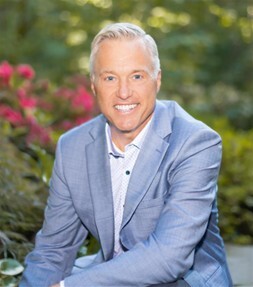
When I began my public health career in the early 1990s, the AIDS epidemic was still claiming lives at a heartbreaking pace. My role was to help educate, prevent disease, and create safe and welcoming spaces for gay and bisexual men—communities that were living with immense loss and, far too often, without the support they deserved. Every week, our team read aloud the names of those who had recently died. As a young gay man in my twenties, still finding my place in the world, those moments left a permanent imprint on my heart. They taught me not only the urgency of public health, but also the human responsibility to ensure people with lived experience are heard, valued, and central to the decisions that shape their health and wellbeing.
The early years of the epidemic also revealed just how devastating delayed government action can be. In the 1980s, fear, stigma, and inaction at all levels of government cost far too many lives. Yet even in that vacuum, communities stepped in with strength and compassion—creating education campaigns, care networks, and support systems that saved people long before policy did. Those grassroots efforts showed me the power of people caring for one another, and the profound impact of community wisdom in times of crisis.
Thankfully, we now live in a state that has learned from those hard lessons. We are fortunate to be part of a place where science is valued, where prevention is seen as an investment, and where government embraces its responsibility to build a culture of belonging and inclusion. Our approach today reflects a belief that public health works best when it listens, collaborates, and honors the dignity of everyone it serves.
|
For me, the opportunity to serve as Secretary—as an openly gay man—is a testament to our state’s commitment to inclusive government. It sends a message that representation matters, that leadership can and should reflect the diversity of the communities we serve, and that the mistakes of the past do not have to be repeated.
Still, I worry about the future of HIV/AIDS prevention under the current federal administration. Progress is never guaranteed, and we must remain vigilant against efforts that would weaken prevention programs, restrict access to care, or push marginalized communities back into the shadows. Today, we are also witnessing escalating political attacks on LGBTQI+ people—especially those who are trans and nonbinary—and these harms are even more acute for individuals who live at the intersections of multiple identities, including communities of color. These attacks do not occur in isolation; they directly threaten public health by fostering fear, discouraging people from seeking care, and undermining the very systems meant to keep people safe. The lessons of the AIDS crisis remind us that silence and stigma are dangerous—and that the cost of inaction is measured in lives.
Reflecting on the AIDS crisis is not only an act of remembrance; it is a call to continue the work with clarity and compassion. We honor those we lost by building systems that are inclusive, responsive, and rooted in science and humanity. And we move forward—together—preventing HIV, advancing equity, and ensuring that every person in every community feels seen, valued, and supported.
Director Dennis Worsham (DOH) previously served as the first Director of the Snohomish County Health Department – the same agency where he began his public health career in the 1990s as a HIV/STD/Hepatitis Program manager and health educator for the LGBTQ+ community during the height of the HIV/AIDS epidemic. Learn more about his leadership of the Department of Health here.
|
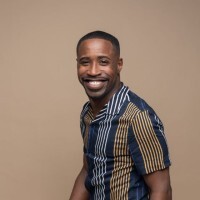
Q&A with Deaunte Damper, recent Ryan White Community Champion Award Winner
Earlier this year, community activist and media host Deaunte Damper was awarded the Ryan White Community Champion award by the Seattle Transitional Grant Area HIV Planning Council. Damper is a fierce and tireless advocate for HIV awareness and bringing LGBTQ-affirming education to marginalized communities throughout the city of Seattle. The Washington State LGBTQ Commission reached out to Damper to ask some questions about the award and his advocacy.
Q: Why is the Ryan White award meaningful to you and relevant today?
A: The Ryan White award is meaningful to me because it honors the courage, resilience, and humanity of people living with HIV. Ryan’s story shifted the national conversation at a time when stigma and fear were shaping policy more than compassion or science. Today, that legacy is still relevant. We are still fighting misinformation, stigma, inequity in care, and the systems that make living with HIV harder than it needs to be. This award reminds me that advocacy rooted in truth, dignity, and community still matters and that our lives, our voices, and our leadership must remain at the center of the work.
Q: As someone living with HIV, what barrier are most common and what are critical areas needing to be addressed?
A: I still see stigma, need for access, and affordability. People are afraid to test or disclose because they fear being judged or losing relationships, jobs, or housing. Many still don’t have consistent access to culturally competent care especially Black and Brown communities, LGBTQ+ communities, people with unstable housing, and those navigating the criminal legal system.
We cannot end the epidemic while ignoring the social conditions people are forced to navigate.
Q: Testing and prevention have been significantly impacted by the federal government. What role do you think the state and local health authorities have to fill the void created by federal actions and policies?
A: They need to fund and support community-based organizations that already have trust in the communities most impacted. They should expand mobile and community-led testing, restore access to free or low-cost PrEP and PEP, and rebuild outreach efforts that federal policies have weakened.
State and local leaders can also push back on stigma driven policies by centering science, equity, and the lived experiences of people with HIV. They can’t wait for the federal government to lead our prevention, care systems, and community health depends on local action now. While we’re at it, we need to be paying peer navigators way more money!
Q: For someone newly diagnosed with HIV, what are key things you would share with them?
A: You are not alone. There is an entire community ready to walk with you, support you, and remind you that you belong. You can live a long, full, beautiful life. With treatment, HIV is manageable, and you deserve a future filled with joy, purpose, and possibility. Give yourself grace. A diagnosis does not define your worth. You are still whole, still deserving, and still you. Ask for help. Whether it’s care navigation, mental health support, or simply someone who understands what you’re feeling, reaching out is strength, not weakness. You don’t have to carry this by yourself.
|
Living Memory: Growing Up in the Shadow and Light of the AIDS Crisis
by Sasha Hansen, Member of the Rainbow Alliance and Inclusion Network (RAIN)
RAIN, the Rainbow Alliance and Inclusion Network, is the LGBTQ+ Business Resource Group for Washington state employees. RAIN is sponsored by the LGBTQ Commission and Office of Financial Management. Membership is open to LGBTQ+ and ally employees in all Washington state agencies and institutions of higher education. For more information on RAIN, visit their website.
I don’t really remember a time when I didn’t know what AIDS was. I was born in 1991, right when drug cocktails were starting to work. My mother was a hospice social worker who ran a life support group for men with AIDS from the time I was three or four until I was in high school. We lived outside San Francisco, in Sonoma County, where there was good access to care. I grew up going to the hospice house where she worked. I have memories of being very small—five, six, seven—playing in the therapy sand table while she ran group. My parents talked openly about everything. My mom always told me what things were: the oxygen tubes, the IVs, the mountains of pills everywhere, the Kaposi sarcoma lesions. It was just part of life for me.
My father used to say I was the “doll” of the life support group. I remember the hospice Christmas parties, the barbecues in our backyard where the whole group came over. Looking back, the boundaries were definitely a little blurry, but that was my world. I asked my mom a few years ago how many of the people I knew as a little kid passed away, because I didn’t remember anyone dying. She told me that in her core group of eight or nine men, none of them died. Not one. Some of them were at my high school graduation. There were a lot of near misses. I remember overhearing my mom on the phone talking to partners from hospital rooms, saying someone was really sick, maybe dying. But the men in her group lived.
|
I came out when I was 13 or 14, near the end of my mom’s time in hospice work. I’d always had queer adults and elders in my life, with the whole gamut of identities. My queer roots are in my bedrock because it’s always been there. Even if I’d turned out straight, I’d still have queer bricks in my foundation. I never had the experience of feeling like I was the only queer person on earth. There’s a deep richness in that, a connection to our cultural history that has always given me a strong sense of self.
There’s one memory that sticks with me. I was probably 14 or 15, in a used bookstore, when I picked up Borrowed Time: An AIDS Memoir by Paul Monette. I opened it and read the first line: “I don’t know if I’ll live to finish this.” And something just… rushed back. This feeling in my body of loving people who were literally living on borrowed time. It lives in my bones.
As an adult, I’ve consumed everything I can about the AIDS crisis. There’s something so familiar and undeniable about it. I’ve learned how much of the political change of that era came from us: from queer people refusing to be erased. It was one of the most successful grassroots transformations in government policy ever. The president at the time wouldn’t even say the word “AIDS,” and still, our community organized, demanded research, demanded care, demanded to live. We did that. And we could do it again.
The emotional lessons have stayed with me, too. People lived longer when they had community caring for them. Chosen family wasn’t optional, it was survival. The programs, the pill redistribution networks, the rides to doctor appointments, the funeral care, the fights with insurance companies…none of that was funded by the government. It was funded by people’s savings accounts, their retirement funds, their time, their bodies, their grief, their love. Queer family is the ultimate support system that can’t be gutted by any politician. That still feels true today.
PrEP is something I think about a lot. It’s not just a medication. It’s the ability to relax. It brings back a kind of presence that we lost. Before PrEP, even when HIV wasn’t a death sentence anymore, you always had to think about it. The question was always in the back of your mind: Could this be the time? PrEP lets people be in their bodies again. It lets people follow their instincts and actually connect. Without it, that vigilance comes back.
And it’s bigger than our community now. People still think of AIDS as a “gay disease,” even though the demographics have shifted dramatically. Low-income Black communities and women are deeply affected. The public hasn’t updated its understanding at all. We were so successful in fighting for ourselves that the epidemic moved into other communities that are still being left in the dark. It’s devastating.
Some people only see the tragedy of the AIDS crisis. And it is a deep, unfathomable tragedy. But there were beautiful things I learned from being in those rooms, about life, identity, love, and what really matters. Those lessons shape me every day. I think a lot about how many social support systems are failing right now, how many government services are being gutted. And in that landscape, the lessons from that time feel even more urgent. Queer family is the thing that endures. The thing nobody can take away. The thing that saves us.
 We are proud to feature articles written by our LGBTQ Youth Advisory Councilmembers. Want to learn more about the council? Head to www.lgbtq.wa.gov/YAC!
Why the "L" Comes First - Lesbian Activism in the HIV/AIDS Movement
Ling Lomanog (They/Them/She) - Kitsap County
This month is AIDS & HIV awareness month. This year, the LGBTQ commission wants to bring attention to how the AIDS epidemic brought the LGBTQ+ community closer together and why the L is first.
Back in the 1980’s when the AIDS epidemic had its first outbreak. Many people were in fear of gay men because of the stigma that gay men were directly related to AIDS, even being called GIRD (gay-related immune deficiency) for a short period of time. Because of this, many gay men didn't get the care that they needed and were often refused or neglected by doctors to help them. In 1982, at the height of this, women stood up to help, specifically lesbian women.
In 1983, “men who have sex with men” were banned from donating blood. And it was lesbian women who stepped up and ran blood drives to help and support HIV men who needed blood transfusions. Lesbian nurses also volunteered their time to help gay men with HIV since many doctors and nurses refused to help due to fear. And it was Lesbians who held workshops and made community art to spread awareness of HIV and AIDS.
This act of bravery and selflessness didn't go unrecognized in the LGBTQ community. Their activism not only helped gay men but also helped break the stigma that was around AIDS and HIV. And give more clarity on what HIV and AIDS is and is not. It was because of their activism, leadership, and care that the acronym was changed. From being called GLBT to the acronym of LGBT that we know today.
In today's day and age, this type of solidarity is still needed today within the queer community.
Sources:
-
https://www.youthco.org/lesbian_solidarity_during_the_aids_epidemic
- https://onlineexhibits.library.yale.edu/s/we-are-everywhere/page/lesbian-aids-activism#:~:text=In%201983%2C%20two%20years%20after,of%20New%20York%20City%20buses
-
https://uisobserver.com/uncategorized/2024/04/29/why-does-the-l-in-lgbt-go-first/
 Resources for HIV/AIDS - Rainbow Resource Hub
 In our Rainbow Resource Hub, we have created a page dedicated to HIV/AIDS. This page features links to resources like guides and tools for those living with HIV, studies and data around HIV/AIDS, and organizations nationally and throughout Washington that provide care and/or advocate for the fight against HIV and AIDS. Visit lgbtq.wa.gov/hivaids to learn more.
Some local organizations and agencies we would like to highlight:
-
The AMP: AIDS Memorial Pathway: Public art that recognizes the AIDS crisis in Seattle and throughout Washington state
-
Benton-Franklin Health District: HIV case management serving Benton and Franklin Counties
-
Blue Mountain Heart to Heart: HIV case management serving Walla Walla and Asotin Counties
-
Cascade AIDS Project: HIV case management serving Clark, Cowlitz, Skamania, and Wahkiakum Counties
-
Coastal Community Action Program: HIV case management serving Grays Harbor and Pacific Counties
-
Confluence Health: HIV case management serving Chelan, Douglas, Grant, and Okanogan Counties
-
Entre Hermanos - Seattle's Latino LGBTQ Organization: HIV case management serving Latino populations in King County
-
Harborview Medical Center - Madison Clinic: HIV case management serving King County
-
Kitsap Public Health District: HIV case management serving Kitsap, Jefferson, Clallam, and North Mason Counties
-
Lifelong: HIV case management serving King, Snohomish, Island, Skagit, Whatcom, and San Juan counties
- People of Color Against AIDS Network (POCAAN): HIV case management serving marginalized communities in King County
-
DOH Medical Case Management Services: HIV case management serving Pierce, Mason, Lewis, and Thurston counties.
-
Spokane Regional Health District: HIV case management serving Spokane, Ferry, Pend O'reille, Stevens, Whitman, Asotin, Lincoln, Adams, Okanogan, and Garfield Counties
-
Spokane AIDS Network (SAN): Organization providing support to those living with HIV/AIDS in Spokane, including a food pantry, testing, prevention, community events and more
-
Yakima Valley Farm Workers/New Hope Clinic: HIV case management serving Yakima, Klickitat, and Kittitas Counties
-
UW Center for AIDS and STD: UW School of Medicine Center for AIDS and STD research, support, and education
January Public Meeting Announcement
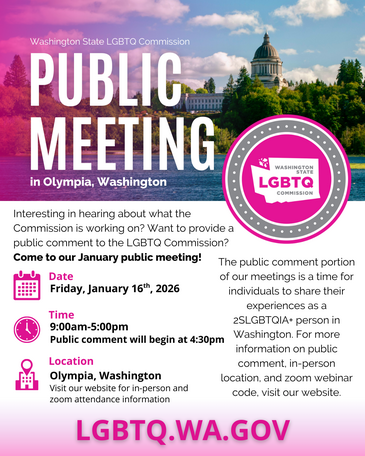
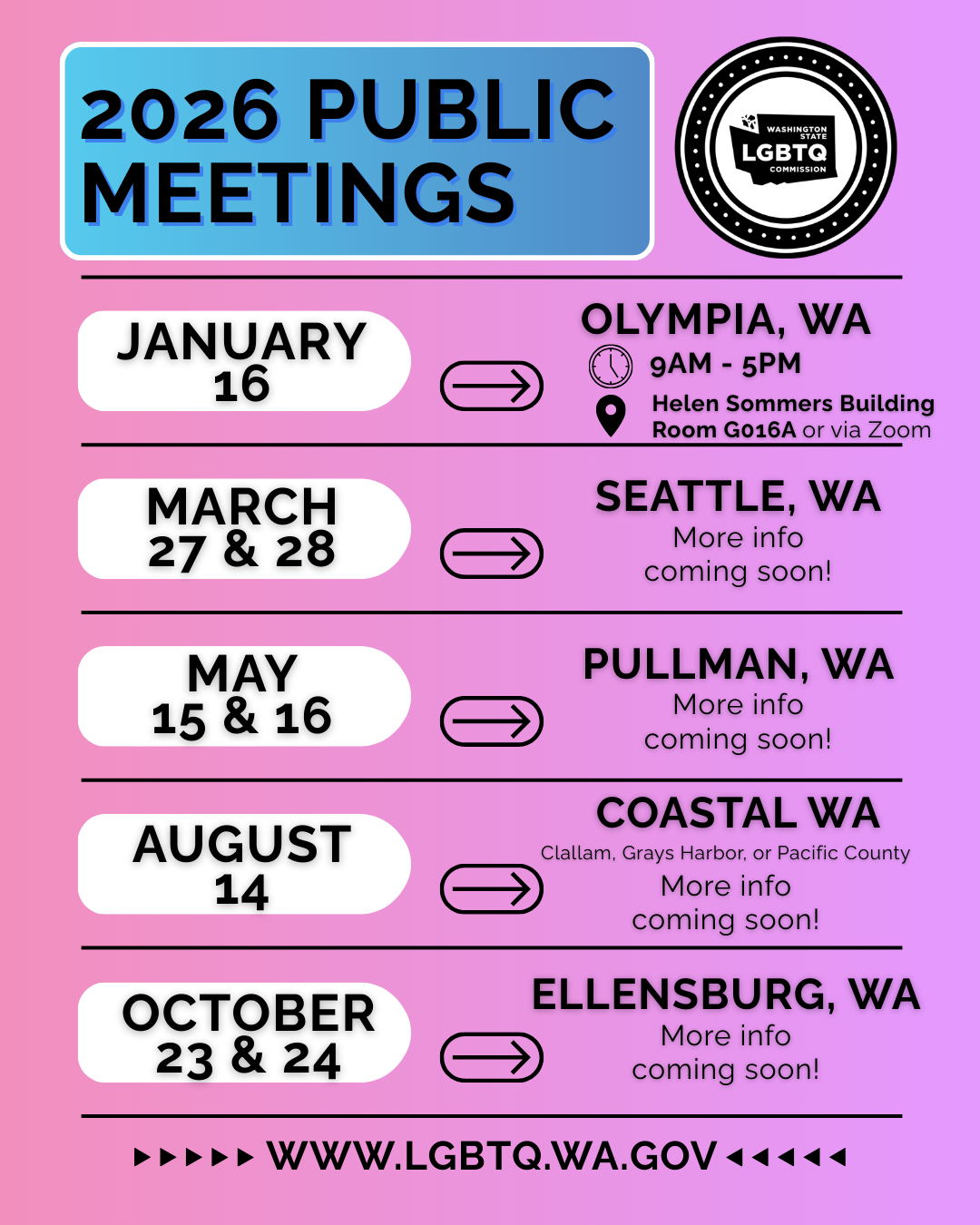
Interested in hearing about what the LGBTQ Commission is working on? Want to provide a public comment to the LGBTQ Commission? Come to our January public meeting in Olympia, Washington!
On Friday, January 16th, from 9:00AM to 5:00PM, the Washington State LGBTQ Commission will convene for their first public meeting of 2026. We hope you are able to find some time join us to hear more about Commission work, and we highly encourage 2SLGBTQIA+ individuals around the state to tune in and share public comment with us, in-person or virtually. Public comment begins at 4:30pm, but the public is always welcome to observe any portion of the meeting. Visit our website for in-person location details.
There will be a Zoom option for those looking to participate virtually. Zoom link will be live here on our website prior to the meeting. An agenda will be uploaded no later than 24 hours prior to the start of the meeting.
We hope to see you there!
|
 WDVA LGBTQ+ Veterans Program Workshop Series
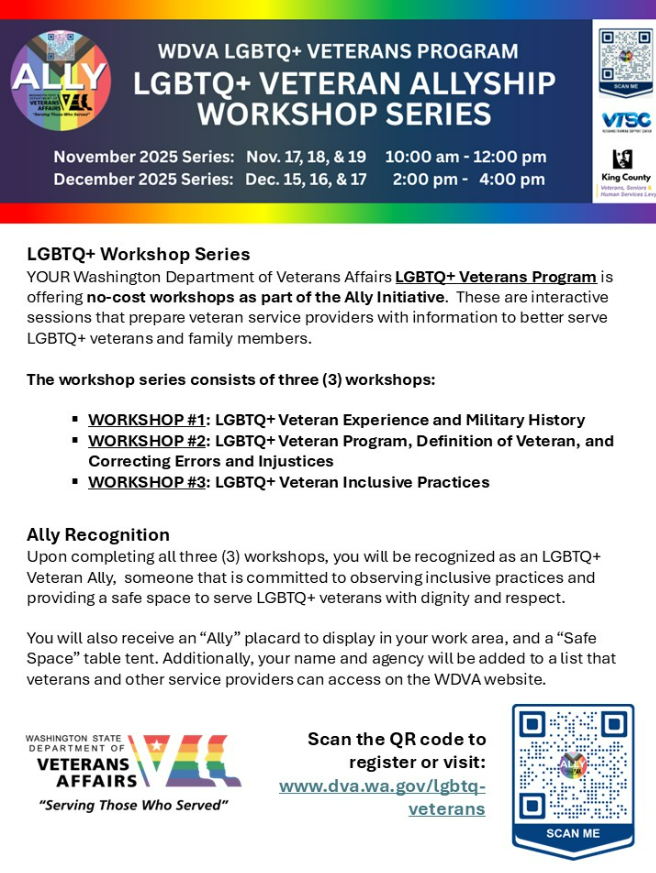 YOUR Washington Department of Veterans Affairs LGBTQ+ Veterans Program is offering no-cost workshops as part of the Ally Initiative. These are interactive sessions that prepare veteran service providers with information to better serve LGBTQ+ veterans and family members.
Register: www.dva.wa.gov/lgbtq-veterans
The workshop series consists of three (3) workshops:
WORKSHOP #1: LGBTQ+ Veteran Experience and Military History
WORKSHOP #2: LGBTQ+ Veteran Program, Definition of Veteran, and Correcting Errors and Injustices
WORKSHOP #3: LGBTQ+ Veteran Inclusive Practices
Department of Commerce Nonprofit Grant Workshop

The Washington State Department of Commerce will host a workshop for nonprofit organizations in December. This workshop is specifically for nonprofit organizations that are not familiar with Commerce contracting.
Attendees will learn from Commerce’s Chief Compliance and Contract Officer what it is like to contract with Commerce. Attendees will also learn how to evaluate their readiness for capital projects by using a Capital Project Assessment Tool.
Two identical sessions will be offered in December:
• 12-1 p.m. Dec. 8 on Zoom (Register)
• 6-7 p.m. Dec. 10 on Zoom (Register)
Additional workshops for different audiences, such as local governments and tribes, are being planned for 2026.
Download the Capital Project Assessment Tool for Nonprofits to prepare for these workshops.
For more information, contact Community.Engagement@commerce.wa.gov.
Commerce’s regional community engagement specialists are valuable resources for your community.
Note: Information provided to the Department of Commerce is subject to public disclosure under the state’s Public Records Act.
|
Take the Age- And Dementia-Friendly Washington Needs Assessment Survey
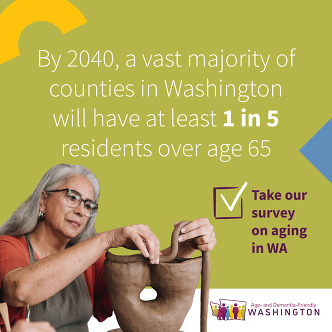
Washington State is taking meaningful steps to become more age- and dementia-friendly — and we need your help to ensure every voice is heard.
As part of Washington’s participation in the AARP Network of Age-Friendly States and Communities and Dementia-Friendly America, we’re gathering input from residents across the state. Your insights will guide how we plan for more inclusive, supportive communities where people of all ages can thrive.
Here’s how you can help:
- Share the community survey with your networks
- Use our ready-to-go social media toolkit and flyer
- Encourage community members, caregivers, and older adults to weigh in
Access the survey here: https://doh.wa.gov/age-and-dementia-friendly-washington-survey
Together, we can make Washington a place where everyone can age with dignity, purpose, and connection.
|
Washington State Civic Education Legislative Page Program - Applications Open!
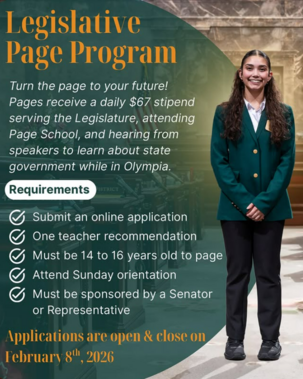
The Washington State Legislative Page Program 2026 Session Applications are open!
The Washington State Legislature has one of the finest page programs in the country. Each year, hundreds of students from across Washington have the opportunity to take part in the legislative process and watch the Legislature and other branches of state government in action.
To learn about the requirements and to apply to the Page Program, head to the Civic Education website. Page Program
|
 The Washington State LGBTQ Commission has compiled the following state agency statements that might relate to the 2SLGBTQIA community. These are agency statements that have been released since our last newsletter. To look at our previous newsletters, click here.
-
Washington State LGBTQ Commission
-
Washington State Governor's Office
-
Governor Ferguson, Ballmer Group announce new grant to fund early learning for 10,000 Washington kids, Nov. 12
-
Governor Ferguson statement on November revenue forecast, Nov. 18
-
Governor Ferguson appoints Mary Crandall to Skagit County Superior Court, Nov. 18
-
Governor Ferguson appoints Brian Bennett as Director of Washington’s Lottery, Nov. 18
-
Governor Ferguson issues emergency proclamation addressing Olympic Pipeline shutdown, fuel delivery impacts at Seattle-Tacoma International Airport, Nov. 19
-
Governor Ferguson appoints Tyson R. Hill to Court of Appeals, Division III, Nov. 19
-
Governor Ferguson appoints Spokane native Colleen Melody to Washington Supreme Court, Nov. 24
-
Governor Ferguson approves Carriger Solar project in Klickitat County, Dec. 4
-
Washington State Attorney General's Office
- AG Brown sues over HUD policy that would put more people into homelessness, Nov 25
- AG Brown secures order blocking attempt to defund Planned Parenthood, other health centers, Dec. 3
-
El procurador general Nick Brown lanza la Unidad de Derechos del Trabajador para aplicar medidas de protección y luchar contra la explotación, Nov. 13
- AG Nick Brown launches Worker Rights Unit to enforce protections, fight exploitation, Nov. 13
-
Bonaventure will pay $7 million to improve services at 10 long-term care facilities in WA, Nov. 19
-
Washington wins lawsuit to protect libraries, museums, and other small agency programs, Nov. 21
-
AG Brown issues statement on the appointment of Colleen Melody to the Washington State Supreme Court, Nov. 24
-
Washington sues to block abrupt and confusing attempt to illegally restrict SNAP eligibility, Nov. 26
-
Protecting Washingtonians from scams and charity fraud this giving season, Nov. 30
-
Protegiendo a los residentes de Washington de estafas y fraude benéfico en esta temporada de donaciones, Nov. 30
-
Consumer Alert: Watch out for potential scam charities requesting donations via tap-to-pay, Dec. 2
-
Washington’s AI Task Force delivers policy recommendations to promote innovation and protect individual rights, Dec. 2
-
Washington State Superintendent of Public Instruction
-
Washington State Secretary of State
-
Washington State Office of the Insurance Commission
-
Office of the Washington State Auditor
-
Washington State Department of Health
-
Washington State Health Care Authority
 December 2025
-
MONTH-LONG
- December: AIDS Awareness Month
- December: Universal Human Rights Month
-
DAYS
- December 1st: World AIDS Day
- December 2nd: International Day for the Abolition of Slavery
- December 3rd: International Day of Persons with Disabilities
- December 8th: Pansexual Pride Day
- December 10th: International Human Rights Day
- December 14th: HIV Cure Research Day
|