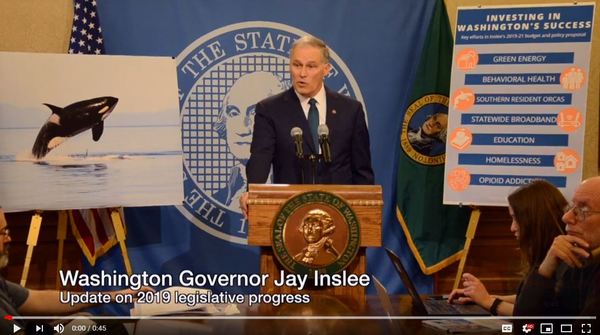
 Tribal leaders joined Gov. Jay Inslee at the Capitol as he signed the Native American voting rights act bill into law Thursday afternoon. The new law allows tribal members to request voter registration support and makes it easier for tribal members to register using their tribal ID card and a non-traditional address. The law also requires county officials to provide a voting drop box if a tribe requests one.
"Our democracy is strongest when more people are able to participate, so I’m proud to see our state once again taking action to shatter the barriers that keep Washingtonians from participating fully in our elections," Inslee said.
Inslee then signed three other bills. One moves our state's presidential primary from May to March. The bill has long been sought by Washington’s Secretary of State to help strengthen the influence of Washingtonians in the elections process.
Another bill updates tax requirements for out-of-state businesses as a result of the U.S. Supreme Court Case South Dakota v. Wayfair, Inc. The bill will also simplify certain requirements for taxpayers and reduce administrative burdens for the Washington State Department of Revenue.
The final bill funds a bump stock buyback program. After banning bump stock devices in 2018, legislators created a program that would allow bump stock owners to exchange their bump stock for $150. A federal ban on bump stocks goes into effect soon, so passage of this bill ensures the Washington State Patrol can immediately launch the program. Washington residents can exchange up to five bump stocks to the Washington State Patrol, Bureau of Alcohol, Tobacco, Firearms and Explosives or local law enforcement. It operates on a first-come, first-served basis. Information about the program is available at www.wsp.wa.gov/buyback.
READ:
WATCH: KING 5 - Washington state will buy rifle bump stocks from residents for $150
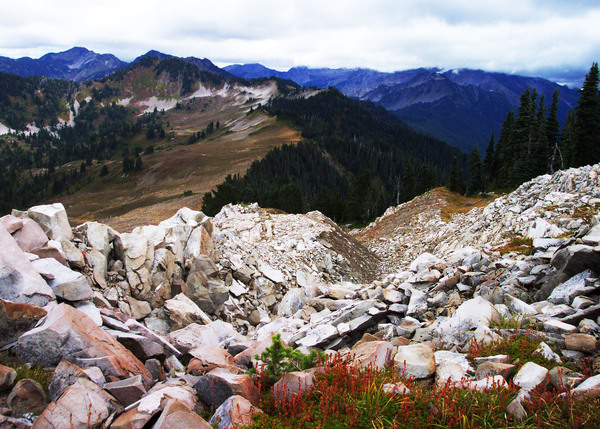 If you hike, hunt or fish, your Washington playground just got cooler.
A national, bipartisan environmental package that expands protections for public lands and supports outdoor projects across Washington was signed into law Tuesday. The John Dingell Jr. Conservation, Management, and Recreation Act, co-led by Sen. Maria Cantwell includes specific wins for Washington public lands.
The act reauthorizes the Land and Water Conservation Fund, which has supported projects at popular sites like Olympic National Park, Lake Chelan, Gas Works Park, and Riverside State Park.
It also protects the iconic Methow Valley from destructive mining, improves irrigation and salmon recovery in the Yakima River Basin, and recognizes our shared heritage by creating designated heritage areas.
Read the rest of the story on the governor's Medium page. You can also read a Medium post from a Dept. of Ecology employee about their reflections on the Yakima River Basin.
READ:
Tri-City Herald - Monumental lands package shows Trump, Dems and GOP can get along
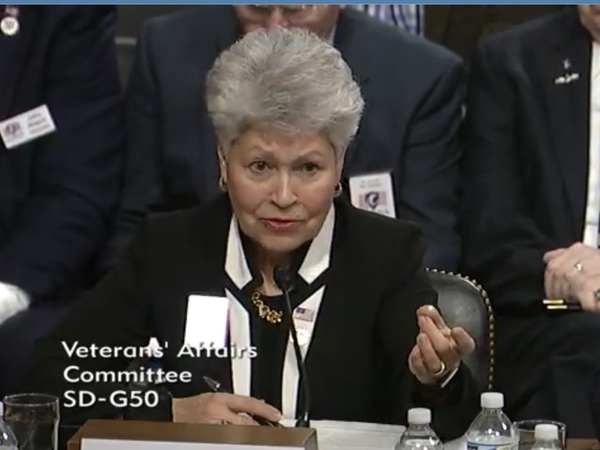 Several Washington state cabinet members testified in in the U.S. Senate this week to highlight the state’s work on a range of issues and call for expanded support and coordination with federal partners.
Lourdes E. 'Alfie' Alvarado-Ramos, Department of Veteran Affairs director testified before a joint hearing of the House and Senate Veterans’ Affairs Committees. As president of the National Association of State Directors of Veterans Affairs, she shared the organization's priorities such as suicide prevention, women veterans and overall veteran treatment. She also offered the continued commitment of NASDVA members to work as partners with the U.S. Department of Veterans Affairs to serve our nation’s 19 million veterans.
Michael P. Meotti, executive director of the Washington Student Achievement Council, testified before the U.S. Senate Committee on Health, Education, Labor and Pensions Tuesday morning. The committee explored the challenges of FAFSA completion, focusing specifically on needed improvements to FAFSA verification.
“It’s not really a fair partnership to ask students and schools to compensate for a broken verification system," Meotti said.
In addition to the call for an improved FAFSA verification system, Meotti also advocated for better connections between students and the variety of available financial supports; increased investments in and access to federal financial aid programs; and enhanced federal investments to the states for the purposes of higher education and FAFSA completion. You can watch a video of hearing here.
Roger Millar, Washington State Department of Transportation secretary also testified at a D.C. hearing this week. The point of the hearing was to address he demands of maintaining a 21st century transportation infrastructure system while managing rapid technological advances, workforce challenges, demographic changes, environmental instability and economic uncertainty. Millar said federal programs should support DOT agencies that take innovative approaches to improve mobility, ensure economic growth and enhance quality of life, saying Washington already leads in these efforts.
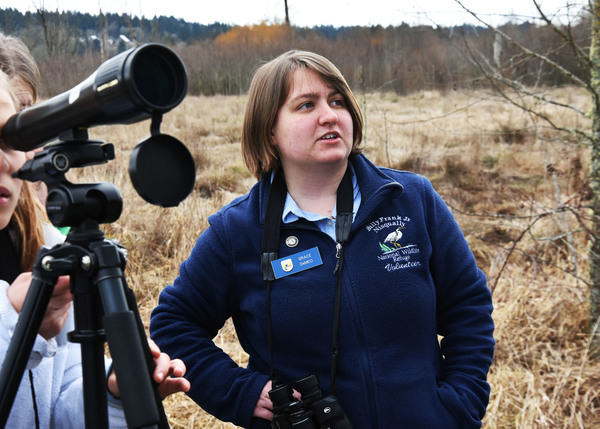 Grace DeMeo easily recalls her first connection with the natural world. As a child, she grabbed a bluegill out of a pond and walked back to her house — fish in hand — to show off to her mom.
“I remember being so enthralled by this fish that I felt I had to take it back and share it with someone,” she said. “It’s just always been something I’ve been excited about.”
Her mom said DeMeo would stare at the pond for hours, watching life thrive in and around it. Not much has changed for the 25-year-old, who earned a bachelor’s degree in wildlife management from Humboldt State University, about wanting to be in nature. Since last September, she has volunteered full-time as a Washington Service Corps member at the Billy Frank Jr. Nisqually National Wildlife Refuge in Washington. Before volunteering there, the Oregon native also volunteered with AmeriCorps in West Virginia.
Read the rest of the story on the governor's Medium page.
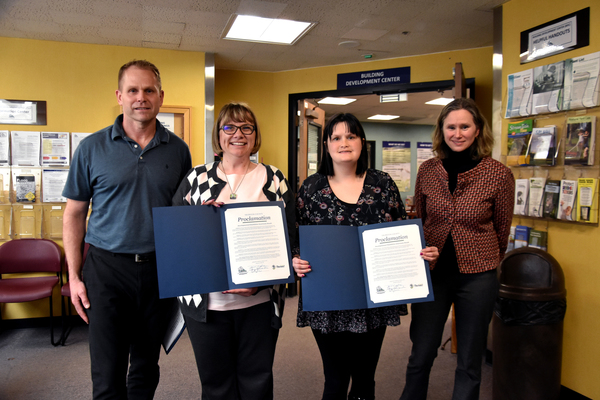 Dozens of people gathered in Olympia earlier this week to celebrate the important contributions and infinite potential of people with disabilities.
The governor's proclamation declared March 2019 as Developmental Disabilities Awareness Month in Washington. The designation is meant to honor and celebrate people with developmental disabilities and the programs available that advocate for and improve the quality of life for these individuals.
Two people with developmental disabilities spoke about the importance of having employment. Heather Harper, second from left in the above photo, has worked in the governor’s office for more than five years as an office assistant.
More than 83,000 adults and children in Washington have developmental disabilities.
The legislative session hit the halfway mark this week, and with that comes the House of Origin cutoff. This means most bills need to have passed out of at least one chamber in order to keep moving forward. Gov. Inslee thanked legislators this week for moving quickly on several significant priorities. Inslee proposed several ambitious proposals related to orcas, climate change, behavioral health, broadband, education and health care and all of them are advancing steadily through the Legislature.
A behavioral health bill that would create an unprecedented, first-in-the-nation partnership for a University of Washington teaching hospital passed the House with a 95-0 vote, showing overwhelming bipartisan support. It now moves into the Senate. Three other governor request behavioral health bills continue moving forward with support from both sides of the aisle. The bills would transform the mental health system in the state. It would put more emphasis on community-based treatment and resources for people with mental illness and substance use disorders.
The House passed a clean fuel standard that would provide cleaner air, reduce carbon pollution and grow jobs for Washingtonians. The bill is part of Inslee’s clean energy proposal to decrease emissions by transitioning to clean electricity, clean and ultra-energy efficient buildings and clean transportation. High school students from Methow Valley visited the Capitol to show support for the 100 percent clean energy bill, which is now in the House after passing the Senate.
The Senate also passed the health care public option bill with bipartisan support on Wednesday. This bill would make high-quality, affordable health coverage more accessible to all Washingtonians.
Three hearings are scheduled next week for orca and salmon recovery issues, which include oil transportation safety, chinook abundance and minimizing vessel noise. Finally, College Promise, the governor's proposal to offer free college tuition to qualified students, passed the Senate over the weekend and is now in the House for consideration. The Senate amendment would guarantee financial aid to students whose family incomes are at or below $28,325 per year for a family of four.
And for readers who want to learn more about the bill-making process, Washington State Archives tweeted a helpful Throwback Thursday graphic that breaks it down.
.
|