|
Reading on a smartphone? The email displays better when you hold your phone sideways.
Progress on providing safe water
Well testing
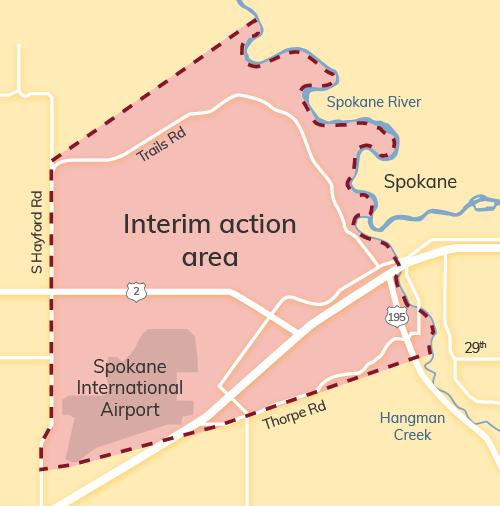
The Spokane Airport has tested 87 private wells. Results are back on 78 wells, 69 of which tested above PFAS drinking water standards.
An estimated 813 properties remain to be tested. The responsible parties are required to schedule all testing by the end of the year.
Please sign up for testing and respond when GSI Environmental Inc. contacts you to schedule. You can leave blank any information you don't know on the well survey.
Questions: Email gegwater@spokaneairports.net
|
City continues to distribute pitcher and countertop filters
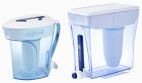
The City of Spokane is providing pitcher and countertop filters certified to remove PFAS and replacement cartridges, including cartridges for the 221 under-sink filters the Department of Health provided. Under-sink filter cartridges should be replaced every 1,000 gallons of water or every 12 months, whichever comes first — but many manufacturers and guides recommend replacing them every 4–5 months for typical household use.
204 residents have picked up pitcher and countertop filters. The filters and replacement cartridges can be picked up at:
County installed 7 wellhead treatment systems; 14 in progress
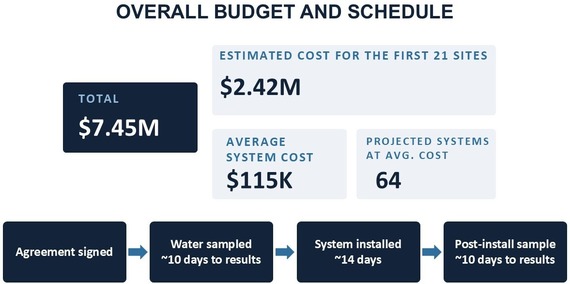
As of Nov. 6, Spokane County installed 7 wellhead treatment systems across the West Plains, with 14 more in progress. The average cost is about $115,000 per system, which combines actual costs from the completed installs with current estimates for the remaining sites. The chart below is courtesy of the county and provides an overview of the budget and installation process and schedule.
|
Investigation plans
Fourth draft of long-term plan to provide safe water due Jan. 8

On Nov. 2, after meeting with the responsible parties on Oct. 30, we submitted our third round of comments to the Spokane Airport, City of Spokane, and Spokane County on the draft long-term plan to provide safe water. Our comments included the need to commit to a schedule to complete the work. The long-term plan should detail how and when the responsible parties will supply wellhead treatment systems to people with contaminated private wells or connect them to city water where possible. The work will include maintaining the treatment systems and periodically testing private wells and filtered water.
The State of Washington comes to the cleanup with available or potentially available funds, specifically, $7.495 million from the Department of Commerce to install wellhead treatment systems, $170,000 from Ecology for administrative costs associated with wellhead treatment installations, and a potential $23.68-million cleanup grant from Ecology to support the work to provide safe water. Producing a plan we can approve is important for providing long-term relief to our community and necessary for Ecology and the responsible parties to leverage these and future funds. The Legislature will not fund grant applications without a schedule to spend the money.
During our meeting on Oct. 30, the city and county requested an extension on the 30 days usually given to incorporate our comments. The updated plan is due Jan. 8. We will hold a 60-day public comment period and public meeting for the long-term interim action work plan.
Ecology provided comments on investigation work plan
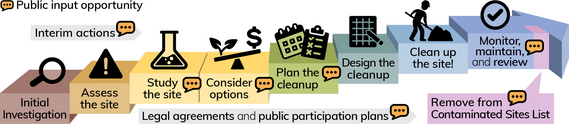
On Nov. 8, we provided comments and requested revisions to the draft remedial investigation and feasibility study work plan. The remedial investigation will determine the full extent of PFAS and other contamination in soil and groundwater, and the feasibility study will assess cleanup options. These are the "study the site" and "consider options" steps in the cleanup process below. We required the short- and long-term interim actions in Feb. to provide safe drinking water while the larger investigation continues.
|
 Welcoming Kristin Beck as Ecology's lead site manager
Thank you, Jeremy Schmidt, for your contributions!
As of Oct. 15, Kristin Beck took over as lead site manager for the Spokane Airport PFAS cleanup. She has been providing hydrogeological support on the the project since 2023. Bri Brinkman will continue to provide environmental engineering support and general PFAS expertise on the project.
We will miss Jeremy, as he moves on to managing petroleum cleanups with the Pollution Liability Insurance Agency. We appreciate all his hard work to progress cleanup and provide safe water to people with contaminated private wells.
Dept. of Health to provide results & advice to volunteers
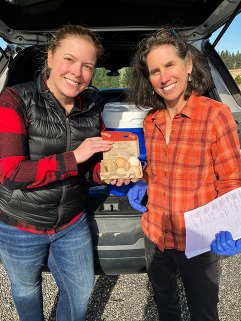
Thank you to the West Plains families who volunteered their home-raised eggs, chicken meat, and garden produce for PFAS testing this Oct. Barb Morrissey and Claire Nitsche with DOH collected 27 samples and are eager to see if PFAS levels in eggs and meat went down when families followed their advice to lower PFAS in their foods.
Additionally, we contracted with a lab running a new lab method, which is optimized for food testing. If this new method works well at detecting PFAS in fruits and vegetables, we can offer more garden testing in the future (pending funding). Our ultimate goal is to learn when water and soil levels of PFAS are high enough to be unsafe for growing home-raised fruit and vegetables, and what people can do to make their home-raised veggies safe to eat again.
Questions? Contact Barb Morrissey at Barbara.morrissey@doh.wa.gov or 564-999-3485.
|
Enroll in the West Plains PFAS filter study
|
The West Plains Water Coalition and the University of Colorado Boulder are studying how effectively home water filters are removing PFAS from private wells.
30 slots are still available to receive free water sampling to test your PFAS filter's performance. Enroll now.
Questions? Email filters@westplainswater.org.
|
|
 |
Read the Fall 2026 newsletter
Fairchild published a newsletter updating people in their sampling area about investigation progress, upcoming contracts to support the investigation and provide filter systems, and plans to expand their sampling area. Past newsletters and their recent outreach flyer about qualifying for a filter system can be found on the bottom left of their Restoration webpage under "Newsletters and Handouts."
Attend the next Restoration Advisory Board meeting
The Restoration Advisory Board includes community members, Tribes, college and university staff, local government officials, Ecology, and EPA. The board discusses the PFAS investigation, along with other cleanup projects at the base.
Combined civics and ecology project-based course focuses on PFAS in the West Plains
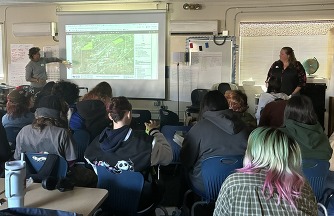
On Oct. 14, Ecology's Kristin Beck, Bri Brinkman, and Erika Beresovoy were joined by Spokane County's Erik Messenger to talk with about 30 students at Three Springs High School in Cheney. Instructors Drake Haren and Hayley Bauer invited us to their ecology/civics class to help students understand and discuss PFAS contamination in the West Plains.
Because the school is in the West Plains, students recalled when Fairchild Air Force Base started providing bottled water for the City of Airway Heights, and some have been personally affected. They asked great questions about health effects, how cleanups are funded, potential solutions, and what our jobs are like. Final projects were scientific portfolios and maps detailing PFAS in the West Plains and a charter assessing regulatory and community involvement in the issue, including public policy proposals students defended at a town hall meeting in the classroom.
We enjoyed meeting the students and thank Drake and Hayley for the invitation! If you're interested in a classroom or community group presentation, please contact Erika at WestPlainsPFAS@ecy.wa.gov or 509-385-2290.
|
New to the issue?
Visit our PFAS in West Plains private wells webpages for an overview. Ecology is always available to answer questions as well! Please reach out to us anytime with your questions, comments, or ideas about Spokane Airport PFAS cleanup or public involvement.
Contacts
|