|
In this month’s issue we bring you:
- A question and answer with the Grays Harbor Stream Team on citizen science
- All you need to know about the Community Flood Assistance and Resilience (CFAR) program
- New OCB staff announcements
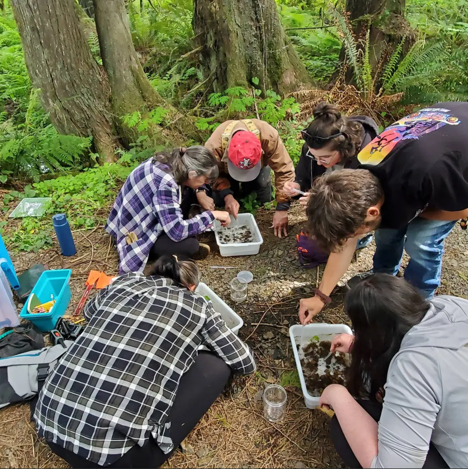
If you have been out and about this summer in the creek, you might’ve seen your friends and neighbors collecting samples and wondering, “What are they doing out here?” We reached out to Breana Downs, the Education and Outreach Coordinator at the Grays Harbor Conservation District to ask a few questions and learn more. Breana leads volunteer stewardship events and is passionate about connecting people to their local waterways and making conservation accessible to everyone.
For readers who may be unfamiliar with macroinvertebrates, what are they, and why are they such important indicators of stream health?
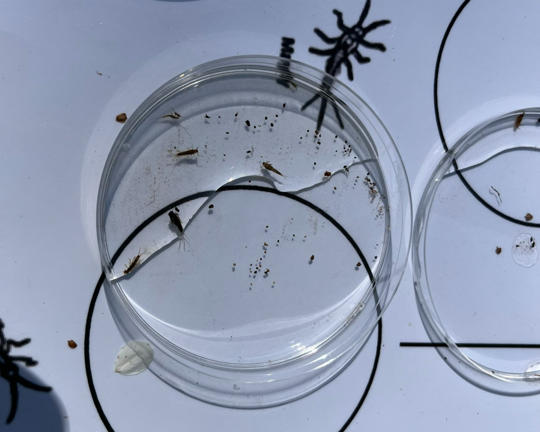
Aquatic macroinvertebrates are small organisms lacking an internal skeletal system that live part or all of their lives in water. These macroinvertebrates include many types of insects as well as other animals such as worms, mollusks, and crustaceans. Benthic macroinvertebrates are excellent indicators of the health of streams and rivers because they are found in almost all freshwater environments, have a small home range, are relatively easy to sample and identify, and their different taxonomic groups show varying degrees of sensitivity to pollution and other stressors.
 How did the Grays Harbor Stream Team involve volunteers in collecting and identifying macroinvertebrates, and what skills do participants learn through the process?
In 2026 the Grays Harbor Stream Team involved volunteers in collecting and identifying macroinvertebrates through 4 sampling events and 3 identification events from May to August. Volunteers gained hands-on experience with collection techniques, identification methods, and classifying macroinvertebrates. The program's goal is to provide technical skills to participants, helping them build resumes and enter environmental careers, but it is open to anyone who is interested in learning more about their local streams.
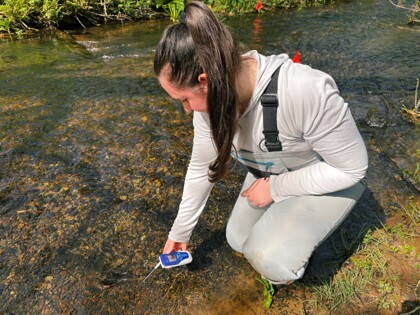 What have you learned from the macroinvertebrate data collected this year, and have there been any surprising findings in local streams?
Surprisingly, the data showed that the sampled streams and rivers throughout Grays Harbor have similar Benthic Index of Biotic Integrity (B-IBI) scores. The B-IBI scoring system measures the health of a stream or river based on the amount and types of macroinvertebrates present and was used as a quantitative method to determine and compare the biological condition of the selected streams. During the program's development, we aimed to choose waterways from four categories: reference/undisturbed, disturbed by logging, disturbed by heavy farming, and disturbed by urban runoff/mill operations. So, we were surprised to find that all the streams scored about the same in the B-IBI system, meaning they had similar levels of ecosystem health.
How does the information gathered by citizen scientists contribute to watershed management, restoration efforts, or environmental decision-making in Grays Harbor?
This project is strictly a non-regulatory, community science initiative. While the Grays Harbor Conservation District and Stream Team facilitate data collection to document watershed conditions, neither organization enforces rules or laws, nor does this program assess compliance with environmental standards. Collected macroinvertebrate data is used only for educational purposes and habitat trend analysis.
What would you say to someone who is interested in protecting local waterways but isn't sure how they can get involved, and what opportunities are available through the Stream Team?
I would recommend searching online for local groups interested in protecting local waterways and attending some of their events. Good places to start are searching for your local conservation district (every county has one) and stream team. The Grays Harbor Stream Team offers community members a variety of hands-on and educational opportunities, including trivia nights, streamside restoration, citizen science, and many more. Our Macroinvertebrate Sampling Program will continue throughout Grays Harbor next year. Training starts in spring 2027.
Interested in getting involved or staying up to date? Follow the Grays Harbor Stream Team on Facebook or Instagram, check out the Stream Team website, or sign up for their newsletter.
Flooding looks different from property to property, which is why there isn’t a one-size-fits-all solution. The Community Flood Assistance and Resilience (CFAR) Program helps residents, businesses, and local communities in the Chehalis Basin identify practical ways to protect homes and property from flood damage. CFAR is part of the Chehalis Basin Strategy's focus on finding practical, community-scale ways to protect people and property while considering the long-term health and function of the Basin's floodplains. Through technical assistance and flood-risk reduction projects, CFAR helps property owners explore options that fit their individual circumstances, from smaller measures that can be done by homeowners themselves to larger projects such as elevating or relocating structures or moving out of harm’s way. CFAR services include:
No-cost technical assistance: To answer questions, provide advice, and help people understand their options for protecting homes and businesses. Technical assistance ranges from helping people better understand flood insurance and river gage readings, to helping identify actions to reduce potential flood damage.
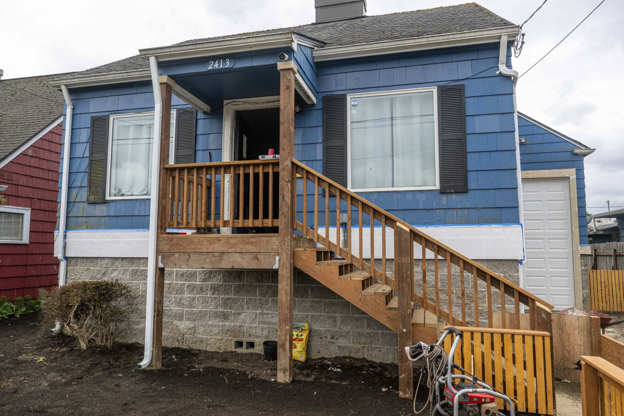
Elevating homes: For some properties, raising a home above expected flood levels can provide long-term protection. CFAR has completed 8 home elevations to date and is working on its next round of 7 home elevations, with ongoing support from the Chehalis Basin Board.
Voluntary property acquisitions: In some locations, the safest and most sustainable option may be to move a structure out of a high-risk area altogether. OCB can work with willing sellers to acquire properties at risk of flooding. Once acquired, the property is transferred to a long-term owner and maintained in a way that prevents it from being converted back to uses that could increase future flood damage.
Interested in learning whether CFAR could help with your property? Visit the OCB’s Flood Assistance webpage to access resources and request assistance.
The OCB is welcoming a new Principal Planner, April Gasman, who will be working on the CFAR Program, among others! April comes to the OCB with a background is in watershed and salmon recovery, and experience supporting collaborative efforts that bring together Tribal partners, communities, federal, and state agencies to advance recovery goals. Most recently she served as Salmon Projects Coordinator at Puget Sound Partnership, where she worked across the Puget Sound recovery community on salmon habitat restoration, facilitation, and partnership coordination. April’s first day is September 1.
Shannon Griswold will also be joining the OCB as the Fiscal Manager. Shannon is coming to the OCB with 11 years' experience at USAID. She’s worked on budget development, contract oversight, and project management. Shannon’s first day will be September 16.
Chehalis Basin Board Meeting | September 3, 9 a.m. – 1:45 p.m.
Montesano City Hall, 112 North Main Street, Montesano, WA 98563
Once a month, the Chehalis Basin Board meets to discuss funding, evaluate
priorities, and put flood and habitat projects in place that support the Chehalis
Basin Strategy. Listen in to find out more. Access more information on the agenda and how to attend virtually and in-person on the Board’s website.
Habitat Work Group | September 8, 9 a.m. – 12 p.m.
Chehalis Tribe Community Center, 461 Seneca Road, Oakville, WA
Regular meeting of the Habitat Work Group.
Hoquiam River Cleanup | September 19, 10 a.m. – 1 p.m.
Cosmo Community Park
Join the Chehalis River Basin Land Trust for a clean-up day. This event partners with the Grays Harbor Coastal Interpretive center visiting the Hoquiam River just north of the city of Hoquiam along Highway 101. Learn more about the event and register on the Chehalis River Basin Land Trust website.
|
Follow us on social media and never miss the latest news, project updates, and coming events:
|
|
|