Department of Ecology
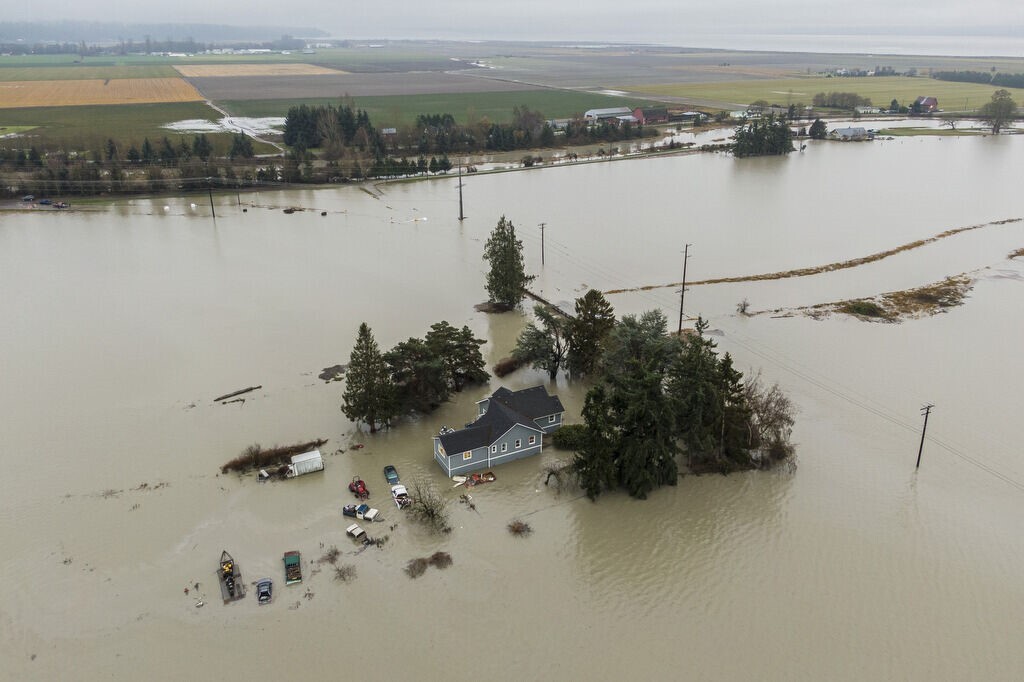
We know that this is a challenging time for many communities who are still focused on essential flood response and recovery actions. We want to do everything we can to support local floodplain administrators in the days ahead. We are offering several opportunities next week to connect with our staff.
1. Ecology Flood Recovery Drop-in Office Hours (NFIP Q & A)
When: Tuesday, December 16, 3 -4 pm
Where: Microsoft Teams
2. Post Flood NFIP Responsibilities: Understanding Substantial Damage & Local Roles
When: Wednesday, December 17, 8 -9 am
Where: Microsoft Teams
3. Post Flood NFIP Responsibilities: Understanding Substantial Damage & Local Roles
When: Thursday, December 18, 12 -1 pm
Where: Microsoft Teams
Additional Resources
FEMA Advisory
A strong atmospheric river is bringing heavy rains and storms to parts of Washington and Oregon. With widespread flooding impacting both states, FEMA's National Flood Insurance Program (NFIP) is ready to support you and your community.
The NFIP is providing the following resources to help you prepare and recover from flooding.
Contact FEMA
If you have any questions, please contact FEMA Region 10 Office of External Affairs:
WA Emergency Management Division - Public Assistance
Jurisdictions responding to the current storm must capture clear, timely, and complete documentation of damages, costs, and impacts. FEMA must be able to visually confirm damage, validate emergency work, and understand the severity of impacts to your community. The information you gather now will form the basis of your Initial Damage Assessment (IDA) and support the joint Public Disaster Assessment (PDA).
Document Damages as Soon as It Is Safe
Photographs & Videos (Required)
- Capture damages before any repairs or emergency work begin, and again after repairs are completed.
- Use geo-tagged or GPS-located photos whenever possible.
- Take wide-angle photos for context and close-ups for detail.
- Include a scale reference (cone, tape measure, ruler).
- Document inaccessible damage using aerial/drone imagery or by noting why the area cannot be reached.
Track Emergency Work & Costs in Real Time
Use a Storm-Specific Charge Code
Apply the charge code to all storm-related labor, equipment, materials, and contracts.
Track:
- Personnel names, hours, overtime, and tasks performed
- Equipment used, hours operated, and specific work locations
- Materials and supplies used
- Contracted work, procurement documentation, daily logs, and invoices
- Emergency protective measures (pumping, sandbagging, barricading, temporary power, traffic control)
Required Debris Documentation
Debris is a major component of PA funding. Ensure all debris operations are fully documented and monitored.
Record:
-
Debris location (GPS) and type (vegetative, C&D, sediment, hazardous trees, etc.)
- Photos at pickup sites, staging/TDMS, and final disposal sites
-
Load tickets, truck IDs, truck capacity certifications
-
Monitoring logs (required) with signatures and verification
-
Scale tickets, landfill receipts, and haul routes
Debris must be traceable from origin → staging → final disposition.
Begin Building Your Initial Damage Assessment (IDA)
Start a running list of all damaged sites, including:
- GPS location
- Facility description and function
- Cause of damage
- Detailed description and measured quantities
- Estimated repair cost (emergency and permanent work)
- Photos collected (before/after)
- Work status (not started, in progress, completed)
This inventory will directly support the PDA.
Tips for Strong Documentation
- Use specific, measurable descriptions (e.g., “40 ft of roadway shoulder washed out”).
- Keep pre-disaster maintenance records and earlier photos accessible.
- Ensure every cost is tied to a location, task, or mission assignment.
- Don’t discard debris documentation, logs, or photos—even if work is complete.
Strong documentation today leads to a stronger PDA and better outcomes for Public Assistance funding.
Floodplain Management Specialists
Ecology regional specialists
Statewide NFIP coordinator: Amanda Richardson at 509-385-3076
Northwest Region: Sarah Caggiano at 564-233-9306
- Island, King, Kitsap, San Juan, Skagit, Snohomish, and Whatcom counties, plus incorporated areas.
Southwest Region: Alex Rosen at 360-810-0027 or Matt Gerlach at 360-584-2804
- Alex: Grays Harbor, Mason, Lewis, Pacific, Thurston, and Wahkiakum counties, plus incorporated areas.
- Matt: Clallam, Clark, Cowlitz, Jefferson, Pierce, and Skamania counties, plus incorporated areas.
Central Region: Sandra Floyd at 509-571-5679
- Benton, Chelan, Douglas, Kittitas, Klickitat, Okanogan, and Yakima counties, plus incorporated areas.
Eastern Region: Vacant - Contact our Statewide NFIP Coordinator.
- Adams, Asotin, Columbia, Ferry, Franklin, Garfield, Grant, Lincoln, Pend Oreille, Spokane, Stevens, Walla Walla, and Whitman counties, plus incorporated areas.
FEMA Region 10
|