|
As the seasons shift and the Chehalis Basin settles into the quiet beauty of late fall, we’re reflecting on the progress and partnerships that continue to move our work forward. In this Nov. edition, we share updates on the National Flood Insurance Program, a summary of a recent restoration workshop, an exciting opportunity to get involved with citizen science in the region, and a brief overview of our ongoing outreach with Basin communities. Whether it’s restoring salmon habitats, strengthening flood protection, or developing the long-term Chehalis Basin Strategy for the region, each story this month reflects our shared commitment to a thriving, sustainable Chehalis Basin.
The National Flood Insurance Program helps property owners, renters, and communities protect themselves from the financial impact of flooding. Managed by the Federal Emergency Management Agency(FEMA), the program provides flood insurance to participating communities that adopt and enforce floodplain management regulations.
Unfortunately, Congress did not reauthorize the National Flood Insurance Program before its funding deadline on Sept. 30, so the program has temporarily lapsed as of this Oct. This lapse is tied to the broader federal government shutdown. For now, that means new or renewed flood insurance policies most likely can’t be issued until the program is back up and running, though current policies are still active.
If you have any questions about how the lapse impacts you and your existing policy, we recommend you contact your insurance agent. The Community Flood Assistance and Resilience program is also here to help individuals and businesses in the Chehalis River basin to reduce flood damage to homes and businesses. Please fill out this form to request technical assistance and information about potential resources and programs that can help in your area.
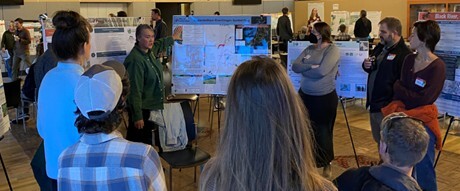
On October 16, approximately 60 participants gathered at the Chehalis Tribal Community Center for a collaborative workshop focused on advancing habitat restoration in the Chehalis Basin. The session was organized around four focus groups, known as “clusters”, representing key ecological areas:
- Grays Harbor Estuary
- Olympic Mountains and Cloquallum Creek
- Black River wetlands and Oregon Spotted Frog
- Upper Basin and spring Chinook
Each cluster included scientists, restoration practitioners, and subject matter experts who work within those regions. Their goals were to explore how research funded by the Aquatic Species Restoration Program (ASRP) can better inform project prioritization and design, and to identify which projects may seek implementation funding by the end of the current biennium, June 30, 2027.
Early outcomes of the workshop include a list of actionable next steps for the ASRP, such as evaluating the effectiveness of completed projects. Funding estimates for each cluster were also developed to guide future investment decisions. A full summary of the event, findings, and anticipated projects will be published on the Office of Chehalis Basin’s website under the ASRP project development section. ASRP will have meetings every three months to continue to track progress within each cluster, culminating in another workshop next year. Community members who are interested in staying informed or getting involved should reach out to their local Conservation District, which plays an active role in ASRP planning.
The Chehalis Basin Collaborative for Salmon Habitat is collecting salmon observation photos and you are invited to help. The group, along with the Coast Salmon Partnership, has been developing a website to display salmon sitings across the Basin. Contributing your sitings is simple. See a Salmon? Fill out this survey! You’ll respond to questions about the salmon you saw, weather, stream flow conditions, and other observations. The map showing results, when ready, will be available at the Coastal Salmon Partnership website.
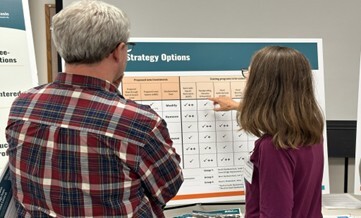 |
Thank you to everyone who attended our two open houses in Chehalis and Montesano and those who visited our online open house! We had great conversations with a broad range of community members. Our team is busy compiling feedback received to date via paper and online comment forms. In the meantime, our comment form remains open. We welcome community members to contribute thoughts and perspectives they’d like the Board to consider as they continue weighing options for a Long-Term Strategy. See the Long-Term Strategy video for an overview on what’s being considered for the future of the Basin.
In 2026, our team will be providing more opportunities to stay engaged and provide feedback on the long-term options for flood protection and aquatic restoration. We will provide updates via this newsletter as we get closer to the final Long-Term Strategy in November 2026.
Salmon Education Field Trip with Chehalis Basin Fisheries Task Force
Nov. 6, 7, and 13, 9:30 a.m. – 12 p.m.
Satsop Springs Hatchery, 2090 W Beerbower Rd, Elma, WA 98541
Come help educate local youth about streams, rivers, and salmon at the Satsop Springs Hatchery. To volunteer, contact Tina Niels.
Chehalis Land Trust Tree Planting Work Party
Saturday, Nov 15, 10 a.m. – 12:30 p.m.
Chehalis Discovery Trail, 1545 Goodrich Road, Centralia, WA 98531
Join the annual work party planting baby trees along the river at Discovery Trail to support the reinvigoration of this critical habitat. Visit the Chehalis River Basin Land Trust website to learn more about the Tree Planting Work Party and RSVP for the event.
River Table Workshop
Saturday, Nov. 22, 12 p.m. – 3 p.m.
Elma Timberland Library, 118 N 1st St, Elma, WA 98541
Fun opportunity to learn about how rivers work with the dynamic river table with the Grays Harbor Stream Team.
|
Follow us on social media and never miss the latest news, project updates, and coming events:
|
|
|