Let's Talk About Adjudication - October 2025
In this issue
Resources to help you file
Workshops for water users
My water source isn't connected to the Nooksack River...
News from the Whatcom County Superior Court
Legal terms glossary
A few questions answered
We have resources to help you file your court claim form
If you received an adjudication court claim form in the mail this spring, you need to file it by May 1, 2026. That deadline will not change unless ordered by the Court. While the Washington state government is facing a budget shortfall, Ecology has enough funding to continue adjudication outreach and customer support along with money for Whatcom County to provide technical assistance. In addition, Whatcom County Superior Court is working with the Administrative Office of the Courts to ensure they have sufficient and ongoing funding to meet their budget needs.
That means we’re here and available to help you file your court claim form. Whether you need more information about Whatcom County’s water use calculators, or one-on-one support, you can contact us for free and timely assistance. If you use water from a well, check out our court claim form workshops below to register for step-by-step guidance in a group setting.
If you’re one of the 1,000+ people who’ve already filed, we’d love to hear your story. Just reply to this email and tell us what motivated you to file early. Here’s what someone from your community recently shared:
My reason for filing early was to get this process over and done with so I wouldn't continue fretting over this task looming ahead of me. Once I began filling out the form, I realized it wasn't all that difficult. It was nice to be able to say, "I did it'! - B. H, homeowner.
Workshops for water users – register now
Please join us! We’re offering three free in-person workshops for landowners who use groundwater wells. Each session will provide step-by-step guidance and walk participants through Part B or C of the court claim form. Registration closes on October 22.
Workshop schedule
All sessions run from 5:30 PM to 7:00 PM. You are welcome to attend one or more sessions.
- October 28 – Homes on wells (Part B), Ferndale
- October 29 – Stockwater, group domestic, commercial, and industrial uses (Part C), Everson
- October 30 – Small farms (Part C), Deming
Pre-registration is required, and space is limited – so register now
If you’re interested in attending a workshop, please contact Ecology staff for details. Leave a message with your name and a convenient time to reach you, and we’ll get back to you as soon as possible.
You can register in any of the following ways:
Please note: The workshops will focus solely on the court claim form. For other questions about the adjudication process, please contact our customer service line by leaving a message at (360) 255-4406 or WRadjudications@ecy.wa.gov and we’ll get back to you as soon as possible.
I live in Whatcom County, but my water source is not connected to the Nooksack River – why do I need to participate in the adjudication?
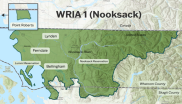
That is a really good question that we hear about often. Even if your water source isn’t connected to the Nooksack River, if you use water directly from groundwater or surface water in Water Resources Area (WRIA) 1, you still need to participate in the adjudication and file a court claim form. The WRIA 1 adjudication area covers all of Whatcom County and the northern part of Skagit County, not just the Nooksack Basin.
|
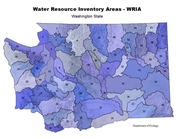
Water Resource Inventory Areas (WRIAs) were created under Washington’s Water Resources Act of 1971 to address the diverse water needs of the state, which include tribal, coastal, mountain, agricultural, municipal, and environmental.
The state is divided into 62 WRIAs. These administrative boundaries were drawn through a joint effort involving several state environmental agencies, including Ecology, the Department of Natural Resources, and the Department of Fish and Wildlife. Each WRIA boundary was designed to best align with the watersheds, the common water challenges faced by the area, and with existing county and state lines whenever possible.
Many people confuse WRIAs with watersheds. Watersheds are different than WRIAs. A watershed is a natural area where all the water drains to a low geographical point, like a river, lake, or ocean. A WRIA can include multiple watersheds and subbasins. For example, WRIA 1 covers the Nooksack River Basin, Lake Whatcom, and coastal watersheds. So, while a watershed is defined only by how water flows, a WRIA is also an area designated by scientists and planners for management purposes, meaning the water bodies do not necessarily need to be connected.
Ecology follows long-established water laws (1917 for surface water and 1945 for groundwater) to ensure fair management of water use. In WRIA 1, adjudication is a necessary step in this process.
|
News from the Whatcom County Superior Court
The court has scheduled a status update hearing on October 13 at 9:00 a.m. During the hearing, the Judge will review the Steering Committee’s Proposed Case Management Order including new Special Rules of Procedure for service. The new rules introduce an online docket sheet to replace traditional mail service in the adjudication process. You can view the hearing livestream. It will not be recorded.
The docket sheet is a list of all documents (except claim forms) filed with the court for the WRIA 1 adjudication. It will be available both at the Clerk’s office and online. Anything filed in the adjudication, except claim forms, will appear on the docket sheet and serve as legal notice.
The Judge will also review the proposed language recommended by the Steering Committee for a postcard mailer. This mailer, which will be sent by Ecology, will inform claimants that the docket sheet is being put in place and that they will no longer receive notices about the case by mail.
For details about other court events, visit the Whatcom County Water Adjudication Guidance page.
Legal terms glossary
If you’re confused about court terms, or maybe just a little curious, here are some simple definitions of words that are used when we talk about adjudication. Please know that this information is not legal advice.
Adjudication court claim form: A blank form provided to defendants for them to fill out and report their water use. If not received by certified mail, it can be filed online or picked up at Ecology’s Bellingham Field Office.
Appeal: A filing asking a higher court to change a judge’s decision. To appeal an order by Judge Freeman, you would usually file in Division I of the State Court of Appeals.
Cause number: A unique number assigned by the Court Clerk that identifies a lawsuit. The cause number of the WRIA 1 Adjudication is 24-2-80000-37.
Continuance: A delay or rescheduling of a court deadline or hearing. For example, a party may request a continuance if they need more time to prepare.
Court Clerk: The government office responsible for all official copies of court documents. The Court Clerk’s office is separate from the Superior Court, but the offices work together.
Courts: Government offices where justice is administered. The WRIA 1 adjudication takes place in the Whatcom County Superior Court.
Defendant: A party who receives a lawsuit and needs to respond. Defendants in the WRIA 1 adjudication need to respond by filing a court claim form describing their water use.
Docket: A court’s list of documents filed in a case. You can check the docket online to see who has filed.
File: To submit an official document as part of the court record. The deadline for most water uses to file a court claim form is May 1, 2026.
Hearing: A formal court event where lawyers and parties can answer questions and provide information to the judge. A hearing can be online, in person, or both. The judge will wait to issue an order after the hearing.
Judge: The official in charge of court proceedings who makes legal decisions about the parties’ rights. The Presiding Judge in the WRIA 1 adjudication is the Honorable David Freeman.
Jurisdiction: The legal authority to decide legal cases. The Whatcom County Superior Court has jurisdiction over the adjudication.
Motion: An official document asking the court to make a decision. For example, a party may file a motion to modify or change a court order.
Notice: Information provided to let parties know of actions, deadlines, or decisions in a case.
Order: An official court decision. For example, the judge signed an order in 2025 directing Ecology to mail a summons to adjudication defendants.
Party: A person, organization, government, or business involved in a lawsuit. WRIA 1 parties in the adjudication include Ecology, the United States, Tribes, and water users.
Plaintiff: A party who starts a lawsuit. The plaintiff in the WRIA 1 adjudication is the Department of Ecology.
Serve: To send a legal document to other parties in a case. Lawyers usually serve their “Notice of Appearance” on other lawyers.
Stay: A temporary pause in court proceedings to allow time for other developments. For example, Judge Freeman has ordered a stay, so we won’t file a motion without leave of the court.
Subcase: A unique number assigned by the Court Clerk to track individual court claims when they are filed. For example, after you file, check the docket to find your new subcase number.
A few questions answered
We receive many inquiries about the adjudication process. Here are a few questions plus our responses.
Question: What kinds of documentation and evidence are helpful to establish continuous use and support my water claim?
Response: You do not need to file evidence with your court claim form, but it is good to do some research before you file. You may want to investigate the history of your water use, when it began, how previous owners used it, if the use aligns with the original permit, and whether there have been periods of non-use. For a comprehensive list of the types of information and evidence that would be useful, see Ecology’s Focus on Assessing Your Water Right. The list includes maps, photographs, deeds, affidavits signed by neighbors who have lived there in the past, and public records.
Question: I’m just about ready to file my court claim form. When should I submit documentation about historical use?
Response: For now, please only submit your court claim form. You will have up to three years from the deadline to submit evidence. The evidence will be submitted using a process created by the Whatcom Superior Court, which is currently not available. See RCW 90.03.635 for more information.
Question: I have a small farm and may use more water than 5,000 gallons per day (gpd). What if I do not qualify for the groundwater permit exemption?
Response: You should still fill out a court claim form. If you do not have a water right document and your use does not qualify for a permit exemption, you can still ask the court to consider your water use in the adjudication. You will need to indicate “other” as your answer in section C1. You will then need to present your evidence and reasoning to the court.
Resources
Contact Ecology with your questions
Information and tools
Language access
If you have difficulty understanding English or have a disability, free language assistance or other aids and services are available upon request. Please call 360-407-6872.
Si necesita ayuda para entender esta información, ofrecemos servicios gratuitos de traducción e interpretación, así como Braille y ASL para personas con discapacidades. Para solicitar estos servicios, llame al 360-255-4406.
Если вам нужна помощь в понимании этой информации, мы предоставляем бесплатные услуги письменного и устного перевода, а также информацию шрифтом Брайля и на американском языке жестов (American Sign Language, ASL) для людей с инвалидностью. Чтобы запросить эти услуги, позвоните по телефону 360-255-4406.
ਜੇਕਰ ਤੁਹਾਨੂੰ ਇਸ ਜਾਣਕਾਰੀ ਨੂੰ ਸਮਝਣ ਵਿੱਚ ਮਦਦ ਦੀ ਲੋੜ ਹੈ, ਅਸੀਂ ਮੁਫ਼ਤ ਅਨੁਵਾਦ ਅਤੇ ਵਿਆਖਿਆ ਸੇਵਾਵਾਂ ਪ੍ਰਦਾਨ ਕਰਦੇ ਹਾਂ, ਅਤੇ ਨਾਲ ਹੀ ਅਸਮਰਥ ਲੋਕਾਂ ਲਈ ਬ੍ਰੇਲ ਅਤੇ ਅਮਰੀਕੀ ਸੰਕੇਤ ਭਾਸ਼ਾ (American Sign Language, ASL) ਵੀ ਉਪਲਬਧ ਹਨ। ਇਹਨਾਂ ਸੇਵਾਵਾਂ ਦੀ ਬੇਨਤੀ ਕਰਨ ਲਈ, 360-255-4406 'ਤੇ ਕਾਲ ਕਰੋ।
Adjudication is a legal process in Whatcom County Superior Court between the Washington
Department of Ecology and all local water users in Water Resources Area (WRIA) 1. This process requires water users to self-report their water use in a form online or on paper. The court will make a decision that lists water uses in priority (old to new), including where and how much water is legal on each parcel of land. It does not involve criminal proceedings or penalties. It does not change the current law on water use.
For more information, please visit our Nooksack Adjudication website.
|