Speak Up and Help Support the Padilla Bay National Estuarine Research Reserve
Do you love the Padilla Bay Reserve?
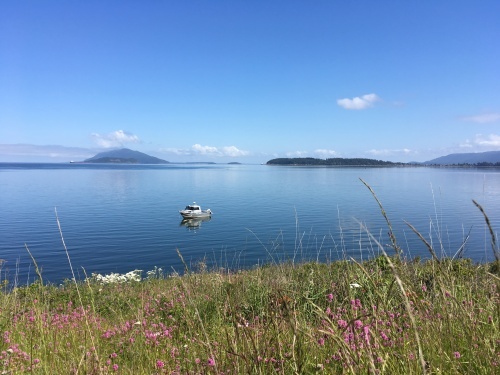
Padilla Bay is an amazing place to explore the outdoors, play in the mudflats, hike the upland trail, fish, paddle, and watch wildlife. We provide essential science and knowledge, great education programs for all ages, and critical support for community decisions and local businesses. Padilla Bay and all the other Reserves across the country are important!
It's time to tell Congress
Your elected officials need to hear directly from you about how much you value your Reserve and that you support full federal funding for the Reserves. Please join NERRA in urging them to invest in your Reserve and the entire System.
We need your support to keep Padilla Bay funded and continue the great work we are doing to promote research, education, training and stewardship for Padilla Bay and the Salish Sea.
Follow this link to tell congress you care and or sign a letter of support!
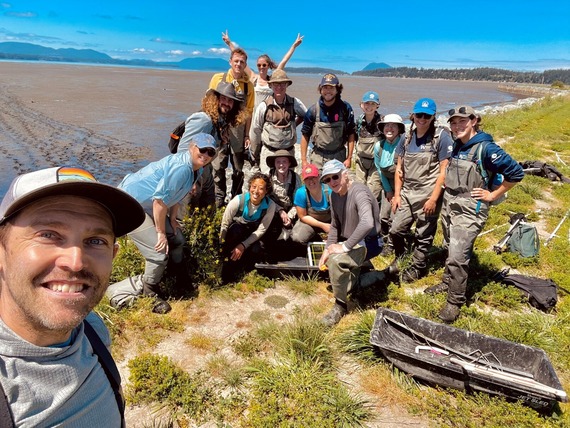
Summer Camp at Padilla Bay!
By: Erin Merklein
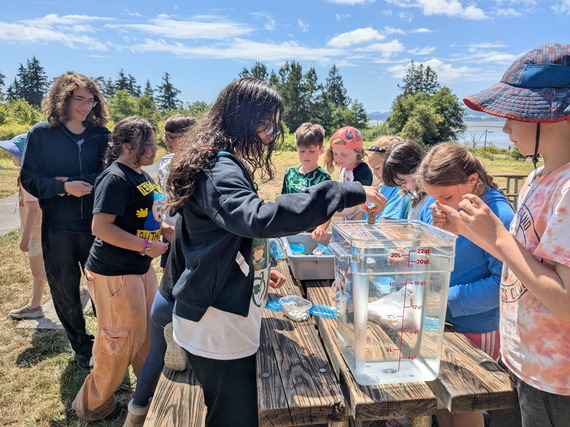
The education team has been enjoying this hot busy summer at the reserve! One of our most beloved programs, Art and Science Camp, happened for a week this past July. This unique program is an exploration on what makes our community special through the intersections of art, culture and science in partnership with the Museum of Northwest Art. Each July we welcome 16 campers for a full 5 days of learning adventures and this year our campers once again inspired us with their ideas, thoughtfulness and of course art!
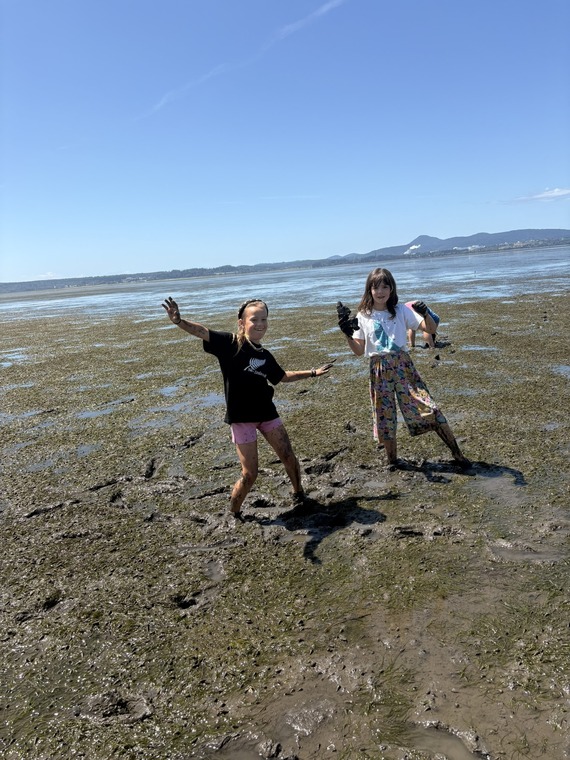
We started off the week as anyone should, in the mud! Summer is the best time to explore the bay as the tide recedes drastically and unveils many tiny creatures. This is always a favorite for kids visiting and as you can see you can’t be afraid to get a little dirty!
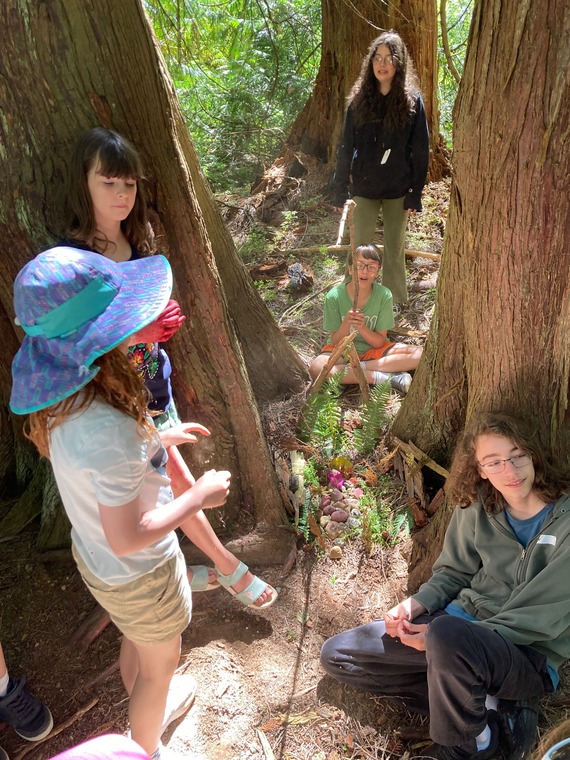
 The week was filled with many different art projects including an Andy Goldsworthy inspired nature piece. Each group was given instructions to find a spot on the trail and use natural materials to create an art piece of their liking. The group below stated their piece was inspired by life, death and reincarnation.
 Later in the week the campers participated in the annual plankton races. They were given 20 minutes to create a model plankter out of a variety of materials like cork, weights, paperclips, toothpicks, etc. The goal is to have your plankter stay suspended mid water column as a real plankter in the ocean would not survive if it sank or floated right on the top of the water. The campers then duke it out on a one v. one race with the winner taking on the next and so on until we came out with a winner!
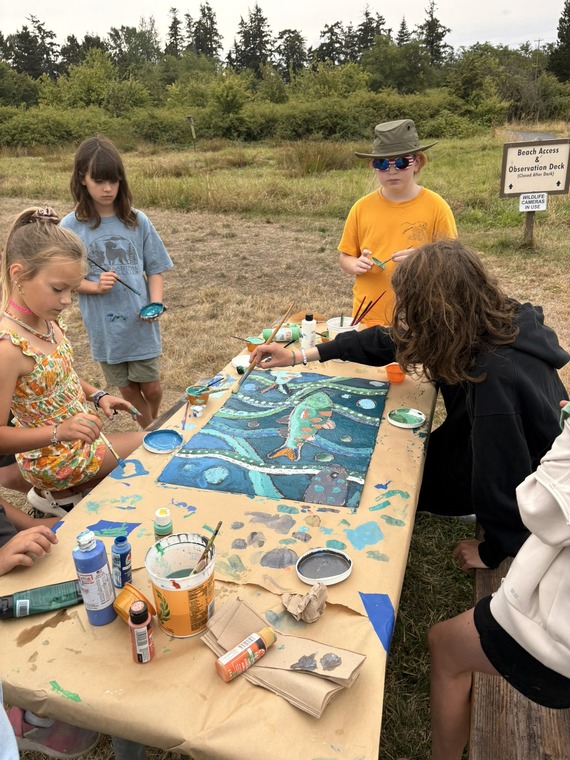
 One of the last art projects the campers completed was a group painting. Unlike other paintings, this one was created on tar paper. Staff used chalk to create an outline of an image, and the camper painted everything exposed except for the chalk lines. After the paint dried staff wiped off the chalk to unveil a beautiful masterpiece!
Larval Crab Settlement Project
By: Mae Brenneman
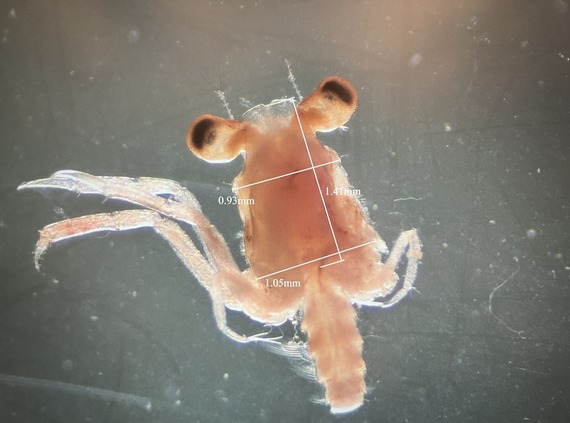
Since April, two members of our research team have been working on a project to examine larval crab settlement in the bay! Nicole Burnett and Mae Brenneman started deploying artificial substrates at our property near Samish Island in hopes that late-stage megalopae (free swimming crab larvae!) would find them suitable habitat to settle on and molt into their first juvenile crab stage. Nicole and Mae deploy 21 individual “collectors” of varying artificial substrate treatments every two weeks. These treatments include plastic turf squares, aquamesh (a filter used in aquariums), hog’s hair HVAC filter, oyster shells, and two control treatments: just the mesh basket the collectors are deployed in, and the bare sediment itself.
These two control treatments will help them understand how the baskets themselves might entice crabs to settle in the collectors, and how crabs are naturally settling in the area (bare sediment). When the collectors and sediment are retrieved and brought back to the Reserve, they’re rinsed through a 500 micron sieve to catch all the potential megalopae and juvenile crabs. So far, Nicole and Mae have found Hemigrapsus oregonensis, or Hairy shore crab, megalopae as well as very tiny juveniles, which indicates that crabs are choosing to settle on these artificial substrates! The substrate that has had the most success in collecting megalopae and juvenile crabs so far is the oyster shell treatment, and the substrate that has had the least success is the bare sediment, though there are still many samples to sort through.
Nicole and Mae are hoping to continue this project into October and are especially hoping for a European green crab megalopa to settle. Being able to collect green crabs with these tools could help researchers better understand larval green crab behavior and could help with mitigation efforts!
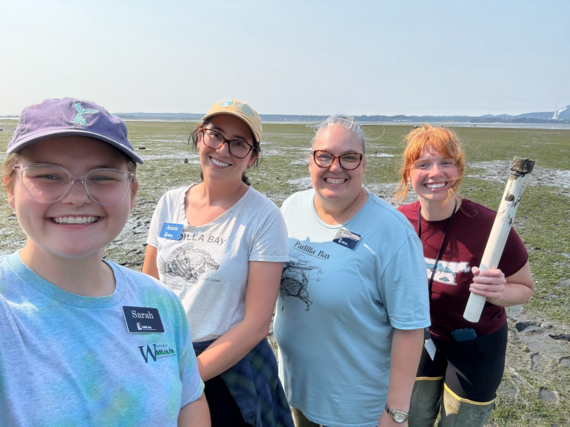
Sarah Archers Americrops Term at Padilla Bay
By: Sarah Archer
The past year at Padilla Bay has been an absolute whirlwind! Every day has brought something new to learn and exciting challenges to work through.
I joined the education team as their summer intern last year and it gave me the chance to dip my toes into the world of environmental education. In the Fall I was lucky enough to transition from that into their AmeriCorps Individual Placement position. Each season of my term brought new experiences.
Fall was all about learning! I got settled into the education team, attended my first WCC training conference with Mae, our Research AmeriCorps IP, and became acquainted with the lab and aquarium. Being behind the scenes of an aquarium was a dream come true for my younger self! I also learned to plan and run our Mini Explorers and Junior Ecologist programs, monthly classes for 3-5 and 6-9-year-olds, respectively. These classes are run specifically by the AmeriCorps member every year, and they continued to be one of the highlights of my term.
Winter was full of events. We hit the ground running with the Youth Earth Summit, a conference for local high school students interested in environmental classes and clubs, where I hosted a career panel made up of environmental professionals at different stages in their careers. This included some friendly faces from HF Sinclair, Samish Department of Natural Resources, and some of Padilla Bay’s own staff! I also had the chance to assist the education team with an annual environmental educator conference, Storming the Sound. Art classes like block printing and watercolor painting were another fun form of programming that Annie, one of educators, helped me lead.
Spring passed by in an instant. Daily field trips kept the education team busy, and the interpretive center was full of life! I got hands-on experience with the bay’s wildlife, taught hundreds of children (which included pulling some out of the mud), and started my Wilderness First Responder Course at another WCC training. Spring also included getting connected to the local community through outreach events like Mount Vernon’s Earth Day Celebration. In total, we saw over 6,000 students during our main field trip season!
Summer was by far the most exciting season of my term. I had the opportunity to join the research team for their sea star monitoring and had an absolute blast traveling out to Saddlebag island on the research vessel. I was also lucky enough to travel with my team to the Northwest Aquatic and Marine Educators conference down in Newport, Oregon. We kept busy with summer programs and plenty of mudflat safaris and fish feedings for the public. My second art and science camp brought the education team a group of 16 campers that kept me on my toes and wowed me with their creativity and insightfulness.
My term at Padilla Bay has been the experience of a lifetime. I could not be more grateful to have had the opportunity to learn from so many passionate people and kickstart my career in such a positive and lively environment!
 |
|
Mini Explorers
3-5 year olds, sharing stories, songs, and activities to learn all about Padilla Bay. Join us for fun, fast-paced programs especially for preschoolers. Click on the topic below to register.
Estuary!: Wednesday Oct. 15th at 11:00am and Thursday Oct.16th at 1:00pm
Why Animals Don’t Wear Clothes: Wednesday Nov. 12th at 11:00am and Thursday Nov. 13th at 1:00pm
Wrack & Wreath: Wednesday Dec. 10th at 11:00am and Thursday Dec. 11th at 1:00pm
|
|
Junior Ecologists
6-9 year olds who have fun learning about the estuary Join us for fun, interactive programs about the Padilla Bay estuary and its amazing plants and animals. Click on the topic below to register.
Salmon Run: Thursday Oct. 9th at 10:30am and Saturday Oct. 11th at 10:30am
Here Comes the Sun: Friday Nov. 21st at 10:30am and Saturday Nov. 22nd at 10:30am
Wrack & Wreath: Friday Dec. 19th at 10:30am and Saturday Dec. 20th at 10:30am
|
|
 |
Padilla Bay Presentation:
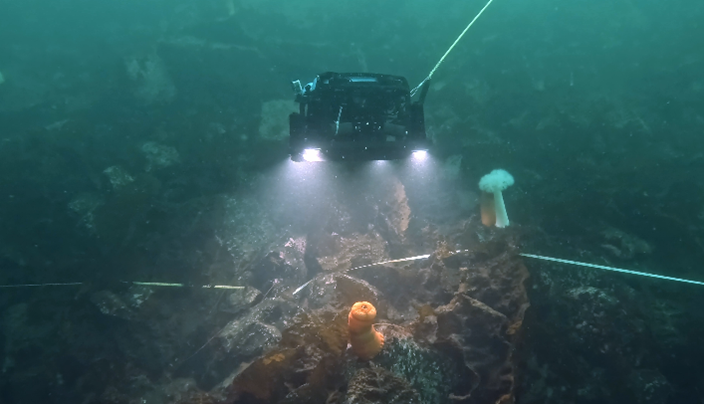
ROV surveys within kelp forests and open-source AI models to process survey images and extract data
Saturday December 13th 1pm-2:30pm
Join Dr. Zachary Randall to hear about fascinating local research:
Since 2022, the Seattle Aquarium’s Coastal Climate Resilience (CCR) program has advanced the use of relatively low-cost, compact, and customizable remotely operated vehicles (ROVs) as a novel way to monitor shallow coastal ecosystems, particularly kelp forests. By combining high-resolution underwater imagery with open-source AI analyses, the goal of this work is to generate new insights into the resilience of kelp, invertebrate, and fish communities. The approach is designed to be scalable and adaptable, with integration into other data sources such as scuba diver surveys and satellite imagery. Importantly, the open-source model has enabled volunteers with specialized skills to make novel contributions to semi-autonomous ROV flight controls and AI-based image processing and data extraction. At its core, CCR emphasizes transparency, reproducibility, and collaboration—empowering scientists, conservation practitioners, and community partners to expand these methods and strengthen collective efforts to conserve and restore coastal ecosystems in the face of climate change.
Register Here
Fall Birding with Libby Mills
Saturday November 8th and 22nd
8am to 11am
Even if it’s quiet outside, it's a nice time to connect on the edge of the estuary. By November our winter birds are taking over the edge of Skagit flats and Padilla Bay. There should be raptors returning and snow geese and the other winter constellation of birds. We will check for the easy big birds and more subtle songbirds.
Dress for fall weather! Field guides and binoculars are available for loan. We’ll meet at the Interpretive Center parking lot. This class is offered twice.
Register Here
Family Friendly Cider Pressing
Friday October 17th and Saturday October 18th
10am to 12pm
Learn about the Breazeale family and crank the old cider press in the orchard! This is a hands on class suitable for ages 3 up, please register everyone in your group not just children!
Register Here
Wild Edible and Medicinal Plants
Thursday October 16th from 12pm to 2pm
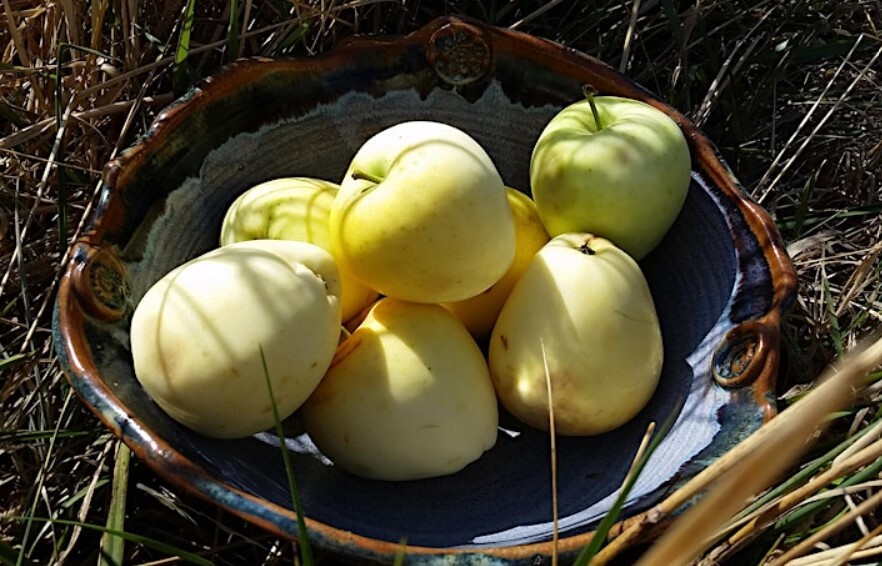
Come and experience a burst of growth. Join naturalist Janson Jerome in this search for wild edible and medicinal plants. You may want to bring a field notebook.
Please arrive to the event five minutes prior to the start, no ticket required. We often have a waitlist for events so please let us know if you need to cancel for any reason.
Register Here
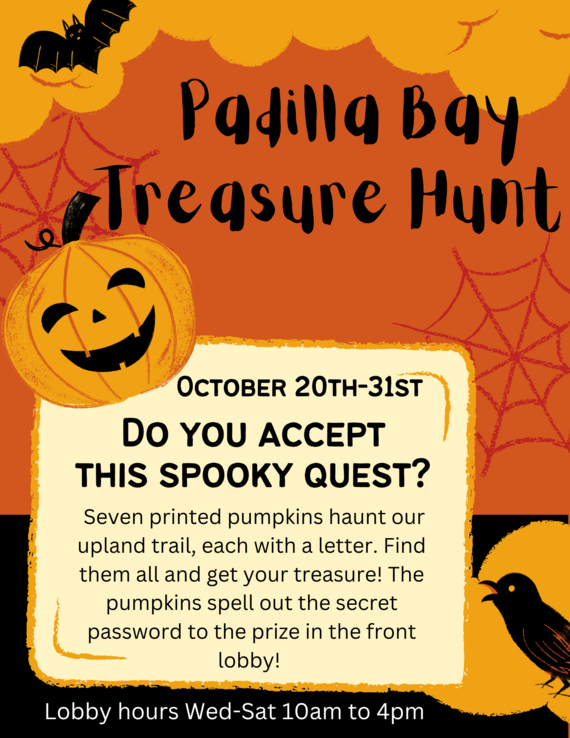
Halloween Pumpkin Hunt
October 20th- November 1st
Aquarium Tour and Fish Feeding
Come and find out what’s new and exciting in our aquariums. Join aquarium staff for a close look at our tanks and amazing critters! All tours start at 10:15 am sharp!
Friday October 3rd
Saturday November 15th
Friday December 12th
Register Here
 |
|
Padilla Bay Foundation
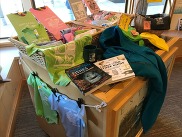
Your Foundation Board wishes you all the very best during the upcoming holiday season. Check out our great selection of books and gifts in the Interpretive Center lobby.
Read all about Padilla Bay Foundation activities
|
|