Let's Talk About Adjudication - April 2025
In this issue
Why do we need adjudication in WRIA 1?
Court claim form update
File soon
Open house for homes on a well - get information to file
A few questions answered
Resources
Why do we need adjudication in Water Resources Inventory Area (WRIA)1?
Ecology gets a lot of questions about why the WRIA 1 adjudication is needed. Water management is a complex issue, but here are some short answers.
-
There is uncertainty over who has the legal right to use water in the area, and how to protect streamflow during dry months. Many efforts to resolve conflicts over the past 35 years have not succeeded.
-
Adjudication will create a list of who has the right to use water, how much they are legally entitled to, and in what order of seniority.
-
Once we have this inventory, it will be possible to develop large-scale solutions.
Court claim form update
On March 17, we mailed adjudication documents to over 30,000 landowners in Water Resources Inventory Area (WRIA) 1. If you use water directly from surface or groundwater in WRIA 1, you need to file a court claim form, even for small uses like single homes on wells.
-
If you received a court claim form but are a customer of a water system (you pay a water bill to a city or other service), and don’t use any other surface or groundwater in WRIA 1, you are not required to file a court claim form. Give us a call or send an email to let us know.
-
If you’re a water user in WRIA 1 and didn’t receive your court claim form yet, please check the brown notice left by the USPS mail carrier and follow the instructions.
-
If you haven’t been notified by certified mail and think you will need to file a claim form, please contact us.
In less than two weeks, more than 20,000 people have received their court claim forms, and over 190 people have filed.
File your claim form – don’t wait until the last minute
You have over a year -- until May 1, 2026 -- to submit your claim form. If you can, file soon instead of waiting until the last minute, so you’ll have enough time to find resources and get your questions answered. If you would like in-person assistance, we can work with you one on one – give us a call and we’ll set up an appointment.
We encourage you to file using the Whatcom County Superior Court's Guide and File system. It’s faster and easier for everyone. You will want to use a browser such as Chrome, Edge or Firefox - Safari is not recommended. You can also deliver a paper copy to the Court Clerk’s office in person. If you cannot hand-deliver the completed court claim form to the court in-person, contact us for specific mailing instructions.
There is a $25 filing fee that covers the administrative costs associated with processing the court claim forms and an extra $1 charge for filing via Guide and File. If you are paying in person at the court, you can pay during business hours by cash, cashier’s check, money order, credit card or debit card. Personal checks are not accepted.
Do you have a home on a well? Come to an open house and get information to fill out your court claim form
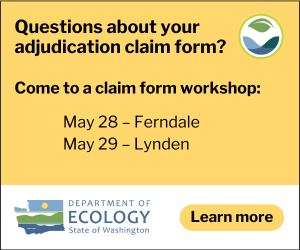
Open house (in person) for landowners with homes on a well – Come and go anytime 5:30-7 p.m. Bring your court claim form and questions. Registration required.
-
May 28 Pioneer Pavillion, 2007 Cherry Street, Ferndale, WA 98248
|
A few questions answered
We receive many inquiries about the adjudication process. Here are a few questions plus our responses.
Question: I am a consultant filing a court claim form on behalf of my client. Which filing method should I use?
Response: To file for someone else, it is easiest to use eFile. The court claim form needs to be signed by the landowner. They are the ones signing under oath that the facts in their form are correct. Consultants or legal representatives can assist in filling out the form and uploading it on behalf of their client, but the landowner's signature is still required. This signature can be added digitally on a fillable PDF or handwritten on a paper copy. The Guide and File system is not designed for this purpose and shouldn’t be used.
Question: I have a mobile home on land owned by someone else. Do I need to fill out a claim form?
Response: Owners of mobile homes do not need to file a claim unless they also own the land (real estate) under the mobile home itself. The manager or owner of the property is responsible for reporting water use and filling out the claim form on behalf of their tenants.
Question: We have a small 3-acre homesite in the county and use less than 500 gpd of water indoors and water less than a half-acre of plantings and yard from our well. We have two horses that graze on our property and drink from a 100-gallon stock tank from the same well. What part of the form should we fill out?
Response: You’ll complete both Part B and Part C of the court claim form:
- Part B covers your domestic use from a permit-exempt well: 500-gallon-per-day maximum for indoor use and outdoor watering or irrigation for a personal lawn or garden of up to ½ acre (21,780 square feet).
- Part C covers stock water (the horses and the water they drink).
You’ll provide the parcel numbers about the place of use (where the horses drink the water) and the well location (where the well is located that fills the stock water tank). Be sure to have the parcel numbers handy since you’ll need this information multiple times on the form.
As a general rule, Ecology will ask the court to approve these as two separate uses. Once they are on the court decree, Ecology would issue two certificates documenting where the water is used—one for your home and one for the stock water.
Question: Will the adjudication result in Ecology turning off water inside my home?
Response: No. While water scarcity and drought are challenges that affect everyone, it’s important to know that the adjudication process will not shut off water in existing homes. Builders of new homes need to be aware of water guidelines in the WRIA 1 Water Availability Focus Sheet and consult with the county to comply with all laws.
Resources
Contact Ecology with your questions
Information and tools
Past e-newsletters
Language access
If you have difficulty understanding English or have a disability, free language assistance or other aids and services are available upon request. Please call 360-407-6872.
Si necesita ayuda para entender esta información, ofrecemos servicios gratuitos de traducción e interpretación, así como Braille y ASL para personas con discapacidades. Para solicitar estos servicios, llame al 360-255-4406.
Если вам нужна помощь в понимании этой информации, мы предоставляем бесплатные услуги письменного и устного перевода, а также информацию шрифтом Брайля и на американском языке жестов (American Sign Language, ASL) для людей с инвалидностью. Чтобы запросить эти услуги, позвоните по телефону 360-255-4406.
ਜੇਕਰ ਤੁਹਾਨੂੰ ਇਸ ਜਾਣਕਾਰੀ ਨੂੰ ਸਮਝਣ ਵਿੱਚ ਮਦਦ ਦੀ ਲੋੜ ਹੈ, ਅਸੀਂ ਮੁਫ਼ਤ ਅਨੁਵਾਦ ਅਤੇ ਵਿਆਖਿਆ ਸੇਵਾਵਾਂ ਪ੍ਰਦਾਨ ਕਰਦੇ ਹਾਂ, ਅਤੇ ਨਾਲ ਹੀ ਅਸਮਰਥ ਲੋਕਾਂ ਲਈ ਬ੍ਰੇਲ ਅਤੇ ਅਮਰੀਕੀ ਸੰਕੇਤ ਭਾਸ਼ਾ (American Sign Language, ASL) ਵੀ ਉਪਲਬਧ ਹਨ। ਇਹਨਾਂ ਸੇਵਾਵਾਂ ਦੀ ਬੇਨਤੀ ਕਰਨ ਲਈ, 360-255-4406 'ਤੇ ਕਾਲ ਕਰੋ।
Why is the WRIA 1 adjudication necessary?
In Whatcom County, the population is growing and demand for water is increasing. Water is most in demand during the summer, when precipitation is lowest. That’s when farmers need water for agriculture, and fish need water in streams and rivers.
The state legislature passed the first water law in 1917, based on the principle of “first in time, first in right” — that is, a senior water right holder cannot have their use impaired by a junior user. As wells became more common, a state law on groundwater was passed in 1945, which required permits for using groundwater with exemptions for certain situations such as private wells for homes.
There is also the issue of unquantified Tribal water rights. Lummi Nation and the Nooksack Tribe claim the earliest rights to water in the area. In the absence of a court decree, no one knows how much water this might be, what streams and rivers are affected, or during what seasons. For many years, Lummi Nation and the Nooksack Tribe have worked with other parties, including local and state governments, farmers, water districts, developers, environmental groups, and other interests to address water availability – but these voluntary efforts did not produce solutions.
The patchwork of permits, claims, exemptions, and pre-1917 water uses has made it very difficult to regulate water use fairly and legally. Who has senior water rights? How much water is being used now? At what times of year is there a legal water shortage?
Adjudication will create an inventory of water rights that will answer these questions. This is a legally binding process, unlike previous voluntary attempts to resolve conflicts, which stalled when things became challenging. All parties, including the Tribes, must file their claims in Whatcom County Superior Court. Adjudication will make it possible to create water banks and other tools for moving available water to where it’s needed.
For more information, please visit our Nooksack Adjudication website.
|