|
Having trouble viewing this email? View it as a Web page.

 2024 Northwest Remediation Conference in Tacoma May 2
The Northwest Environmental Business Council (NEBC) is hosting its annual Northwest Remediation Conference in Tacoma, Washington, on Thursday, May 2.
This is the region’s largest and most comprehensive remediation conference. If you’d like to learn more about cleaning up and re-using contaminated properties, this conference is for you. This year's event features a Brownfields Track with sessions on best practices for securing funding, Tribal Brownfields Programs, and redevelopment success stories. Agenda.
_________________________________
Featured session: Redevelopment success stories
In an afternoon session, we'll share three case studies about successful brownfield redevelopment projects, including the inspiring story of a community organization leading the effort to clean up a former gas station property to redevelop into affordable housing.
The three projects have different timelines and variables, but all of them are succeeding, thanks to strong partnerships and stakeholders who shared the same vision. Hear lessons learned and bring home practical takeaways for your own success story-in-waiting.
Speakers: Benjamin Bowers & David Harris, Terracon | Ben Howard, Port of Bellingham | Adam Griffin, Aspect Consulting | Edwin Lindo, Estelita’s Library | Shreejita Basu, Washington Department of Ecology | Moderator: Elaine Heim, Washington Department of Ecology
 Funding opportunities
Commerce's solicitation for clean energy projects underway: Apply by June 14
Washington entities can apply for their share of $34 million in grants from the Department of Commerce for clean energy projects such as:
- Electric grid modernization and innovation
- Innovative large-scale and dual-use solar
- Solar energy retrofits for public buildings
- Clean energy project siting and permitting
- Building, industry, aviation and maritime decarbonization
- Clean energy projects that leverage private and federal funding.
Consider attending one of these webinars before submitting your application:
-
Wednesday May 1| Pre-application conference #1 | 10 a.m. Pacific | Register
-
Thursday May 16 | Pre-application conference #2 | 3 p.m. Pacific | Register
To apply:
Funding for infrastructure construction: Apply by June 28
Washington entities with local construction projects can apply for their share of $148 million in grants and low-interest loans from Department of Commerce's Public Works Board. Eligible projects include construction, pre-construction, and emergency local public infrastructure. Learn more.
Applications due Friday, June 28 at 11:59 p.m. Pacific.
Community Change Grants Program: Apply by November 2024
Community-based entities nationwide can apply for their share of $2 billion from EPA's Community Change Grants Program to help manage their environmental and climate justice challenges. In February, EPA announced a few updates to the program:
Applications accepted in Grants.gov by 8:59 p.m. Pacific on Thursday, Nov. 21, 2024.

Housing-related opportunities
Build capacity and strengthen outreach with grants from this Commerce program
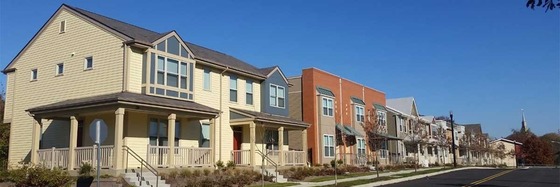
If your Washington group is interested in building affordable housing but needs some help getting your project underway, check out the resources from the Department of Commerce's Capacity Building, Outreach and Support Program (CBOS). Their team offers technical assistance for project planning; financing strategies; site planning and design; and feasibility analyses. Learn more.
Commerce extends deadline for low-income housing planning grants: Apply by April 30
Washington counties and cities can apply for grants up to $50,000 from the Department of Commerce's Coordinating Low-income Housing Planning (CLIHP) Grant program. Recipients can use funds to support plans for their lowest-income residents and other efforts such as:
- Coordinating planning five-year homelessness plans with Growth Management Act (GMA) comprehensive plans, to yield consistent policies and data.
- Coordinating conversations and resource sharing on affordable housing and homelessness planning between counties and cities, including planning for new shelters.
- Updating development regulations to allow emergency housing and shelters, permanent supportive housing, and transitional housing in more areas.
- Implementing land use incentives and regulatory changes to encourage development of more affordable housing types, particularly those for households below 50% of area median income (AMI).
Applications accepted on a rolling basis through April 2024. Grant instructions (PDF). Grant application (Word).
Public housing communities get results with planning grants: Apply by June 10
About 20 communities nationwide will be selected for planning grants from HUD's Choice Neighborhood Program to create and preserve housing, and to enhance community amenities like grocery stores and parks. Added bonus: if your community is awarded a grant, you'll receive priority for future Implementation Grant applications, too.
Apply through Grants.gov by 8:59 p.m. Pacific on Monday, June 10.
Off-farm labor housing repair program: Apply by June 18
Eligible entities nationwide can apply for funding from a program called Off-Farm Labor Housing Repair Program to develop housing for domestic farm laborers who are year-round, migrant, or seasonal. The funds can be used to construct, improve, or purchase housing. Qualified applicants include:
- Broad-based nonprofit organizations
- Nonprofit organization of farmworkers
- Federally recognized Indian Tribes
- Community organizations
- States or local governments
- Limited partnerships with a nonprofit general partner.
Applications for funding repairs due 9 a.m. Pacific Tuesday, June 18.
Applications for funding new construction due 9 a.m. Wednesday, July 3.
Download slides and Q&As from the program's workshop in April. Learn more.
 |
Take this survey and
tell us where we're headed this summer.
|
|
Help us build one-day brownfields workshops for you this summer. Ecology's Brownfields Program and the Center for Creative Land Recycling (CCLR) are planning several workshops and one of them might be in your own community. Tell us when, where, and what you'd like to learn in this short survey by midnight Friday May 3.
Workshop participants will learn about brownfields from a team of experts. You'll hear from community members who successfully turned their blighted properties into assets. We’ll provide information about funding and the cleanup process. We'll also share some of the challenges you might experience on the way, and how we can help.
Workshop participants will come away with:
- Tools for identifying brownfields in your community.
- Financial and technical assistance resources for land reuse.
- An understanding of what it takes to clean up a brownfield and redevelop it.
- Common challenges and how to overcome them.
- Great ideas for meaningful community engagement.
- Common milestones for projects (and when to ask for help).
- Opportunities to engage with our brownfields staff.
Take our 5-minute survey by 11:59 p.m. Friday, May 3. Have more questions? Please contact Ali Furmall, Brownfields Specialist, Washington Dept. of Ecology, ali.furmall@ecy.wa.gov
Return to top of message.
|
New EPA resource center hosts Portland event April 30
Communities in Washington, Oregon, Alaska, and Idaho are now served by two EPA resource centers dedicated to helping tribal and community organizations address environmental and energy justice issues. The centers are called Thriving Communities Technical Assistance Centers (TCTACs or "tic-tacs" for short) and the Oregon-based Northwest Environmental Justice Center is hosting a launch event in April.
Celebrate with the Portland team on Tuesday, April 30 from 2 p.m. to 4 p.m. then attend the networking reception from 4 p.m. to 5 p.m. We've noticed the event is waitlisted but encourage you to try. Learn more and register.
______________
Learn more about the TCTACs and how your community can benefit from their services:
-
Northwest Environmental Justice Center is based in Oregon. This team provides technical assistance such as help navigating government systems, increasing your administrative capacity, and identifying funding opportunities.
-
UW Center for Environmental Health Equity is based at the University of Washington. This team provides technical assistance for communities wanting to develop proposals for environmental justice (EJ) and energy justice grants and programs. Example services include conducting EJ analyses, facilitating engagement with stakeholders, and engaging UW graduate students in technical assistance opportunities.
CCLR video showcases the benefits of technical assistance
Center for Creative Land Recycling (CCLR) offers no-cost technical assistance to communities in EPA Region 10 (Washington, Oregon, Idaho, and Alaska) and Region 9 (California, Nevada, et al.). A new 20-minute video shows how well their assistance works.
Watch Rural Revitalization that spotlights four small towns in Nevada and California that are using Brownfields funding to transform their contaminated sites into community benefits. After that inspiration, check out CCLR's services to see what they can do for your community.
Financial webinar series specifically for Tribes
Tribal-specific funding is featured in a 4-part webinar series from the Council of Development Finance Agencies (CDFA). Learn more.
- All webinars 11 a.m.–12:30 p.m. Pacific.
-
Register for July 9 and Oct. 15 webinars even if you can't attend. Registrants can access recordings later.
EPA's Targeted Brownfields Assessments minimize uncertainty
A Targeted Brownfields Assessment (TBA) is an environmental investigation that documents environmental conditions at a property being considered for redevelopment. EPA's Targeted Brownfields Assessment program offers assessments by EPA contractors at no cost.
TBAs promote brownfield cleanup and redevelopment because they help states, Tribes, municipalities, other government entities, and nonprofit organizations minimize uncertainties around contamination that is often associated with brownfields. TBAs may encompass one or more of three activities:
- “All appropriate inquiries” assessment (Phase I), which includes a background and historical investigation, and a site inspection.
- Full site assessment (Phase II), including sampling activities to identify areas of contamination and types and concentrations of contaminants.
- Determining how much more investigation is needed and/or establishing cleanup options and cost estimates based on planned uses after redevelopment.
No application deadlines for this service. Learn more about TBAs in Region 10.
Technical expertise from KSU and CCLR help max your dollars
Check out these EPA technical service providers who can help you make the most of your brownfields funding:
EPA's Brownfields Job Training Grants

What are Brownfields Job Training Grants?
These EPA grants allow nonprofits, local governments, and other organizations to recruit, train, and place unemployed and under-employed residents of areas affected by the presence of brownfields. Graduates develop skills needed to secure full-time, sustainable employment in the environmental field, such as working with hazardous substances, pollutants, contaminants, and petroleum products; cleanup and reuse; and chemical safety. Learn more.
___________
Changes to the grant program for Fiscal Year 2025
-
Coalitions will now be eligible.
- New threshold evaluation criteria for expenditure of existing funds.
Learn when the next solicitation period will open by tracking the "Job Training" link on the EPA Brownfields' Types of funding page.
___________
Zoom calls will focus on networking and strategies
Technical service provider Kansas State University will host monthly Professional Learning Community calls on Zoom through September 2024. The calls provide new and aspiring Brownfields Job Training grantees an opportunity to network and learn strategies for developing successful brownfields job training programs.
Calls are held the 3rd Wednesday each month using the same Zoom link. To get on the mailing list, forward your contact information to Mike Senew at msenew@gmail.com.
- Wed. May 15 at 11 a.m. Pacific
- Wed. Jun 19 at 11 a.m. Pacific
- Wed. Jul 17 at 11 a.m. Pacific
- Wed. Aug 21 at 11 a.m. Pacific
- Wed. Sep 18 at 11 a.m. Pacific
Select opportunities you may find of interest...

New competitive grant program builds stronger infrastructure for bikes and pedestrians: Apply by June 17
Federal grants are available to communities that want to provide safe bike and pedestrian transportation networks or develop plans for same. You can catch a ride on grants from the U.S. Department of Transportation's Active Transportation Infrastructure Investment Program if your organization is:
- A local or regional governmental organization, including a metropolitan planning organization or regional planning organization or council
- A multicounty special district
- A state
- A multistate group of governments
- An Indian tribe (BIL § 11529(l)(5)).
Find several recorded sessions on their webpage to learn more. Applications due in Grants.gov by 8:59 p.m. Pacific on Monday, June 17.
Infrastructure funding available to Washington communities: Apply by June 28
Washington Dept. of Commerce's Public Works Board has loans and grants for repairing, replacing, or creating infrastructure such as domestic water systems, roads and streets, bridges, and stormwater systems. Eligible applicants for this funding are:
- Cities
- Counties
- Special purpose districts
- Quasi-municipal organizations
Apply through ZoomGrants by 11:59 p.m. Friday, June 28.
Your organization could manage the Healthy Watersheds Grant Program: Apply by May 10
A $2.1 million-dollar cooperative agreement is available from EPA to manage the Healthy Watersheds Grant Program that accelerates and expands the strategic protection of healthy watersheds. The cooperative agreement is anticipated to be incrementally funded at an average of approximately $350,000 per year over a six-year project period. Visit the website to learn more, access recorded webinars, and download frequently asked questions.
Apply in Grants.gov by 8:59 p.m. Pacific on Friday, May 10.

Contact us if you have a brownfield project!
Missed the latest updates?
|
Español (Spanish)
|
Si tiene preguntas o desea obtener más información sobre propiedades o terrenos abandonados o subutilizados que podrían tener contaminación ambiental pero potencialmente ser aptos para revitalización, comuníquese con: Elaine Heim, elaine.heim@ecy.wa.gov (360) 584-3750
|
|
中文 (Chinese)
|
如果您有任何疑問或想瞭解更多關於棕地即曾經的工業或商業用地的資訊,請聯繫 : Elaine Heim, elaine.heim@ecy.wa.gov (360) 584-3750
|
|
Tiếng Việt (Vietnamese)
|
Nếu quý vị có câu hỏi hoặc muốn biết thêm thông tin về bất động sản bị bỏ hoang hoặc không sử dụng có thể gây ô nhiễm môi trường, được gọi là “brownfields” vui lòng liên hệ : Elaine Heim, elaine.heim@ecy.wa.gov (360) 584-3750
|
|
한국어 (Korean)
|
브라운필드 (환경오염이 가능한 버려지거나 잘 사용되지 않는 부지)에 대해 질문이 있거나, 더 많은 정보를 원하시면 다음 연락처로 문의하세요: Elaine Heim, elaine.heim@ecy.wa.gov (360) 584-3750
|
|