The High Cost of Podiatry Board Investigations: How Complaints Can Impact Your Washington Licensing Fees
Jonathan Chamrad, Program Associate
Have you noticed healthcare costs creeping up? Professional licensing fees are also on the rise. The Washington State Department of Health podiatry program works in support of the board. This includes providing logistical support when complaints come in. Complaints and investigations, if needed, create a big financial strain and can affect the licensing and renewal fees that Washington podiatrists pay.
A complaint against a medical provider, including podiatrists, starts a process that involves several steps. The process is designed to be fair, equitable, and thorough, and the final outcome depends on what's discovered. Podiatrists face different types of complaints such as negligence, malpractice, and ethical challenges. The severity of these complaints, and the board’s responses, can and do vary depending on that severity.
All investigations are initiated by a complaint. Once the Department receives a complaint, members of the case management team review the complaint(s) and, if necessary, assigns an investigator to conduct further investigations. Once an investigation is complete, the full record is reviewed by the case management team, which includes attorneys and board members, and may result in disciplinary proceedings. Each complaint and investigation carry a price tag: investigator pay, legal fees, and office costs, which all add up. Under Washington law, each profession, including podiatry, must cover its costs, be self-sustaining and have a minimal fund balance. As a result, when investigation expenses increase because of additional complaints, this can result in result in higher licensing fees.
Podiatrists can help lower complaints by maintaining clear communication and by providing great care. By prioritizing effective communication, empathy, ethical professionalism, and ongoing education, podiatrists can significantly reduce complaints and foster a more positive relationship with their patients. In doing so, not only can they enhance their professional reputation, but they can also ensure a higher level of patient care, ultimately leading to better health outcomes.
Additional tips include:
- Keep detailed notes.
- A patient communication checklist can really help.
- Have a plan to handle risks.
- Stay up to date with the latest laws.
These steps and others can help to reduce complaints, protect you, and minimize program costs.
Take a Look at Medical Complaints
RCW 18.130, or the Uniform Disciplinary Act (UDA), consists of laws governing the licensure and discipline procedures for health and health-related professionals and businesses. These rules and regulations strengthen and consolidate disciplinary procedures for licensed and certified health and health care-related professions and agencies. The link to the 2021-2023 UDA reports for medical providers can be found here, and you are encouraged to compare statistics regarding podiatry with other professions. Please note that another report will come out in 2026 (covering 2023 – 2025).
The Washington State Department of Health also has a website that provides information on providers disciplined by the department and/or boards called Newsroom, and a link to this site can be found here.
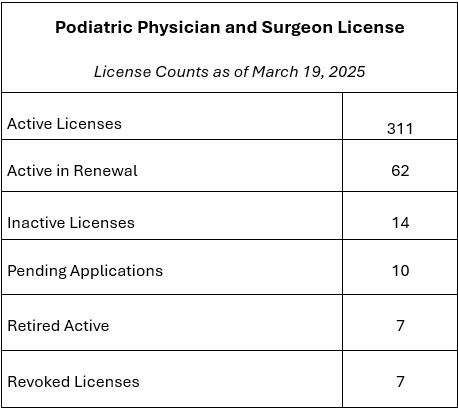
Statistics Surrounding Complaints
|