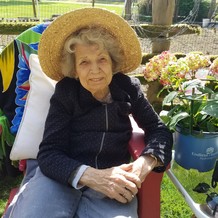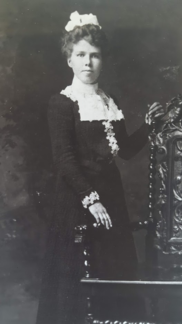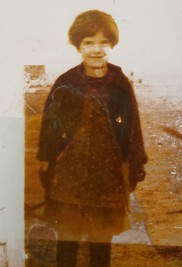
Life was difficult for Berdelle and her family after her mother died. Her father developed arthritis and struggled to keep up the family farm. Her brother dropped out of grade school to help their father plant and harvest the crops and take care of the farm animals. Berdelle told us, “I learned to read, and reading sort of saved my life.” She graduated from high school and two years of teachers college, and then taught school for several years in a one-room school.
“After my mother died, it was like she had never lived,” Berdelle told us. “No one, including my father, ever mentioned her name or memories of her again. I remember wondering why no one ever talked about her.”
Berdelle met her husband at a barn dance. She went with him to Seattle, and they started their lives together there. Eventually, they moved to Lake Quinault, where she continued to teach school and Head Start. Berdelle and her husband had five children. She taught her kids about the 1918 flu pandemic.
Sandy, at 70, is the baby of the family. She and her siblings grew up hearing stories about the pandemic and the terrible impact it had on her mother’s life. Sandy feels fortunate that she heard these stories. The 1918 pandemic was devastating for millions of families, but many families just didn’t talk about it. Sandy said, “I guess it was so terrible everyone wanted to forget about it.”
Sandy told us hearing her mother’s stories helped her be more aware of the way colds and flus spread. She remembers when she was working, and one person would come in sick, and then a couple of days later someone else was sick. “You could just watch it move from person to person down the line of cubes! It was so plain!”
Hardly a day goes by that Berdelle doesn’t think of her mother and the losses from the 1918 flu. Berdelle hopes that we will remember and talk about the people who died of COVID-19. “I do feel sorry for the families who have lost a loved one, especially if small children are left without a mother or father,” she said. COVID-19 is familiar territory for people who grew up with the specter of pandemic flu. Sandy told us, “One thing that absolutely astounds me is that people don’t take it seriously.” Berdelle sees her family now just from a distance. Sandy said, “We’re just trying to be so, so careful.”
Numbers. The latest numbers are updated on our webpage. As of 11:59 p.m. on June 15, there are 480,026 people in Washington who have been tested for COVID-19. Of those, 26,531 people (or 5.5%) have tested positive for COVID-19. Of those, 1,231 people (or 4.6%) have died of the disease.
Practice compassion. We all have a story. Listen to stories. Learn from our painful past. What will your COVID-19 story be? We have already lost more than 1,200 people in Washington to COVID-19. Take care of each other by wearing cloth face coverings, staying at least six feet away from others, and washing your hands frequently.
Can't wait to hear your story,
Lauren
|