Review the Office Hours recording and get highlights
Join Office Hours on May 13
Our next Office Hours is on May 13. Meetings are recorded.
Public Records Notice: Meeting registration information, such as name and email address, is a public record and may be subject to disclosure, pursuant to Chapter 42.56 RCW: PUBLIC RECORDS ACT.
The WSBO held Office Hours on April 8. The meeting recording and highlights follow:
Watch the April 8 recording
Password: &f0R#T4*
April 8 slide deck (PDF)
 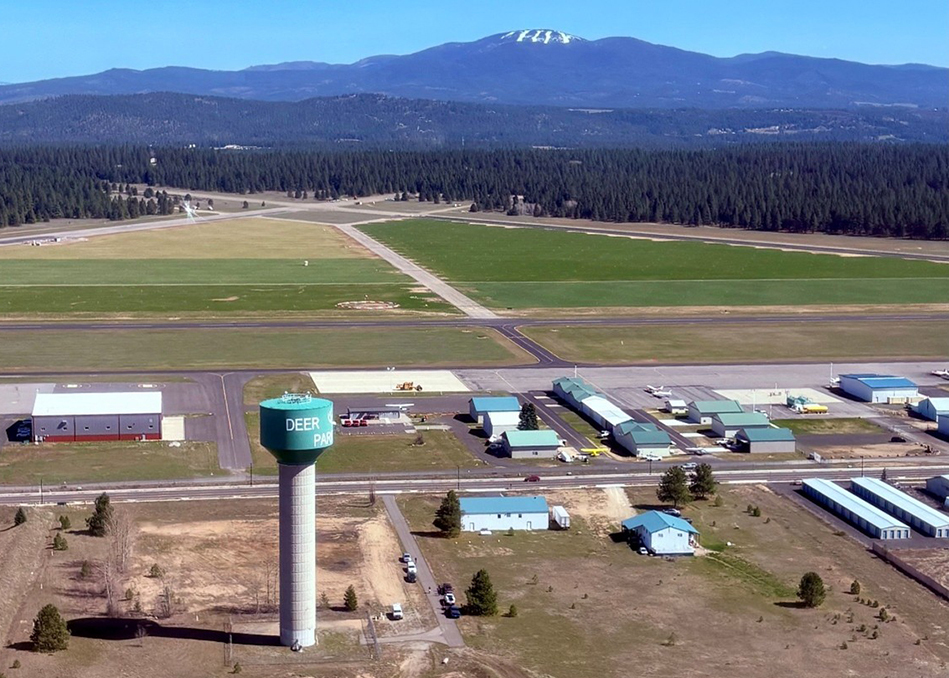 The community of Deer Park, Washington, seen during WSBO Director Jordan Arnold's recent trip.
BEAD Program status update
We have good news to announce! WSBO received the official Notice of Award (NOA) from our federal partners, who signed it on April 15. This award is the contract between WSBO and the federal government and includes all the requirements the state must follow when implementing the BEAD program.
WSBO can issue award letters, followed by the scope of work and subgrantee contract agreements, after WSBO signs the NOA. Subgrantees will have up to 180 days from April 15 date to sign contracts (though signing earlier is encouraged).
Washington received approval for its final BEAD proposal (provider selection, technology choices and award amounts) on Feb. 26.
BEAD Project Area Map and public tools
WSBO has received many inquiries from the press, public, and local entities asking how to identify whether a BEAD project affects their community.
WSBO’s new BEAD Award Map is in development and will show awarded project areas, award details and the individual locations coming online.
Until then, WSBO recommends using the Project Area Maps. Users can enter an address and right-click to reveal all Broadband Serviceable Locations (BSLs) included. The map is slow to load due to the large amount of data.
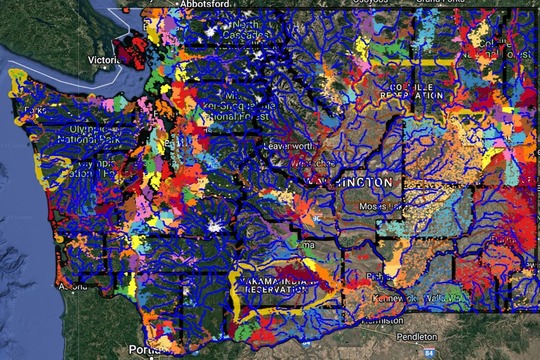 This map was used in the BEAD application round to display the project areas across the state that include locations without broadband service.
Subgrantee agreement updates
WSBO posted a new draft of the Subgrantee Contract (PDF) incorporating updated NTIA requirements and general terms and conditions. A tracked changes version (PDF) comparing the current and the previous version is available to help identify changes. The updated draft reflects the necessary additions from NTIA.
The updates include updated federal compliance requirements (including domestic procurement requirements and NEPA), a new Federal Interest section, additional information about programmatic expectations, and additional financial control and risk management expectations.
Subgrantees are encouraged to review and flag issues early. Additional changes might occur based on provider feedback or shifts in federal policy. Our NOA will contain “Specific Award Conditions” for Washington that may need to be incorporated into contracts. The latest version of the contract and a redline are housed in the Subgrantee Resources section of the WSBO website.
Tribal Consent Status
WSBO is tracking tribal consent closely and intends to support subgrantees and tribes as needed. In some cases, FCC maps flagged small numbers of BSLs as tribal even when the overall project area was not. Subgrantees in these situations must still secure tribal consent. All subgrantees lacking consent for impacted BEAD BSLs have been informed via email. WSBO encourages subgrantees to include specific addresses or maps for tribes.
Letter of credit and performance bonds – What subgrantees need to know
All applicants indicated in their BEAD application whether they would use a letter of credit or performance bond.
-
Letter of credit (LOC): Final LOC must be submitted before WSBO can execute a subgrantee agreement. Execution will pause until WSBO verifies the LOC is in hand.
-
Performance bond: Subgrantees have 60 days after contract execution to submit a performance bond. Failure to do so is grounds for termination of the contract. Many financial institutions require an executed contract before issuing the bond, which explains the 60-day window.
-
Reduced 10% LOC/Bond Option: This option requires reimbursement requests every six months for all associated project areas.
Subgrantees should review NTIA’s BEAD FAQ for more details.
Remaining BEAD funds: What will Washington do?
Roughly 23% of Washington’s BEAD funds remain unallocated. WSBO has not yet received federal guidance on how to use these funds, but we are closely tracking national discussions. Potential uses requested by Washington and other states include cleanup of remaining unserved/unfunded areas, permitting modernization and local capacity-building, telecom workforce development, and resilience and public safety infrastructure.
Technology selection: Fiber versus fixed wireless
During the last Office Hours, several people asked why fixed wireless was selected over fiber in some areas. The original expectation was to deploy fiber statewide using the full $1.2 billion BEAD allocation. Under the new administration, NTIA eliminated technology preference and shifted its focus toward reducing costs. That shift required WSBO to choose between fixed wireless and satellite, rather than fiber, in many cases. For more information, view the updated guidance.
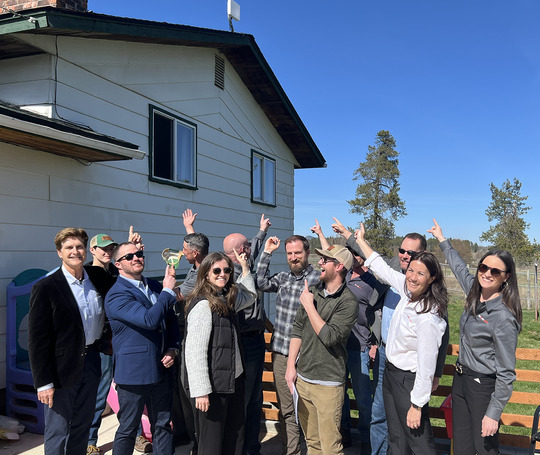 WSBO Director Jordan Arnold joined broadband specialists in Spokane and Deer Park this month.
Director Jordan Arnold visits Spokane
Last week, WSBO Director Jordan Arnold and Infrastructure Specialist Nick Zehrung visited Deer Park to observe a demonstration of a “next gen” fixed wireless project delivering 500 Mbps download/100 Mbps upload speeds. That effort – a public-private partnership between Broadlinc, Tarana Wireless and local ISP KnightCom – is a great example of a fixed wireless project that leverages available resources (the network equipment is installed atop the Deer Park water tower) and serves local needs. WSBO is committed to ensuring all funded technologies provide reliable service and meet performance standards.
Watch our video about the visit (YouTube)
About BEAD
The BEAD program aims to get all Americans online by funding partnerships between states or territories, tribal nations, communities, internet providers and other stakeholders to increase high-speed internet adoption. The federal program provides over $42 billion for infrastructure planning and implementation nationwide. Learn more about Commerce’s BEAD work on our Internet for All page.
BEAD is an infrastructure investment program, meaning it will result in connections to sites that haven’t had them before, and service customers will pay for the monthly service. Recent federal updates to BEAD policies do not allow the program to implement affordability requirements.
About the Washington State Broadband Office
The Washington State Broadband Office, housed within the Department of Commerce, leads the state’s efforts to expand broadband access and adoption. The office administers federal and state broadband programs, coordinates with stakeholders, and develops strategies to ensure all Washingtonians have access to affordable, reliable high-speed internet.
|