The Jamestown S’Klallam Tribe: A model for energy resiliency
As climate impacts intensify across the Pacific Northwest, the Jamestown S’Klallam Tribe’s work shows how steady funding, strong partnerships and local leadership can turn climate challenges into lasting solutions.
The Western red cedar (x̣páy), often called the “tree of life,” is foundational to many tribal nations in the Pacific Northwest. For generations, it has been used to make canoes, longhouses, clothing, baskets, and ceremonial items. The Jamestown S’Klallam Tribe, located on the Olympic Peninsula, continues this tradition through cedar weaving, bentwood boxes and more.
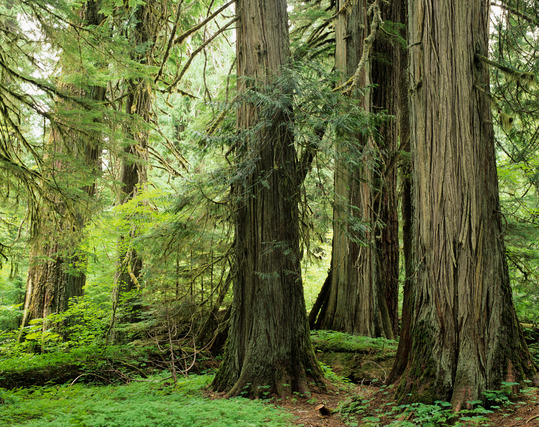 Mt. Rainier National Park, Grove of the Patriarchs, Western red cedar trees. Photo from Adobe Stock.
Cedars thrive in cool, wet conditions. But recent years have brought rising temperatures and extreme weather to the region.
In June 2021, an extreme heat wave struck Washington and much of the Pacific Northwest. A weather pattern known as a “heat dome” trapped hot air over the region for days. Temperatures soared to record highs. Unfortunately, the hottest day on record coincided with a very low midday tide, leaving intertidal organisms such as clams and oysters fully exposed to direct sunlight. Along Washington’s beaches, prolonged heat and sun exposure caused many clams to die inside their shells.
This event further confirmed what Tribal leaders and staff had long understood: Climate change is already having profound impacts on natural resources and cultural traditions.
Planning for a resilient tribal community
Robert Knapp has worked with the Jamestown S’Klallam Tribe Natural Resources Department for more than 13 years. As an environmental planning manager, his recent focus is on securing funding to strengthen the tribe’s climate resilience.
When the federal Inflation Reduction Act of 2022 passed, Knapp identified new funding for tribes and began applying for grants to support clean energy projects. His efforts have brought in awards from federal agencies, the Washington State Department of Ecology and the Washington State Department of Commerce.
Between 2024-2026, the Tribe was awarded more than $3.3 million in Commerce funding for
The Dungeness River Nature Center
The Dungeness River Nature Center, located in Railroad Bridge Park where the Olympic Discovery Trail crosses the Dungeness River, is a partnership with the National Audubon Society and the Olympic Peninsula Audubon Society. Commerce supported the Tribe’s planning and design, awarding $99,000 for the design and is working to provide funding to install solar panels and battery storage at the Center.
“Commerce helped immensely with planning and design,” said Knapp. “We couldn’t have done a fraction of what we have accomplished without that support.”
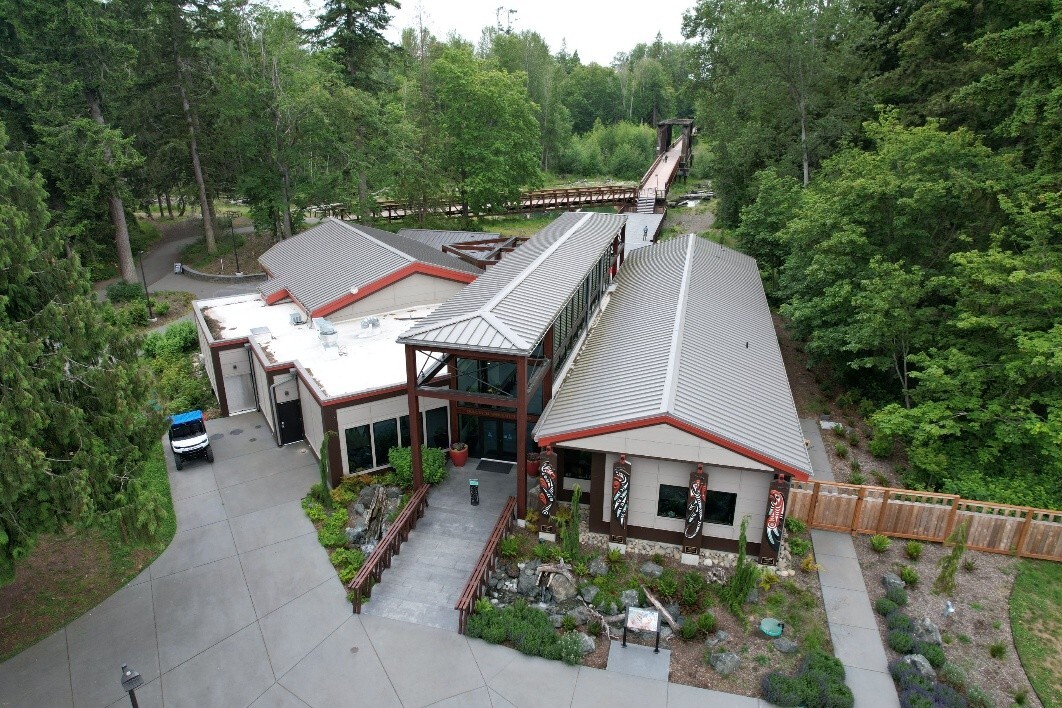 The Dungeness Nature Center. Photo courtesy of the Jamestown S’Klallam Tribe.
Community members visit the Center to learn about the river and release salmon into the stream. The gathering space and commercial kitchen make up a community meeting place. The solar plus storage microgrid, a project in progress, provides resilient backup power for the Nature Center.
Tribal Climate Resilience funding and Healthy Homes
The Tribe is also upgrading its housing through its Healthy Homes Program, a partnership with engineers and housing staff to create stronger, more energy-efficient homes. In December 2025, Commerce awarded the Jamestown S’Klallam Tribe a Climate Resilience grant of $895,935. Upgrades to its rental homes include:
- Exterior insulation in roofs and walls
- Air sealing to reduce drafts and smoke intrusion
- Heat pumps for efficient heating and cooling
- Heat pump water heating
- Improved ventilation and air filtration
- Long-lasting, recyclable roofs
These improvements will help homes stay cooler during heat waves, cleaner during wildfire smoke events and more comfortable year-round.
Funding a growing electric vehicle infrastructure
The Tribe has also expanded its electric vehicle fleet and charging network. With support from multiple funding sources, including Commerce, the Tribe purchased EVs and installed 30 charging stations at key locations.
The chargers are available to both staff and community members, making it easier for more people to switch to electric vehicles. Demand continues to grow, as the chargers make it easier to promote the use of EVs.
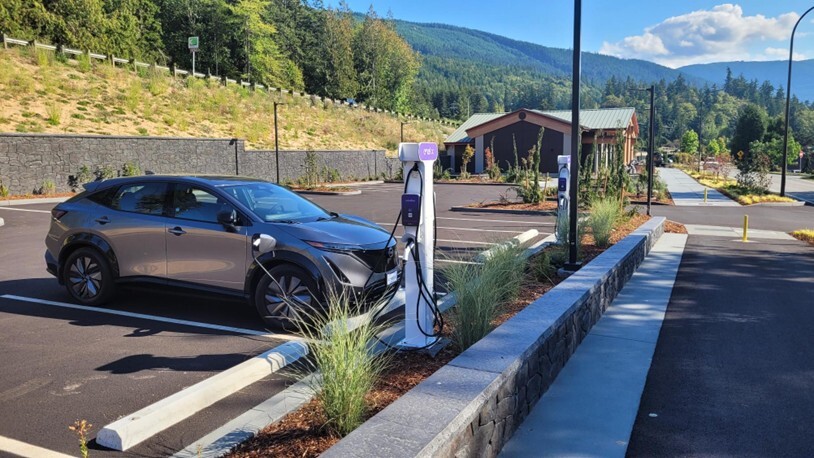 EV chargers in front of the Jamestown S’Klallam Tribe Tribal Nature Center. Photo courtesy of the Jamestown S’Klallam Tribe.
Through careful planning and strategic investment of state and federal funds, the Jamestown S’Klallam Tribe has created a coordinated approach to resilience. Solar microgrids, stronger housing and expanded EV infrastructure work together to reduce risk and protect the community.
As climate impacts intensify across the Pacific Northwest, the Jamestown S’Klallam Tribe’s work shows how steady funding, strong partnerships and local leadership can turn climate challenges into lasting solutions.
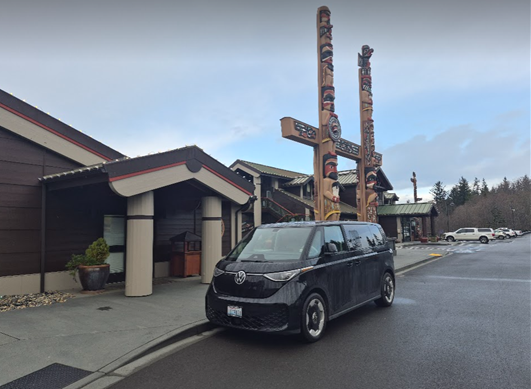 Electric van, purchased with Washington Commerce Tribal Climate Resilience funding
|