Thanks for checking out our newsletter this month. The beginning of July has been pretty rough for many in our community. Over the past several months, so many of you have shown up and spoken out about concerns regarding potential federal cuts to service systems and supports. We heard significant concerns — especially about Medicaid — and how cuts would impact the lives of people with developmental disabilities.
While the bill passed on July 3, 2025, is not what we had hoped for, we are coming out of this experience more informed, more involved, and ultimately stronger as a community. We plan to keep building that strength over the next several months as our state — and others across the country — determine how to move forward.
We need to continue helping each other, holding each other, listening to each other, and speaking up for one another. Please know the DDC is here, working alongside you. We will continue to provide information and education to ensure our community understands how changes will unfold and what actions we can take in response.
Please keep reaching out — share your questions, concerns, and let us know what would be helpful. Take good care of yourselves and the people you care about.
Brandi Monts, WADDC Executive Director
|
The Council is already planning for the 2026 legislative session!
Council members are building the Washington State Developmental Disabilities Council’s 2026 Legislative Priorities. They’ve identified six core values—belonging, diversity, inclusion, independence, leadership, and respect—along with five key areas of concern affecting people with intellectual and developmental disabilities: caregiver shortages and training, employment, access to services, Medicaid, and workforce shortages. The Public Policy Committee is now reviewing this input to shape the final priorities.
Emily Rogers, WADDC Public Policy Director
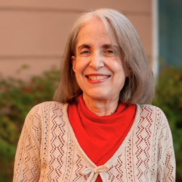
Leigh Spruce, a self-advocate from Mill Creek, joined the Washington State Developmental Disabilities Council to use her lived experience to drive change. Leigh was drawn to the Council because of its statewide impact and the opportunity to bring her voice to the table. “I wanted to lend my self-advocacy voice and life experience, which I feel should include everyone, to forge change,” she says. Since joining, she has testified on key legislation, including the Nothing About Us Without Us Act, and worked to educate underserved communities about disability rights and the Council’s role.
Leigh’s leadership has been recognized by her peers, who elected her Co-Chair earlier this year. She’s also completed training on cultural intersectionality and inclusive advocacy. “The faith that my fellow Council members have in me means a great deal,” she says. Reflecting on her time with the Council, she adds, “My favorite part is learning about other disability agencies and what has to be done to be purposeful.” Leigh hopes her work helps build a more inclusive future: “I want the work we do to create lasting change for future generations.
|
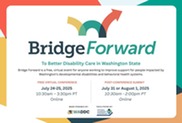
Bridge Forward
You’re invited to Bridge Forward – a free, virtual event for anyone working to improve support for people impacted by Washington’s developmental disabilities and behavioral health systems.
This free gathering brings together individuals with lived experience, families, providers, policymakers, and community partners form across the state and beyond to raise awareness, share challenges and successes, and chart a path forward together.
The first two days (7/24 and 7/25) of the gathering will be conference-style and include presentations and breakout sessions. The second part of the conference will be interactive. Attendees will join one of two sessions (7/31 or 8/1) to plan the future of behavioral health and developmental disability supports in Washington.
If you have questions or need support to register, please contact the Council at info@ddc.wa.gov or (800) 634-4473.
|
Community Summit Recap
The Washington State Developmental Disabilities Council (WADDC) was proud to be a participant and sponsor in this year’s Community Summit, continuing its mission to support inclusive communities and elevate the voices of people with developmental disabilities and their families. Big kudos and gratitude go to all of the Council members and Informing Families collaborators who helped make this event a success! Please check out what we learned and what the community told us at these events.
Final Month to Take DDC Survey
If you haven't taken our short, anonymous survey yet, now's the time! It only takes about 10 minutes, and your input helps shape our future work to support people with developmental disabilities and their families in Washington. The survey deadline has been extended to August 1st, 2025 at 5 p.m.
As we enter the final month, we’re especially looking to hear from individuals who have been underrepresented so far—people with intellectual and developmental disabilities (IDD), Black, Indigenous, and people of color (BIPOC), and people under 40. Your voice is vital and will help ensure our work reflects the needs of the whole community.
New Informing Families Coordinator
Please join us in welcoming new Informing Families Coordinator, April Paccerelli! We are looking forward to community members connecting with April in Ferry, Stevens, Lincoln, and Pend Oreille counties.
Enigma ASD Services is a Seattle-based nonprofit dedicated to helping neurodiverse young adults thrive in college, independent living, and social connection. Through a range of services — including one-on-one life skills coaching, interest-based social groups, and an independent living program called Thrive — Enigma supports personal growth, confidence, and community.
|
Who We Are: The Developmental Disabilities Council (DDC) advocates for better services and supports for people with developmental disabilities and their families in Washington State.
What We Do: The DDC advocates for improved services and supports for individuals with developmental disabilities and their families, guided by our core values including self-determination and inclusion. Collaborating with various agencies and organizations, we train leaders, promote better policies, and coordinate efforts towards enhancing the lives of those with developmental disabilities. Our Five-Year State Plan guides our work, ensuring we address critical community needs and uphold specific goals. Through public policy advocacy and active participation in state-wide activities we strive to enact positive change and foster inclusivity for all.
Council Membership: Council members are appointed by the Governor to serve three-year terms. At least 60% of our members are required to be people with developmental disabilities and family members of people with developmental disabilities. Other members are representatives from state agencies and other organizations we work with. Council membership must reflect the diversity of communities across Washington State. This includes geographic location, disability identity, and racial/ethnic identity. Each year there are openings on the Council, and we are always accepting applications. Click to edit this placeholder text.
|