Executive Director Update

Hello everyone, thank you for taking a few minutes to check out our April newsletter. We have seen so many of you step up to lead your communities over the past month! You are shaping the future of the systems we depend on both here in Washington and on a national level. For example, folks in Spokane, Walla Walla, and Vancouver helped their communities understand and speak up about potential changes to Medicaid. Groups across the state have signed onto letters reaching out to their congressional officials to voice their questions and concerns about the changes that impact their service systems. Advocates are focused on the extraordinary opportunity to downsize our dependence on institutions and build better community supports so people can live the lives they want, how and where they want.
Please keep reading to learn more about these actions and issues, and check out and share the Residential Habilitation Centers (RHC) Data and Report Toolkit on the DDC website to understand and see examples of what has worked for people transitioning from a facility into their community. Please reach out to the Council if you have questions about any of the information in this newsletter, and take care of yourselves and each other. Your voice and efforts are helping to make a difference.
Brandi Monts, WADDC Executive Director
|
 Public Policy Corner
The Washington State Developmental Disabilities Council, along with numerous partner organizations, is urging Congress to reject the U.S. Department of Health and Human Services’ proposed reorganization plan. This plan includes the elimination of the Administration for Community Living (ACL) and possible cuts to vital programs for people with disabilities and older adults. These changes were made without public input or congressional consultation and would harm essential services such as:
-
Medicaid helps people with disabilities live in the community and avoid institutional care.
-
SSI provides monthly income and Medicaid access for low-income people with disabilities.
-
ACL supports independence by coordinating disability and aging programs.
-
Department of Education oversees special education through IDEA, but funding is limited.
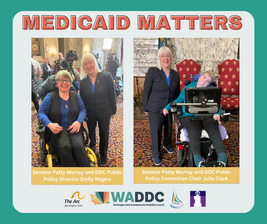
In addition to our letter to Congress, the DDC was proud to be represented at the recent Medicaid Matters Press Conference in Olympia, where leaders like Senator Patty Murray and Representative Emily Randall highlighted the importance of protecting Medicaid. Julie Clark, Chair of the DDC’s Public Policy Committee, shared her powerful personal story — offering the only firsthand account from someone with lived experience — and reminded everyone why Medicaid is truly a lifeline for people with disabilities. Thank you, Julie, for your strong voice and advocacy!
Emily Rogers, WADDC Public Policy Director
Watch Now: 2025 Legislative Priorities from the Washington State DD Council
Get a clear overview of the Washington State Developmental Disabilities Council’s 2025 Legislative Priorities in this short, engaging video. Learn about our commitment to funding inclusive services, protecting civil rights, addressing workforce shortages, and eliminating restraint and isolation. The video also highlights key issues we're monitoring—like emergency transport for power wheelchair users and increased flexibility in personal care delivery. Don’t miss this important update and share with your network!
 |
|
Help Shape the DDC’s Next 5-Year State Plan!
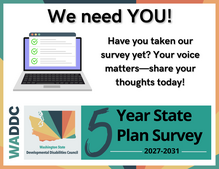
The Washington State Developmental Disabilities Council (DDC) is creating its next 5-Year State Plan — and we want to hear from you! If you are a person with a developmental disability, a family member, or a community stakeholder, please take our anonymous survey to share what matters most to you. The survey takes about 10 minutes to complete.
|
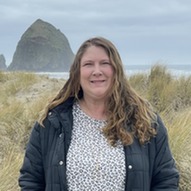
Council Member Spotlight: Sandi Gruberg
Sandi Gruberg brings a powerful combination of personal and professional experience to the Washington State Developmental Disabilities Council. As a parent and caregiver for her adult daughter with IDD, Sandi offers firsthand insight into the challenges and triumphs families face. Her professional expertise as a systems navigation expert further strengthens her advocacy, making her a vital voice on the Council. She co-coordinates the Washington Statewide Parent Coalitions, assists individuals in obtaining benefits and services through the Pierce County Coalition for DD and teaches Parent Provider classes for The Arc of Washington.
“I joined the Council to raise awareness and bring forward the voices of individuals who are typically not included where decisions are made,” Sandi explains. “As a parent and caregiver, I am passionate about representing individuals with complex support needs and the families who help them live full and meaningful lives.”
For Sandi, the most rewarding part of her Council work is the opportunity to blend her systems knowledge with her experience. This unique perspective helps shape disability conversations and decision-making practices in new and meaningful ways. “I approach each Council meeting with creativity, collaboration, and transparent honesty in the hope of fostering new ideas and solutions to address community needs,” she shares.
Sandi’s dedication and compassionate advocacy make her an invaluable asset to the Council, helping to ensure that individuals with IDD and their families have a voice in shaping the policies that impact their lives.
|
 |
|
The Washington State Developmental Disabilities Council, The Arc of Washington State, and Self Advocates in Leadership (SAIL) have launched a campaign to help people understand and participate in potential Medicaid changes. We’ve created a webpage and video series explaining Medicaid’s role, who it serves, and why it matters. You can also share your Medicaid story through video, photo, or written statement, and we offer support to help set up meetings with your elected officials. |
Upcoming Council Events
April 2025 Quarterly Council Meeting - Tri-Cities, WA
April 23, 2025 - April 25, 2025
Our hybrid meetings are open to the public.

Upcoming Community Events
2025 Virtual Community Summit – Save the Date
DSHS Developmental Disabilities Administration is thrilled to announce the 2025 Virtual Community Summit! The theme for the Summit is Uniting for Impact: Engaging for Change. This year’s summit will be completely virtual, bringing together self-advocates, families, friends, partners, and allies to collaborate in creating more inclusive communities.
- Date: June 4, 2025
- Time: 8:30 a.m. - 5 p.m.
- Registration will open in early April - and it’s FREE!
|
Agency spotlight: Thoughts Cost
Thoughts Cost is a culturally relevant, disability-centered organization that believes in making education accessible, engaging, and empowering for everyone. Through programs like ARISE, AURA, and PATH, the organization promotes work readiness, community connection, and transitions out of institutional settings. Services include IEP support, mentorship, and accessible educational tools that empower and uplift people with disabilities.

Washington State DD Council - Who We Are & What We Do
Who We Are: The Developmental Disabilities Council (DDC) advocates for better services and supports for people with developmental disabilities and their families in Washington State.
What We Do: The DDC advocates for improved services and supports for individuals with developmental disabilities and their families, guided by our core values including self-determination and inclusion. Collaborating with various agencies and organizations, we train leaders, promote better policies, and coordinate efforts towards enhancing the lives of those with developmental disabilities. Our Five-Year State Plan guides our work, ensuring we address critical community needs and uphold specific goals. Through public policy advocacy and active participation in state-wide activities we strive to enact positive change and foster inclusivity for all.
Council Membership: Council members are appointed by the Governor to serve three-year terms. At least 60% of our members are required to be people with developmental disabilities and family members of people with developmental disabilities. Other members are representatives from state agencies and other organizations we work with. Council membership must reflect the diversity of communities across Washington State. This includes geographic location, disability identity, and racial/ethnic identity. Each year there are openings on the Council, and we are always accepting applications.
|
|