A Note from Small Biz Andrew
Very late spring greetings, small business humans!
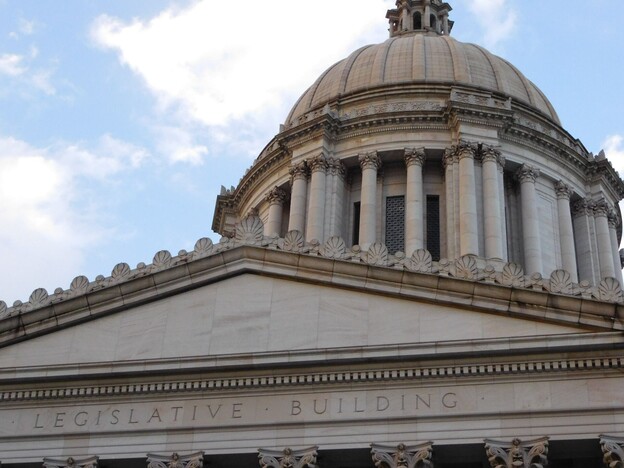
Spring is nearing its official conclusion and the legislative session has come to a close. Bills have been passed. Gubernatorial signatures have been obtained. Sea mammals have waddled out of Puget Sound to issue the official Seal of Approval. At least, I presume the seals that close sessions are of the harbor variety.
Here are this edition's talking points we'll pass through our Small Business Newsletter chamber together:
- Our New Legislation Roundup will summarize some passed bills of note
- New electrical laws are going live
- Some funds for small business loan programs are reaching Washington state
- Take part in webinars (including the return of live workshops), COVID updates, and more
And since bills are the topic du jour and we're still waddling through the last vestiges of spring, I'm going to consult the Venn Diagram for overlap between these two topics and opt for duck jokes to toss your way. Because as my grandfather was fond of saying, "When life throws waterfowl at you, it's time to duck."
Your friendly friend at L&I,
Andrew Bryan
Asst. Small Business Liaison
New Legislation Roundup
Learn about the recently passed legislation that could affect your small business.
Washington's 2023 legislative session recently concluded, so the Small Business Newsletter is here to review some of the bills that could impact your business in the not too distant future.
HB 1217: Wage Complaints
Who it impacts: All businesses
What is changing: For all wage complaints filed on or after January 1, 2024, if an employer accepts an offer from L&I to resolve a wage complaint without a citation and notice of assessment, any settlement must include interest of 1 percent per month on all amounts owed. The interest is to be paid to the employee.
The employee may request a waiver or reduction of interest as part of the settlement process.
When it takes effect: July 23, 2023 for the law, but applies to wage complaints filed on or after January 1, 2024
Read the details in the Final Bill Report.
HB 1491: Prohibiting Unjustified Employer Searches of Employee Personal Vehicles
Who it impacts: All employers
What is changing: Employers or their agents may not search an employee’s privately owned vehicle located on the employer’s parking lots, garages, or access roads to the employer’s parking lots or garages.
An employer must not require, as a condition of employment, that an employee or prospective employee waive those protections.
An employer may not take any adverse action against an employee for exercising any rights established under these provisions.
When it takes effect: July 23, 2023
Read the details of the bill, including situations where the prohibition against searches does not apply as well as examples of adverse actions, in the Session Law.
Small Biz Andrew's Business Jests #1
Which hockey team is the favorite to all waterfowl?
You'd think it would be the Anaheim Ducks, but around here, it's the Seattle Quacken.
HB 1534: Strengthening Protections for Consumers in the Construction Industry
Who it impacts: Construction contractors and those who engage them
What is changing:
- Contractor registration applicants may provide an individual taxpayer identification number (ITIN) in lieu of an employer social security number.
-
When it takes effect: July 23, 2023
- L&I is required to deny an application for registration when an applicant is a successor to a business entity with an unsatisfied final judgment against it.
-
When it takes effect: July 23, 2023
- Raises the required bond amount for contractor registration from $12,000 to $30,000 for general contractors and from $6,000 to $15,000 for specialty contractors.
-
When it takes effect: July 1, 2024
- Increases fines and penalties for failure to register as a contractor to a range of $1,200 to $10,000. The maximum penalty for other violations of the Contractor Registration Act is also increased to $10,000.
-
When it takes effect: July 1, 2024
- Homeowner Recovery Account is established. Revenues from all fines and penalties collected by L&I under the Contractor Registration Act must be transferred into the Homeowner Recovery Account. Homeowner Recovery Program allows for eligible homeowners to receive recovery payments of up to $25,000 from the account based on unsatisfied final judgments brought against registered contractors.
-
When it takes effect: Homeowner Recovery Program eligibility begins July 1, 2026
Read the many details in the Session Law.
HB 1762: Protecting Warehouse Employees
Who it impacts: Employers who directly or indirectly employ or exercise control over working conditions of 100 or more employees at a single warehouse distribution center or 1,000 or more employees at one or more warehouse distribution centers in the state
What is changing: Employers must provide to all employees a written description of each quota to which the employee is subject.
Violations occur if the quota does not provide sufficient time for meal and rest breaks, or exposes workers to health and safety hazards, or violates related laws.
Requires employers to provide information about quotas and work speed data upon an employee's request, or a former employee's request, for up to three years from separation.
Prohibits retaliation.
Allows L&I to investigate complaints, enforce the requirements, including assessing penalties.
When it takes effect: July 1, 2024
Read all the details in the Session Law.
Small Biz Andrew's Business Jests #2
No matter how long a duck lives, it never grows up.
It will, however, grow down.
SB 5111: Concerning Payments for Accrued and Unused Sick Leave for Certain Construction Workers
Who it impacts: Construction companies
What is changing: Requires employers to pay the balance of accrued and unused sick leave to construction workers, except for residential construction, that have not met the 90-day sick leave eligibility threshold at the time of separation from employment. Payment must be made at the end of the established pay period following the worker’s separation.
When it takes effect: January 1, 2024
Read more in the Final Bill Report.
SB 5156: Expanding the Farm Internship Program
Who it impacts: Small farmers
What is changing: Expands the existing farm internship program to all counties in Washington for qualified small farms (annual sales less than $265,000) to employ up to three farm interns at any time, working under special certificates issued by L&I. In some counties, at least one intern must have a parent or grandparent who is/was a migrant farmworker.
When it takes effect: May 4, 2023
Read all the details of the bill in the Final Bill Report.
Small Biz Andrew's Business Jests #3
What kind of television programming excites waterfowl the most?
Duckumentaries.
SB 5217: Concerning the State's Ability to Regulate Certain Industries and Risk Classes to Prevent Musculoskeletal Injuries and Disorders
Who it impacts: All employers
What is changing: Repeals a law prohibiting L&I from adopting rules related to ergonomics or musculoskeletal disorders. L&I may now adopt up to one set of rules each year related to preventing musculoskeletal injuries and disorders in industries showing at least two times the average incidences for these types of injuries.
When it takes effect: July 23, 2023
Read all the details of the bill in the Final Bill Report.
SB 5286: Modifying the Premium Provisions of the Paid Family and Medical Leave Program
Who it impacts: Those contributing to Paid Family and Medical Leave, administered by the Employment Security Department
What is changing: Modifies the statutory formula for determining the premium rates for the Paid Family and Medical Leave Program administered by the Employment Security Department. ESD’s authority to assess solvency surcharges is removed and total premium rates are adjusted when a calculation conducted on or around October 20 of each year exceeds a rate necessary to maintain a three-month reserve. This can be no greater than 1.20 percent.
When it takes effect: July 23, 2023
Read all the details of the bill in the Final Bill Report.
Small Biz Andrew's Business Jests #4
If you need a well prepared presentation, never hire a duck.
They always prefer to wing it.

State Rewires Electrical Law
What you need to know
On July 1, a new law will change Washington’s approach to journey level electrician certification. An 01 journey level electrician does all types of electrical work.
The state passed two laws: one that requires electrical trainees join a training program to register as an apprentice; and the other, passed this year, opens the door a little wider for more trainees to take the journey level exam offered through L&I.
Electrical contractors employing apprentices must either be part of a registered apprenticeship program, or create their own. The law passed this year allows electrical trainees that reach a certain level of experience to continue work without registering as an apprentice. The law allows this through July 1, 2026.
For more information, visit www.Lni.wa.gov/ElectricalApprenticeship, email ElectricalApprenticeship@Lni.wa.gov, and join the email list to receive “Electrical Currents,” the newsletter.
|
 |

Washington Receives $163.4 Million to Fund Small Business Loan Programs
Five new programs will be offered through the State Small Business Credit Initiative (SSBCI).
Washington state has been awarded $163.4 million from the U.S. Treasury Department to operate five capital access programs for small businesses. The new funding will be used to launch an updated version of the state’s highly successful Small Business Credit Initiative (SSBCI) program, which was completed in 2016.
With the federal infusion, Washington will operate five distinct programs:
Micro and Small Business Loan Fund – Assists small businesses with obtaining loans through participating lenders and Community Development Financial Institutions (CDFIs)
Revenue-based Loan Program - Provides access to capital through a revenue-based debt product that focusses on underbanked communities around the state
Washington State Venture Capital Fund – An equity/venture capital program that provides capital commitments to new venture capital funds with diverse investment teams or that are focused on investing in underserved startups or targeted investment objectives such as climate technologies
Commercial Real Estate Loan Program – Provides subsidized owner-occupied commercial real-estate loans that could be used for tenant improvements, construction, purchase or refinance
Small Business Collateral Support Program – Provides small business loans to companies that have trouble qualifying for short-term loans through collateral support
The programs will be launched in mid-2023 once they have completed regulatory review and are able to accept applications. The Washington State Department of Commerce will announce programs as they come online.
|
|
Small Biz Andrew's Business Jests #5
Scientists have determined that the reason ducks always fly south for the winter is because it's too far to waddle.
|

COVID-19 Requirements in Effect (Updated April 12)
Federal and state-level COVID-19 public health emergency proclamations have ended, but it remains a workplace hazard. Know what's required.
All employers must continue to ensure a safe workplace by adhering to the following items.
Minimum Requirements for All Workplaces
Mask Guidance
- Ensure workers (including those in health care settings) wear appropriate, fit-tested, and NIOSH-approved respirators:
- When providing care to or working near someone known or suspected to have COVID-19.
- When required by your COVID-19 hazard assessment and when respirators are required, you must have a respirator program (see sample templates) and meet the requirements in Respirators, Chapter 296-842, WAC.
- Make sure voluntary use of respirators is safe. Workers may use N95 respirators as long as it doesn’t create a safety or security issue. See voluntary use requirements in Respirators, Chapter 296-842, WAC.
For more details on further requirements and resources, please consult the L&I Requirements and Guidance for Preventing COVID-19 page.
|
|

2nd and 3rd Quarter Webinars for Small Businesses
L&I Essentials for Business webinars cover:
- Essentials about workers' compensation, quarterly reporting, what to do if your employee is injured, workplace safety and health requirements, wage and hour laws, and contractor registration rules.
- How to access a range of L&I resources and services designed to help your business save time and money.
- Various ways L&I partners with you to keep your workforce safe and healthy.
Upcoming monthly L&I Essentials for Business Webinars will be held on the following dates:
Webinars are also available in Spanish:
The Return of Live L&I Essentials for Business workshops!
Other L&I Webinars for Employers
|
|
Small Biz Andrew's Business Jests #6
What time do the most successful ducks wake up?
At the quack of dawn.
|