|
ESTUARY AND SALMON RESTORATION PROGRAM NEWSLETTER |
|
ESRP 2027-2029 Preliminary Investment Plan
|
|
As a state-funded capital grant program, the Estuary and Salmon Restoration Program (ESRP) runs on the state’s biennial budget cycle. Every other fall, ESRP releases requests for proposals (RFP) for grant programs with an active competition. In November 2025, ESRP released RFPs for the following programs:
-
Restoration and Protection Grants
-
Regional Pre-Design/ Learning Grants
-
Beach Restoration Small Grants
The regional Shore Friendly Programs compete on a 6-year cycle, so there were no Shore Friendly RFP issued this grant round.
In the 2026 grant round, ESRP received 65 final applications across all four programs requesting over $51.2 million in grant funds. Of those 65 final projects, ESRP is requesting full funding to support 46 projects at a total project request of $36,151,000, with 11 identified project alternates. In addition to the funding request for projects, ESRP will also request $3,145,000 for the biennium to support agency administrative costs. The combination of project and agency administrative costs brings the ESRP 2027-2029 budget request to a cumulative total of $39.2 million.
All ESRP proposals were evaluated by technical review teams made up of members from federal, state, and local agencies, tribes, and nonprofit organizations. These evaluations result in a singular prioritized project list, referred to as the 2026 ESRP Preliminary Investment Plan. This list will be presented to the Governor and the Legislature by the Recreation and Conservation Office (RCO) for funding consideration in the 2027-2029 budget.
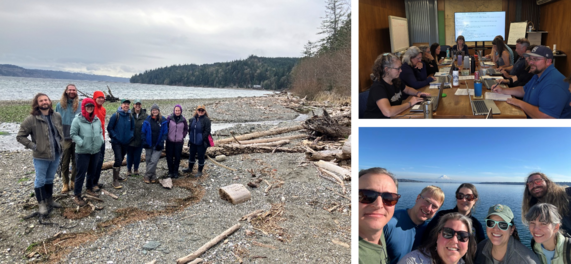 ESRP project site visits and technical reviews are a special opportunity to engage with project sponsors and colleagues – meeting with friends old and new – in our Puget Sound restoration community!
The ESRP Team wishes to extend our deepest gratitude to the more than 45 technical reviewers who provided support and expertise throughout this process. Technical reviewers spend upwards of 30 hours actively participating in sponsor presentations sessions, reviewing application materials, partaking in technical review discussions, and providing detailed scores and comments – all on a completely voluntary basis. The ESRP program simply couldn’t operate without the thoughtful participation and dedicated work of the review community.
It is no secret the next legislative session will be a challenging one. Regardless, we look forward to supporting all project sponsors with critical restoration work needed for Puget Sound recovery!
ESRP Learning Program
ESRP invests in applied science to support restoration planning, prioritization, design, implementation, and adaptive management through the Learning Program. This ESRP program works with the scientific community to resolve technical uncertainties and increase our understanding about certain types of restoration projects or project actions for the purpose of increasing the efficiency and effectiveness of future capital restoration projects.
Helping connect restoration practitioners with the science we fund is a key goal of the Learning Program. To that end, we recently reorganized the ESRP Learning Program web page on the Salish Sea Restoration Platform (formerly called the Salish Sea Wiki). Now, all completed learning projects are listed in a table sortable by lead researcher and completion year. The table also provides links to study products, webinar recordings, and each project’s individual project page on the Salish Sea Restoration Platform. Projects are grouped by shoreform (deltas, beaches, embayments).
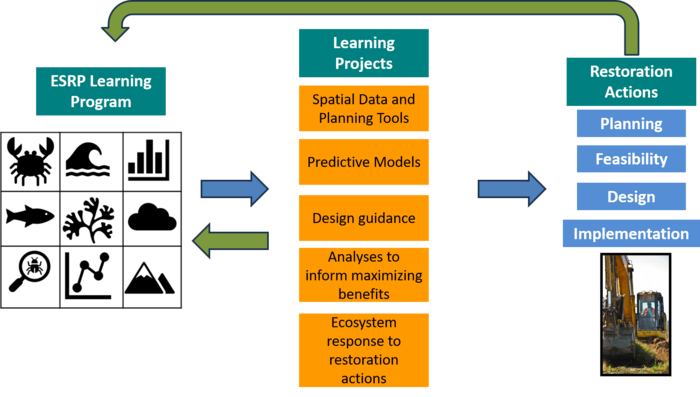 We are working toward something even more exciting in the future, but we hope this first step to organizing the wealth of available information improves accessibility for those who can benefit from the science. If you can’t find something you are looking for or have questions, please don’t hesitate to reach out!
Save the Date: Next ESRP Learning Program Webinar Nov. 9
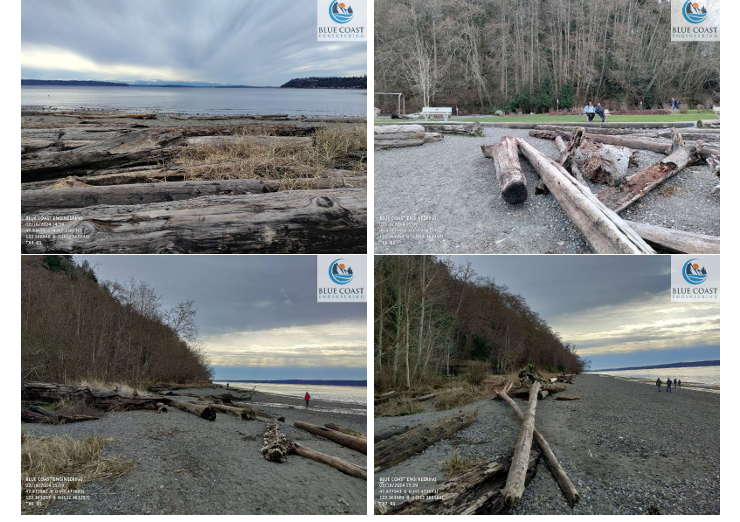
We are excited for Kathy Ketteridge and the Blue Coast team to share the results of their recently completed ESRP Learning Project, “Refining Design Guidance for the Use of Large Wood in Shoreline Restoration Projects in Puget Sound” on Monday, Nov. 9 from 1-2 p.m.
This study built on previous design guidance developed by NSD for large wood in fluvial systems to develop information to improve performance of process-based shoreline restoration designs that incorporate or naturally recruit large wood on Puget Sound beaches. A full project report and a recording of this webinar will be posted on the Salish Sea Restoration Platform project page. This webinar is presented as funding requirement of ESRP Learning grant, PRISM #20-1944.
Register for the free webinar here.
|
|
New 6-year Program Synthesis Report
In June 2026, the Shore Friendly program delivered a synthesis report of the program’s activities from 2019-2025. Paid for by the Puget Sound Partnership, Shore Friendly contracted with the Puget Sound Institute and Washington Sea Grant to complete the publication. The report compiled metric data from the six local programs, identified program successes and challenges, and provided program management recommendations. (Kinney and Fishman, 2026)
|
WDFW Residential Shoreline Social Survey Report
In 2026, WDFW completed a Shoreline Social Marketing Survey (SSMR) with Puget Sound shoreline owners. This research and its findings are part of WDFW’s continued assessment of sustainable incentives through technical and financial assistance for voluntary shoreline stewardship among residential shoreline owners. The research improves our understanding of shoreline owner demand for alternatives to hard armor, demand for varying incentives to those alternatives, and variation in behavior relative to cost of alternatives. Analysis cross examined variables like damage costs, distance to threat (e.g. flooding, erosion, or landslide), and age of owner(s) with demand for incentives posed. Results include evidence of where owner decisions are and are not influenced by incentives, or incentive variations, relative to cost and perceived outcome variations from shoreline management choices. It informs the current or projected viability of subsidized residential lending for these armor-alternative projects, as an undertaking by WDFW with co-Agency Partner to complement existing or adapted Shore Friendly grant work and technical assistance. Download the full report and associated survey analyses here.
|
|
Project Highlight: Shore Friendly and Beach Restoration Small Grants Programs |
|
|
Submitted by Karin Streilioff, Conservation Programs Director, Thurston Conservation District & Shore Friendly Thurston
In recent years, many exciting restoration projects occurred at public sites such as the Nisqually Wildlife Refuge near Lacey in Thurston County, and at conserved properties like Capitol Land Trust’s Bayshore Preserve in Oakland Bay, Mason County. These high-profile, large-acreage projects represent exceptional opportunities and provide a source of inspiration for everyone concerned with the health of the Salish Sea. Yet Puget Sound shorelines are a patchwork of public sites and privately owned residential, industrial, and commercial parcels. Stewardship in this complex landscape necessitates action at multiple scales. To realize a comprehensive shift towards sustained coastal processes and functional nearshore habitat, Shore Friendly focuses on building and maintaining a groundswell of behavior change among waterfront homeowners. More than 36,000 individual parcels on Puget Sound are privately-owned residential properties. Of these, over 400 miles have some form of hard armor like a concrete bulkhead that interrupts natural shoreline processes and habitat (WDFW data).
Shore Friendly, a collaborative endeavor coordinated and funded through WDFW’s ESRP program, grows in impact each year. Locally-adapted, regionally integrated Shore Friendly programs are led by a diverse group of non-profits, local governments, the Swinomish Indian Tribal Community, and Conservation Districts spanning Puget Sound. Each local program specializes in direct engagement with local waterfront homeowners to support behavior change. Programs provide expert advice, technical assistance, and financial incentives to promote armor removal where feasible, armor avoidance, and long-term shoreline stewardship. Shore Friendly engages the residential waterfront homeowners who own over 25% of Puget Sound shorelines. They represent the future of restoration opportunities and nearshore stewardship.
The Shore Friendly program’s momentum is starting to deliver results. In South Puget Sound alone, work since 2019 resulted in over 1,075 linear feet of residential shoreline armor removed across five residential sites, with an additional quarter-mile of shoreline currently in design for future removal. Across Puget Sound the impact grows; each Shore Friendly Program continues to identify and develop projects, completing hundreds of feet of restoration work along the marine shoreline. While individual sites are sometimes small, the collective benefit of this shoreline restoration work is just as powerful as the cumulative impacts and degradation resulting from shoreline armor.
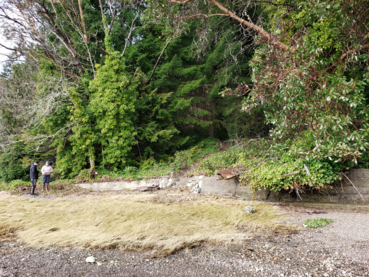
Early residential armor removal projects provide inspiring examples of what is possible when individual parcels are restored. In lower Eld Inlet of South Puget Sound, Thurston Conservation District’s Shore Friendly program worked with waterfront landowners to complete a small but impactful project. At this site, 100 feet of concrete bulkhead and fill extended onto the beach, covering all but a remnant patch of salt marsh. The adjacent forest was full of invasive English Ivy and Himalayan blackberry. Shore Friendly Thurston staff worked with the landowners to assess site suitability, design a restoration project, and complete construction with grant funds and homeowner contributions.
Notably, a key goal of this project was not just to remove the concrete bulkhead but to remove fill and create space for the salt marsh to migrate landward, expanding availability of valuable nearshore habitat and supporting long-term shoreline resilience in the face of rising sea levels and climate change. Where the salt marsh was once truncated by a concrete wall, today it has space to expand and shift landward over time. This small piece of shoreline is thriving and offers a critical waystation for juvenile salmon as they migrate towards the Pacific to grow into adults. The marsh is full of pollinators and other insects that contribute to the intricate nearshore food web. The shoreline is also beautiful, which the homeowners also appreciate.
Restoration projects like this provide exciting examples of what is possible when homeowners voluntarily break with a tradition of hard armoring and instead embrace strategies to build a healthier future for Puget Sound. Importantly, these projects also leverage tens of thousands of dollars in funding that are invested in Salish Sea restoration. They create jobs for restoration designers, construction firms, and materials suppliers. They build knowledge and skills in the restoration practitioner community. Perhaps most importantly, they show other waterfront homeowners how restoration can enhance their property while contributing to greater ecosystem benefits. Waterfront residents who understand the value of natural shorelines and have the knowledge and tools to steward form a key piece of the Puget Sound stewardship puzzle. Across the region, Shore Friendly continues to support and grow that essential community.
|
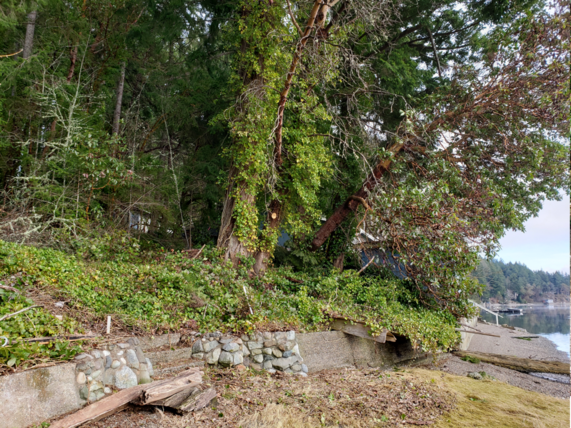 BEFORE RESTORATION (2022)
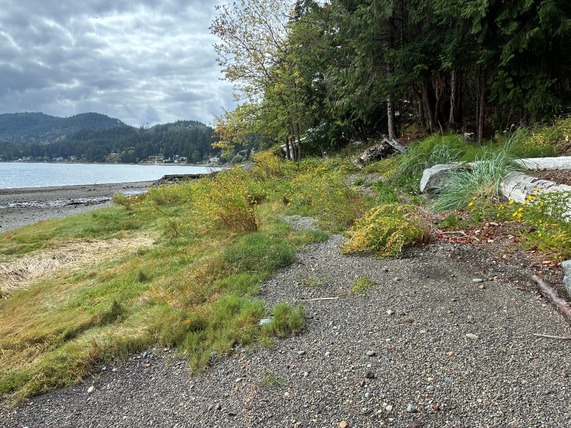 2 YEARS AFTER RESTORATION: Note expansion of salt marsh and backshore species, including Puget Sound gumweed in bloom.
Learn more from the participating homeowners - videos & podcast interviews: https://thurstoncd.com/stewardship/shore-friendly/
Recognition of Project Partners:
-
Project Development and Management: Shore Friendly Thurston team at Thurston Conservation District
-
Design: Natural Systems Design
-
Construction: Brumfield Construction
-
Restoration Funding: ESRP Shore Friendly Program & Beach Restoration Small Grants Program, Washington State Conservation Commission: Natural Resources Investment Program. Property owners.
For questions, contact:
ESRP Program Manager,
ESRP Learning Program Manager,
Shore Friendly and Beach Restoration Small Grants Programs Manager, Jenna.jewett@dfw.wa.gov
For more information on ESRP please visit our
|
|
|
|
|