|
It goes without saying that sometimes our greatest conservation outcomes take time, from the years it can take to see largescale habitat restoration projects come to life, to the years—even decades—to see signs of success in a species reintroduction program. Resiliency is integral to how we continue to be successful for fish and wildlife conservation in Washington state.
This spring, as Washingtonians were enjoying turkey hunting, dusting off their paddleboarding gear, digging for razor clams, or photographing wildlife on public lands, the Legislature wrapped up another session.
The final adopted budget in response to the state’s budget deficit requires the Department to modify, scale back, or stop doing important work for fish and wildlife conservation. As we’re navigating a reduced budget at the state level and facing similar uncertainty at the federal scale, our ability to lean into resiliency feels especially relevant.
Based on our stark budget reality, we know with certainty that Washingtonians will feel these impacts. Our capacity far exceeds the demand for outdoor recreation opportunities. More so, we are faced with monumental challenges in the face of conservation, from climate change to wildfire, and more.
Regardless, we continue to work with state leaders and legislators to emphasize the value of WDFW’s full portfolio for fish, wildlife—and people.
For more information about Department budget impacts, refer to our blog. I hope you have a great summer and that you find some time to get out to enjoy all that Washington has to offer.
Sincerely,
 Kelly Susewind, Director
|
|
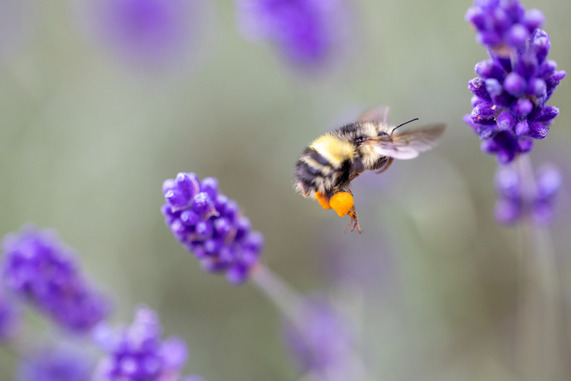 A yellow headed bumble bee (Bombus flavifrons) hovers near a lavender flower at the Capitol Campus Pollinator Garden.
Topics in this message include:
Plan your summer fishing trip: 2025–26 regulations now available
The Washington summer recreational salmon fishing season is already open in several marine and freshwater areas of Puget Sound, the coast, and Columbia River, with more fisheries set to begin in July and August. Anglers can expect similar fishing seasons to last season, along with good opportunities in Puget Sound for an expected forecast of nearly eight million pink salmon in late summer and fall.
You can find the full 2025–26 Sport Fishing Rules pamphlet online or pick up a physical copy at local outdoor retailers and tackle shops the last week of June. Anglers using the Fish Washington® app to look up seasons for 2025–26 fisheries may see dates from last summer. The Fish Washington® app will update for the 2025–26 fishing season by July 1.
|
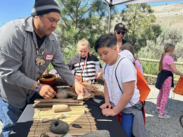
Beebe Springs outdoor school
This spring, the Wild Washington outdoor school at Beebe Springs welcomed 3rd and 4th graders from Chelan and Douglas counties to Beebe Springs Wildlife Area Unit for hands-on learning that explored biodiversity, habitat restoration, and the cultural importance of the land. Over the two years of the program, more than 900 students participated in the outdoor school. One student captured the spirit of the day, exclaiming, “I want to tell my mom to bring me back!”
This program was operated by WDFW in partnership with agencies, tribes and community groups. It was partially funded by a No Child Left Inside grant through the Recreation and Conservation Office and Washington State Parks. Funding for this grant program will drop from $7 million in 2023-25 to $1.1 million in 2025-27.
To learn more about the outdoor school and its impact, read the blog post.
|
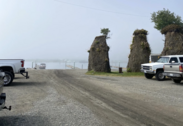
Sekiu boat launch acquisition
Big news for boaters and anglers! WDFW has finalized its acquisition of the Sekiu boat launch property in Clallam County along the northern Olympic Peninsula. The approximately $2.4 million sale includes about 2.5 acres of uplands, tidelands, and an easement for ingress/egress, including a four-lane boat launch, and parking for trailers and vehicles.
Funding for the property purchase, maintenance, operations, and initial infrastructure improvements came from the state’s 2024 supplemental capital budget and a Boating Facilities Program grant from the Washington State Recreation and Conservation Office. WDFW will seek additional funding for further site improvements.
The Sekiu Water Access Area provides opportunities for recreational and commercial fisheries, including salmon and bottomfish, as well as sea kayaking and wildlife viewing. WDFW included this site in our 2018 Lands 20/20 projects, and we’re excited to support the local economy and recreation by keeping it open to the public.
|
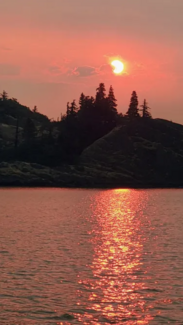
Wildfire restrictions in effect on WDFW-managed lands
Large, devastating wildfires have unfortunately become a common occurrence across the American West, and 2025 is already no exception. With Washington looking at a higher-than-normal wildfire forecast this year, WDFW has once again announced restrictions on certain activities on WDFW-managed lands in Eastern Washington to protect public safety and prevent fire.
As of July 1, restrictions are in place for campfires, target shooting, smoking, and certain other activities on WDFW-managed lands east of the Cascades. With the July 4 holiday coming up, it’s also a good time to offer a reminder that fireworks are banned year-round on WDFW-managed lands statewide. We all have a responsibility to protect our neighbors, as well as the wildlife that call these areas home, by recreating responsibly and following restrictions in effect on public lands statewide. Photo by Wendy Compton.
|
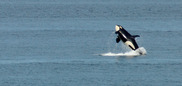
Help protect Southern Resident killer whales this boating season
Summer is the time to get out and enjoy some time on the water in the Pacific Northwest. But if you're boating in the marine waters of Puget Sound or the Washington coast, you should be aware of new laws requiring vessel operators to stay 1,000 yards away from endangered Southern Resident killer whales (SRKW). Underwater vessel noise is one of the key threats to these iconic killer whales, and following these laws is especially important with reports of 22 SRKW in poor condition, as well as two calves born late last year.
WDFW provides a bevy of resources for boaters on the new laws, including FAQs, materials for determining distance on the water, and videos illustrating the impact of vessels on SRKW and how to follow the 1,000-yard distance.
These laws apply to both motorized and non-motorized vessels. If you find yourself within 1,000 yards of an orca, move away and out of the path of the whales at 7 knots or less. If an orca approaches within 400 yards of your vessel, disengage the transmission if it is safe to do so and wait until they’ve left the area. For information about the laws in Washington and Canadian waters, visit bewhalewise.org. Photo by Jeff North.
|
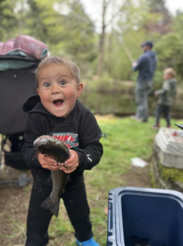
Looking back on Free Fishing Weekend
Free Fishing Weekend returned June 7–8, giving anglers of all experience levels the chance to enjoy fishing without a license for many popular species. Paired with Discover Pass free days, the event brings people out to enjoy fishing spots across Washington—whether returning to a favorite place or exploring somewhere new.
This year, WDFW highlighted opportunities in lowland lakes, including the chance to participate in the 2025 Trout Derby running through Oct. 31. With warm weather and strong turnout, the weekend was a great reminder of how outdoor access supports recreation, family connection, and appreciation for Washington’s natural resources.
Next year, Free Fishing Weekend is scheduled for June 6-7, 2026.
|
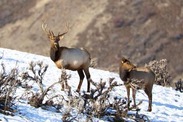
Don’t feed wildlife: new rules in place to protect Washington’s wild neighbors
Living in Washington means living with wildlife, and many people may be tempted to feed wild animals near their homes or communities. People often think they are helping wildlife by feeding them or simply hoping that providing food will give them a better opportunity to observe their wild neighbors. Unfortunately, feeding wildlife can cause more harm than good, especially with new wildlife diseases being found in Washington. WDFW recently adopted new rules prohibiting deer, elk, and moose feeding due to the high potential for feeding sites to promote disease spread. Of particular concern is chronic wasting disease (CWD), an always-fatal disease of deer, elk, moose, and related species (cervids) that was detected in Washington for the first time in 2024. There is no cure for CWD, and it has the potential to greatly impact Washington’s cervid populations.
Refer to our video for more information. Photo by Tony Sirgedas.
|
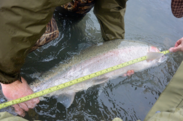
Research suggests link between steelhead survival rates, ocean conditions
By examining and collecting data from wild winter steelhead in rivers on the western Olympic Peninsula and flowing into Grays Harbor, WDFW scientists have shed new light on the link between changing ocean conditions and steelhead survival rates.
Their research found, in part, that immature and adult steelhead survival rates have declined over time, and survival trends across populations were strongly associated with changing ocean conditions.
Steelhead, which can exceed 30 pounds, are the state fish and a highly regarded game fish. They are the same species as rainbow trout, but while rainbow trout remain in fresh water, steelhead are “anadromous” and travel to the ocean before returning to spawn in fresh water.
|
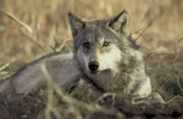
On the move: understanding lone wolves in Washington
Wolves that leave their original packs are called "dispersers." Dispersal is a natural and common behavior in which wolves leave to find new territory and mates, potentially traveling up to 30 miles a day and as far as 200 miles. Dispersers are often seen in areas closer to humans as they use easy travel routes like roads and river valleys. If you encounter a wolf or pack in Washington, do not approach; keep your distance, leash pets, and back away slowly to give the wolf space.
Wolf management in Washington involves cooperation among state, federal, and Tribal agencies, with the U.S. Fish and Wildlife Service leading in federally protected areas. The state's Wolf Conservation and Management Plan seeks to restore wolf populations while reducing conflicts with people and livestock. Sightings should be reported to the Washington Department of Fish and Wildlife (WDFW). Learn more about gray wolves on the USFWS and WDFW websites. Learn more in our blog post. Photo by US Fish and Wildlife Service.
|

Taking care of the people who take care of us
WDFW Police officers and dispatchers have their share of critical incidents and trauma response, which can take a tremendous amount of physical, mental, and emotional energy. While most contacts made by officers are with law abiding people just looking to enjoy the outdoors, there are always exceptions, which can be stressful for officers. So how do the people who protect us deal with their own stress and trauma reactions? Our blog shows how WDFW chaplains help keep officers in good mental health.
|
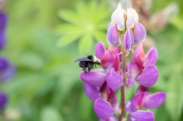
New second grade curriculum available
To celebrate Pollinator Week 2025, WDFW educators released a free second-grade curriculum focused on pollinators and biodiversity. The new resource supports science education across the state and highlights how pollinators contribute to Washington’s biodiversity. Learn more on our Wild Washington page and watch this informative video on pollinators featuring WDFW assistant invertebrate species lead Melinda Vickers.
|
|
|
|
|
|