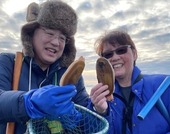
Washington Department of Fish and Wildlife shellfish managers have confirmed the season's final round of razor clam digging opportunities at Long Beach, Twin Harbors, Copalis, and Mocrocks, running May 10-15.
“There was lots of successful spring digging during this past tide series, and it is looking like more of the same for the last digs of the season,” said Bryce Blumenthal, WDFW’s recreational razor clam manager. “When this next series is complete, we’ll have dug 16 weeks of low tides totaling 109 harvest days and 327 individual digs since the beginning of October.”
The set of digs at Long Beach, Twin Harbors, Mocrocks, and Copalis running May 10-15 will proceed after marine toxin results from the Washington Department of Health showed razor clams are safe to eat at those beaches.
WDOH requires two test samples taken seven to 10 days apart, and domoic acid levels must fall under the guideline level before a beach can open for digging. Domoic acid, a natural toxin produced by certain types of marine algae, can be harmful or fatal if consumed in sufficient quantities.
As in past years, WDFW is asking beachgoers to avoid disturbing nesting snowy plovers – a small bird with gray wings and a white breast – by staying out of the dunes and posted areas along the southwest coast. Snowy plover nests are nearly invisible, and it is vital to give birds the space to live and thrive during the nesting period, especially along the southern end of Twin Harbors – known as Midway Beach – and north of Second Avenue in Ocean City to the north end of Copalis Beach and the north end of Long Beach.
Avoid leaving leftover food or trash – which attracts predators – on the beach and picnic areas, keep pets on a leash, stay out of dunes, and avoid areas that are clearly marked with posted signs.
On all open beaches, the daily limit is 15 clams per person. Each digger’s clams must be kept in a separate container, and all diggers must keep the first 15 clams they dig, regardless of size or condition.
Not all beaches are open for every dig, so diggers are encouraged to make sure their intended destination is open before heading out.
For more information on these digs, go to WDFW's razor clam webpage.
WDFW plans to announce tentative digging opportunities in early fall for the 2025-2026 season via the WDFW razor clam webpage. This summer, WDFW will conduct population assessments and regularly monitor domoic acid levels.