Caregiver Connection | November 2026

Having trouble viewing this email? View it as a Web page.

caregiver connection

Select Holiday Magic Gifts by Nov. 13

person-showing-brown-gift-box

Treehouse, DCYF, and Tribal Courts have partnered for over 30 years to make sure that all children and youth experiencing foster care receive a meaningful gift during the holidays through Treehouse’s Holiday Magic program.

Please select gifts by Nov. 13 for them to arrive before winter holidays. Gifts can be requested until Dec. 15, but these later requests may be delivered in early Jan.

Who's eligible?

Dependent children of the state of Washington who are:

  • In an out-of-placement home, including Tribal children who are state dependents.
  • Age 18 or older and participating in the Extended Foster Care/Foster programs.
  • Served under the courtesy supervision and residing in another region of the state.
  • Served under the Interstate Compact of Children (ICPC) residing in another state.
  • Children placed in out of home care on a Shelter Care Order.
  • Children and youth under the jurisdiction of Tribal court are eligible. (Treehouse works directly with Tribes.)

How to Make a Request

Youth or their caregivers can visit the Holiday Magic webpage where they can see photos and descriptions of gifts in English and Spanish, or call the registration line at 206-267-5111. Online registration is preferred.

Questions? Reach out to Treehouse at HolidayMagic@treehouseforkids.org or 206-267-5111 or reach out to your DCYF regional Holiday Magic lead:

Region 1: Erik Larson erik.larson@dcyf.wa.gov
Region 2: Christie Funkhouser christie.funkhouser@dcyf.wa.gov
Region 3: Malay Chakrabarti malay.chakrabarti@dcyf.wa.gov
Region 4: Lisa McKee lisa.mckee@dcyf.wa.gov
Region 5: Jolie Palos-Brown jolie.palos-brown@dcyf.wa.gov
Region 6: Kara Gregory kara.gregory@dcyf.wa.gov


Foster Care Washington Administrative Code (WAC) Updates: Public Comment Deadline Extended

Due to a technical issue, public comment for draft WAC 110-148 was withdrawn for about a week. The full chapter has been reposted, and those outside of DCYF may make public comments through Nov. 10 at 11:59 p.m. You can provide feedback using one of the following methods: 

  • Submit your comments online. 
  • Email rulescoordinator@dcyf.wa.gov.
  • Call 360-972-5385 and provide an email address when leaving a message so that we can respond to your comment.
  • Attend an in-person public hearing at 10 a.m. on Nov. 10, 2026, at DCYF Headquarters, Conference Room 1213, 1500 Jefferson Street SE, Olympia WA 98501.

The updated foster care licensing rules will include several changes to the preservice (before getting licensed) and in-service training (renewing your license) requirements.

The in-service training requirements will include:

  • Trust Based Relational Intervention (TBRI),
  • Connecting: Sexual Orientation and Gender Identity and Expression (SOGIE) Training for Caregivers and Kinship Providers,
  • Parenting in Racially and Culturally Diverse Families, and
  • A 30-minute coaching session to discuss the training.

All licensed foster parents must meet the in-service training requirements when they renew their license starting on April 1, 2027. Licenses expiring through March 31, 2027, are on the “legacy plan” and will not be required to meet the in-service training requirements until the following renewal (2029-2030).

If you have general questions, contact the project team at dcyf.fostercarenrm@dcyf.wa.gov or check the website for the latest project updates.

November 2026 Issue

Receiving caregiver communications in Spanish?

To make messaging more accessible for all, DCYF sends all caregiver related communications in Spanish.

If you would like to be removed from the Spanish distribution list, please respond to this email.


DCYF News


Applications for Scholarships and Financial Aid for Continued Education

The 2027-28 Free Application for Federal Student Aid (FAFSA®) is now open! The FAFSA form is used by colleges and career schools to determine how much financial aid students are eligible to receive, which could include grants, scholarships, work-study funds, and loans. Students must apply for aid every year.

Watch this video from Washington Student Achievement Council (WSAC) as they walk you through the FAFSA application process. Please note that students in foster care after age 13 are “independent students” and will not need parent/contributor information.

The average completion time is only 15 minutes! Make sure your student signs at the end and can see the Submission Summary page. Review next steps and correct any errors on the FAFSA form.

Check out other types of aid and scholarships available to youth currently in foster care or foster care alumni.

Find scholarship search tools for more financial aid opportunities and learn about on-campus support in the news section of DCYF’s Foster Youth Services webpage.


Caregiver 1624 Meetings

These meetings bring caregivers and DCYF staff together to talk about caregiver needs, concerns, and questions. The name “1624” comes from the legislative bill number that created the group.

Learn More


Event and Training Resources

SUD Family Education Sessions

The Alliance 

Alliance CaRes Newsletter

Coordinated Care

DCYF Support and Resources


Updates to Health History Time Period for Caregiver Support Level Assessments

woman coloring with a child

As part of the caregiver support level assessment, a Placement Resource Specialist reviews a youth’s documented health history. They also look at health information from the Health Care Authority (HCA).

Now that the caregiver support level determination process has been in place for over two years, feedback and data collected supports the reduction of the health history time period to include health history from the previous 12 months for all health criteria. The change will take place as of Jan. 1, 2027.

What Does This Change Mean?

Only health information from the past 12 months will be used to determine the level of caregiver support needed, including what’s provided by the Health Care Authority.

Some youth, currently assessed at a higher level, will experience a reduced level that may impact the type and amount of caregiver support services that the youth and their caregivers receive following a six-month reassessment.

Learn more on the Caregiver Level Assessment and Payment webpage. To learn more about the caregiver level assessment process and caregiver supports, check out:

DCYF is hosting drop-in meetings to address questions related to this change and other 2027 changes: 

  • Monday, Dec. 7, 2026 from 3:30 to 4:30 p.m. - Meeting Link
    • Meeting ID: 247 994 817 557 171
    • Passcode: 3MZ6so6u
  • Monday, Dec. 14, 2026 from 3:30 to 4:30 p.m. - Meeting Link
    • Meeting ID: 226 448 782 750 98
    • Passcode: kw9Xk6gm
  • Monday, Jan. 11, 2027 from 3:30 to 4:30 p.m. - Meeting Link
    • Meeting ID: 221 695 130 339 892
    • Passcode: fA6aY2wt

New Video Featuring Child and Family Welfare Services (CFWS) Caseworker

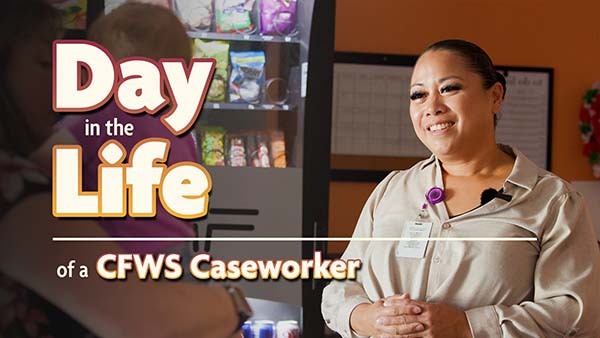
caseworker smiling next to text that says day in the life of a CFWS caseworker

The next installment of DCYF's “Day in the Life” video series follows Stephanie McCardle during her day as a CFWS Caseworker.

CFWS caseworkers support families throughout the life of their child welfare case providing health and safety visits, connecting families with resources, sharing updates during court hearings etc.

Follow along during a typical day of work as one CFWS caseworker advocates for her families, engages with foster caregivers, collaborates with her colleagues, and more. Watch video


Monthly Caregiver Trainings and Special Events

parent making cookies with kid

The Alliance for Professional Development, Training, and Caregiver Excellence

  • Why Children Lie — Nov. 12 from 5:30 to 8:30 p.m.
    Why Children Lie addresses lying on several levels. You will look at your own attitude about lying and how your values and beliefs affect that perception. The course will cover what lying looks like in different stages of development and what the motivating factors may be for a child. You will also talk about the societal norms around lying and how to support a child telling the truth. You will learn how to set a child up for being truthful through positive communication, and how to make changes to your own behavior and responses. Register Here
  • Supporting Children and Youth Impacted by Parental Substance Use — Nov. 19 from 12:30 to 3:30 p.m. Through this course, you will gain a foundational awareness of substance use disorders and the impact on child safety in child welfare cases; recognize common signs and impacts of adult substance use disorders on children and family relationships; and respond in a manner that supports the well-being of the child or youth in your care.
    Register Here 

Learn about all the upcoming classes.

Need to take an Alliance course, but there's nothing scheduled? Sign up to get the course calendar and special training opportunities delivered right to your inbox! 

Check out the Alliance CaRes website and sign up for the monthly newsletter that includes regional and local activities.