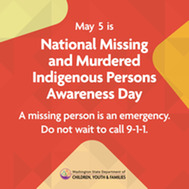
This is not a distant issue. It reflects real gaps in systems—where communication breaks down, where jurisdictional lines create confusion, and where families do not always receive timely, coordinated support. For Native children, youth, and families, these gaps can have lasting impacts.
At DCYF, this connects directly to our work. We are part of the systems that support prevention, respond to concerns, and coordinate across partners. Strengthening relationships with Tribes, improving information sharing, and ensuring culturally grounded approaches are essential to doing this work responsibly.
There are ways to be part of this work. Take time to learn more. Listen to Tribal leaders and community voices. Support community-led efforts. Within our own roles, ask where coordination can improve and where barriers remain. Our communities are not forgotten. Our responsibility is to ensure our actions reflect that.
Learn More:
Awareness Events:
- May 13: Nespelem – MMIP Event with Walk, Speakers, and Community Activities (10 a.m. to 2 p.m., Government Center)
- May 14: Usk/Cusick – MMIP Awareness Walk (11:30 a.m., Camas Center for Community Wellness)
- May 28: Toppenish – Yakama Nation MMIP Symposium (Legends Casino Hotel Event Center)
- May 28: Seattle – Mother Nation Healing Together Gathering (Daybreak Star Indian Cultural Center)
- Nov. 5: Bellingham – Whatcom County MMIP Summit
Ways to Engage:
- Wear red on May 5 to honor missing and murdered Indigenous relatives
- Attend a local event or share information with your team
- Stay updated through local Tribal communications and community event calendars
|
New Caregiver Support Agreement Available to Tribes
The Caregiver Support Tribal Agreement is a new agreement available to Tribes and represents a step forward in the government-to-government relationship between Tribes and DCYF. This Agreement recognizes the longstanding role Tribes have held in supporting caregivers of Tribally dependent youth by financially reimbursing Tribes for the supports they provide.
What is the purpose of the Agreement?
This Agreement provides payments to Tribes for the support they provide to their unlicensed caregivers who have placement of Tribal jurisdiction children or youth.
Who is eligible to enter into the Agreement?
- All federally recognized Tribes in Washington State with Tribal courts that exercise exclusive jurisdiction in child welfare cases
- Federally recognized out-of-state Tribes who have a Memorandum of Agreement (MOA) and can take jurisdiction in Washington State
What population is served under the Agreement?
Unlicensed caregivers who have placement of a child or youth under Tribal jurisdiction.
Highlights of the Agreement:
-
Monthly Payment: Tribes receive a monthly payment for each Tribally dependent child or youth placed with an unlicensed caregiver.
-
Case Aide Services: For eligible children, case aide services provided by the Tribe are reimbursed by DCYF.
-
Direct Payment to Tribes: Payments are made directly to the Tribe and not to the unlicensed caregiver.
-
Start-up Funding: Tribes may receive a monthly start-up payment for up to 90 days to fund one position responsible for program development
For more information about the Caregiver Support Tribal Agreement, please contact Natalie Adams, Tribal Foster Care Licensing Consultant, at natalie.adams@dcyf.wa.gov or 360-764-9273.
Authored in partnership with Deidre Newton, Caregiver Support Program Manager, deidre.newton@dcyf.wa.gov.
Indian Child Welfare Act Title II Grants - Public Safety
The Bureau of Indian Affairs is soliciting grants from Indian Organizations to establish and operate off-reservation Indian child and family service programs. The intent of the Indian child and family service programs is to provide services for stabilizing Indian families and Tribes.
The deadline to apply is June 16, 2026. Visit grants.gov for information and to apply.
New Positive Indian Parenting Resources
DCYF has developed resources, in response to partner interest, that Tribes and Tribal-serving organizations may use, if helpful, to support awareness of Positive Indian Parenting (PIP) classes.
Visit our Training webpage for more information and check out the following resources:
DCYF is also offering Positive Indian Parenting (PIP) Train-the-Trainer courses at no cost.
These courses prepare facilitators to support Native parents using a culturally based approach. Participants receive a manual with materials for eight PIP sessions based on traditional Native teachings about raising children.
Upcoming Train-the-Trainer Course:
- In-Person: May 19-21, 2026 | Nespelem, WA
To sign up, please complete the Registration Form.
For questions, contact Shannel Squally-Janzen at Shannel.Squally-Janzen@dcyf.wa.gov
|
Federal Prosecution of Domestic Violence Crimes in Indian Country
May 20, 2026, from 2 to 3:30 p.m. EDT | Register Here
This webinar covers basic federal criminal jurisdiction, the federal assault statute, domestic assault by an habitual offender offenses, relevant portions of the Gun Control Act, Chapter 110A crimes, hearsay exceptions and the use of expert witnesses at trial when a victim minimizes or recants.
Upcoming Local Events
8th Annual Trauma Informed Care Conference
June 2-4, 2026 – Toppenish, WA
Visit 8th Annual Trauma Informed Care Conference for information.
Yakama Nation Youth Conference - Legends Casino
June 8, 2026 – Toppenish, WA
Visit Youth Trauma Informed Care Conference for information.
Lower Elwha Klallam Tribe – Native Youth Leadership Prevention Summit
June 23-26, 2026
Visit The Athena Forum for information.
Cedar Creek Totem Pole Carving Program
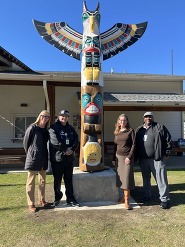
Through a partnership with the Department of Corrections (DOC) and Unkitawa, trees from Echo Glen Children's Center were donated to support and sustain the Totem Pole Carving program at Cedar Creek. The trees were removed as part of the fence construction.
DCYF Secretary Tana Senn, Assistant Secretary of Juvenile Rehabilitation Jennifer Redman, and Superintendent of Echo Glen Jeff Wallace attended a Totem Pole Awakening Ceremony at Cedar Creek Corrections Center in March to celebrate this program.
In exchange for the donated trees, the pole carving program will create a Totem Pole or other wood carved items for Echo Glen.
For more photos and the complete story, visit The Chronicle: Cedar Creek Corrections Center raises authentic totem pole with ceremony.
|
Red Dress Day 2026: Time for a national alert system for missing Indigenous women and girls
"On May 5, Unifor members across the country mark Red Dress Day to honour the Missing and Murdered Indigenous Women, Girls, and 2-Spirit people (MMIWG2S) whose lives have been taken or disrupted by violence, and to stand with the families still searching for answers."
Read the full article.
Rooted in Community, Growing Possibility
April is National Child Abuse Prevention Month. In Tribal communities, this is not a new concept, it is a continuation of what has always been true, our children are sacred, and their well-being is a shared responsibility.
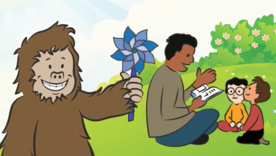
This year’s theme, Pinwheels of Possibility, reflects what happens when communities are supported, families are resourced, and culture is centered. Prevention is not about individual blame, it is about strengthening the relationships and environments that surround our children. For generations, Tribal communities have practiced this through connection, Elders guiding youth, families caring across households and generations, and community stepping in to support when challenges arise.
When families have support early, children thrive. These supports are not just services, they are relationships, culture, and community care. Every act that strengthens a family is an act of prevention, whether through time, teachings, or showing up for one another. Prevention efforts are strongest when they are led by Tribal communities and reflect each Tribe’s traditions and strengths.
Ways to Engage and Support Community
- Participate in Tribal or community-led events
- Wear blue on April 10
- Share resources and information with families and relatives
- Connect families to Tribal programs and supports
- Support and uplift community-led prevention efforts
Resources and Ways to Support Our Children and Families
Pinwheels are available in limited quantities on a first come, first served basis. Proceeds support community prevention efforts through the Children’s Trust of Washington.
Free coloring pages, stickers, and pinwheel posters are also available. To request materials, email strengtheningfamilies@dcyf.wa.gov.
|
‘Red dresses bring awareness to Washington's missing, murdered Indigenous people’
KXLY’s coverage of Washington’s MMIW awareness day.
https://youtu.be/BGQ_5wnr0MI?si=0u4gbcft2KINuAu-
|