|
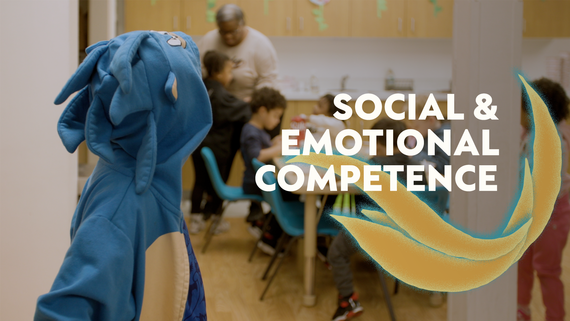
We are so excited to share the latest of our films focusing on the Protective Factors done by First Sight Productions. This video, Social and Emotional Competence, focuses on the important role that a child (and parent's) social and emotional intelligence plays in the growth and development of childhood.
Multicultural Child and Family Hope Center is a Family Resource Center that provides a variety of wrap around services including childcare, diaper bank, parenting classes and more. We are so grateful to partner with them in a variety of ways over the years and for the work that they do daily to support families in the Tacoma area.
There are five protective factors known to help reduce child abuse and neglect: Knowledge of Parenting and Child Development, Social Connections, Resilience, Concrete Support in Times of Need, and Social and Emotional Competence of Children/Nurturing and Attachment. You can watch our earlier videos on Resilience here and our video on Social Connections here. If you are interested in partnering with First Sight for a later video on Parenting and Child Development, please email Kyra.Ingraham@dcyf.wa.gov.
Parenting can be overwhelming, and sometimes families need a safe place for their children while they take a moment to rest, handle a difficult situation, or respond to an unexpected event. Crisis respite offers short-term care for children when parents and caregivers need support and have no safe alternatives.
During the pandemic, the Strengthening Families WA team at the Washington State Department of Children, Youth and Families heard the need for crisis nurseries or crisis respite expressed. In these sessions, we'll share what we've learned exploring these services including our accomplishments so far, lessons from the journey and our hopes for the future. You'll hear from our community partners who are helping build this important safety net for families.
Please join us for one of two sessions.
- Aug. 28, 10 – 11:30 a.m.
- Sept. 25, 2 – 3:30 p.m.
Contact Marilyn.Gisser@dcyf.wa.gov to register.
Open the Door: Talking with Fathers who Want to Change their Controlling, Coercive and Abusive Behavior
When experienced home visitors have an opportunity to engage with fathers about their parenting and its impact on relationships, it can be challenging to know what to say or do when the father is using coercive or abusive behavior with family members.
With the leadership, guidance and content expertise provided by experienced home visitors and domestic violence advocates, WSCADV has facilitated the development of The Father Engagement Tool: Open the door: talking with fathers who want to change their controlling, coercive and abusive behavior in English and Spanish as a free PDF download from the WSCADV website. The tool was created to help experienced home visitors by providing guiding questions and suggestions for home visitors, survivors of domestic violence, and fathers to consider before, during, and after conversations.
If want to know how to use this tool, please go here to watch this webinar training led by three authors of the Father Engagement Tool who will share their thinking about the purpose of the tool for experienced home visitors. Please note: The presenters speak in English, and English captions are available. The PowerPoint slides are in Spanish. We recommend using the English PowerPoint slides to follow along with the training for English speakers. The authors review each panel of Father Engagement tool during the webinar. Also, on the WSCADV website, home visitors will also find companion resources to support parenting for fathers and the whole family.
When you go to the WSCADV website, home visitors will find additional resources including how to partner with their local domestic violence advocacy organization while working hand in hand with dv advocates to support survivors, their families, and communities to be safer, stronger, and more connected.
|
DCYF Launches New DCYF Data Webpage
The Washington State Department of Children, Youth, and Families’ (DCYF) most frequently requested data is now at your fingertips!
DCYF launched a new DCYF Data webpage where media professionals and the public can find and download infographics featuring relevant data points specific to DCYF’s services, programs, and divisions.
Read the web article to learn more.
|
|
 |

New State Laws Help Open Doors to More Child Care Access
Great news! Recent legislation reduces barriers to early education and child care providers.
Individuals wanting to become licensed child care providers, and community organizations, such as churches, seeking to use existing facilities for child care programs, can benefit from local siting and zoning changes aimed to expand places where child care can be made available.
Read the web article to learn more.
|

Washington Continues to Offer Free to Low-Cost Early Care and Education to Families in Need
As you may be aware, the federal government has announced a policy change related to several federal funding streams, including Head Start, that could impact the ability for undocumented families to access educational programs for young children.
We are still assessing the impact of this federal policy shift. However, families — regardless of their immigration status--continue to have access to the following free to low-cost child care and early learning programs offered by the Washington State Department of Children, Youth, and Families (DCYF).
View this bulletin to learn more about Working Connections Childcare (WCCC) and ECEAP.
|

Washington State Makes it Easier for Relatives to Become Licensed Caregivers
The Washington State Department of Children, Youth, and Families (DCYF) launched new licensing standards that make it easier for relatives to become licensed caregivers, which provides additional supports to care for children and youth in foster care.
The new Kinship Licensing Standards — launched July 1 — include 50% less forms for applicants to fill out.
The new standards also established a kinship home study with less questions than the current community foster care licensing process.
Read more by visiting our What's New Blog.
|
Definition of Abuse or Neglect of Children and Youth
The Department of Children, Youth, and Families (DCYF) Partnership, Prevention, and Services Division, Child Welfare division, and Licensing division revised Chapter 110-30 WAC Child Protective Services and other related rules to align with updates to the definition of “abuse or neglect” in RCW 26.44.020 Abuse of Children that went into effect on July 1, 2025. The notice of intent for permanent rule making for these revisions was filed under WSR 25-14-104 on July 1, 2025.
The emergency rule was filed under WSR 25-14-116 on July 1, 2025.
For questions about DCYF rules or to request an alternate format for this information, please contact the DCYF Rules Coordinator at dcyf.rulescoordinator@dcyf.wa.gov.
Provider survey on perinatal mental health services: Washington State Health Care Authority (HCA) and Department of Health (DOH) are conducting a short survey to better understand Washington’s perinatal mental health workforce – professionals who provide care during pregnancy and up to one year after birth.
50-State Comparison of TANF Policies Linked to Child and Family Protection: The National Center for Children in Poverty (NCCP) is pleased to announce an update to its resource, A 50-State Comparison of TANF Policies Linked to Child and Family Protection, featuring scorecards of each state's current policy position for flexibilities that have been shown to affect child maltreatment, neglect, and foster care placements through their effects on caseloads. These policies include providing cash assistance for up to 60 months in a lifetime, refraining from drug testing applicants and recipients, and exempting parents of children under one year of age from work requirements.
Centering Fathers to Advance Justice with Carol Mitchell from Community In-Site. Carol is a seasoned attorney, social justice advocate, and founder of the Institute for Black Justice (IBJ), a DCYF Prevention Partner.
News
Celebrate Dads on the Continuing Journey: Creating Our Path Forward. Register Now for the Seventh Annual Fatherhood Summit and Second Annual Dad Allies Awards: celebrating fathers and inviting us to create our path forward for the Washington Fatherhood Council. Sept. 18, 2025, Bethaday Community Center, Seattle.
Washington For All: Your One-Stop Spot for Community Resources from the Washington Office of Equity. Washington for All is a new, accessible website that connects you to resources and services available to Communities in Washington State.
Preliminary report into Indian boarding schools lays the groundwork for dismantling harmful policies: "The Attorney General’s Office (AGO), under the guidance and leadership of a Truth and Healing Tribal Advisory Committee, released a preliminary report on the history of Indian boarding schools in Washington, outlining next steps the committee and the AGO will undertake as they aim to help policymakers address the harmful legacies of these institutions." Read the full press release.
Racial Equity Resources
The Importance of Culture in Mental Health Care: An Indigenous Provider's Perspective
Brianna Jacobs, LCMHC, shares her perspective on the importance of integrating cultural practices and beliefs into mental health care for indigenous communities. By incorporating traditional healing practices and recognizing the impact of historical trauma, mental health providers can create a more holistic and effective approach to treatment (watch time 7:19):
The Importance of Culture in Mental Health Care
Culturally-Informed Approach to Mental Health
Dr. Jessica Dere explains how culture makes a difference when thinking about mental health and mental illness. Across mental health research, clinical care and teaching, there are profound rewards to be had by truly understanding individuals in context (watch time 17:57):
Culturally-Informed Approach to Mental Health
|