Practicing Cultural Humility in Child Welfare with Tribal Communities
By Shannel Squally-Janzen, Tribal Prevention Specialist
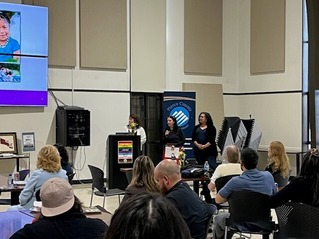
DCYF's Office of Tribal Relations (OTR) recently facilitated a powerful training on Practicing Cultural Humility in Child Welfare with Tribal Communities for the Pierce County Juvenile Court. Attendees included judges, Guardian Ad Litems, attorneys, and representatives from the Puyallup Tribal Court.
The training focused on building awareness of power dynamics, tribal sovereignty, and historical trauma, while emphasizing the importance of meaningful collaboration with tribal communities.
Feedback from participants was overwhelmingly positive, with many expressing that the training was “compelling and inspiring,” “insightful and valuable,” and “full of relevant information.” One attendee shared: “It is so powerful to feel the passion and pain and truly learn and grow through that strong community connection.”
OTR is honored to provide these learning spaces and looks forward to continuing this work alongside state and tribal partners to promote respectful, culturally responsive practices across Washington.
|
Qualified Expert Witnesses Update
By Sally Nahsonhoya, QEW Coordinator
Since August 2024, OTR has successfully secured approximately 500 Qualified Expert Witnesses (QEWs) for Indian child custody proceedings. QEW’s testify to when it’s been determined that continued parental or Indian custodial custody is likely to result in serious emotional or physical damage to their children.
When Washington tribes are identified, the QEW Coordinator refers caseworkers back to the known tribes to request a QEW. When a prospective QEW contractor is a member of a Washington state tribe, they are also referred to their tribe to inquire about being a tribe-designated QEW.
The QEW program is currently updating DCYF's policy to reflect when a QEW is required in court.
Please contact Sally Nahsonhoya, QEW Coordinator, if you have any questions.
Positive Indian Parenting Trainings Grow Statewide Interest and Momentum
By Shannel Squally-Janzen, Tribal Prevention Services Specialist
DCYF has proudly supported three Positive Indian Parenting (PIP) Train-the-Trainer sessions so far in 2025—two virtual and one in-person. Trainings have prepared 69 tribal and tribal-serving professionals with culturally responsive parenting tools. Interest has remained high across the state, with over 120 individuals registering or joining waitlists. These trainings reflect a growing commitment to restoring Indigenous parenting practices that uplift identity, intergenerational wisdom, and cultural strengths.
Participants praised the experience, calling it “a reminder of where I need to be,” and describing the training space as “sacred.” Others shared that “storytelling brought tears” and that the curriculum “honored the wisdom of our ancestors.” Many appreciated the hands-on, visual learning style, and the sense of connection and community it fostered. The in-person training alone drew 27 attendees, with an additional 32 on the waitlist—clear evidence of the deep desire for culturally responsive approaches to family preservation and healing.
As we prepare for continued expansion of PIP, the enthusiasm and dedication shown in these sessions makes one thing clear: culture is prevention, and when we invest in it, we all thrive.
Inter-generational Native Girl Society
The Indigenous Justice Circle will award up to $120,000 in the form of 6-8 awards of $5,000-$25,000 each to create and sustain local Inter-generational Girl Societies over a 20-month period (approx. October 2025-June 2027). The deadline to apply is July 14, 2025.
Visit Indigenous Justice Circle for information and to apply.
Family Services Investigator/Nisqually Indian Tribe
Position closes: June 25, 2025
Apply online: Nisqually Indian Tribe Jobs
ICW Social Worker/Confederated Tribes of the Chehalis Reservation
Position closes: June 27, 2025
For information: Employment Opportunities - The Chehalis Tribe
Tribal Observer Project Sign-Up
The Tribal Observer Project is a voluntary opportunity for Tribal child care licensing and CCDF staff to observe DCYF licensors during monitoring or initial visits in July 2025. This shared learning experience supports Tribal regulatory development and honors each Tribe’s unique approach to child care oversight.
More than one person per program may participate, and a brief orientation will be provided before visits begin. If interested, please contact Mindy Flett at mindy.flett@dcyf.wa.gov by June 30.
15th Annual Youth Academy
Oct. 22-24, 2025
Muckleshoot Casino Resort
Apply for the Young Native Women’s Leadership Academy
The deadline for applications is Sunday, July 27, 2025. Early applications are highly encouraged.
There are no program fees required to participate in the Young Native Women’s Leadership Academy. Participants are required, however, to cover their transportation to and from the Muckleshoot Casino and Resort in Auburn, WA.
For any questions, please contact Kamryn Yanchick at policy@nativeactionnetwork.org.
MMIWP Task Force Releases Annual Report
The Missing and Murdered Indigenous Women and People (MMIWP) Task Force has submitted its third annual report to the Washington state legislature. Read the report here.
Since its establishment in 2021, the MMIWP Task Force has:
- Helped to create a statewide Missing Persons Alert System, which has led to the recovery of more than 80% of the more than 150 individuals reported missing since July 2022;
- Published a Missing Indigenous Persons Toolkit specifically designed for Indigenous families and communities whose loved ones are missing, developed with guidance from the MMIWP Task Force’s Families Subcommittee;
- Founded the first-of-its-kind MMIWP Cold Case Unit to assist federal, municipal, county, and tribal law enforcement agencies in solving missing person and cold homicide cases involving persons of Indigenous ancestry who go missing and are murdered at a higher rate than other demographics; and
- Deepened investment in finding an end to this generational crisis by working with partner groups, like those who wrote the additional reports.
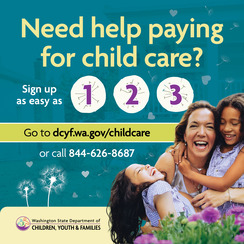
Help Spread the Word | Free & Low-Cost Child Care
Many families living in Washington state qualify for free or low-cost child care, but they may not know about it. You can help by sharing information with parents, caregivers, and your community.
DCYF has put together a toolkit with ready-to-use materials that make spreading the word easy!
Visit www.dcyf.wa.gov/childcare/toolkit to access printable flyers, sample social media posts, and email templates.
Whether you work directly with families or want to help your community stay informed, these resources make it easy to connect families to the support they need.
Want to know more about the Working Connections Child Care Subsidy Program? Visit www.dcyf.wa.gov/childcare or call 844-626-8687. Help is available by phone in multiple languages.
|
Upcoming Local Events
36th Annual Seafair Pow wow-Daybreak Star | Seattle, WA
July 18-20, 2025
Daybreak Star Indian Cultural Center
Visit United Indians of All Tribes Foundation for more information.
31st Pawanputt Pow wow & Encampment | Roosevelt, WA
July 18-20, 2025
Roosevelt Ferry Road, Roosevelt, WA 99356
Contact Sharlene Blacketer for information at (564) 233-6044.
Celebrating Tribal Connections | Interview with Stephanie Gomez, Yakama Nation ICWA Case Manager
By Billie Patterson, Social Service Specialist 3 - ICW Consultant/ Tribal Liaison
What is your name and role at Yakama Nation?
My name is Stephanie Gomez, and I serve as the Tribal Representative and ICWA (Indian Child Welfare Act) Case Manager for the Yakama Nation. I am also the designated QEW for the Tribe, providing testimony on the prevailing social and cultural standards of the Yakama people in child welfare proceedings.
Why is ICWA important to you?
Indian Child Welfare is deeply important to me because it allows me to support Native families in healing and building resilience after experiencing the disruption of family systems. When ICWA is followed correctly, it protects the rights of our children and families, promotes stability, and helps restore cultural continuity. My role allows me to ensure that our families are treated with the integrity, respect, and accountability they deserve under federal law. When ICWA is ignored or misapplied, the consequences are devastating; families can be broken apart, and cultural ties severed. This is why advocacy through my work is not just a job—it's a commitment to justice and cultural survival.

What inspires you to do your job?
What inspires me most is the strength and resilience of our families and communities. Every day, I witness the courage of parents working to reunify with their children and the determination of youth who carry forward our traditions even in challenging circumstances. I also draw inspiration from my upbringing, my ancestors, and the cultural values that have been passed down through generations. Our ways are powerful, and keeping them alive through advocacy, support, and legal protections is an honor.
What are the top tips/advice to social workers who are working with Native families?
-
Lead with respect and humility – Understand that tribal communities are sovereign and have their own customs, governance, and ways of life.
-
Apply the Spirit of ICWA – Even when ICWA does not legally apply, the values behind it—cultural preservation, family connection, and active efforts—should always guide your work.
-
Establish early and ongoing tribal consultation – Tribes should be engaged from the very first contact, not just during court proceedings.
-
Provide culturally appropriate services – Offer services that honor Native worldviews, community strengths, and traditional healing practices.
-
View the tribe as a partner – Together, we can provide stronger, more holistic support to children and families.
What are some of the things that you think social workers are doing well in Washington state?
Many social workers in Washington are making intentional efforts to engage with tribes earlier and more consistently in the child welfare process. There’s a growing understanding of the importance of cultural preservation and the need for culturally relevant resources. I’ve also seen more openness to training and collaboration.
Can you share some things about yourself—family, hobbies, background, etc.?
I am an enrolled member of the Confederated Tribes and Bands of the Yakama Nation and have lived on the reservation for most of my life. I was raised traditionally in both the Wáashat (7 Drums Spirituality) and Indian Shaker Church and continue to practice those spiritual teachings. I’m passionate about our traditional way of life and take pride in preserving our teachings while also navigating the dominant culture. I hold a bachelor’s degree in psychology and advocate for culturally informed mental health and social services that reflect the lived realities and historical trauma of our people. I am also a mother to three wonderful children.
What are some ways social workers can help keep Native kids in foster care connected to their tribal culture?
-
Link them to tribal and local Native programs—regardless of federal recognition.
-
Use tribal-approved placements—prioritize family or community-based care that reflects their culture.
-
Support cultural participation—ensure youth can attend ceremonies, language classes, or community events.
-
Maintain regular tribal communication—stay in contact with tribal reps to support the child’s cultural and emotional wellbeing.
-
Document and share cultural identity—encourage life books, genealogy work, and cultural mentorship.
Any other thoughts you'd like to share?
Meaningful collaboration with tribes is not just a legal requirement—it’s a moral and cultural obligation. Recognizing the strength of tribal communities, respecting sovereignty, and committing to culturally centered practice helps prevent intergenerational trauma and supports the lifelong wellbeing of Native children. By working together—social workers, tribes, and families—we can create systems of care that are rooted in justice, compassion, and respect.
|
|