Now Open: Tribal Observer Project Sign-Up
The Tribal Observer Project is a voluntary opportunity for Tribal child care licensing and Child Care and Development Fund (CCDF) staff to observe DCYF licensors during monitoring or initial visits in July 2025. This shared learning experience supports Tribal regulatory development and honors each Tribe’s unique approach to child care oversight.
More than one person per program may participate. A brief orientation will be provided before visits begin. If your program is interested, please contact Mindy Flett at mindy.flett@dcyf.wa.gov by June 30.
Celebrating Tribal Connections: Interview with Gloria “Cassey” Aranda, NakNuWeSha Program Manager at Yakama Nation
Article written by Billie Patterson, ICW Program Consultant/Tribal Liaison Region 2
Gloria “Cassey” Aranda grew up on the Yakama Reservation. She graduated high school in White Swan, WA and then went on to receive both Bachelor’s and Master’s Degrees in Social Work. She comes from a family of rich heritage, her mother Gloria and namesake having Hispanic heritage and her father a member of the Yakama Nation. Cassey grew up learning the Yakama culture and traditions through her Ulla (grandmother). She loved attending powwows, traveling to the mountains to gather traditional foods, and attending Longhouse ceremonies and events. Cassey comes from a big family as well, with 4 brothers and one sister. Cassey and her spouse are blessed with two sons and they enjoy traveling to basketball tournaments and keeping their family involved in activities.
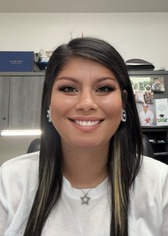
Cassey has been a dedicated employee and asset to the Yakama Nation. She has worked for NakNuWeSha (Yakama Nation child welfare program) for the past 10 years, starting as a Social Worker, then a Supervisor and now the Program Manager where she manages a staff of 13 employees. When asked why Indian Child Welfare is important to Cassey she states: “because it protects the rights and cultural integrity of our Yakama children and families. ICW practice is essential for preserving our Tribal Sovereignty, it prevents forced family separation with our advocacy, and it promotes cultural continuity and corrects historical injustices”.
Cassey is inspired to come to work every day to make a difference in the lives of our children, youth and families. She is inspired to advocate for tribal families and keep families together no matter how difficult the work may be. It can be a very rewarding job, when we are “doing right by the families regardless if it doesn’t feel right to others”. Cassey and her staff understand the needs of tribal families and can be looked upon as helpful knowledgeable partners.
|
Cassey was asked to give some advice and tips for DCYF social workers when working with tribal families. She mentions that it is so important to understand the historical injustices our tribal families have endured and unfortunately sometimes these injustices still happen which continues the cycle of trauma. She encourages social workers to be respectful and when going into tribal homes it is necessary to come with an open heart and remove all biases that can lead to unnecessary separation of families. Do not have a pre-determined plan based on what you “heard” rather than learning the background and issues directly from the family. Be a good listener and do not take things personally as things can get frustrating quickly but when we build relationships with families first, we can create better outcomes. “Keeping our children connected to tribal culture is sacred and healing. Our relatives fought hard to ensure our culture lives on forever”
Cassey wanted to leave us with this last bit of information that is so important:
“I decided to make a career in Indian Child Welfare because my cousins grew up in the state foster care and the experience was terrible for the oldest sibling of three. Due to his stories he told me, I want to make that change to ensure our Native American people have the same care and safety as others in the foster care system. Indian Child Welfare is not just a job for me it is my passion and career to make a difference”.
Such a powerful statement and we are so thankful for Cassey’s partnership and work she does at Yakama Nation.
Start your own Inter-generational Native Girl Society
The Indigenous Justice Circle will award up to $120,000 in the form of 6-8 awards of $5,000-$25,000 each to create and sustain local Inter-generational Girl Societies over a 20-month period (approx. October 2025-June 2027). The deadline to apply is July 14, 2025.
Visit Girl Society Grant Application — Indigenous Justice Circle for information.
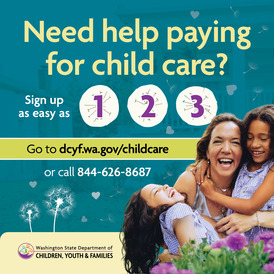
Help Spread the Word | Free & Low-Cost Child Care
Many families living in Washington state qualify for free or low-cost child care, but they may not know about it. You can help by sharing information with parents, caregivers, and your community.
DCYF has put together a toolkit with ready-to-use materials that make spreading the word easy!
Visit www.dcyf.wa.gov/childcare/toolkit to access printable flyers, sample social media posts, and email templates.
Whether you work directly with families or want to help your community stay informed, these resources make it easy to connect families to the support they need.
Want to know more about the Working Connections Child Care Subsidy Program? Visit www.dcyf.wa.gov/childcare or call 844-626-8687. Help is available by phone in multiple languages.
|
MyWABenefits
MyWABenefits is a mobile-friendly website that gives clients streamlined access to important information about their benefits, including food, cash, and Apple Health Classic Medicaid. Visit the Healthier Washington Collaboration Portal to learn more.
Upcoming Local Events
Graduation Coastal Jam - Puyallup Tribe Culture Department
June 20, 2025 at 5 p.m. | Cheif Leschi Schools, Puyallup, WA
For questions, contact Marsha Pluff at (253) 337-8549.
New JR Facility Opening
On Thursday, May 29, DCYF held a press event at Harbor Heights, the state’s newest Juvenile Rehabilitation facility. Speakers included DCYF Secretary Tana Senn, Department of Corrections' Secretary Tim Lang, and Harbor Heights Superintendent Ken Rochelle.
Watch the video here: https://www.youtube.com/watch?v=9s-c7YGVoPQ
Read our recent press release to learn more about Harbor Heights Superintendent Ken Rochelle.
Spotlight on Success: Capital HS Komakhuk Brothers Lead Cedar Weaving Project
"Agugaluk and Aholagana Komakhuk are brothers (and students) at Capital High School who took part in a special project called the Cedar Weaving Project." Read the full article.
|