|
|
March 2025 Issue:

Welcome to the Kinship Connection Newsletter. Inside this newsletter you’ll find resources that are specifically meant to support kin families.
Being with family has long term positive impacts on mental health and placement stability. Research shows that children do better when placed with kin across every measured health factor.
Our agency is committed to placing children with kin when possible and supporting kin caregivers.
Agency News
|
|
|
|

DCYF Licensing Division is creating a new Washington Administrative Code (WAC) Chapter 110-149 for licensing requirements for kinship homes. This will reduce barriers and improve equity for kinship caregivers applying to be licensed.
The project team is updating the forms, supporting materials, and procedure guides. On June 30, 2025, there will be a new kinship licensing process including a new home study, WAC Chapter, and reassessments specifically addressing the needs of children in the care of a relative. Kinship Caregivers should notice the more efficient home study and reassessment process.
If you have any questions, contact the project team by emailing dcyf.kinshipfeedback@dcyf.wa.gov.
The Kinship Licensing Standards team used a trauma-informed approach to create the new process. To be trauma-informed means that we see the impact, signs, and symptoms of trauma and understand the potential for recovery by responding to trauma and actively resisting re-traumatization.
If you are interested in learning more about trauma-informed care, we recommend Trust Based Relational Intervention: Introduction and Overview to TBRI and Trauma-Informed Parenting training from The Alliance for Professional Development, Training, and Caregiver Excellence.
|

The Licensing Division (LD) will be restructuring its Kinship and Foster Care programs to better support children, youth, and families in the summer of 2025.
Currently, LD Foster Programs are separated into pre-licensing/licensing (called “Assessment”) and post-licensing (called “Safety and Monitoring” or “SAM”). LD is adopting a new model where staff will specialize in foster or kinship.
Rather than maintaining the previous pre-and post-licensing model, each licensor will now be assigned to a new application and will oversee that caregiver for the duration of their license. Meaning you will have the same licensor for as long as you maintain your license.
All licensed caregivers, including those holding a kinship license, will receive more information as this transition takes place. For now, updates will be provided in this newsletter.
If you have questions, comments, or suggestions, please email dcyf.licensingfeedback@dcyf.wa.gov.
|
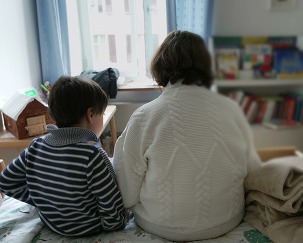
G entered DCYF care just following their 2nd birthday.
Today despite their ongoing medical complexities, they are a happy and thriving child who has found their forever home with their maternal grandparents.
When G was 4 years old, they were referred to the Wendys Wonderful Kids (WWK) Program. Upon getting to know G, it was clear that beyond their medical complexities, G was a vibrant child who loved to be outside and was a quick learner.
Following a relative search, G’s maternal grandparents responded noting an interest in the support and placement of G. DCYF and WWK pulled out all the stops to make these grandparents successful in caring for their grandson with a beautiful support network of relatives and family members who have built a connection with G.
|
|
|
|
|