|
|
March 2025 Issue:
 History
March is Women’s History Month, which commemorates
and encourages the study, observance, and celebration of
the vital role of women in American history. From science to
politics, Women’s History Month is a chance to reflect on the
trailblazing women who lead the way for change.
The current month-long observance began with educators in
Santa Rosa, California, who first celebrated Women’s History
Week in March 1978 to increase awareness of women’s
contributions to society. The week-long event officially turned
into a month in 1987 when Congress passed a resolution
designating March as Women’s History Month.
Notable Individuals
Susan B. Anthony: A women’s rights activist and American social reformer, who played a critical role in the women’s suffrage movement, helping to lead the way for women to vote.
Fannie Lou Hammer: A powerful voice of the civil and voting
rights movements and a leader in the efforts for greater
economic opportunities for African Americans.
Dolores Huerta: Co-founder of the United Farm Workers
Association, Dolores is one of the most influential labor
activists of the 20th century and a leader of the Chicano
civil rights movement.
Books
-
A is for Awesome!: 23 Iconic Women Who Changed the World by Eva Chen
-
Hidden Figures by Margot Lee Shetterly
-
Good Night Stories for Rebel Girls: 100 Tales of Extraordinary Women by Elena Favilli
|
|
|
Foster Parenting & Kinship Care | Washington State Department of Children, Youth, and Families
The Family Separation Response Task Force, led by DCYF, held its first meeting on Feb. 11, with presentations about the current processes that schools, child welfare workers, and law enforcement utilize when responding to family separation due to detention or deportation of parents and caregivers.
Read the full article in English, Espanol, and Soomaali.
The Education and Training Voucher (ETV) Program provides financial assistance to eligible youth to attend an accredited college, university, vocational or technical college.
To learn more about the program, eligibility, and to apply for the 2025–2026 school year, please visit the ETV webpage.
To meet the priority deadline, you must submit an application by April 30, 2025.
Virtual negotiations to update foster care WAC 110-148 continue until April 2025.
These negotiations involve licensing, child placing agency and tribal child placing agency staff, community caregivers, and youth and parents with lived experience.
Suggestions for WAC Sets 4 and 5 are now available for review. If you would like to give input on revised WAC or have any questions, email dcyf.fostercarenrm@dcyf.wa.gov.
The Alliance
Alliance CaRes Newsletter
Coordinated Care
DCYF Supports and Resources
SUD Family Navigator Training
|
|
|
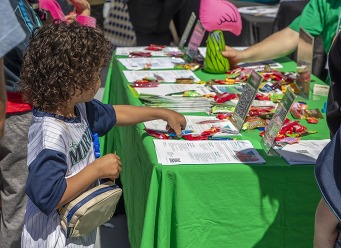
Every year, DCYF partners with the Seattle Mariners to celebrate kinship, foster, and adoptive families during their annual event, We Are Family Day, held at T-Mobile Park.
Join us on Sunday, April 27 to celebrate caregivers and enjoy a baseball game.
|

Family Success Northwest is an organization working to engage, strengthen, and collaborate with families and the community to help trauma-impacted families heal.
Their annual Parent's Conference will be hosted at Great Wolf Lodge in Grand Mound, Washington, May 2-4, 2025.
This year's theme is Rise of the Resilient: A Galactic Journey in parenting. Learn more.
Highlights include:
- Jedi-Level Parenting Workshops: Learn skills to conquer challenges and foster
growth.
- Intergalactic Fun for Kids: Interactive activities, games, and themed day
camp.
- Connect with Your Parent Alliance: Build lasting relationships with other parents.
- Resources for Family Success: Access tools to thrive on your parenting journey.
Interested in sponsoring a family so they can attend this conference? View the flyer for more information.
|

The Licensing Division (LD) will be restructuring its Kinship and Foster Care programs to better support children, youth, and families in the summer of 2025.
Currently, LD Foster Programs are separated into pre-licensing/licensing (called “Assessment”) and post-licensing (called “Safety and Monitoring” or “SAM”). LD is adopting a new model where staff will specialize in foster or kinship.
Rather than maintaining the previous pre-and post-licensing model, each licensor will now be assigned to a new application and will oversee that caregiver for the duration of their license. Meaning you will have the same licensor for as long as you maintain your license.
All licensed caregivers, including those holding a kinship license, will receive more information as this transition takes place. For now, updates will be provided in this newsletter.
If you have questions, comments, or suggestions, please email dcyf.licensingfeedback@dcyf.wa.gov.
|

Celebrate Developmental Disabilities Awareness Month to raise awareness about the inclusion of people with developmental disabilities in all facets of community life, as well as awareness of the barriers that people with disabilities may still face when connecting to their communities.
Did you know?
- In the state of Washington there are approximately 1.3 million adults living with a disability.
- There are currently more than 900 children and youth, ages 0-21, with an intellectual or developmental disability, who are involved in the child welfare system.
- Approximately 22% of parents with a cognitive disability have Child Welfare involvement, nationwide. These parents are at an increased risk of having parental rights terminated.
Eligible children and youth can access Developmental Disabilities Administration (DDA) Home and Community Based Waivers when in a dependency proceeding.
To learn more about DDA enrollment for a child or youth in your care, please talk with your DCYF Caseworker or DCYF's Mental Health/Developmental Disabilities Program Consultants.
|

DCYF filed WSR 25-05-072 to open the public comment period on proposed revisions to the rules on EFC as required by Senate Bill 5908.
Last June, these rules went into effect under emergency status. The goal of these changes is to reduce barriers to youth who are dependent at the age of 18 and voluntarily enroll in the EFC program by eliminating current federal eligibility requirements.
To participate in the permanent rulemaking process for these rules, the last day to submit feedback on the proposed rules is Tuesday, March 25, 2025. You can provide feedback using one of the following methods:
Equal weight is given to all comments, whether they are made online, by email, or voicemail. For questions about DCYF rules, or to request an alternate format for this information, please contact dcyf.rulescoordinator@dcyf.wa.gov.
|

DCYF is excited to share that all caregivers have two different resources available for support: a local Caregiver Supports provider and the Alliance Caregiver Retention, Education, and Support (CaRES) program.
Both services are designed to provide caregivers with critical resources.
What is the difference?
- Caregiver Supports are tied to a young person being placed in your home and are based on the young person’s support level. Visit the Caregiver Supports webpage to find your local provider and to find out what services are available and when they are available.
- CaRES is available at all points in a caregivers’ fostering journey, these resources are available before, during, and after placement. Visit the Alliance CaRES website to learn more about how CaRES can support you or email alliancecares@uw.edu.
|

The Alliance for Professional Development, Training, and Caregiver Excellence
-
Honoring Their History: Memory Preservation for Children in Care — March 20, 5:30 to 7:30 p.m.
The new training focuses on how to support a child’s well-being through the recording of memories and other parts of their life during their time away from their family. This webinar introduces the idea of memory preservation as central to a child’s welfare, because it provides many benefits to emotional and mental health.
Register Here
-
Foster Care: A Means to Support Families — March 24, 1 to 3 p.m.
This course helps you understand the child welfare experience from the perspective of the child’s parents and supports finding compassion for parents and the challenges they may be facing. Strategies to nurture children’s relationships with their parents and to integrate and maintain ongoing communication and connection between parents and children are covered.
Register Here
Learn about all the upcoming classes.
Sign up to get these notices sent right to your inbox or explore the training calendar.
CaRES Events
Single/Solo Parenting
March 18 from 6 to 8 p.m.
Speaker: Deshanna Brown
Register Here
Story Time: Celebrate our Differences!
March 26 from 6:30 to 7:30 p.m.
Reader: Christa Murray
Join Here
|
|
|
|
|
|