|
SFL Project Closeout: SFL communities are winding down their network meetings and priority projects, with a plan to celebrate and wrap up local work in December. We will keep you, our readers, and our community partners updated with any new plans after that.
Newsletter publication schedule: The SFL Newsletter will be published bi-monthly on the 2nd and 4th Fridays in October, November, and December 2024.
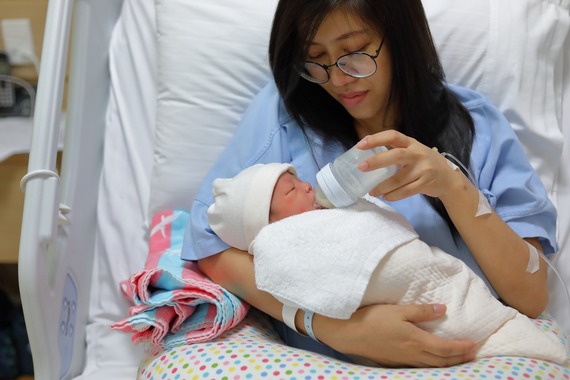 The Power of Doulas: Through our Share a Story Project, and through the Community Prevention Plans and Priority Projects in Strengthen Families Locally, we have heard again and again that communities want more access to Doulas and Perinatal Supports for birthing people. Four of the priority projects engaged Doulas or Perinatal Supports, and an additional 2 community projects received funding from the DCYF-Ballmer Flex Fund to sustain Perinatal Support and Doula programs. Doula supports increased social connections for families and reduced mental health issues. They are particularly successful and needed in rural and Eastern Washington, and with Black, Native, and Immigrant/Refugee populations. The Indigenous Birth Justice Project has been training indigenous Doulas across the state, and Kitsap Public Health District’s Black Infant Thrive program supports perinatal mental health for Black families in Bremerton.
February is Parent Recognition Month: Please join us to celebrate and honor all the incredible parents, caregivers and community members creating safe, happy and healthy childhoods for children. Do you know an incredible person or family who should be honored? Nominate them here!
Inslee statement on President Biden’s apology for Indian boarding school system: President Biden issued a formal apology yesterday for the United States’ boarding school system that separated Native American children from their families and placed them in schools where they were forced to assimilate. Recent reports from the U.S. Department of Interior indicate thousands of children were killed or abused at these schools. An earlier report in 2022 identified 15 such schools in Washington state.
“Among our nation’s darkest stains is the boarding school system that the U.S. government used to erase Tribal language and culture under the harmful pretext of assimilation,” Inslee said. “I applaud President Biden for taking this important step towards healing. We can’t change our past, but we can take accountability for the generational trauma and loss this system wrought. Much work remains and Washington state will do its part to uplift the efforts of those who are carrying forward Tribal languages, cultures and knowledge to current and future generations.”
The most recent operating budget signed by Inslee includes a legislative directive to the Office of the Attorney General to study the impacts of boarding schools in Washington state through a truth and reconciliation model. This includes creation of an advisory committee that will prepare a report with recommendations due in 2025.
Check here for news and opportunities specific to our Strengthen Families Locally communities. Send opportunities to dcyf.strengtheningfamilies@dcyf.wa.gov
Spokane: Patients of Deer Park Dental Clinic Advised to Seek Medical Testing. Washington State Department of Health, as well as Spokane Regional Health District, has advised that all patients who received care at the Deer Park Dental Clinic in Deer Park, Washington, during the periods of November 2021 through June 2022, receive blood born pathogen testing, to include Hepatitis B, Hepatitis C, and HIV. Read the full press release.
Peninsula: Peninsula Early Childhood Coalition monthly meeting Nov. 12, 1 pm. Register here.
Kitsap: Rules of the Road – Investment Strategies from Kitsap County Parent Coalition. Hear from Edward Johnes Financial Advisors, Chris Goff and Matt Sawan, as they discuss investment strategies. Not sure how to invest? Regardless of your course, these 10 Rules of the Road can help you get where you want to be. November 21, 6-7:30 p.m., online. Register here.
Kitsap: Trauma-Informed Professionals Levels 1 & 2 Training coming to Kitsap County! Join Kitsap Strong as we welcome Master Trainer Rick Griffin from Walla Walla’s Community Resilience Initiative, bringing his expertise in brain theory and trauma curriculum to our community. December 9 and 10, House of Awakened Culture, 18264 Hyak Lane NE, Suquamish, WA. Cost: $12.35. Register here.
Spokane: SRDVC Holiday Open House. This is a wonderful opportunity to connect with the SRDVC Team, SRDVC Board members, community partners, and everyone who contributes to our mission. We’ll have refreshments, seasonal treats, and plenty of holiday spirit to share! 104 S Freya St., STE 319A (White Flag BLDG), Friday November 22, 2-5 p.m.
Spokane: End the Violence Conference: Empowering domestic violence professionals in the Pacific Northwest with cutting-edge training at the End the Violence Conference. February 24 - 26, 2025. Spokane Community College / Spokane, WA. Early bird registration through Jan 1 - $150. Register here.
Ferry-Stevens: Early Learning Summit. Join us for an afternoon of collaboration as we seek to identify our community’s early care and education goals based on the most recent local data. November 22. Lunch and Networking: 11:30 a.m. - 12:00 p.m. Summit: 12:00 - 3:00 p.m. Shadle Park Library Event Room, 2111 W Wellesley Ave, Spokane, WA 99205. Register here.
Check out these local resources on Facebook!
Connect (Events and Opportunities)
Integrating Acceptance, Belonging, and Community Components Into Early Childhood Education Presented by: Sandy Lookabaugh, Ph.D., and Lisa Godwin, Ph.D. Early childhood is the optimal time to introduce and reinforce prosocial attitudes and skills of acceptance, belonging, and community. However, educators may be hesitant to directly engage in these conversations despite the importance of embedding these concepts within curricula and programing during this optimal time of learning. November 12, 8-9 a.m. PT. Register here.
Cultivating Justice: Empowering Communities through Food and Farming. Explore the intersection of food justice, youth empowerment, and sustainability, featuring leaders who have dedicated their lives to transforming food systems and communities. This webinar will explore how food justice initiatives can create pathways for systemic change. November 12, 12-1:30 p.m. PT. Learn more and register here.
Advocating for Our Future – Creating Long-Standing Safety Nets for Latine Children and Families. In the wake of the 2024 presidential election, our Latine communities have the opportunity to advocate for public policies that uplift our culture, ensure family safety, and support our children. This episode will emphasize the importance of public policy, community safety, and access to support systems by focusing on the immediate steps and long-term strategies to reinforce our community's safety nets and create a secure, thriving environment for Latine children and families. November18, 12-1:30 p.m. PT. Register here.
Substance Use Disorder family navigator training: Washington State Community Connectors (WSCC) and partners have developed a training to educate families about substance use disorder (SUD) and related treatment options across the state. This training is for parents, family members, and caregivers who are interested in learning how to support their loved ones with SUD. Participants will learn about up-to-date information around SUD, addiction and its effects on the adolescent brain, skills for families navigating their relationship with someone with SUD, and systems navigation. November 18-21 from 9 a.m. to 1 p.m. daily | December 2-5 from 9 a.m. to 1 p.m. daily | January 6-9 from 4 p.m. to 8 p.m. daily. Learn more and register at WSCC
NW ROTAC Explained: How we help communities address the opioid epidemic in Alaska, Idaho, Oregon, and Washington Presented by PRISM Collaborative and NW ROTAC. Join us for an informative webinar where we will describe the mission and impact of the Northwest Rural Opioid Technical Assistance Collaborative (NW ROTAC). Discover how we are actively partnering with and supporting rural communities across Alaska, Idaho, Oregon, and Washington in addressing the opioid crisis through resources, training, and focused outreach. Learn from co-directors Drs. Elizabeth Weybright, Michelle Peavy, and Sandi Phibbs who translate research into accessible resources and tools to serve rural practitioners, community leaders, educators, healthcare professionals and American Indian/Alaska Native partners throughout the Northwest. November 19, 12 p.m. Register here.
Nonprofit Financial Reporting: Building a Simple System for Complicated Needs. Nonprofit organizations handle complex financial data, often working with diverse funding streams, programs, and reporting needs. In this webinar, we explore best practices for designing an accounting system that delivers abundant benefits: streamlined reporting, greater accuracy, and operational efficiency. Learn how to structure your system in 3D, leverage one-click reporting, and avoid common pitfalls. We'll highlight best practices that will allow your nonprofit to thrive and give thanks for the clarity and ease of managing financial data. November 20, 2024, 9-10 a.m. PT. Register here
Let’s Talk About Kin from Casey Family Programs. As we embrace a kin-first culture as a state, what are we learning from families? Building Family Partnerships presents a webinar focused on understanding the needs of kinship families through the lens of those caring for youth and children. Join up to listen in as lived experience and professionals seek to understand and respond to all a family’s needs to achieve well-being together. November 20, 1-2:30 p.m. Register here
Gender and Affectional Identity Affirming Services: Best Practices for Supporting Individuals within the LGBTQIA+ Community from Washington State Health Care Authority (HCA) and Rutgers Department Psychiatric Rehabilitation and Counseling Professions. Participants will explore best practices for cultural humility when working with individuals within the LGBTQIA+ community, learning how to integrate inclusive language and services into their practice. Case studies and applied activities will allow participants to develop practical skills to provide gender-affirming and affectional identity-supportive services with a focus on fostering safe, respectful, and inclusive therapeutic environments. December 17, 3-4:30 p.m. PT. Register here
Washington State Fathers Network Monthly Webinars: You are invited to join the Father's Network Monthly Webinars! Men, Women and all couples are welcome all sessions will be recorded. Session Schedule: January 4 Sibling Support: 7 Simple Strategies for Parents to Connect with Their Typically Developing Kids | February 1: Washington State Parent to Parent Network | March 1: Planning for Housing: Accessing Benefits, Roommate Matching, and Shared Living Development Services | April 5: Helping Our Children Develop Meaningful Relationships | May 3: Social Communication 101 |June 7: Supporting Bilingualism for Children with Special Needs. All workshops 7:30—8:30 p.m. Register Here
Trauma-Informed and Trauma-Supportive Training of Trainers from CRI: Are you interested in becoming a CRI trainer? Our Master Trainer, Rick Griffin, will be training the next generation of trauma-informed instructors beginning in January. Don't miss this opportunity to bring the science of resilience into your work! Join us for the following live webinars: Course 1: Trauma-Informed Training of Trainers begins on January 13 | Course 2: Trauma-Supportive Training of Trainers begins on January 21.
Implicit Bias: From Awareness to Conscious Decision-Making from Washington Health Care Authority (HCA) and Rutgers Department of Psychiatric Rehabilitation and Counseling Professions. Objectives/Takeaways: 1. Recognize implicit bias and why it matters; 2. Identify sources of implicit biases; 3. Accept the responsibility to identify and understand your implicit biases; 4. Identify strategies for combating implicit biases. January 21, 2025, 3-4:40 p.m. PT. Register here.
BTC’s National Substance Use Disorder (SUD) Virtual Summit, The First 1,000 Days: Family, Kin and Foster Caregivers on the Paths to Recovery. Our 2025 National SUD Summit will highlight the roles, strengths, and successful approaches of family members and foster care providers who step in to take care of babies and children when parents on the road to recovery need help. In addition, we will delve into how federal and state policy shapes programs and supports for parents living with SUD, and for the kin and foster caregivers who nurture their babies and children when they can’t. Wednesday, February 12, 2025, 8 AM – 2:30 p.m. PT. Early Bird Registration through Jan 25, $75, register here.
Creating Trauma-Sensitive Schools: Join the largest gathering of Trauma-Informed Educators dedicated to building Trauma-Responsive schools gathering in Atlanta, GA. February 16th-18th, 2025. Details and registration here.
Learn (Educational Resources)
How to improve youth mental health in WA: In a new report, Children's Alliance provides an assessment of leading proposals to improve youth mental health in Washington, and offers recommendations for low-cost, high-impact strategies that the state could implement to make major progress in the year ahead. Read the report here.
Tangled Routes: A Storytelling Podcast Navigating Youth & Family Systems - Episode 3: Shavontae's Story. In this episode, Shavontae recounts her journey through the child welfare and juvenile justice systems, while battling substance abuse and mental health issues. Listen here.
Building Healthy Futures: Addressing Mental Health and Substance Use Disorders During Pregnancy and Postpartum. This report from the Center for Health Care Strategies examines access to care challenges for individuals with mental health disorders and/or SUD and outlines recommendations for evidence-based, person-centered perinatal services. Read the report or watch a related webinar.
Cash Transfers Benefit Children and Families, Identified as Effective PN-3 State Policy Solution. Through a comprehensive review of the most rigorous research to date, the Prenatal-to-3 Policy Impact Center at Vanderbilt University has identified cash transfers as a proven state strategy to improve outcomes for children and families. Read more here.
Act (Ways To Engage Right Now)
The Prevention Services Clearinghouse is pleased to announce that a public call for program and service recommendations is now open. This call is an opportunity for the Clearinghouse to actively engage the public and solicit recommendations for new programs and services for systematic review. This call is an opportunity for the public to recommend mental health, substance use, in-home parent skill-based, and kinship navigator programs and services for systematic review. Additional public calls for recommendations will occur on at least an annual basis. Recommendations can be submitted via email at any time. The deadline for submissions is November 21, 2024. Learn more here.
Focus group opportunity! Infant and Early Childhood Mental Health workforce development. Join us for listening and brainstorming sessions and contribute your expertise! The information gathered will be used to design a cohesive strategy to expand, diversify, train, and retain the infant and early childhood mental health workforce. A report is due to the Washington State Legislature in June of 2025. Anyone providing support to young children and families in Washington State is invited to participate, including infant mental health specialists, home visitors, child care providers, community health workers, early intervention specialists, and other trusted community members. Opportunities for direct service providers and program administrators. Learn more and sign up here.
Grow (Funding and Resources)
DCYF Opens Third Round of Tribal Early Learning Fund: DCYF is excited to announce the opening of a third round of Tribal Early Learning funding (TELF), following two rounds already in the past year totaling more than $6 million in disbursements to tribes, tribal providers, and tribal-serving organizations across Washington state.
Applications for the third round of funding are due by 5 p.m. on Monday, Dec. 2, 2024. For more information, and to apply for funding, please visit the DCYF Tribal Relations webpage. For questions, please email Apolonio (polo) Hernandez, the Tribal Early Learning fund specialist, at apolonio.hernandez@dcyf.wa.gov or call 509-564-5027.
TELF supports tribal children, prenatal to five, in early learning programs across Washington state in a culturally appropriate and inclusive manner. To learn more about Round 1 and Round 2 funding disbursements, visit DCYF Awards Nearly $3.7M to Early Learning Programs Serving Tribal Children. If interested in ongoing Office of Tribal Relations news, subscribe to the OTR newsletter.
Washington Supportive Housing Institute 2025: The Washington Supportive Housing Institute (SHI) brings teams across various sectors together for intensive and interactive workshops covering all aspects of creating affordable and supportive housing. The Institute provides tools and support to help teams build their project plans and bring them to reality. Teams graduate from the Institute with a housing development plan and a path for acquiring funding. We are looking for teams who want to create supportive housing to end homelessness in Washington. These teams can include: Supportive housing developers; Affordable housing developers looking to expand into supportive housing; Service providers looking to create a new supportive housing project. Application Deadline: Wednesday, November 13th, 2024 by 11:59 p.m. PST. Apply here
If you have suggestions for what to include in this newsletter, email Joy Lile.
|