|
Our in-person All HVSA is quickly approaching. As a reminder May 9 will be for supervisors and model specific connection time, while May 10 will be the All-HVSA day, with in person and virtual options for participating.
This year the focus will be on Resilience and how that might look unique for everyone. This will include a presentation on NEAR sciences, speaker Charles Hunt and a panel reflecting on the impact of the opioid epidemic on Washington families and the strength in recovery. You can register for this full day virtually here. We will have one zoom running the entire day and staff are invited to come and go as it fits their needs.
Use this in person All HVSA registration link for the in person All HVSA event on May 10 if you have not yet registered and still plan on attending in person.
If you have any questions about in person or virtual registration, please email the Home Visiting inbox at dcyf.homevisiting@dcyf.wa.gov.
Perinatal Mental Health Community Capacity Building
Strengthening Families Washington (SFWA) at the Department of Children, Youth, and Families (DCYF) in collaboration with Perinatal Support Washington (PS-WA), is pleased to announce that funding is available for perinatal mental health community capacity building! We invite Requests for Application (RFAs) from Washington State organizations interested in collaborative efforts to increase community-wide awareness and develop resources to support perinatal mental health.
Review the following document:
The deadline for applications is 5 p.m. on May 8, 2024. If you have any questions, please email dcyf.strengtheningfamilies@dcyf.wa.gov.
Crisis Respite Capacity Building Funding Opportunity
Strengthening Families Washington (SFWA) at the Department of Children, Youth, and Families (DCYF) is pleased to announce that DCYF has released a Request for Proposal (RFP) to develop crisis respite capacity in Washington State. Crisis respite is short-term care for children when their parents or caregivers need a break for any reason, whether they are exhausted and worn-out from the demands of parenting or when they experience difficult life circumstances or other unexpected events and have no safe alternatives for care.
We invite proposals from organizations who are interested in developing crisis respite capacity in Washington State communities, Tribal Nations, Recognized American Indian Organizations (RAIOs) and Native Serving Organizations through either in Option 1, crisis respite exploration and planning, or Option 2, implementation.
DCYF will post this Solicitation, and all Amendments and announcements relating to this Solicitation, on WEBS. You can access WEBS at https://fortress.wa.gov/es/webscust. All bidders must be registered in WEBS to download this solicitation and receive notifications regarding amendments to the solicitation.
The deadline for submitting proposals is May 8, 2024, by 4 p.m.
Please share this opportunity with community partners and organizations throughout the state. If you have any questions, email dcyf.contracts@dcyf.wa.gov.
Gov. Jay Inslee has declared May Maternal Mental Health Awareness Month. Nearly 20% of Washington moms experience perinatal mood disorder post birthing experience. If you or someone you know are struggling, you can find resources at our partner Perinatal Support Washington. PS-WA also has a warm line 1-888-404-7763 available in both English and Spanish.
The DCYF Early Learning Division filed WSR 24-08-066 to open the public comment period on proposed amendments to WAC 110-425-0030, Early Childhood Education and Assistance Program (ECEAP) Definitions. The Fair Start for Kids Act (Engrossed Second Substitute Senate Bill 5237) directs DCYF to establish a definition of an Indian child that will be used for ECEAP enrollment.
The definition will include federally recognized Tribal members and increase clarity around which children are eligible for enrollment as an Indian child into ECEAP programming. The definition needs to be in rule by July 1, 2024.
Submit Comments
To participate in the permanent rulemaking process for these rules, the last day to submit feedback on the proposed rules is Tuesday, May 7, 2024. You can provide feedback using one of the following methods:
Equal weight is given to all comments, whether they are made online, by email, or voicemail.
For questions about DCYF rules, email dcyf.rulescoordinator@dcyf.wa.gov.
Our next office hours will be May 16, 2024 3 p.m. Join here.
More Resources for Families!
Expanded HealthCare for Immigrants
During our recent legislative session, $28.4M was included in the Washington budget to expand healthcare access for undocumented individuals and families with a Medicaid-equivalent. With this additional funding, the number of folks who can access this program will double. Undocumented survivors of domestic violence face many barriers to accessing healthcare, including fear of deportation, language barriers, and financial abuse. This is an important step towards dismantling these barriers and promoting health equity for immigrants and survivors alike. Check with your local Navigator for help enrolling undocumented individuals for Medicaid.
Doulas for All Medicaid Coverage
The Washington legislative budget included funds for the ability of birth doula services to be reimbursed through Medicaid coverage. The approved reimbursement rate of up to $3,500 per doula is the highest rate for birth doulas in the nation. Additionally, $100,000 has been allocated for the development of a “Doula Hub,” which will provide support for doulas navigating Medicaid referral and billing systems. The physical, emotional, and informational support that birth doulas provide during pregnancy and the postpartum period has been shown to significantly improve health outcomes and health equity. Doula services are holistic and culturally responsive, which is particularly important for BIPOC, LGBTQIA+, low-income, and other communities that face barriers or discrimination when accessing the health care system.
Questions? Please contact Leigh@wscadv.org, WSCADV
To reduce the impact of the Opioid Epidemic, Washington State has developed the Opioid Taskforce and an Opioid and Overdose Response Plan.
The Pregnant, Parenting, Children, and Families (PPCF) workgroup is one of the workgroups associated with the taskforce. Through the collaboration of this workgroup, evidence-based lactation guidance and education documents are available on the Healthier Washington Collaboration Portal. These documents are intended to guide healthcare providers in providing quality patient care and advice with regard to lactation and infant feeding for parents with a history of substance use. These resources are also available in multiple languages.
For more information about opioids, visit:
Opioids | Washington State Department of Health
Congratulations to Alex Patricelli regarding her internal promotion as she fills a new role for the Start Early team, the Manager of Community Partnerships. Alex will continue to support technical assistance to the Tribal programs she is currently working with, as well as facilitate Communities of Practice for providers. In addition, Alex will be leading community engagement work centering BIPOC and rural communities, as well as support the launch of Start Early Washington’s Community Advisory Committee. We are so excited to support Alex as we build out her new role!
CQI Corner
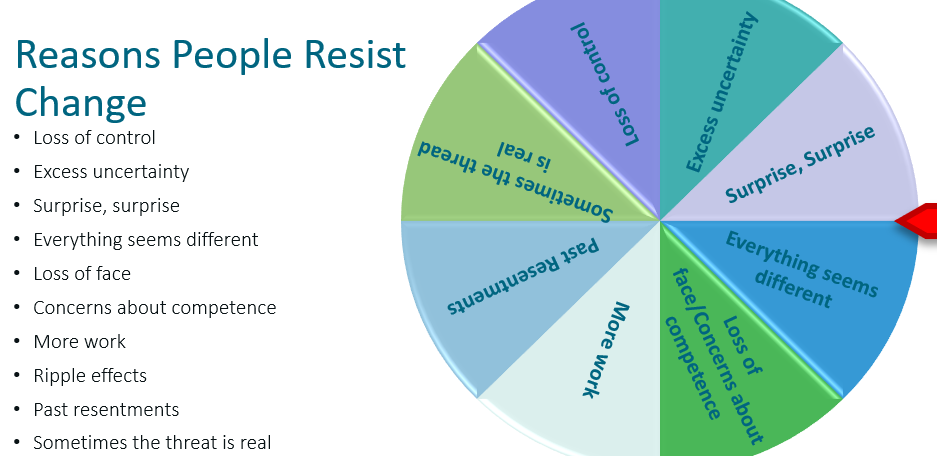
March Webinar Summary: Change Management: Managing Resistance to Change
In our recent webinar on Change Management: Managing Resistance to Change, we explored common reasons for resistance to change and what factors can be taken into consideration when meeting resistance. Through a large group discussion, participants had the opportunity to share their personal experiences and insights. They discussed effective strategies, tips, and valuable lessons learned to enhance change management practices within their respective teams. In Part 2 participants will have the opportunity to further exchange experiences and knowledge to support practical guidance for navigating resistance to change and fostering smoother transitions.
 Resources (found on Basecamp – CQI Project Folders)
For questions, support or to be added to CQI communications:
Camille Carlson: ccarlson@startearly.org
The Start Early Washington team is excited to be offering home visitor peer connection opportunities, which will provide a space for home visitors across Washington to connect with each other, share questions, strategies, and reflections on working with families.
Register for Home Visiting Peer Connections
For questions please contact HVStartEarlyWA@STARTEARLY.ORG
Each month, DCYF ESIT Tribal Program Consultant Brian Frisina will provide a key topic to help support us all in getting to know our Tribal Nations partners better.
This month’s topic is:
Food sovereignty: Valerie Segrest at TEDxRainier
The Indian tribes around the Puget Sound have practiced sustainable balance with its foods for thousands of years, but now the prairie lands and mountain berry meadows are disappearing and salmons runs are dwindling. Valerie Segrest, a member of Muckleshoot tribe and native foods educator tells us to listen to the salmon and cedar tree, who teach us a life of love, generosity and abundance, and to remember when we take better care of our land, we are taking better care of ourselves.
Valerie Segrest is a native nutrition educator who specializes in local and traditional foods. As an enrolled member of the Muckleshoot Indian Tribe, she serves her community as the coordinator of the Muckleshoot Food Sovereignty Project and also works for the Northwest Indian College's Traditional Plants Program as a nutrition educator. In 2010, she co-authored the book "Feeding the People, Feeding the Spirit: Revitalizing Northwest Coastal Indian Food Culture". Valerie received a Bachelor of Science in Nutrition from Bastyr University in 2009 and a Masters Degree in Environment and Community from Antioch University. She is a fellow for the Institute of Agriculture and Trade Policy (watch time 13:11):
Sustaining Traditional Foodways: Interview with Valerie Segrest
My name is Valerie Segrest and I am a member of the Muckleshoot Tribe located just south of Seattle, Washington, and my background is nutrition in herbal medicine and Food Systems specifically of the Pacific Northwest region specifically. After I got my degree in nutrition, I just felt like I couldn't be the kind of clinician who came home and counseled my people about a diet that I knew they didn't have access to and so I chose to focus on community nutrition efforts and specifically the food sovereignty movement which in our approach for by the Muckleshoot Food Sovereignty Project, founded in 2009.
Kelli Faryar interviews Valerie Segrest, enrolled member of the Muckleshoot Indian Tribe and native nutrition educator. Read the entire interview:
Tahoma Peak Solutions
Valerie aims to inspire and enlighten others about the importance of a nutrient-dense diet through a culturally appropriate, common-sense approach to eating. Learn more about Valerie and her work, writing and news:
Sources
Food sovereignty: Valerie Segrest at TEDxRainier, posted to YouTube by TEDx Talks, Jan. 22, 2014.
Sustaining Traditional Foodways with Valerie Segrest by Kelli Faryar, Spring 2022. Rites of Green, Journal of Washington State Folklife.
Valerie Segrest, Tahoma Peak Solutions, Contact Valerie at valerie@tahomapeak.com.
What is autism?
Autism, or autism spectrum disorder (ASD), refers to a broad range of conditions characterized by challenges with social skills, repetitive behaviors, speech and nonverbal communication. According to the Centers for Disease Control, autism affects an estimated 1 in 36 children and 1 in 45 adults in the United States today.
We know that there is not one type of autism, but many.
Learn more
Kit for Kids: Teach Kids About Autism
Organization for Autism Research developed a peer education program called Kit for Kids to help educators, parents, friends, and classmates teach students in grades K-8 about autism. The kit revolves around “What’s Up with Nick?”, a story about a new autistic student named Nick. It teaches children that autistic students may think differently or need some accommodations, but all students are of equal worth and should be treated as such.
Learn more about the curriculum and how you can help:
Teach Kids About Autism
Resources
OIAA Releases ECEAP & Head Start Participation Dashboard
|
A DCYF strategic priority is to create a high-quality, integrated B-8 system. In support of this priority, the Office of Innovation, Alignment, and Accountability (OIAA) has released the ECEAP and Head Start Take Up Dashboard. This publicly available dashboard explores how many families “take Up” ECEAP or Head Start services across Washington state (i.e. of the families eligible for these services, how many enroll).
The dashboard shows the “take up” rate for counties, legislative districts, school districts, and zip code tabulated areas. To further refine the population, users can adjust the filters to select the age group, income brackets, Early Learning program type, and whether to include children participating in the Working Connections Child Care subsidy program.
The ECEAP and Head Start Take Up Dashboard is one of many Early Learning Dashboards available to DCYF staff and the public to inform policy and practice.
|
Working Families Tax Credit Listening Sessions: Department of Revenue (DOR) is hosting listening sessions for tax preparers and community members to share their experience applying for the Working Families Tax Credit. For Community Members (Spanish interpretation available).
Please join us at one of these sessions:
-
Tuesday, May 7, 2 p.m. Click here to register |
-
Wednesday, May 8, 6 p.m. - Click here to register.
If you are unable to attend a live listening session, we still want to hear from you. You are welcome to complete this questionnaire.
News
Autism Awareness Symbols: What Do They Mean?: Many symbols have come to represent autism over the years but none is as popular as the puzzle piece. First used as a symbol for autism in 1963 by the National Autistic Society (NAS) in the UK, it’s become a globally recognized symbol for the complexity, joy and mystery that surrounds autism. There are many other symbols and colors all of which hold significance for the autism community. Let’s explore some of the prominent symbols that have come to represent autism awareness and acceptance over the years.
'We believe in second chances': Green Hill staff members focus on rehabilitation, Yahoo.com
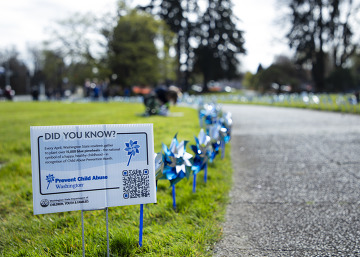
Commentary Blue pinwheels represent child abuse prevention, Columbia Gorge News
|