|
Celebrate Women’s Month by Jahla Brown, DCYF ESIT Partnership & Collaboration Specialist

Now that Black History Month has ended and March has begun, we have the privilege of celebrating another vital month in the calendar year: Women's History Month. What was once Women's Day, expanded to a week, then to an entire month, over decades of celebration.
With roots dating back to 1857, when women in New York City factories protested poor working conditions, this month has the opportunity to highlight the many accomplishments that women have made. And to spotlight how women's accomplishments will continue to inspire many future generations (watch time 2:11):
|
“As the salmon disappear so do our tribal cultures and treaty rights. We are at a crossroads and we are running out of time.” -Billy Frank Jr. Nisqually, Nisqually, a Native American Elder, environmental leader and advocate for treaty rights.
Each week, DCYF ESIT Tribal Program Consultant, Brian Frisina, provides a key topic to help us get to know our Tribal Nation Partners better.
This week’s term is:
Every year, the treaty tribes in Western Washington observe Billy Frank, Jr.’s birthday on March 9.
The fishing rights warrior and longtime chairman of the Northwest Indian Fisheries Commission lived from March 9, 1931, to May 5, 2014.
His life is chronicled in several books and films. We encourage you to visit the following links to learn more about Billy Frank Jr. so you may pass on his messages to Stay the Course and Tell the Truth:
View the 2024 Proclamation: acknowledging Billy Frank, Jr.'s legacy surrounding the Fish Wars, restoring and protecting habitat, Indian treaty rights and fisheries management; adding a statue of Billy Frank, Jr. to Washington D.C.’s National Statuary Hall (in 2025); and the declaration of March 9 as Billy Frank Jr. Day., signed by Mayor, Dontae Payne, March 5, 2024:
Many people have contributed to Washington’s history, but few have made as profound an impact in the face of adversity as Billy.
Throughout his life, Billy brought people together to find common solutions to protect salmon and other natural resources for the benefit of all Washingtonians. His story reminds us that pursuing a more just society creates a better society for everyone. He fought for justice through nonviolent and collective action.
Learn more about Billy's life, contributions and legacy (watch time 6:20):
Nisqually Tribe honors legacy of Billy Frank Jr.
Friends and supporters of Billy Frank commemorate his life with a feast, a new school curriculum for Billy Frank Jr. Day, and a day of service.
Read the full article:
March 9 is Billy Frank Jr. Salmon Celebration Day
Billy Frank, Jr., a Northwest Native American (Nisqually) activist, played a key role in the “Fish Wars” of the 1960s and 1970s, resulting in a landmark [Boldt] decision affirming tribal fishing rights. Join us in honoring him on March 9!
The Seattle School Board will acknowledge March 9 as a day of observance recognizing and honoring the life and legacy of Billy Frank, Jr.
Learn more about this influential leader in our Billy Frank, Jr. collection of resources:
The Billy Frank, Jr. Day Curriculum
A curriculum is in development for aiding teacher’s in educating others about the life and accomplishments of Billy Frank Jr. and how he fought for the salmon and the rights of treaty tribes. Use the form below to access the collection of curriculum files, which includes lesson plans, videos and presentations.
Access the collection of curriculum files, including lesson plans, videos and presentations:
Sources
Proclamation shared courtesy of Peggen Frank, daughter-in-law of late Billy Frank, Jr.
Honoring Billy Frank Jr., posted to YouTube by Northwest Treaty Tribes, Feb. 1, 2021.
The Billy Frank, Jr. Day Curriculum - Salmon Defense, Salmon Defense is a 501(c)(3) tax-exempt charitable organization.
Nisqually Tribe honors legacy of Billy Frank Jr. by Lynda V. Mapes, Seattle Times environment reporter, originally published March 9, 2016, updated March 10, 2016, © 2024 The Seattle Times.
Billy Frank Jr. Day, Seattle Public Schools, © 2024 Seattle Public Schools.

Thank you to everyone who participated in the February State Interagency Coordinating Council (SICC) meeting!
For Review
The draft February SICC meeting minutes, Meeting Materials and presentations have been posted to ESIT's SICC Meetings page for review. If there are needed changes to the February meeting minutes, please send your edits to Will Moncrease Jr.
SICC Direct List
If you would like your email added to the SICC direct email list to receive the agenda and meeting materials in advance of upcoming SICC meetings, email Will Moncrease Jr., with the subject: Add me to SICC DL.
Questions?
Please contact DCYF ESIT Partnership & Collaboration Manager, Will Moncrease, Jr., at will.moncrease@dcyf.wa.gov.
|
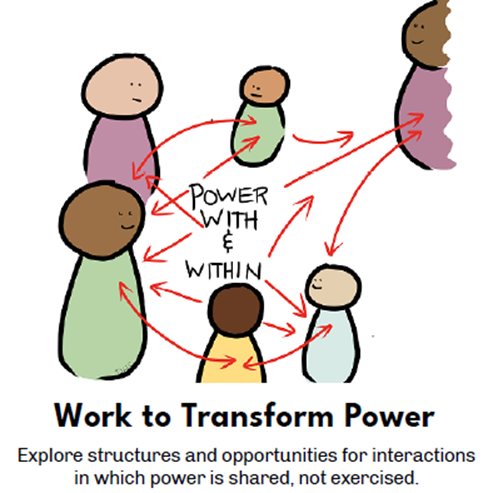
"Work to Transform Power: Explore structures and opportunities for interactions in which power is shared, not exercised." - Liberatory Design, Mindsets and Modes to Design for Equity
Why?
To have the opportunity to influence and support the drafting of equity-based metrics that can drive the local decision-making process for the use of the IDEA Part C Equity in Access Funding Set-Aside, totaling $500,000 statewide. Influencers will also have the opportunity to contribute to the content and format of a streamlined, mini-application to be used by local programs to describe their equity-based metrics and priority areas.
Who?
If you are interested in helping identify data and information necessary to ensure equitable services (both types and intensity) are provided for each child and their family regardless of race, language, social class, or place of residence, please volunteer. Working together, parents, practitioners, administrators, and finance leaders can influence how resources are allocated at the local level to break down barriers and reduce inequities in access to high-quality, family-centered, statewide early support services. To volunteer to join the EIA-TWG, email your request to Kali Wraspir, ESIT Resource Allocation Specialist at kali.wraspir@dcyf.wa.gov with “EIA-TWG Volunteer” in the subject line.
What is the Timeline & Commitment?
The 10-12 member EIA-TWG will meet up to three times for 60–90-minute segments between April-May 2024. Meeting dates and times will be determined after membership influencers are identified.
Questions?
Please feel free to contact Valerie (Val) Arnold, ESIT State Administrator, at valerie.arnold@dcyf.wa.gov or preferably at (360) 485-7773.

We are pleased to share that this summer, DCYF will be launching a new and improved training site, called DEVELOP. DEVELOP will combine the “Find Trainings” part of MERIT with the DCYF Training Portal , where ESIT professionals go to take online training.
When DEVELOP goes live this summer, ESIT professionals will be able to search, register for, and take trainings in DEVELOP, all in one location!
Before going live
DCYF will import the training history of ESIT professionals with training records in the current Training Portal into the new site. Your existing account and history of training information will move to DEVELOP.
As we begin the transition
In addition to monthly newsletter updates, DCYF will provide access to recorded demonstrations, written tutorials, and one-on-one office hours for technical assistance beginning 90 days before people begin using DEVELOP to find training.
For more information about DEVELOP, visit DCYF's New Training Site, or contact dcyf.esittraining@dcyf.wa.gov.
|

In collaboration with the State Interagency Coordinating Council Personnel and Training Sub-Committee, the ESIT State Leadership Office is pleased to announce the soft roll out of the new ESIT Credential for Family Resources Coordinators (FRCs) beginning in February to introduce and field test the process. A firm roll out for the credential requirements is planned for July 1, following a 90-day communication cycle starting April 1.
Beginning February 1, newly hired Family Resources Coordinators (FRC) will receive an ESIT Credential once they complete all initial training requirements and submit a credential application.
The Initial ESIT FRC Credential Guidance can be found on the ESIT In-Service Training Framework webpage.
Initial ESIT FRC Credential Webinar
Join us for a Q&A Webinar where you can learn more about the ESIT Credential for FRCs!
March 11 | 2 – 3 p.m.
Questions?
Please contact ESIT's Workforce Development Specialist, Lori Holbrook, at dcyf.ESITtraining@dcyf.wa.gov.
|

Do you work at a local ESIT Provider Agency and bill public and/or private health insurance for ESIT Services? You are invited to join a newly formed Insurance Billing Support Group!
What is the Insurance Billing Support Group?
This informal peer-to-peer collaborative space will be limited to those who are engaged in billing at the local ESIT program level, meeting the fourth Monday of each month. We hope to connect as peers, exchange ideas, and collaborate to find solutions to common challenge such as:
- What have you found to be the best coding to use for specific services?
- What strategies have worked for following up on denied claims?
- What procedures does your agency have in place to ensure timely filing?
A little about the facilitator
My name is Marsha Smith and I work for Steps, formerly Toddler Learning Center. We serve Island County, San Juan County and Anacortes. I have worked here for almost 6 years, and before this my experience came from the financial industry and working in the Island Hospital billing department. My love for numbers and money has helped me be a great advocate for families and staff. I enjoy sharing what I know, and most of all learning from my peers who do the same work.
Join us this month!
Mon., March 25 | 2 p.m.
Questions?
Can’t attend but interested in future events? Have questions? Email Marsha Smith, at Marsha.S@takingstepstogether.org.
|

Upcoming
Offered at no cost for ESIT Professionals. Full descriptions of each training, including registration information, is available in the 23-24 Ongoing Professional Development and Calendar.
- Promoting First Relationships Drop-In Session | March 19
- Promoting First Relationships Booster Session | March 7 & 8
- Introduction to Reflective Supervision for Supervisors | April 2 - 5
- Domestic Violence Assessment and Response | April 4 & 5
- Foundations of Infant and Early Childhood Mental Health | April
|
Mark Your Calendars!
Please make plans to attend the 2024 Infant and Early Childhood Conference (IECC), hosted completely virtual via Zoom!
May 6 – 10
For conference information please visit www.ieccwa.org.
IECC plans to offer STARS Credit and Clock Hours for this event.
The purpose of the IECC Conference is to provide opportunities for families and service providers to come together to learn, share and advocate on behalf of all young children, especially those with developmental delays, disabilities and/or other special health care needs.
IECC Partnership Opportunity
IECC is so thankful for its many community partners. Due to their support IECC has been able to shift its platform and offer the conference registration complimentary for all attendees the past few years. If your organization would be willing to partner with us please email the conference coordinator, Amanda Cardwell directly at amandacardwell@frontier.com.

The Washington State Department of Health, Early Hearing Detection, Diagnosis and Intervention (EHDDI) program worked with ESIT, family resources coordinators (FRCs), early support providers, deaf and hard and hard of hearing (DHH) adults, audiologists, and a family-to-family support organization to create three training modules. The training modules provide FRCs and early support providers with information and resources that are helpful when working with children identified as deaf or hard of hearing and their families. The trainings focus on the following topics:
-
Special Providers and Services: Discusses DHH specialized programs and supports, and special considerations when working with children who are DHH with additional disabilities.
-
Knowledge Building: Provides information about diversity in the DHH community, describes hearing levels, and technology options available.
-
Bias Awareness: Provides information about communication opportunities, recognizing biases, and ways to support diverse families.
To access the trainings, please visit the EHDDI WaPortal page:
|
 |

Supporting the Anxious Eater: A Responsive Approach with Karen Dilfer, MS, OTR/L
Practitioners who work with children and families in feeding therapy settings don't miss this opportunity to:
- gain an understanding of responsive feeding principles and demonstrate how to apply them to support children whose individual differences make it difficult for them to enjoy eating,
- explain how sensory safety and emotional safety are the foundation for building a child’s internal motivation to eat,
- learn to collaborate with parents to give them increased confidence feeding their child.
4 sessions | 4:30 - 6 a.m. | Weekly on Wednesdays
Scheduled Dates: 3/6, 3/13, 3/20, 3/27 | Live Online Via Zoom
Great value: Only $30 per session!
Learn more and register:
Building Relationships into Systems of Care with Pradeep Gidwani, MD, MPH
Healing happens in the context of relationships, yet, when Systems of Care are developed, the focus is on what is the problem and what services are needed? A better question is what relationships are needed to help children and their families. What if systems builders intentionally focused on enhancing relationships? In San Diego County, we have built an Early Childhood System of Care to treat children with mild to moderate developmental and behavioral concerns. In the last 18 years, we have served over 330,000 children and their families. Even though we were successful with building a system of care, we found families did not engage or stay engaged in services until we focused on building and supporting relationships. This session will share our lessons learned by building and nurturing relationships with our families and their children, our service providers, and our funders.
Thurs., March 21| 5 p.m. | Live Online Via Zoom
Free Community Learning Event!
Learn more, check out upcoming classes available, and register:
|
This course will be a mixture of video observation of infants, PowerPoint, and discussion to help participants define, observe, and reflect on ways to understand and support the infants who are growing and developing in their care. The course will be held on Zoom.
March 11 | 8 a.m. – 12 p.m. | $150
Keys to Infant Caregiving is a research-based program for professionals that provides essential information on newborn and infant behavior. Participants will learn about infants and their captivating ability to interact and engage in relationships with their parents, caregivers, childcare providers and how that impacts the care they receive. Participants will learn about how infants’ internal states influence their behavior and how to help infants regulate. They will learn how to read the very young infant’s cues and how to foster relationships in the childcare setting that promote the infant’s social, emotional, and cognitive growth while completing routine tasks like feeding and diapering an infant.
The course will be a mixture of video observation of infants, powerpoint, and discussion to help participants define, observe, and reflect on ways to understand and support how infants in their care are growing and developing within the daily interactions they are engaging in.
This course will help you:
- Describe the observable behaviors of the six infant states and how that impacts the care they receive,
- Identify state-related behaviors during routine caregiving activities,
- Demonstrate your knowledge of the infant’s regulatory capabilities through the identification of cues- both engagement and disengagement,
- Identify ways of interacting with infants to support emotion regulation, language, and social development.
Your fee covers tuition and Keys to Infant Caregiving study guide. This training is eligible for 3.75 Professional CEUs and STARS.
|

Join Washington Sensory Disabilities Service (WSDS) consultants representing Washington State School for the Blind (WSSB) and Center for Deaf and Hard of Hearing Youth (CDHY), with other sensory statewide partners, as they host monthly 1 hour drop-in sessions to share and discuss resources related to ESIT services for children who are blind/low vision, deaf/hard of hearing, or deafblind. Each drop-in session will have a topical focus and will offer opportunities for open questions on any topic. ASL interpretation and Live Captioning will be provided.
March 25 WSDS Drop In Session
Kris Ching (CDHY) and Anna Dodd, from the Early Hearing Detection, Diagnosis, and Intervention (EHDDI) Program, introduce the new EHDDI training modules for ESIT service providers and answer questions about new ESIT Practice Guide on Pathways to Services for Young Children who are Deaf and Hard of Hearing.
Mon., March 25 | 1 p.m.
April 22 WSDS Drop-In Session
Kerianne Christie (CDHY) and Jessica Chandler, from WSSB, facilitate a FRC panel discussion and answer questions.
Mon., April 22 | 1 p.m.
May 13 WSDS Drop-In Session
Kerianne Christie (CDHY) and Jessica Chandler, from WSSB, and Nancy Hatfield, from the DeafBlind (DB) Program, to facilitate a conversation about working effectively with Blind-Low Vision/Deaf and Hard of Hearing/DB Specialist. Bring your questions, comments, and suggestions!
Mon., May 13 | 1 p.m.
|

Course overview
This course focuses on the development, prevention and treatment of psychological disorder from infancy to adulthood. It weaves together theory, human development, assessment, case examples and treatment applications to reframe maladaptive behavior in terms of strategies for self-protection. The course emphasizes the process of adaptation and developmental pathways that carry risk for psychopathology. The course is aimed at professionals who work with troubled families or individuals, including, psychiatrists, psychologists, lawyers, social workers, teachers and nurses. Read more and register:
May 6 - 8, & 20 - 22 | 9 a.m. - 1 p.m. | via Zoom | $890.00
About the Presenter
Patricia Crittenden, PhD is a developmental psychopathologist with many years’ experience as an academic and practitioner in child maltreatment, attachment theory and family therapy. She was taught by Mary Ainsworth and was on the Faculties of Psychology at the Universities of Virginia and Miami. She held visiting positions at the Universities of Helsinki and Bologna, the Clark Institute of Psychiatry (Canada), San Diego State University (USA) and Edith Cowan University (Australia). She developed the Dynamic-Maturational Model (DMM) of Attachment and Adaptation and is one of the founders of the International Association for the Study of Attachment (IASA). In 2004, she received a Career Achievement Award from the European Family Therapy Association. She has published more than 150 scientific papers and several books
|

Emergency Broadband Benefit Funds Available
The WA Office of Broadband has funds available to assist families with internet costs. More details on this benefit and how to apply are located here.
Discounted Internet Service Available to Low-Income Households
The federal Affordable Connectivity Program offers eligible households a high-speed internet plan for no more than $30 per month. More details on this program and how to apply are located here.
Digital Navigation Toolkit Available
Digital Health Navigators are individuals who address the whole digital inclusion process - connectivity, devices, and digital skills - to support community members and provide access to healthcare. The National Consortium of Telehealth Resource Centers (NCTRC) has released a new toolkit that provides helpful resource links relating to digital navigation.
|

Workshops offered by the Infant Early Childhood Mental Health (IECMH) Workforce Collaborative are free for professionals who serve or support children prenatal to five and their families enrolled in Apple Health (Medicaid).
- IECMH Clinical Workshops are designed for clinical professionals involved in mental health assessment and diagnosis for children birth to five.
-
IECMH Community Workshops are intended for all professionals who support the social-emotional well-being of babies, toddlers, preschoolers, and their families, as well as expecting families.
For more information visit:
CEUs and/or STARS hours are provided for most workshops.
Questions? Contact admin@wa-aimh.org.
|
For more updates, subscribe directly to these great newsletters:
|