|
Get ready to connect! The Spring All-HVSA meeting will take place May 9-10, 2024. This will be in person, with hybrid options, at Cedarbrook Lodge in Seattle. We recognize that a Thursday/Friday option isn't ideal, especially for those who don't work on Fridays. And, we also recognize that Parent Child+ is having their national meeting on the 9th. In light of all this, we will be doing Supervisors Day 1 and the full group on Day 2, with hybrid options available. Our hope is next time to return to a plan of a mid week meetings, with the full group meeting on the first day, and the smaller, supervisor group the second, as a way to foster relationship and connection growth for the field. We thank you for your understanding about difficulties facilitating that goal for this session.
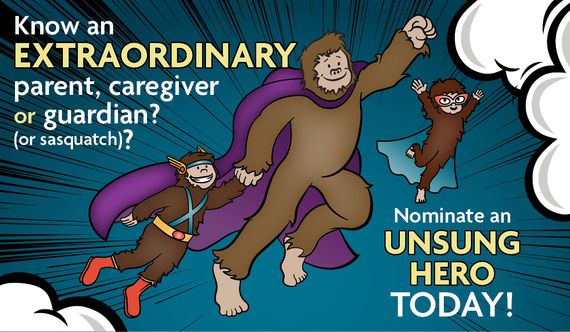 February is Parent Recognition month in Washington state, and Parent Leadership Month nationally. And we have a pretty unique way to celebrate it! Each year we receive nominations from across the state of parents, caregivers and community members celebrating and highlighting the hard work that goes into making sure that each child has the happy, healthy and loved childhood we hope for all children. A parent panel is then invited in to review the applications and they select a honoree for each day of the month. All honorees, their families or support people, along with nominators are invited to an celebratory dinner, and are celebrated by sharing their stories in partnership with Seattle's Child magazine online. Be sure to follow DCYF on social media for those stories to be shared!
Tribal Early Learning Fund (TELF) - Now Accepting Applications!
The Washington State Department of Children, Youth, and Families Office of Tribal Relations is excited to share a funding opportunity to support Tribal children prenatal to five in early learning programs around Washington State. The Tribal Early Learning Fund (TELF) is designed to provide resources to ensure early learning programs can best serve Tribal children in an inclusive and culturally appropriate manner.
Applications are due by 5 p.m. on Friday, March 1, 2024.
The maximum award is $250,000 for category 1, $100,000 for category 2, and $75,000 for category 3. The current fiscal year will run from the time of award until June 30, 2024.
The following early learning programs are eligible to apply:
-
Category 1: Tribal Nations, or Tribal Child Care Center
- Tribal Head Start and/or Early Head Start
- Tribal Early Childhood Education & Assistance Program (ECEAP) and/or Tribal Early ECEAP
- Tribal Childcare Centers
-
Category 2: Tribal Nations, Recognized American Indian Organizations (RAIO’s), Tribal/Native Serving Organization, or Tribal Child Care Providers
- Recognized American Indian Organizations (RAIOs) with an early learning program
- Tribal/Native Serving Organization with an early learning program
- Tribal Home Visiting
- Tribally Licensed Childcare providers
- Certified/Certified for Payment only Tribal Child Care providers
-
Category 3: Community Organization, State or Certified Child Care providers that serve tribal children
- Home Visiting programs serving Tribal children
- ECEAP and/or Early ECEAP Contractors & Subcontractors serving Tribal children
- State Licensed Childcare providers serving tribal children
- Certified Childcare providers serving Tribal children
Technical Assistance office hours will be offered to assist with applications and any other questions that might arise:
For questions, please contact Rayna Espinosa, Tribal Early Learning Fund Specialist, at rayna.espinosa@dcyf.wa.gov or (564) 546-0436.
Early Learning Facilities Funding for Minor Renovations
Grant application opening Feb. 1, 2024: Early learning facilities funding for minor renovations, pre-applications are due by Feb. 22, 2024.
Grants are for minor renovations and small capital improvements to existing early learning and childcare facilities licensed or certified by DCYF on or before July 1, 2023.
More details:
- Family homes, child care centers, tribes, and public school districts are all eligible to apply.
- All work must be performed by licensed and bonded contractors.
- Grant recipients must commit to providing child care services at the awarded location for 10 years after completing the renovation project.
- Unlike previous ELF funding rounds, providers do not need to increase their number of spaces to apply.
- Projects that are already completed are not eligible to apply and costs incurred before the date of award letter are not eligible for reimbursement.
For information, visit Community Capital Facilities - Early Learning Program (wa.gov).
Federal Tribal Title IV-E Plan Development Grants
The purpose of this funding opportunity is to solicit proposals for one-time grants to tribes, tribal organizations, or tribal consortia that are seeking to develop and, within 24 months of grant receipt, submit to the Department of Health and Human Services a plan to implement a title IV-E foster care, adoption assistance, and, at tribal option, guardianship assistance program.
Electronically submitted applications must be submitted no later than April 19, 2024.
For information and to apply, visit grants.gov.
Our next office hours will be Feb. 15, 2024 3 p.m. Join here.
Please join us for the Virtual Home Visitor Training Series with presenters from a wonderful team of experienced and wise home visitors and WSCADV staff!
The Domestic Violence Assessment and Response training is followed by the Safety Planning with Families training.
Please register for each event you wish to attend.
DV Assessment and Response
Jan. 30, 2024
Jan. 31, 2024
10:00 - 11:30 am both days
Register here!
Safety Planning with Families
Feb. 9, 2024
9:30 a.m. – 2:30 p.m.
(break from 12-1 p.m.)
Additional trainings will continue throughout the fiscal year and we will continue to post registration links as we get closer to events.
Article written by Betsy Tulee, ICWA Consultant/Tribal Liaison
In 2010 President Obama declared January ‘National Slavery and Human Trafficking Prevention Month’ and every year since each president has reaffirmed this commitment.
Indigenous women and children are substantially impacted by human trafficking in comparison to the general population. Tribal communities have experienced a wide range of historical trauma since the earliest days of colonization, including forced removal from homelands, theft of resources, forced family separation, severe abuse of children in boarding schools, loss of culture, ravaging diseases, intergenerational poverty and indiscriminate and unaddressed violence. These forms of trauma can lead to higher rates of behavioral and physical health issues, homelessness, domestic violence and other social wellbeing disparities which can result in higher vulnerability to exploitation and human trafficking. Clearly these are dire situations for every child and every adult who is a labor and/or sex trafficking victim, yet more awareness and more supports are being made available.
Tribal, federal, state and local funding sources have been dedicated to fighting trafficking. Cross systems collaborations are being developed which include (but are not limited to) tribal, state and federal agencies representing social services, law enforcement, judicial systems, medical providers, transportation, and the private sector to combat labor and sex trafficking. Survivors and their family members are at the table sharing their lived experiences and contributing to solutions. There are excellent service providers and agencies designed specifically to serve indigenous victims of trafficking by identifying, intervening and supporting them in a trauma informed and culturally supportive manner.
For more information, visit Indian Affairs (bia.gov).
The virtual forum, taking place from 10 a.m.- 3 p.m. on Thursday, Feb. 8, is titled “Child Well-Being and the New Science of Trauma.” Dr. Linda Chamberlain will be the forum’s featured speaker. Attendees will acquire an expanded understanding of the role of the nervous system in healing, as well as practical tools and skills they can apply immediately to their work. What attendees learn will apply to a wide range of settings across different age groups. Register here.
Each month, DCYF ESIT Tribal Program Consultant Brian Frisina will provide a key topic to help support us all in getting to know our Tribal Nations partners better.
This month’s topic is:
What the Winter Solstice Means in the Cree Tradition: Ask an Elder
What does the winter solstice mean in the Cree tradition? Elder Wildfred Buck explains how the Cree observe the shortest day of the year (watch time 1:03):
What the Winter Solstice Means in the Cree Tradition
Dr. Martin Luther King, Jr.: A Leader and a Hero
Celebrate Dr. King’s legacy by helping children understand the importance of love, justice and equality with this special video and issue from Let’s Find Out, the early childhood magazine for early-learners (watch time 5:50):
News
Bottlenecks, Backlogs, and Breakdowns: Using Data to Identify Gaps in Service Referrals from the Harvard Government Lab Performance Lab. Read the report here.
What’s happening in the Washington State legislature? Read the Children’s Alliance Legislative Recap here.
Large number of US parents are draining their savings to pay for child care, poll finds, The News Tribune
|