Background
Kwanzaa, held Dec. 26 to Jan. 1, celebrates African American culture. The holiday is commemorated with songs, dances, drums, storytelling, food, and the lighting of candles to honor a particular African-derived principle.
The holiday was created in 1966 by Dr. Maulana Karenga, professor and chairman of Black Studies at California State University, Long Beach following the Watts Riots.
Terminology
Kwanzaa: Refers to “first fruits” in Swahili
Nguzo Saba: Translates to seven principals in Swahili
Karamu: An African feast held on Dec. 31
Kinara: Candleholder
Books
-
My First Kwanzaa by Karen Katz
-
The People Remember by Ibi Zoboi
-
Li'l Rabbit's Kwanzaa: A Kwanzaa Holiday Book for Kids by Donna L. Washingtons
|
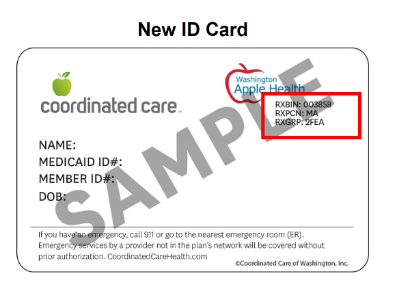
As of Jan. 1, 2024, there will be changes in contracted pharmacies for those who have the foster care health coverage: Apple Health Core Connections (AHCC) through Coordinated Care of Washington (CCW).
New insurance cards are now being mailed to caregivers containing new Rx numbers. Please be sure to watch for these cards in the mail.
Most members will have no change but will need to provide the new prescription or Rx number on their AHCC card to their regular pharmacy. A very small number of AHCC members will also have to switch pharmacies. Coordinated care has reached out to those members and will help locate a new pharmacy.
For members using CVS Caremark Mail Service Pharmacy, prescriptions with remaining refills will be available through Express Scripts Pharmacy on Jan. 1, 2024, with no action needed by the member in most cases.
Note: Refills for controlled drugs, such as Alprazolam, Clonazepam, Pregabalin, Tramadol, and Zolpidem, will not transfer to Express Scripts® Pharmacy. Members must ask the doctor to electronically send or fax a new prescription to Express Scripts® Pharmacy at 1-800-837-0959. All members using CVS Caremark Mail Service Pharmacy should have received communication about the change from Coordinated Care via mail.
If you have questions, contact AHCC Staff at 1-844-354-9876 then press 1 and enter extension 6102194 (8 a.m. to 5 p.m. M-F)
|

Do you know students who are planning to enroll in an accredited college, university, technical, vocational, or dual credit high school program? The Education and Training Voucher (ETV) Program offers financial assistance to eligible youth — up to $5,000 per academic year!
Applications for 2024-2025 open January 1. The ETV program is still accepting applications for the current academic year (2023-2024) as well.
To learn more about the program, eligibility, and to apply for the 2024–2025 school year, please visit the ETV webpage or email ETVWash@dcyf.wa.gov. To meet the priority deadline, you must apply by April 30, 2024. All applications received after April 30 are awarded on a funds available basis.
Note: the minimum eligibility age is changing to 15 (previously 16) on January 1.
Thank you to all who help students receive their funds — the program served 156 students last year.
|
Beginning Jan. 1, 2024, patients, students, and families with loved ones at behavioral health facilities, residential private schools, and host homes can now report suspected child abuse or neglect to DCYF.
Under State Bill 5515, DCYF will have the legal authority to investigate alleged child abuse or neglect at these locations, which also includes substance use disorder treatment facilities, mental health facilities, or those integrated into another setting.
The public may report suspected child abuse or neglect to child protective services (CPS) by calling 1-866-END-HARM (866-363-4276).
"The safety of children and youth is our agency’s number one priority and this change gives us another avenue to reach families who need support," explained Ruben Reeves, Assistant Secretary of Licensing.
Allegations of abuse or neglect that are screened in will be assigned to investigators who will make a finding as to whether the alleged abuse occurred. In the past, allegations of abuse or neglect at these locations were referred to law enforcement.
Starting July 1, 2025, residential school must be licensed by DCYF so the findings from these CPS investigations could potentially impact their licensing standing. DCYF will also be working closely with the Department of Health which provides oversight for the behavioral and substance treatment centers to provide them with information about CPS investigations at these locations.
To learn more about reporting suspected child abuse or neglect, visit https://www.dcyf.wa.gov/safety/report-abuse

Through the Looking Glass (TLG) provides services and resources to support families with disabilities throughout their lifespan.
TLG wants to find out about the current strategies and supports that are used and needed by parents and caregivers who have physical disabilities or are blind or have low vision through a national survey.
Why should I take part? Your participation will help TLG:
• Expand online resources and educational materials
• Create educational materials for occupational therapists and other professionals on ways they can support parents and caregivers who are blind or have low vision
Who can take the survey? TLG wants to hear from parents or caregivers who have:
• Low vision, blindness, or other conditions that affect vision OR
• A physical disability, including those with chronic health problems AND
• One or more children under 6 years old
Take the survey at https://ttlgredcapebmjghweac5sg.azurewebsites.net/surveys/?s=FXD3TTCYXR9CJ3MM
If you would like to take the survey over the phone, you can provide your contact information or call Stacy Frauwirth at (510) 225-7519.
|

The Alliance for Professional Development, Training, and Caregiver Excellence
-
African American Hair and Skin Care — Jan. 8 from noon to 4 p.m.
This training teaches you to understand the complexity of caring for African-American and biracial hair and skin. Participants will gain skills and knowledge to be culturally responsive to the needs of the children/youth in their care.
-
Building Parental Resilience for Kinship Caregivers — Jan. 21 from 6:30 to 8 p.m.
This course helps you understand the importance of self-care and practical ideas for how to do it. You will understand signs of stress and burnout and recognize the importance of maintaining their mental, physical, emotional, and spiritual well-being.
Learn about all the upcoming classes here: https://risewiththealliance.org/home/caregiver-training-schedule_january-2024/.
Sign up to get these notices sent right to your inbox or explore the training calendar.
Coordinated Care
-
Supporting LGBTQIA+ Youth in Foster Care — Jan. 23 from 4:30 to 6 p.m.
Developed through Amara with input from Coordinated Care and other community organizations. For caregivers and professionals who work in the child welfare setting.
Register in advance for this meeting:
https://centene.zoom.us/meeting/register/tJckcOGhqjkrGN21ux4RVNo6ZaigLX3fCpV7
-
Understanding Youth Substance Use — Jan. 24 from 5:30 to 7 p.m.
Explores the impact and rates of substance use among youth in foster care. Discusses risk factors and protective factors, how substance use effects the brain, different types of substances being used, and common warning signs of use or addiction. Caregivers will leave better able to start conversations with youth on substance use and addiction.
Register in advance for this meeting:
https://centene.zoom.us/meeting/register/tJckceuqqTgiHNfHvClodkiJmB3VU-q1jJe7
-
Attachment and Bonding Beyond Infancy — Jan. 26 from Noon to 1:30 p.m.
Attachment is the foundation of all relationships, and when caring for children with a history of trauma and trust issues, it does not always occur easily. This training addresses the need for Attachment-focused care, focusing on some practical tips on how to strengthen attachment to children. This training can help caregivers and others understand the basics of how attachment issues are extremely common in children who have experienced complex trauma.
Register in advance for this meeting:
https://centene.zoom.us/meeting/register/tJEsceqtqD8tE9HIDWRcTGLDShMFr8YkLYhc
Please consult our website for monthly training webinars and events: https://www.coordinatedcarehealth.com/members/foster-care/medicaid-events.html
|

This new health hub features online health information and resources on topics that are of interest to teens. From physical health to public transportation, behavioral health to dating and relationships, users can engage the tags and filters to find resources for different topics.
Teen Health Hub WA
Teens and caregivers can find links to quality, accurate information on health topics that are important to them. Each link is vetted by DOH’s Adolescent and Young Adult Health Team and reviewed by the Youth Advisory Council.
|
|