For those who were not able to attend the 2023 Indigenous Children, Youth & Families (ICYF) conference, recordings of the presentations are now available on DCYF’s YouTube channel: ICYF 2023 Playlist.
Office of Tribal Relations Welcomes Art Caballero, Juvenile Rehabilitation (JR) Tribal Liaison
Art will start with the Office of Tribal Relations on Dec. 1! He is currently a Community Re-entry Service Manager with the Juvenile Rehabilitation (JR) division. He has worked with JR for over 27 years in various positions and enjoys with working with youth and families and the diversity that comes with service. Art has worked with tribes and RAIO’S in eastern Washington for over 20 years in a government-to-government capacity and has worked collaboratively with OIP doing 7.01 work and working with tribes on residential service agreements with JR. He is currently doing similar work with 10.03 and RSAs.
Art enjoys to fish and have fun and also loves to travel and spend time with his family. He has a son and daughter; one is a teacher and the other one is still in college. Art is looking forward to working with the OTR team and making new friends as well as saying hello again to team members that he has worked with in the past.
DCYF Joins Instagram & Threads
DCYF has officially joined Instagram and Threads @wadcyf. Stay connected by following for resources, stories, and updates.
The Washington State Department of Children, Youth, and Families (DCYF) is pleased to announce that the 2023-24 Child Care Complex Needs Fund application is now available.
Eligible licensed, certified, and certified-for-payment-only child care providers and eligible license-exempt Family, Friend and Neighbor (FFN) providers can apply for the Child Care Complex Needs Fund in the WA Compass Provider Portal.
When Can I Apply?
The application is open now and will close at 5 p.m. on Jan. 3, 2024.
Before applying, all providers must have a WA Compass Provider Portal account to access the Child Care Complex Needs Fund application.
E4A Funding Opportunity: Indigenous-Led Solutions to Advance Health Equity and Wellbeing
The Robert Wood Johnson Foundation (RWJF) will award up to $4 million in grants through the Evidence for Action (E4A) program to support research driven by Indigenous communities focused on advancing “upstream” solutions to promote health equity and wellbeing for Indigenous Peoples.
Four-Year Tuition Coverage for Tribal Scholars Program
The USDA 1994 Tribal Scholars Program provides full tuition, fees, books, a housing stipend, and paid workforce training to any interested and eligible student pursuing degrees in agriculture, food, natural resource sciences, or related academic disciplines at a tribal college or university (TCU). Eligible applicants include graduating high school seniors, full-time students currently enrolled at a 1994 land-grant tribal college or university, or recent TCU associate degree graduates. For FY 2024, 27 scholarship slots are available at: Agriculture Research Service, Farm Service Agency, Farm Production and Conservation, Forest Service, National Institute of Food and Agriculture, and Natural Resources Conservation Service. The application deadline is Dec. 1, 2023. Visit the USDA 1994 Tribal Scholars Program or email 1994@usda.gov for information.
Conversation on Equity | Addressing the Behavioral Health Crisis
Dec. 7, 2023 | 12:30 - 2 p.m. | Virtual
Region 10 states of AK, ID, OR, and WA confront a unique set of behavioral health challenges. These states exhibit some of the highest rates of substance abuse and addiction in the nation, influenced in part by isolation in remote and frontier areas, homelessness, economic disparities, workforce shortages, and limited access to treatment facilities.
Moreover, the prevalence of mental health issues, such as depression and suicide, is alarmingly high. It is imperative to address equity in behavioral health to diminish disparities and enhance the overall well-being of individuals in the region. To register: Meeting Registration - Zoom.
Learning to Listen: Conversations for Change
Learning to Listen: Conversations for Change returns with three new conversations featuring inspiring leaders working on the frontlines of current and emerging issues for children and families. These conversations are for everyone who cares for and about babies and children, and the families, professionals, and communities that protect, nurture, and enjoy them.
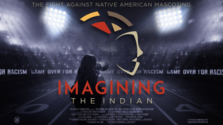
Join on Wednesday, Dec. 13 at 12 p.m. (PST) for a conversation with Indigenous filmmakers Ben West and Yancey Burns, and psychologist, Amy West about their new documentary, Imagining the Indian – The Fight Against Native American Mascoting.
Violence on Indigenous Lands is Violence on Indigenous Bodies and Futures
-
This webinar focuses on how Land/Environmental violence specifically impacts maternal and reproductive health, spiritual well-being, and emotional safety. Our presenter will describe the experiences and impacts their community and neighboring communities have endured and are still experiencing due to land violence. Our presenter will also share how Indigenous culture, teachings, and activism are a guide for a pathway to healing, health, birth sovereignty, and justice.
Amara's Family Connections Program offers free support for parents whose children are placed in foster/kinship care and those who are caring for the children as they work to build a collaborative, child-centered partnership. Services include:
Connections Meetings (in person, virtual and paper options)
Caregiver and parent relationship support provided by experienced peer mentors
Family and Youth Justice Programs - Fall 2023 Newsletter
The Administrative Office of the Courts’ (AOC) Family and Youth Justice Programs (FYJP) is excited to share their inaugural newsletter with you. This quarterly publication is full of great information about - and links to - the innovative and important dependency court improvement work performed by FYJP staff and their many system partners. Current and past newsletters will also be available on the FYJP website.
Forest Corps National Service Opportunity for Native Youth
Beginning Summer 2024, the AmeriCorps NCCC Forest Corps will engage 80 young adults, ages 18-26, in wildland fire prevention, reforestation, and other natural and cultural resource management projects to support the U.S. Forest Service’s Wildfire Crisis Strategy and Reforestation Strategy. Native youth will be recruited for Forest Corps in key locations to support cultural resource management projects. AmeriCorps National Civilian Community Corps/Forest Corps members will receive a compensation package equivalent to $15 an hour, including lodging, transportation, clothing, a living allowance, health benefit, and more. Members will receive extensive training, hands-on-experience, and leadership skills for future careers in natural resource management, forest health, and climate resilience at the U.S Forest Service or other organizations.
USDA Expands Access to Traditional Indigenous Foods in Schools
Soon, USDA’s Food and Nutrition Service (FNS) will open applications on Grants.gov for the Supporting the Use of Traditional Indigenous Foods in the Child Nutrition Programs Cooperative Agreement. FNS will award a total of $2 million in grants to four organizations – either led by or partnering with an Indigenous organization or tribe – to provide regionally focused training and technical assistance to school nutrition professionals.
The training and technical assistance will focus on school food procurement, preparation, and crediting of traditional Indigenous foods. Funds may be used to support the use of traditional Indigenous foods in school lunch, school breakfast, summer meals, meals and snacks served to children after school, and culturally relevant nutrition education for students. Each of the cooperative agreements will be awarded in four different regions of the country to maximize the number of tribes being served.
Center for Indigenous Collaborations and Learning in Home Visiting
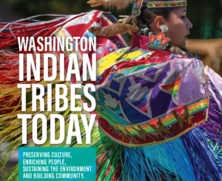
Washington Indian Tribes Today is produced by Washington Tribes, a program sponsored by the Washington Indian Gaming Association. This educational resource provides essential information about modern-day tribes in our state and what tribal governments are doing to preserve culture, sustain the environment, build communities and enrich people.
“Sovereignty Gardens” Children’s Educational Animated Series. This series of short educational shows will help build excitement and pride with children about using Indigenous knowledge in gardening, food sovereignty, traditional foods, and healthy eating habits. “Sovereignty Gardens” uses animation and puppetry to follow Stompy the buffalo and his friend Bran through a series of learning adventures, which include cameos by Indigenous and scientific leaders. USDA Office of Tribal Relations entered into a cooperative agreement with Dr. Lee Francis (Pueblo of Laguna) (Indigi-Nerd/Native Realities) to create this animated series.
Indigenous Foods Foraging and Cooking Videos for Northeast and Southeast Regions. The Office of Tribal Relations Indigenous Food Sovereignty Initiative partnered with the North American Traditional Indigenous Food Systems (NATIFS) to produce a series of videos on Indigenous foods foraging and cooking for the Northeast and Southeast regions to complement USDA’s Food Distribution Program on Indian Reservations (FDPIR) (commonly referred to as “commodities”) food packages. Last year, USDA released videos for the Midwest, Mountain Plains, and Southwest regions. Next year videos will be produced for Alaska and Hawaii.