|
|
November 2023 Issue:
 Background
National Adoption Day is celebrated annually in November, typically on the Saturday before Thanksgiving. It raises awareness about the significance of adoption, educates the public about the children in need of homes, and recognizes and celebrates the countless families and children whose lives have been positively transformed through adoption.
National Adoption Day was founded in 2000 by a coalition of child welfare organizations and businesses working to improve the lives of foster children.
Key Definitions
Reunification: A family’s legal connections and rights do not change, and parents keep full rights and responsibility for their child.
Adoption: Creates a new legal relationship with another adult for a child that is legally free. The adoptive parent has all care, custody, and legal rights to make decisions for the child, and the child has inheritance rights.
Guardianship: Maintains the legal relationship between a child and the parent but gives another adult physical and legal custody with full responsibility and rights to make decision for the child or youth. A guardianship ends on the child’s 18th birthday.
Kinship Care: A relative, such as a grandparent, aunt, or uncle, assumes the role of caregiver and legal guardian for a child when their biological parents are unable to provide care.
Books
When children and youth are placed into foster care, away from parents, siblings, and extended family—they can lose their identity. That is why supporting, encouraging, and honoring a child’s race, ethnicity, culture, and disability is so important. While this may seem hard, one way to support identity and inclusion is through literacy!
Here are three books we recommend:
-
Tell Me Again About the Night I Was Born by Jamie Lee Curtis
-
Yes, I'm Adopted! By Sharlie Zinniger, Tiffany Cunliffe
-
What Makes A Family? Hannah Bruner, Sandie Sonke
|
|
|
|

The Washington State Department of Children, Youth, and Families will replace the current four-level rate assessment system with a new, seven-level caregiver supports model beginning Jan. 1, 2024. The new rate assessment system aligns supports with known information about the child or youth.
Licensed caregivers will receive the first reimbursements at the new rates in February 2024 for January 2024 services dates. January reimbursements which are for services provided in December 2023 will be at the current rates.
Licensed caregivers that currently have a child placed in their home will receive a notification before the end of the year informing them of the new caregiver support level (1-7) that will go into effect Jan. 1, 2024, if the level has dropped.
Starting Jan. 1, 2024, DCYF will pay all caregivers including CPA caregivers directly. CPA caregivers will need to start claiming invoices beginning January 2024. DCYF will continue to offer Zoom sessions to provide technical support to any caregivers who need assistance signing up for Direct Deposit, registering for the SSPS Provider Portal, or claiming invoices.
The next Zoom session:
Tuesday, Dec. 5, 2023 | 6 to 7 p.m.
Zoom link: https://dcyf.zoom.us/j/9048600952?pwd=UEJYOHZweTFuYkZ3R25lWHhWQkoxdz09
Call-in Number: 1-253-215-8782
Meeting ID: 904 860 0952
Resources:
• DCYF Virtual Sessions – Caregiver Payments
• Provider Payments Training
• Provider Payment Frequently Asked Questions
If you have any questions, email dcyf.caregiversupports@dcyf.wa.gov
|
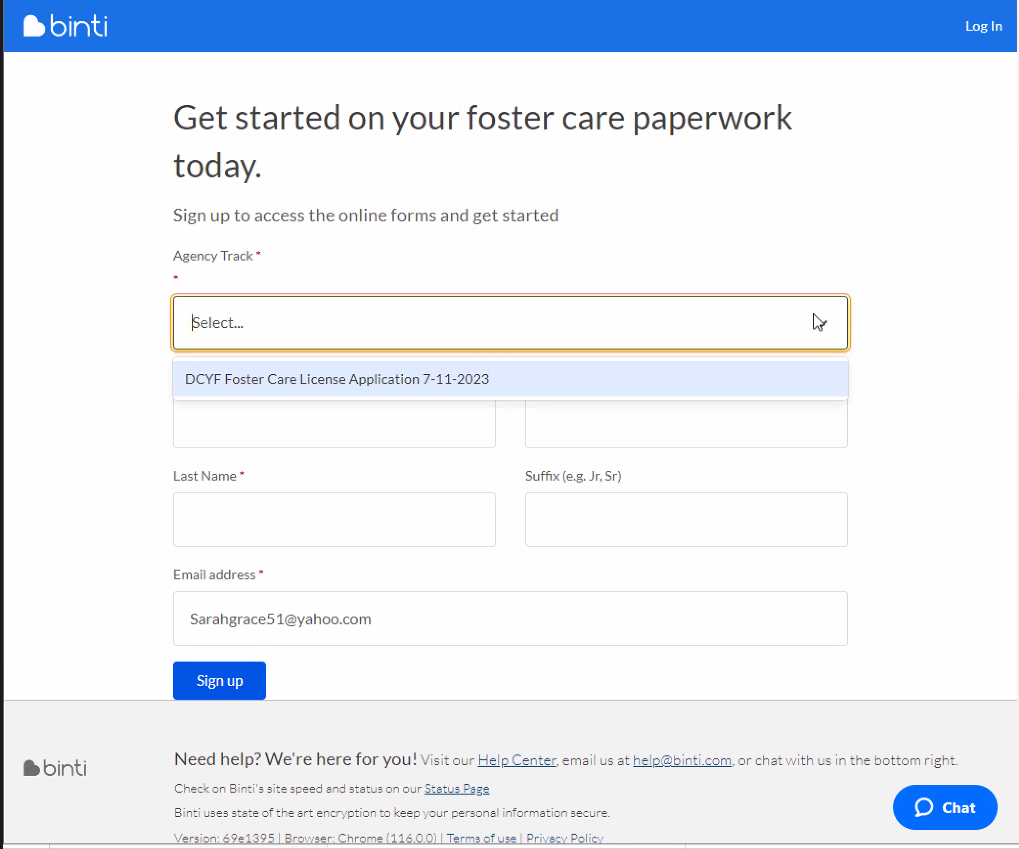
SAW is required for all Washington State agencies that use electronic portals. Caregivers or applicants who previously logged in to WA CAP using the WA CAP login and password page will now be redirected to SAW. Any user who does not have a SAW account will need to create an account with SAW. Please use this guide to review how to sign up for SAW and/or add the WA CAP service to an existing SAW account. Where the guide says to “ENTER YOUR CODE,” use the code: wacap
It is essential that the email address previously used to log in to WA CAP match the email used for the SAW account. Most caregivers or applicants will already have an account created for them in WA CAP. If you sign in through SAW and are greeted by the page below, please reach out to your licensor or home study writer and do not proceed further:
 For those caregivers that previously logged in and bookmarked the log-in page, you can now log in by choosing the SSO option:
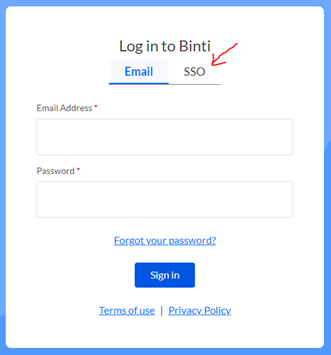 Click “SSO,” and you will see a search bar and a list of agencies. You can search “Washington” or scroll to the end of the list to find the selection for “Applicant”, as noted below:
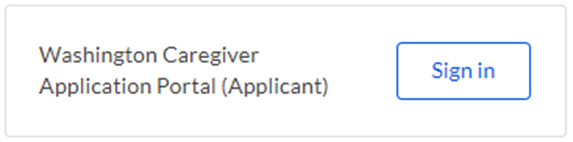 This will redirect you to SAW where you can continue the sign-up, sign-in or Multifactor Authentication process.
If you have questions, please contact your assigned worker or dcyf.caregiverportal@dcyf.wa.gov

The December training schedule from The Alliance is available now!
Don’t miss:
-
Building Parental Resilience for Kinship Caregivers: This course walks you through the importance of self-care and practical ideas for how to do it. You’ll learn to understand signs of stress and burnout and recognize the importance of maintaining your mental, physical, emotional, and spiritual well-being.
-
Impact of Substance Use: This course helps you understand the short- and long-term impact on children exposed to substances prenatally.
-
Naloxone Storage and Usage: Designed specifically to equip caregivers with essential knowledge and skills to respond to opioid overdose emergencies effectively. View e-learning course.
Sign up to get these notices sent right to your inbox!
Learn about all the upcoming classes here: https://risewiththealliance.org/home/caregiver-training-schedule_december-2023/ or explore our new Calendar website feature to see the whole month at a glance.
|

-
Virtual Caregiver Support Groups — Dec. 4 from noon to 1:30 p.m. or Dec. 5 at 6 to 7:30 p.m. Can attend one group or both!
This is a virtual state-wide support group intended for adoptive, foster and kinship caregivers. A place to share concerns, resources and talk to others who understand! Does not matter which placing agency you used previously or are with currently. It is an honest, supportive environment with humor and ideas.
Facilitated by Zia Freeman, MA, LMHC with Coordinated Care (for full flyer information and future dates email Zia.Freeman@coordinatedcarehealth.com) Just click on the link at time of group, no registration needed. https://centene.zoom.us/j/93339639459?pwd=OCtNMlllY1pZNWRvZ0ZId0tHM3ZVdz09
-
In-Person Caregiver Support Groups — Dec. 6, from 6 to 7:30 p.m.
This is an in-person support group intended for adoptive, foster and kinship caregivers. We meet at 3754 W. Indian Trail Rd., Spokane, WA (Excelsior Wellness Center). A place to share concerns, resources and meet others who understand! Does not matter which placing agency you used previously or are with currently. It is an honest, supportive environment with humor and ideas. For adults only, no childcare provided. Facilitated by Zia Freeman, MA, LMHC with Coordinated Care (for full flyer information and future dates email Zia.Freeman@coordinatedcarehealth.com)
-
Hygiene & Trauma: How do they connect? — Nov. 30, 2023, 1 p.m.
Does a teen you work with not like to bathe? Does a child you support seem less than fully potty trained (and they are no longer toddlers!) Will the adolescent rarely change their clothes? There is more to these tendencies than just resistant behavior. Learn the causes of poor hygiene and practical solutions to help fix it, and how to help caregivers deal with this challenging issue! Facilitated by Zia Freeman, MA, LMHC Community Educator with Coordinated Care.
Register in advance for this meeting: https://centene.zoom.us/meeting/register/tJIldumorDgpHdR898F6Lu6wEFASlqJUnp1L
After registering, you will receive a confirmation email containing information about joining the meeting.
-
Resiliency — Dec. 7 from 5:30 p.m. to 7 p.m. This training looks at factors that affect resilience, the human adaptive process, ways to successfully cope with trauma, and the 12 steps of successful survivors. The training ends with a discussion around how caregivers can help their children feel safe, capable, and loveable. Register in advance for this meeting: https://centene.zoom.us/meeting/register/tJEodO6qqTkrHNJsE6i_WEQlCtUncfk9zooN
-
Trauma 101 — Dec 8, from 10:30 a.m. to noon
What is Trauma? This training answers this question by defining trauma, how trauma affects children, and what caregivers can do to assist children. The presentation will heighten the caregiver’s awareness of children’s cues so they will know what to expect and how to respond when a child experiences trauma triggers. Register in advance for this meeting:
https://centene.zoom.us/meeting/register/tJEsce2urz4tGN1EdYvKMz3irpyMX_0DYkpP
All webinars are approximately 90 minutes and participants will receive a training certificate that can be used for caregiver licensing purposes or meet some employer requirements.
For further information email Zia.Freeman@CoordinatedCareHealth.com
Please consult our website for monthly training webinars and events: https://www.coordinatedcarehealth.com/members/foster-care/medicaid-events.html
|

The majority of children and youth in out-of-home care are covered by Medicaid through the Apple Health Core Connection (AHCC) plan for foster children, which is provided through Coordinated Care of Washington (CCW). However, Dental coverage is not run through AHCC/CCW.
Fostering Well-Being (FWB) provides care coordination for all fee-for-service needs for children and youth in out-of-home care, including dental needs. FWB will assist you in connecting with CCW when appropriate.
If a child or youth has a dental need (including orthodontia), contact the DCYF caseworker to discuss the need and determine if a review with FWB is appropriate. There is a process guide for DCYF caseworkers that will walk the child/youth’s team through the steps for care coordination, Medicaid review of needs, and a second review with FWB’s help if applicable. A second review can be especially helpful if a service has been denied.
Apple Health eligible dental services for children and youth include, but are not limited to:
- Routine exams (including the initial examination when first entering care)
- Cleanings
- X-rays
- Sealants
- Fillings
- Stainless Steel Crowns (Porcelain on front teeth only with Prior Authorization)
- Fluoride application
- Extractions
- Orthodontic services for children and youth only if they are deemed medically necessary and have prior authorization for treatment.
Note: Medical necessity for Apple Health orthodontia coverage includes “severe malocclusions” such as cleft palate or other serious dental problems.
Resources:
If you have any questions, contact Trishia Benshoof, Foster Care Health Program Manager at trishia.benshoof@dcyf.wa.gov or 360-789-0049.
|
|
|
|
|
|