|
|
November 2022 Issue:
 History
November is Native American Heritage Month, or as it is commonly referred to, American Indian and Alaska Native Heritage Month. The month is a time to celebrate rich and diverse cultures, traditions, and histories and to acknowledge the important contributions of our nation’s first people.
In 1990, a joint resolution was passed by Congress and signed into law by President George H. W. Bush declaring November Native American Indian Heritage Month. Within this joint resolution, Native citizens were recognized as America’s original inhabitants who made essential contributions to both the United States and the world. In addition, Congress acknowledged Natives for their role in assisting the early European visitors to North America and Founding Fathers of the United States.
Terminology
While there are many terms often used interchangeably for the Native American Culture, they all have different meanings. Learning and using accurate terms encourages cultural understanding and sensitivity. Here are a few of the most common:
Indigenous: Refers to the descendants of the peoples who inhabited the Americas, the Pacific, and parts of Asia and Africa prior to European colonization.
Native American: Refers to peoples living within what is now the United States prior to European contact.
American Indian/Alaska Native: Refers to a person having origins in any of the original peoples of North and South America (including Central America) and who maintains tribal affiliation or community attachment.
Books
When children and youth are placed into foster care, away from parents, siblings, and extended family—they can lose their cultural identity. That is why supporting, encouraging, and honoring a child’s race, ethnicity, and culture is so important. While this may seem hard, one way to support a strong cultural identity is through literacy!
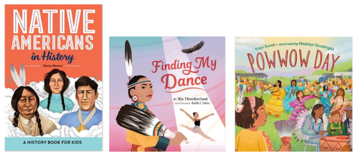
Here are four books we recommend:
-
Native Americans in History| Jimmy Beason
-
Finding My Dance | Ria Thundercloud
-
Powwow Day | Traci Sorell
|
|
|
Join Us to Learn More About:
- Adoption Support program
- Eligibility and application process
- Benefits available through the program
Adoption Support Information Sessions occur the first Wednesday of every month.
Pick the time slot that works best for your schedule.
12-1 p.m. | Meeting Registration - Zoom
6-7 p.m. | Meeting Registration - Zoom
|
|
|
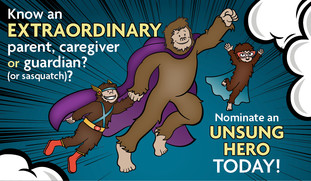
DCYF is gearing up for its annual Unsung Hero campaign in honor of Parent Recognition month, held in February.
Please help us honor 28 parents and caregivers by nominating a parent/ caregiver/guardian for the Unsung Hero award. The nomination form is available in three languages (English, Spanish and Somali).
All nominations must be submitted by Jan. 3, 2023. The nominations can be emailed to strengtheningfamilies@dcyf.wa.gov.
Since 2011, we have honored 309 parents and caregivers in Washington State for the roles they have taken with their families, schools and communities. They have been recognized because they have shown strength, courage and empathy in their communities. Parents and caregivers around Washington State are supporting their children, families, and communities in exceptional ways through this pandemic and we want to show our appreciation.
|

Every Saturday before Thanksgiving, the country celebrates National Adoption Day. The day was founded in 2000 by a handful of courts, child welfare agencies, and businesses to raise awareness of the thousands of foster children awaiting adoption.
Gov. Jay Inslee proclaimed Nov. 18, as Adoption Day in Washington.
As of Nov. 1, Washington State had 6,272 children in out-of-home care, of those, 992 children were legally free, ready to be adopted.
|

Holidays and celebrations can be a time of family togetherness, but they can also be a time of stress and heightened expectations. It takes intentional planning to give the children in your care a wonderful experience that includes the things that make the holiday or celebration special for everyone.
Join us tonight for the first session of this timely, specialized two-hour supportive facilitated discussion. We'll meet:
Tuesday, Dec. 8 | 6-8 p.m.
The meeting will allow folks to talk with each other about ways to manage the expectations of the child, their family, and your family. You will also talk about how to plan ahead to minimize the emotional challenges that sometimes come with family celebrations. Lastly, you will have an opportunity to create a celebration action-plan that is specific to your family and the child in your home.
Register for the zoom meeting here.
|

Alliance CaRES is excited to have a team of three Spanish Speaking Specialists available to serve monolingual Spanish speaking caregivers and anyone more comfortable conversing in Spanish.
In Eastern Washington, Sylvia Cardenas, a former kinship and licensed foster parent, has a passion for connecting with caregivers in Spanish and ensuring every caregiver has great support as they do the hard work of serving children in the foster care system.
In Western Washington, Dr. Emmanuel Camarillo and Francisco Javier Contreras Alvarez, currently licensed foster parents, have strong ties to their local foster care community and want to help Spanish speaking caregivers connect and stay engaged as they serve kids.
The entire team is here to ensure Spanish speaking caregivers receive the best support possible. For assistance from the team reach out to alliancecares@uw.edu anytime.
|

Join the Alliance CaRES and Coordinated Care for a supportive group where caregivers can openly talk and share resources with one another.
Join a Session at the Service Alternatives office (1313 N. Young Street Suite E Kennewick, WA 99336) on:
- Wednesday Dec. 7 | 6-8 p.m.
Discussions are driven by who attends each time (common themes include attachment, behavior, academics, grief & loss, cultural & family connections) with support, resources and understanding on being a caregiver for children with a background of trauma. Training certificates are provided for attendees that can be used for licensing.
This group is facilitated by Zia Freeman, MA, LMHC, Community Educator for Coordinated Care. She has many years of experience running support groups for caregivers & parents, as well as providing trauma-informed based trainings in the community.
This is an open group, and you can attend any session. Please do not bring children to the group. For more information contact: Zia Freeman, facilitator, at 1-509-202-7894 or Zia.Freeman@CoordinatedCareHealth.com
|
Statement on the Supreme Court Challenges to ICWA
|
|
|
|
|