 Hosted by the Coalition for Juvenile Justice (CJJ) and the National Juvenile Justice Network (NJJN), October is Youth Justice Action Month (YJAM) – a month where advocates come together to organize events and online activities to raise awareness and inspire action on behalf of young people impacted by the justice system.
Young people who end up in the juvenile justice system are often acting out of survival or coping with the traumatic and toxic stress in their environment, particularly youth of color, who are disproportionately impacted. It’s critical for adults and communities to hear their stories and come together to advocate for changes in the justice system.
Here are five ways you can get involved and take action for YJAM:
- Read the White House proclamation
- Attend a YJAM event
- Post to social media (#YJAM2022)
- Volunteer at a JR facility
- Subscribe to the JR newsletter
Learn more about YJAM and other ways to take action at www.njjn.org/our-work/youth-justice-action-month.

The JR team is excited to share its first annual report. The report highlights all areas of service throughout JR, including the work the division has accomplished so far and goals for the coming year. The report also highlights how JR has innovated, provided services, and persevered, despite a global pandemic. These include:
- Demonstrating commitment to the JR workforce and providing the work environment they need in order to best provide care for the young people we serve.
- Increasing awareness of JR’s work and transparency about the ways the division works both inside and across JR and with community stakeholders and partners.
- Showing up each and every day in service to the state of Washington.
Read the full JR Annual Report today!
|

DCYF is seeking to reduce the bottleneck of youth and young adults placed in the agency’s JR institutions, and to enhance community-based, less restrictive options.
One of the agency’s decision packages for the 2023 Legislative Session seeks to continue the expansion of JR’s community capacity and support of a trauma-informed, culturally relevant, racial equity-based, developmentally appropriate, community-based approach with therapeutic supports to support the successful reentry of JR youth and young adults back into the community.
This ask would provide capital funding to increase JR’s least restrictive capacity through the creation of Transitional Living Centers to be co-located at Echo Glen Children’s Center and Green Hill School. The ask would also provide capital funding to enhance access to least restrictive community-based facilities for eligible youth by adding 32 community facility beds through the construction of two new 16-bed community facilities in Clark and Snohomish Counties.
Learn more about the agency's decision packages for the 2023 Legislative Session.
|
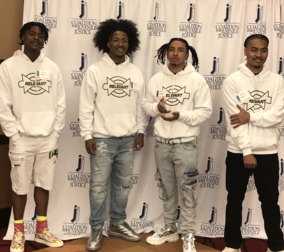
Green Hill School youth participants in the Emerging Leaders Committee (ELC) were recently interviewed by a White House representative on policy recommendations for President Biden on juvenile justice and reentry issues.
The ELC is a partnership between the CJJ and young people who have been justice-involved or are in the justice field. Members help shape the overall program and policy agenda for the CJJ. In 2019, Green Hill School youth on the ELC actively participated in getting legislation passed that rolled back laws requiring juveniles charged with certain crimes to be tried in adult court.
Alongside young people from the NJJN, Green Hill’s ELC youth provided feedback to the White House (via Zoom) on reducing involvement in the justice system, improving rehabilitation and reentry, and addressing disparities.
“I enjoyed working collaboratively with CJJ and NJJN to uproot the deep injustices plaguing the juvenile justice system we are in today,” said youth participant Edgar. “I look forward to possibly getting another opportunity to get direct feedback from the White House as to our efforts and recommendations.”
This was an exciting opportunity for DCYF’s young people to advocate for themselves and current and future generations. We look forward to seeing how their feedback impacts future policy in the United States.
|

As part of the agency’s commitment to promoting safety and trauma-informed environments, JR is implementing Advanced Crisis Intervention Training (ACIT). ACIT is the only crisis intervention certification available from a professional mental health association for responding to anger, aggression, and violence. In the 2022 Performance-based Standards (PbS), more than 70% of staff indicated that additional training would increase facility safety, and about 50% specified the need for more verbal de-escalation training. The ACIT program aims to meet that need and represents an avenue to invest in staff’s professional development and safety, while also empowering youth.
ACIT is designed to intervene with individuals experiencing crisis or emotional dysregulation in a way that prioritizes safety for staff and residents, protects dignity, and reduces the recurrence of future crises. ACIT is a highly structured framework for interacting with an individual in crisis by identifying their need, engaging safely, and empowering them to self-regulate, thereby reinforcing staff safety. At its core, ACIT is done with a resident rather than to them.
Read the full article.
|

My name is Tyshawn, and I am 22 years old. I began my incarceration at 17 with an inadequate mindset, not really knowing who I wanted to be or letting others dictate my future. I was first in DOC (Department of Corrections) before coming to JR, and one of the biggest challenges for me was influence. I let the older “homies” influence my decisions, causing nothing but problems for me while in prison. When I got talked to about going to Green Hill School, I thought it would be stupid and that I was better off staying in the joint, until I had a sit down with a “lifer” who told me about the programs and the group home opportunities JR had to offer. I came to JR, and though I had a rough year, I made it to a group home where there has been staff and peers encouraging my every step and helping me to achieve my life goals.
Something I want people to know about being in JR or just being incarcerated in general is that this is hard for us. This important part of your life is being spent in cells while under harsh authority is rough, especially for kids turning into adults, so putting us back into society and just expecting us to know what we’re doing doesn't work – we need help. Whether it’s addictions, family loss, abuse situations, mental health, we need help to redeem ourselves and come out of this better than ever. I have now achieved my high school diploma, and I am enrolling into Evergreen Beauty College and working toward becoming a Youth Development Aide. With the help of my peers and some staff, I feel able to accomplish anything, and even when things get rough, I know I will have a strong healthy support system.
- Tyshawn, age 22, JR resident
|

JR is updating its tool for assessing the needs of young people in our care. For several years, JR has used an assessment that measures important rehabilitation factors across a young person’s life domains to prioritize counseling goals and linkage to services and resources. These life domains include family, school, work, peer associations, use of free time, behavioral health, attitudes, and skills.
The new tool is called the IDEA (Integrated Developmental Evaluation and Assessment). It is informed by recent research in the field of juvenile rehabilitation. While the IDEA is similar to the current tool in many ways, this change supports some important improvements in how we serve and support young people and their families.
DCYF-JR research and other studies worldwide show that when we address priority needs, help reduce risk factors, and support the growth of protective factors (strengths, skills, and positive connections), chances for young people to succeed in the community go up. Research also shows that to protect from bias and ensure agency effectiveness, it is important to update measures regularly, analyze results, and evaluate our follow-through with programs and services needed by young people, as identified in their assessment.
In addition to updating the tool to be more sensitive to risks of inaccuracies and bias, we’re also increasing re-assessment frequency to every 90 days to provide more dynamic information about how a young person is progressing (or struggling), and increase accountability with how we respond to their needs and measure outcomes. These changes also align with work underway to implement significant new behavioral health and reentry resources funded by the Legislature. We need a tool that provides “state-of-the-art” guidance to ensure we are good stewards of these resources in the service of our mission to help young people thrive in the community as they transition to adulthood.
|
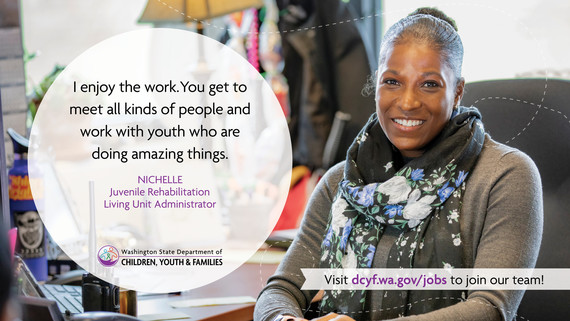
Listed below are key job openings in JR. The following positions are open to all, so please share with anyone who may be interested:
|