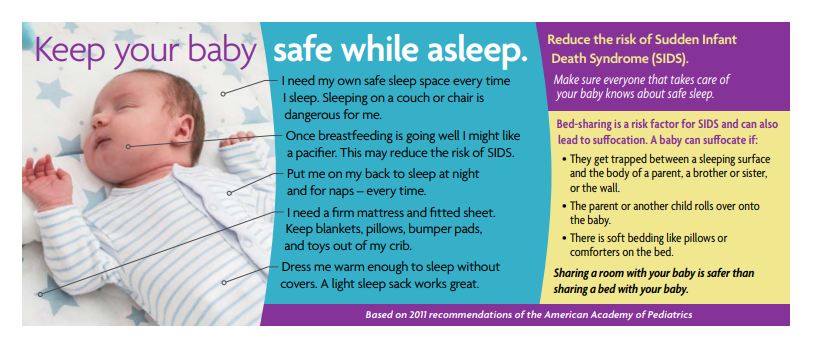
 DCYF has new safe sleep cards available for distribution. To request your free cards, email strengtheningfamilies@dcyf.wa.gov.
This spring, the Strengthening Families Washington team (SFWA) at the Washington State Department of Children, Youth, and Families underwent two home visiting services application processes.
The first wrapped up in July and is intended to increase the number of families served by the Home Visiting Services Account (HVSA) by approximately 300 through a competitive award process. One application is complete and the second, Tribal specific expansion, is still underway. We are excited to announce the results of the first application process.
The total funding is $2.1 million, with programs allocated up $300,000 per proposal.
During the expansion rounds, DCYF held webinars and offered open office hours to help with questions. Weekly FAQs were also posted to the funding webpage. Review panels comprised of community, parents, and other agency partners in the two rounds reviewed the applicants and selected programs to be invited for an interview.
After reviewing 23 applications for funding, 11 programs were awarded contracts through the Spring 2022 HVSA Expansion Funding Opportunity. The total funding to be distributed is $2,107,576.
The applicants that were funded are:
-
Chelan-Douglas Health District | Nurse Family Partnership to serve 12 families, primarily Hispanic, in rural Chelan and Douglas Counties.
-
Child Care Action Council | Parents as Teachers to serve 15 families, primarily Hispanic, in Mason County.
-
Chinese Information and Service Center | ParentChild+ to serve 24 immigrant families in South King County.
-
Eastern Washington University | Early Head Start Home Based to serve 28 families in rural Ferry, Stevens, Pend Oreille, and Spokane Counties.
-
El Centro de la Raza | Parents as Teachers to serve 18 Latinx families in south King County.
-
Horn Of Africa Services | ParentChild+ to serve 40 immigrant families from Eastern Africa, Black/African American, in south King and Pierce County.
-
InterCultural Children & Family Services | Parents as Teachers to serve 36 families, primarily Black/African American in Pierce County.
-
Lydia Place | Parents as Teachers to serve 16 families, primarily homeless, Hispanic from Whatcom County.
-
Open Arms | Perinatal Services Outreach Doula to serve 24 families in south King and Pierce Counties.
-
Suquamish Tribe | Parents as Teachers to serve 12 American Indian families, primarily the Suquamish Tribe.
-
Yakima Valley Farm Workers Clinic | Parents as Teachers to serve 15 American Indian families in rural Yakima County.
In addition to the general home visiting expansion, SFWA is in the process of a specific home visiting funding opportunity for federally recognized Tribes and Tribal organizations within Washington State. This Funding Opportunity hopes to serve approximately 50 families. Programs proposing to expand their programs may request up to $240,000 per proposal; those intending to start a new program may request up to $120,000. A total of $480,000 in funding is available.
SFWA has been working closely with the Office of Tribal Relations for outreach to tribes, communication, application development, and review and we received eight letters of interest and applications by the June 30, 2022 deadline. These ae currently under review. These programs will use one of the nine home visiting models in the HVSA. The SFWA will follow a similar process for review and selection by utilizing community partners and stakeholders.
The successful tribal programs will be announced soon.
Strengthening Families Washington at the Department of Children, Youth, and Families (DCYF) in partnership with the DCYF Office of Tribal Relations is pleased to share a funding opportunity to support tribal fatherhood within Washington State. Federally recognized Indian Nations, Recognized American Indian Organizations (RAIOs) and other community-based organizations that serve American Indians/Alaska Natives are encouraged to apply for this opportunity if you serve American Indian/Alaska Native fathers who reside in Washington State.
Successful applications will provide strength-based parenting support programs to American Indian/Alaska Native fathers and expectant fathers in Washington State. Programs should be intended to increase family strengths, enhance child development and reduce the likelihood of child abuse and neglect.
Applications are due by 5 p.m. on September 7, 2022.
The application includes the Request for Applications (RFA) form and the Budget Proposal Form.
For More Information
- See the Frequently Asked Questions (FAQ). FAQs will be updated weekly through September 2, 2022. The final day to submit questions is August 26, 2022.
- See the sample contract General Terms and Conditions. Note that some of these terms and conditions may be open to negotiation.
- We held an optional informational webinar about this opportunity on July 26. The webinar provided an overview of the funding opportunity and application process.
- Attend the Application Technical Assistance Office Hours August 9, 2022, 2-3 p.m. or August 15, 2022, 9-10 a.m.
Zoom meeting link for the webinar and office hours:
https://dcyf.zoom.us/j/85426941266?pwd=R3Bsa004MXJ2VFZFYXJIUTF2NGlRQT09
Meeting ID: 854 2694 1266
Passcode: 641321
One tap mobile
+12532158782,,85426941266#,,,,*641321# US (Tacoma)
+12133388477,,85426941266#,,,,*641321# US (Los Angeles)
Dial by your location
+1 253 215 8782 US (Tacoma)
+1 213 338 8477 US (Los Angeles)
Auto Captioning services will be provided for these events. Additional accommodation requests should be sent to strengtheningfamilies@dcyf.wa.gov
Contact strengtheningfamilies@dcyf.wa.gov with questions.
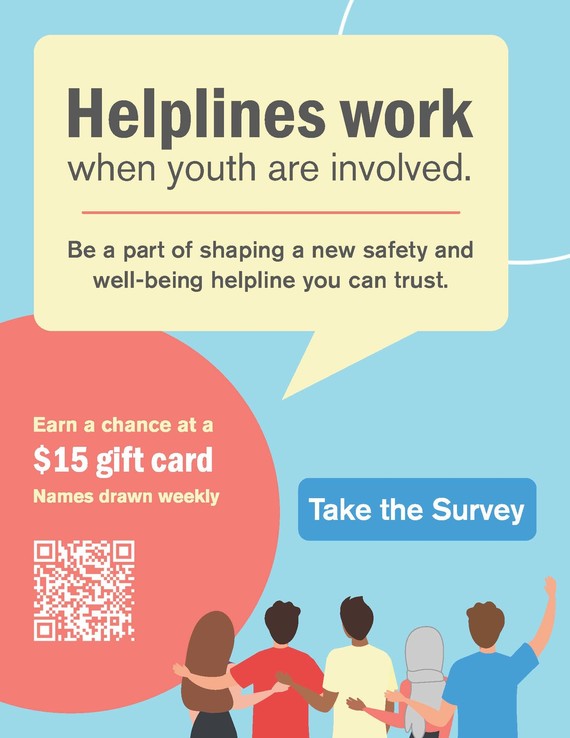
Washington State is working to create a youth safety and well-being helpline available 24 hours a day, 365 days a year to address a spectrum of youth safety & well-being concerns and connect youth with appropriate resources. This survey is intended to help gather youth feedback on this new helpline. We aim to gain input from youth on the branding and marketing of the helpline, and glean insight on how we can create something that resonates with youth. This survey is the first in a series of two surveys. Please share with youth and community in your network. The first survey will run from July 11 through August 5.
Many children have fallen behind during the pandemic. Developmental screenings are key to gaining access to supports for families and children to thrive. These screenings will ask age-specific questions about children’s development and activities that the child can do, like “reaching for a toy in front of them with both hands” and “picking up small food pieces with their fingers.” The results give a point-in-time snapshot of the child’s development. Based on the child’s screening results, additional support can be provided, if needed. Routine developmental screenings are good for all children between birth and age 6. You can find out more information, and the Ages and Stages Questionnaire, at Help Me Grow.
Funding Available for Foster Youth Driver Education & Liability Insurance
Did you know our partners at Treehouse can provide funding to help youth in foster care obtain their driver’s license and auto liability insurance? Eligible youth can receive up to $750 for driver’s education as well as driving school registration assistance, transportation funding for travel to driving school, and more. Youth can also receive funding assistance for any auto liability insurance policy amount for up to six months at a time.
Learn about the Driver’s Assistance program and eligibility criteria at treehouseforkids.org/our-services/drivers-assistance/. You can also reach out to Sherrie.Flores@dcyf.wa.gov with any questions.
DCYF Early Childhood Equity Grant
The Fair Start for Kids Act, passed by the Washington State Legislature in 2021, directs DCYF to distribute funds to support inclusive and culturally and linguistically specific early learning and early childhood and parent support programs across the state. The funds are distributed through the Early Childhood Equity Grant. Early Childhood Equity Grants are intended to serve as a step toward expanding access to early learning statewide and transforming Washington's early learning system to make it more inclusive and equitable. Eligibility is open to: licensed or certified child care providers with an open license in good standing; license-exempt Family, Friend, and Neighbor (FFN) providers serving children receiving state subsidies; ECEAP contractors; certified Play and Learn Groups. Application closes August 16. More information here.
Materials
988 Suicide and Crisis Lifeline
988 is the new, nationwide, three-digit dialing code for the Suicide and Crisis Lifeline. The lifeline is accessible by calling, texting, or chatting. The line’s trained operators are caring and compassionate – the average call takes 20 minutes or longer, and operators will direct callers to mental health, suicide prevention, or substance use disorder supports. The 988 line will not replace other crisis lifelines – other lines will continue to operate at their present phone numbers.
“Thanks to the many partner organizations and agencies who have made this resource possible,” said Gov. Jay Inslee. “In the same way 911 transformed our ability to respond to emergency safety or health situations, 988 will transform our ability to connect people to help in behavioral and mental health crisis situations.”
Veterans and service members may reach the Veterans Crisis Line by pressing 1 after dialing 988. A Native and Strong Lifeline for Native and Indigenous people will launch soon. Spanish-speaking operators are available (press 2 after dialing 988), and interpretation services are available in over 250 languages. Deaf, hard of hearing, and TTY users may use their preferred relay service or dial 711, then 1-800-273-8255.
Food Assistance Will Soon be Available for Families
Another round of food assistance will open soon to help families buy groceries while children are home for the summer. Pandemic EBT, or P-EBT, will be available to families with young children eligible for Basic Food benefits, and school-aged children eligible for free or reduced-price school meal programs. P-EBT benefits can be used anywhere that accepts EBT payments.
In the News
Racial Equity Resources
Below are resources and opportunities to engage:
|