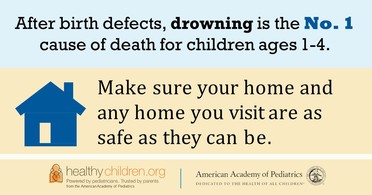
With temperatures warming up around the state and summer breaks starting, please refresh your memory around water safety.
WAC 110-145-1590: How must I keep children safe around bodies of water?:
- You must ensure children in your care are safe around bodies of water. You must:
- Keep all swimming pools and other bodies of water fenced with a locking gate or other DLR-approved safety device;
- Lock hot tubs when not in use;
- Make all potential water hazards, including wading pools, inaccessible to children when not in use.
- All swimming pools and other bodies of water must comply with state and local regulations. You must work with your licensor to establish a plan for the bodies of water based on the development level and behaviors of the children in your facility.
- You must ensure age and developmentally appropriate supervision of any child that uses hot tubs, swimming pools, spas, and around man-made and natural bodies of water. A supervision plan may be necessary for children with specific behaviors.
- You must observe the following when foster children are swimming in pools or outdoor bodies of water:
- Swim only in designated swimming areas; or
- Require all children age 13 and under to wear U.S. Coast Guard approved personal floatation devices when swimming outside the supervision of a lifeguard.
- If you have any water-based recreation devices, you must use and maintain them according to manufacturer's recommendations. All children and youth who ride in a water-based recreation device must wear a U.S. Coast Guard approved personal floatation device at all times.
- Except for staffed residential homes licensed for five or fewer children, you must have a person with current life saving certification on duty when children are swimming in any swimming pool or outdoor body of water.
- For staffed residential licensed for five or fewer children, an adult with current age-appropriate first aid and CPR or a person with current life saving certification must supervise children swimming under age twelve. The supervising adult must know how to, and be able to use rescue equipment, and be able to see and hear the children at all times.
- Children under the age of five must be within touching distance of a supervising adult or the child's birth parent at all times.
The American Academy of Pediatrics also has great advice about staying safe around pools and bodies of water. Please spend some time going through their resources to ensure you have a safe and fun sun filled summer.
|
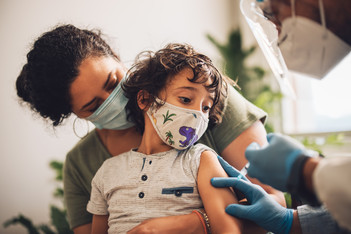
Booster doses of the Pfizer-BioNTech vaccine are now available for children ages 5-11. The Washington State Department of Health (DOH) expanded booster dose eligibility to include everyone 5 and older following guidance and recommendations from the U.S. Food and Drug Administration (FDA), the Centers for Disease Control and Prevention’s (CDC) Advisory Committee on Immunization Practices, and the Western States Scientific Safety Review Workgroup.
“The CDC’s announcement is welcome news as we continue to do everything we can to keep Washingtonians of all ages safe,” said Umair A. Shah, MD, MPH, Secretary of Health. “This pandemic is not over and we must continue to use the tools at our disposal. This includes masking, therapeutics, vaccinations and – of course – boosters. Keeping yourselves and those around you safe is of utmost importance, and this recommendation is another step in that direction.”
The expansion of booster eligibility comes as COVID-19 cases are continuing to steadily rise across the county. The myth that COVID-19 is always a mild disease in children needs to be dispelled. Since the beginning of the pandemic, more than 4.8 million children ages 5-11 have been diagnosed with COVID-19, with 15,000 hospitalized and, tragically, 180 deceased.
DOH’s updated booster dose recommendations are as follows:
- Children ages 5-11 should receive a booster dose five months after completing their primary vaccine series of Pfizer-BioNTech vaccine. Immunocompromised children should receive their booster at least three months after their primary series.
- Everyone 12 and older should receive a booster dose five months after completing their primary vaccine series of Pfizer or Moderna, or two months after receiving the single-shot Johnson & Johnson (J&J) vaccine.
- Everyone 50 and older should receive a second booster dose four months after receiving their first booster dose.
- Individuals 12 and older who are moderately or severely immunocompromised should receive a second booster dose four months after receiving their first booster dose.
- Those 18 and older who received a primary vaccine and booster dose of the J&J vaccine four months ago can receive a second booster dose of an mRNA COVID-19 vaccine.
To make a vaccine or booster appointment, visit Vaccine Locator, Vaccines.gov, or call the COVID-19 Information Hotline at 833-VAX-HELP. Language assistance is available. Those with further questions are encouraged to visit DOH’s COVID-19 Vaccine Frequently Asked Questions webpage or talk to their trusted health care provider.
|

Resources for families and caregivers
OLYMPIA – The nationwide infant formula shortage has caused stress for many families. The Washington State Department of Health (DOH) has compiled resources to assist families trying to find nutritionally appropriate food for their babies. The information below comes from the American Academy of Pediatrics (AAP), the U.S. Department of Health and Human Services, the Washington WIC program, the Centers for Disease Control and Prevention, and the U.S. Food and Drug Administration.
While the shortage has been persisting since the pandemic, it has worsened due to supply chain issues, the February recall of several baby formula products due to possible contamination, and the voluntary closure of a facility in Michigan by Abbott Laboratories - the country’s largest manufacturer of infant formula. Though Abbott reached an agreement with the U.S. Food and Drug Administration (FDA) on the steps needed to restart production, it will still be weeks before any formula products from that facility become publicly available.
If you are struggling to find infant formula and have concerns about your child’s nutrition, your first step is to check out the links and resources provided to get accurate information. If you still have concerns about your child’s health, contact your child’s primary care provider’s office and ask to speak with a nurse, medical assistant, or health educator on your child’s care team.
“Your child’s doctor and care team are a great source of information for any concerns about your baby’s health and nutrition,” says Dr. Tao Sheng Kwan-Gett, Chief Science Officer, Washington State Department of Health. “They may be able to make recommendations about switching to a formula that’s easier to find or give tips on where to go when your usual sources of formula are out of stock.”
For people needing connection to health care providers, call the Help Me Grow WA hotline at 1-800-322-2588 for referrals and to apply for food and health resources in Washington. Additional support and resources are also available to participants in federal and state nutrition programs.
For WIC participants and families, contact your local WIC clinic to get infant formula benefits replaced or change baby formulas. WIC has expanded the types of formula they provide to offer more choices for families participating in the program. They can often tell you which stores have formula in stock. If you can’t reach your local clinic, call the state WIC office at 1-800-841-1410 Monday to Friday, 8:00 am – 5:00 pm. Check the Washington WIC web page for more information on approved replacement infant formulas.
For participants in Basic Food (SNAP), visit the Parenthelp123 web page or call 1-800-322-2588.
In this urgent situation, the AAP says it’s ok for most babies to switch to any available formula, including store brands, unless your baby is on a specific extensively hydrolyzed or amino acid-based formula for certain medical conditions. Contact your child’s primary care provider to ask about specialty formula alternatives.
Though it might be tempting to try to make homemade formula, the AAP cautions not to do this because formula recipes might not have enough vital nutrients or could contain too much salt or other elements that could be harmful to your baby.
Also, at the request of the FDA, Abbott is releasing limited quantities of metabolic nutrition formulas that were previously on hold following Abbott's recall of some powder infant formulas from its Sturgis, Mich., facility. These products have been tested, are safe for distribution, and were not included in the recall. These products also require a medical referral. Patients, caregivers and healthcare professionals in need of these products should contact Abbott at +1-800-881-0876 to provide necessary information.
If you suspect you have recalled formula on hand, you can check to see which formulas are recalled at Washington WIC.
Some additional tips to help with your infant formula search:
- Check smaller stores and drug stores or buy online from reputable distributors and pharmacies.
- Contact manufacturers directly:
- Gerber’s MyGerber Baby Expert: reach a certified nutrition or lactation consultant by phone, text, Facebook Messenger, web chat, or video call, who can help you identify a similar formula that may be more readily available
- Abbott’s Consumer Hotline: call 1-800-986-8540
- Abbott’s urgent product request line: ask your OBGYN or your infant’s pediatrician to submit an urgent product request by downloading and completing the form - PDF
- Mead Johnson/Reckitt’s Customer Service line: call 1-800 BABY-123 (222-9123)
- Check out community resources:
-
Locate your nearest Community Action Agency (CAA). Your neighborhood CAA may be able to provide you with formula or connect you with local agencies that have formula in stock.
- United Way’s 2-1-1: dial 2–1-1 to be connected to a community resource specialist affiliated with United Way who may be able to help you identify food pantries and other charitable sources of local infant formula and baby food.
-
Feeding America: call your local food bank to ask whether they have infant formula and other supplies in stock.
-
Human Milk Banking Association of North America(HMBANA): certain HMBANA-accredited milk banks are distributing donated breast milk to mothers in need; please note that some may require a prescription from a medical professional. Find an HMBANA-accredited milk bank.
Relactation or induced lactation is also possible and can be an alternative to using formula, but it does take time and effort. La Leche League International has resources on how to stimulate milk supply.
“No family should be in a position where they are worried about how they are going to feed their children,” says Kwan-Gett. “We need to prioritize food security so that every family can be sure that their child is getting nutrition for optimal growth and development.”
Please visit DOH's new nutritional guidance resources page for more information on what to do and actions to take that are safe for your child.
The DOH website is your source for a healthy dose of information. Find us on Facebook and follow us on Twitter. Sign up for the DOH blog, Public Health Connection.
|
The continuing education requirements for licensed foster parents changed in May 2022. The new continuing education requirement for licensed caregivers is 24 training hours for each three-year licensing period. Previously, DCYF required licensed caregivers to complete 36 hours in their first three-year licensing period, 30 hours in their second consecutive three-year licensing period, and 24 hours in all subsequent three-year licensing periods.

Foster parents have a new way to earn the continuing education credits they need to maintain their state licenses. The State has approved the Parental Compass podcasts for credit. The free podcasts are offered by Family Education and Support Services Regional Resilience Center in connection with Bobby Williams’ The Bridge Music Project, a non-profit that works with at-risk area youth.
Many parents seek, and sometimes struggle, to find the best strategies to raise kids who are emotionally healthy and resilient. They now can find help and support through The Parental Compass podcast, a free online service of the Family Education and Support Services Regional Resilience Center (FESS).
Produced by Bobby Williams, founder of The Bridge Music Project, The Parental Compass podcasts are drawing an audience of parents, teachers, foster parents, children’s advocates and those working in a professional capacity with children from other parts of the country and the world, says FESS Executive Director Shelly Willis.
She said the podcasts also are used by various organizations, support groups and others for education and discussion; foster parents even earn continuing education credits for tuning in.
The podcasts feature professional or knowledgeable speakers with expertise in a given area. Podcasts explore universal topics such as sibling relationships and emotional development, as well as niche areas like autism and ADHD. Listeners can get advice on supporting an LGBTQ+ youth, learn about teen dating violence prevention or get pointers on keeping youth sports fun.
FESS Clinical Director Scott Hanauer and Board member Tanya Murray hatched the idea for The Parental Compass with Williams in 2020.
“We realized that, during Covid, parental and family stressors were at an all-time high,” Hanauer said. “Most parents did not have the time or the emotional space to sit in prescheduled parent education trainings. We also realized that if FESS wanted to support parents and families, we needed to make pertinent information available to them when it fit their family’s schedules.”
The Parental Compass was launched that fall, with Williams interviewing Hanauer about parenting during covid. Hanauer continues to work with Williams to identify topics, find presenters and produce new segments. Williams works to keep podcasts about 20 minutes in length, long enough to inform but short enough to fit into busy lives.
Murray had long advocated broadening FESS’s outreach beyond those parents who are required by court order or the child welfare system to attend parenting classes. By providing a vehicle for FESS to reach a broader audience, the podcasts have become part of that solution.
“All parents can use help in raising children, and the podcasts are a creative way to provide information,” Hanauer said.
Williams, a musician and a graduate of The Evergreen State College in Olympia has worked with foster children most of his career. He founded the non-profit Bridge Music Project as a way to help at-risk young people work through their challenges and connect with others through music and songwriting.
“Bobby used his intellectual curiosity to think about parenting and what topics parents would be most interested in learning,” said Hanauer, who first met Williams when they both worked at Olympia-based Community Youth Services. “He has now created 82 podcasts that are relevant in the lives of families.”
That includes the families of foster parents, who are required to earn educational credits each year. The State has approved the podcasts for credit. For information on submitting credits, go to www.familyess.org/theparentalcompass.
For more information about The Parental Compass, contact: Bobby Williams, 574-309-1484, bobby@familyess.org; or Scott Hanauer, scotth@familyess.org
|
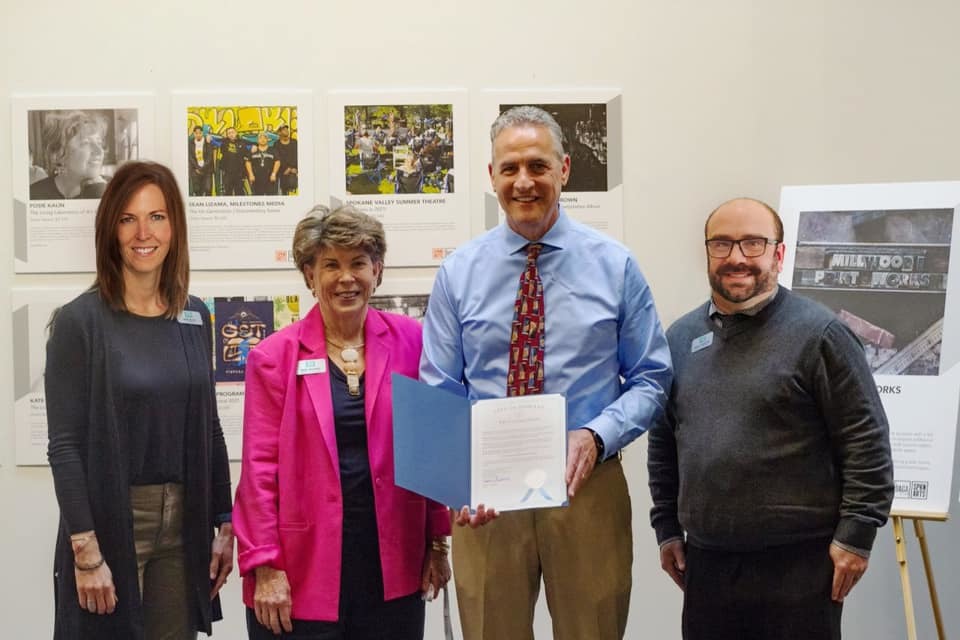 Last month, the mayor of Spokane declared May as Foster Care Appreciation Month.
Are you connected to a youth in foster care, adoption support, alumni of care, or a reunified family? Have you ever felt like the health care system should be easier for that youth? If so, this overview is for you. It will give you the tools you need to help navigate the health care system. Apple Health Core Connections (AHCC), a program of Coordinated Care of Washington Inc., provides Apple Health (Medicaid) benefits for foster, alumni, and adopted youth.
This overview shares:
- How to get the most out of covered physical and behavioral health services
- What to do if you face barriers
- Details about added benefits like video chat appointments with a provider and getting paid for preventative care
Trainings Dates:
June 22, 2022 06-7 p.m.
Register in advance for this meeting: https://centene.zoom.us/meeting/register/tJIoduiqpzgoHNV-drnSviHmo9mpwI_RJrzw
After registering, you will receive a confirmation email containing information about joining the meeting. Training certificates will be provided to attendees.
If you have any questions, email CommunityEducation@coordinatedcarehealth.com

If you were born in 2004 or have experienced the foster care system and did not have a Birthday Party when you turned 18, this party is for you!
Eileen & Callie’s Place, along with several local sponsors, are hosting Celebrate 18! a state-wide birthday party for 100 girls experience foster care and turning 18
Each young lady will receive a:
- New outfit
- Makeover
- 22” Rolling duffel bag
- Swag bag filled with everyday necessities
- A journal
- Celebrate 18! t-shirt
Additionally, on hand are:
- Employers able to hire on the spot
- Schools and training centers accepting applications
- Social service organizations that can answer questions and provide needed guidance for accessing resources
- Photographers to capture individual and group pictures of the event
The event will be held on July 23 at 2 p.m. at the Auburn Community & Event Center. The event will be decorated, with a section set aside for those who are interested in making vision boards. RSVP:
https://eileenandcalliesplace.org/celebrate-18-birthday-party-rsvp/
This year, the organization is hosting an inaugural Celebrate 18! Benefit Dinner, inviting the community to celebrate this very special population.
Your support changes the life of young ladies aging out of foster care who are transitioning into adulthood and working towards a positive, productive lifestyle.
For more information, call (567) 233-2632 or email celebrate18andLife@gmail.com.
|
Teens 14-19 can work out for free all summer AT Planet Fitness through Aug. 31.
To sign up, visit the Planet Fitness High School Summer Pass registration page. Next, download the Planet Fitness App to access your digital key and then head to the gym!
News Release: Washington State Reaches Groundbreaking Federal Class-Action Settlement for Youth in Foster Care
DCYF to Launch Online Foster Parent Application Process
Foster Youth to Independence Program Sees Early Success in Kitsap County
|