|
|
|
It is with great pleasure that I share the second issue of our Juvenile Rehabilitation (JR) newsletter. Spring, with all of its new growth and possibility, has reached us, and I am excited to share some of the work that JR is involved in. I am thankful always for the dedicated professionals who work on our team, for our partners across the state, and for everyone who believes in the potential of the young people we serve and helps eliminate barriers to accessing opportunity!
I want to begin by acknowledging the closure of Naselle Youth Camp (NYC) by June 30, 2023. During the 2022 Legislative Session, the Washington State House and Senate released the 2022 Supplemental Operating Budget, which included direction for DCYF to discontinue youth placements at NYC. The budget has since been signed by Gov. Jay Inslee.
Closure is painful – for the impacted employees, for the community, and for JR staff across the state who are feeling alongside their impacted peers. We are working closely with employees and the young people housed at Naselle to ensure the best possible outcomes for all in placement. And we are incredibly grateful for the work of our NYC team, past and present, and their continued dedication to providing quality support and care to youth throughout this process.
Also coming out of the 2022 Legislative Session were a few bright notes, including the repeal of Parent Pay – a harmful and outdated practice, which we were ecstatic to see go! You can find more about this and other legislative actions impacting JR below.
In this issue, we also share the bright voice of JR resident Gladyz; several highlights from the incredible work Echo Glen Children’s Center is doing to expand education, therapeutic environments, and trauma-informed care; and progress we’ve made in addressing the national opioid crisis and its many dangers to youth and community.
Thank you all for your unwavering dedication to seeing Washington’s children, youth, and families flourish like springtime!
 |
|
Felice Upton
Assistant Secretary, Juvenile Rehabilitation
|
|
|
|
|

The 2022 Legislative Session concluded on March 13 after a whirlwind 60 days. We are thrilled to see significant investments in DCYF as well as the passing of our agency request legislation, repealing the Parent Pay Statute, with overwhelming support from the Legislature. With the passage of HB 2050, Washington will no longer require parent payment for the cost of their child’s support, treatment, and confinement – an antiquated and inequitable practice that we are proud to leave behind. This bill also cancels existing debt for families, which is a major win for the youth and families we serve.
We’re also excited to see state investments specifically for JR staff and services, including wage increases and bonuses to retain critical staff, $196K for JR education security for additional staff to support youth engaged in the GED curriculum, $100K for JR peer navigators (specific to peer navigator expansion work at Green Hill School), and $2.1M in returns on caseload reduction to maintain JR staffing levels.
Additionally, the Washington State House and Senate released the 2022 Supplemental Operating Budget, which included direction for DCYF to discontinue youth placements at Naselle Youth Camp, with the intent to close the facility by June 30, 2023. The budget has since been signed by Gov. Jay Inslee and DCYF is currently in the early phase of implementation. While this news has been understandably hard for many of our staff and partners, the legislative decision does not reflect the quality of work performed at Naselle or any JR facility, nor the dedication of our incredible staff. The legislation instead reflects declining numbers of youth entering our JR facilities, with a 73% reduction over the past 20 years. It also reflects the state working in the best interests of youth to provide direct services, closer to their community, and with easier access to familial and natural supports.
You can view the session wrap-up webinar and presentation slides on the DCYF Government Affairs webpage, under 2022 Legislative Session Updates.
|

“Going through the process of transitioning back into the community and learning to be an adult on my own has taught me that life is not easy – especially if you’re doing it alone. But it has also taught me that I have to seriously make some wise decisions about my future, and I have to consider the people around me too because the decisions that I make affect them. The staff ask me questions and help guide me in the right direction so that I can be sure about the actions that I take.
Every day is a new experience. Each day I learn something about myself. Throughout my journey, I realize how much I’ve grown in the [JR] program. Having staff around to guide me has been a bonus for me because of their experiences, and I know that when I release, I will be a better person.”
– Galdyz, age 20, JR resident
|

Trauma-informed care aims to realize the impact of trauma, understand paths to recovery, recognize signs and symptoms, integrate knowledge about trauma into policies and practices, and actively avoid re-traumatization. As part of the agency’s Strategic and Racial Equity Plan, building a trauma-informed system and weaving a healing-centered approach through all our work are essential to the health and wellbeing of the children, youth, and families we serve, as well as our staff.
In JR, staff are actively trained on effective ways to provide support and trauma-informed care for youth in residence. The goal is to not only help young people heal and flourish, but also to prevent them from having repeated involvement with juvenile justice systems and protect them from re-traumatization.
“We center advancing racial equity across all of DCYF – the same can be said for trauma-informed care in JR,” said Behavioral Health Administrator Eric Nicholson. “Trauma-informed care is the lens we use for everything. It’s an opportunity to really engage young people and provide a better system of care. It helps us to build more trusting relationships with them and their families, and foster stronger relationships with us as a provider of services.”
Professional development in trauma-informed care is critical to building a better understanding of some of the traumatic experiences these young people have had – like gang violence, physical abuse, and neglect.
“The traumas our young people experience can be extremely detrimental to their lives, very similar to war vets. We’ve seen the light on this, and that’s why we’re focused on taking trauma-informed care to the next level at DCYF,” said Nicholson.
Targeted training also helps us understand how staff experience secondary trauma and helps to increase workforce wellbeing and retention — an important component of providing consistent, uninterrupted, and high-quality care to youth.
Some examples of trauma-informed approaches and initiatives include:
- Incorporating “Think Trauma” in new employee, Community Safety (CST), and Crisis Management and Intervention Strategies (CMIS) training.
- Deeper-dive training for clinical staff (e.g., Trauma-focused Cognitive Behavioral Therapy, Trauma Affect Regulation, and Cognitive Behavioral Intervention in Schools).
- Partnering with programs like Yoga Behind Bars and Trauma Stewardship Institute.
- Staff and youth Peer Support Program
- JR established a Staff Peer Support Specialist and will be recruiting a second.
- JR established a Youth Peer Support Specialist whose focus is growing services that center lived experience and support young people's healing and leadership.
At DCYF, we believe it is critical to place the voices and experiences of youth and families firmly at the center of our thinking. Trauma-informed care shifts the focus from “What’s wrong with you?” to “It’s not your fault.”
“Just because these youth have committed a crime, they are still people,” said Nicholson. “They are just like our kids. They need to be treated in the same kind, caring, and loving way. Trauma-informed care helps us to understand and meet them where they are, and empowers young people to be the healing.”
|

With the ongoing national opioid crisis, it is critical for JR staff to be educated and prepared for overdose emergencies in our line of work. To meet this need, JR has implemented procedures and initiatives to keep both staff and young people safe.
The first step is understanding what to look for and how to respond to a suspected overdose. All JR staff have completed training on opioids, with an emphasis on the dangers of fentanyl and overdose prevention/intervention. Staff have been oriented to the overdose antidote Narcan (Naloxone), which has been made readily available for use with a suspected overdose. Young people with opioid risk are also offered Narcan when they release from JR facilities.
The serious risks associate with fentanyl cannot be understated. Pills labeled as Oxycodone, Percocet, Xanax, or other medications often contain fentanyl, even if they look exactly like medication manufactured in a pharmacy. It only takes a microscopic amount of fentanyl to kill someone, and the overdose is quicker than with other opioids.
JR has implemented policies and procedures, and developed relationships with community providers to offer Medications for Opioid Use Disorder (MOUD) as a treatment option for young people with moderate or severe opioid use disorder. Some youth begin taking prescribed MOUD before they release.
JR is also partnering with Seattle Children’s Hospital and the University of Washington as one of 10 projects across the country participating in HEAL (Helping End Addiction Long-term) Opioid Prevention grants from the National Institute of Health. Our project, titled POST (Positive Outcomes through Successful Transition) provides opioid education (materials are available on secure laptops that are accessible to young people), reentry-focused recovery support for young people as they prepare to release and return home, and connections with treatment providers and other resources that support healthy living in the community.
|

During the 2021 Legislative Session, the Legislature funded two important decision packages for JR’s service array. One helps us provide community-based reentry services to all young people releasing from care, and the other helps us expand behavioral health supports and treatment for youth. Since then, our teams have been diligently working to implement several quality services and supports:
-
Community Support for All Youth (CSAY) provides young people in JR with individualized assistance through community-based services and least restrictive opportunities. These supports are based on eligibility and identified needs. By strengthening pathways toward community success using a Risk, Needs, Responsivity approach, therapeutic interventions and essential community reentry services are being prioritized and offered.
- The Behavioral Health Services decision package uses state investments to improve youth health status; lower economic and societal costs of substance use, mental illness, and trauma impacts; and create better outcomes for youth, families, and communities. Access to comprehensive, effective, and culturally relevant services is essential to support the wellbeing and community success of young people in JR. As part of the decision package, JR has hired a state-wide Youth Peer Support Program Specialist, many of the established Substance Use Dependence (SUD) and Dialectical Behavior Therapy (DBT) Specialists for institutions, and is pursuing contracts for Behavioral Health Liaisons for community facilities and regional offices. These changes provide a more focused and feasible scope of responsibility for residential counselors and ensure youth with higher behavioral health needs are getting the treatment they need to thrive.
You can learn more about this work by reading the Community Support for All Youth Fact Sheet and the Behavioral Health Services in JR Fact Sheet.
|
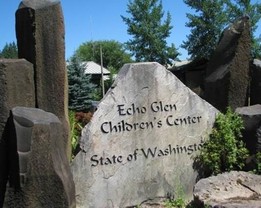
Our partners at Performance-based Standards (PbS) measure our work in JR institutions and compare it with national trends. PbS recently shared data across all three JR institutions, and over the past few years, Echo Glen Children’s Center has seen significant improvements in several key areas of treatment. A few worth celebrating include:
- The percentage of youth who received staff support in addressing grievances is consistently above national field averages.
- Youth-on-youth assault has been consistently below national field averages.
- Use of restraints is below national field averages.
Echo Glen has also made innovations in education and learning opportunities for youth, as well as in expanding trauma-informed care. Several successes include:
- Initiating a comprehensive orientation process for incoming students (school credit review, hope scale review, interest and learning types interview, etc.), three recent high school graduations and one GED graduate with more on the way, the creation of an after-school program and student guidance team, and more.
- Continuing a phenomenal partnership with UPower, which uses trauma-informed coaching with movement and play to empower and educate youth.
- Launching the Edible Schoolyard program, which provides content-rich learning experiences that allow Echo Glen’s youth to learn and practice hard skills, develop their knowledge of food systems, and produce tangible results in the kitchen and garden.
- Mental health team progress in working with programs and case managers to build youth shaping plans, consulting administration on mental health programs and services on campus, providing case management services in a multi-disciplinary team, and more.
- Launching the Youth Engagement Specialist (YES) Team to help reduce room confinement by supporting youth in school, creating time for staff treatment work, and overseeing pro-social volunteer programs.
- Several animal-centered programs that focus on healing, patience, growth, and humanity. Programs include Canine Connections, campus therapy dog sessions, equine experiences, and kitten fostering.
- Beginning a program with Pongo Poetry, which provides healing through the arts.
- A Yoga Behind Bars pilot, which provides trauma-informed yoga sessions for both staff and young people.
- A new partnership with the Center for Dialog and Resolution, where employees and youth learn mediation and conflict resolution.
- The upcoming launch of an on-campus beauty school for youth to learn cosmetology, barbering, styling, coloring, and more (in partnership with Evergreen Beauty School).
In addition, a group of dedicated volunteers (Friends of Echo Glen) have created a plethora of healing volunteer opportunities for youth. These include fundraisers and donations to fund youth development, service events for the community, paving the way for new program opportunities, beautifying the campus, and more.
Thanks to the dedication of our volunteers, partners, and staff, Echo Glen is strengthening therapeutic environments, expanding trauma-informed care, and enhancing services and supports. We look forward to continued goal attainment and helping young people launch into their futures.
|
Listed below are key job openings in JR. The following positions are open to all, so please share with anyone who may be interested:
|
|
|
|
|