
The Washington State Department of Children, Youth, and Families (DCYF) is preparing to celebrate Parent Recognition Month in February 2022 by honoring extraordinary parents, caregivers, guardians, and community members across Washington State through the annual Unsung Heroes campaign.
Since 2011, with your help, we have honored 281 parents and caregivers in Washington for the roles they have taken with their families, schools, and communities. They have been recognized because they have shown strength, courage, and empathy in their communities. We also acknowledge that this year, parents and primary caregivers have been called upon more than ever to be the buffer for the traumatic experiences that our world has faced. Parents and caregivers around Washington State are supporting their children, families, and communities in exceptional ways through this pandemic and we want to show our appreciation.
Please help us honor 28 more unsung heroes in February 2022 by nominating a parent, primary caregiver, or guardian for the Unsung Hero award. The nomination form is available in three languages (English, Spanish, and Somali). All nominations must be submitted by Jan. 17. The nominations can be emailed to strengtheningfamilies@dcyf.wa.gov or submitted via the form itself.
For more information, email strengtheningfamilies@dcyf.wa.gov.

|

"The job is rewarding because I can help guide families in the right direction by showing them support and encouraging them along the way," says Kathy Eirls with Better Futures Together Family Services. "I feel like we have the ability to make a difference in the child's life, as well as the parent, by being a support that they look forward to."
Eirls has been a Family Time provider for almost seven years, serving families in Ferry, Grant, Pend Oreille, Spokane, Stevens, and Whitman Counties.
Every morning before she leaves her home, she makes sure she has the proper car seats installed in her car for her morning visit. She also verifies she has the correct forms. Some days, she is picking up children at daycare; other times, she is helping children get their coats on as she picks them up from a foster home.
Once the children are safely buckled in, they head to the location of the visit.
"My number one priority is to keep the children safe," says Eirls, who adds she jots down as many notes as possible during supervised visits.
This is typical when a visit goes smoothly. Eirls often helps redirect the parent to ensure the child is safe and makes the most of the visit. Once the visit is over, the parents help bring the children to the car and buckle them in. Providers will then head back to the drop-off location, take the children in, sign the transportation log, and drive back to the office.
"There have been several families that I have worked with where I've noticed a difference family time has made," said Reina Rodriguez, a Family Time provider with Pathways to Connections. "A parent who is consistent can build on their relationship and strengthen their bond through the difficult moment."
For the last three years, Rodriguez has been providing Family Time services and helping reconnect families in Chelan and Douglas County.
"It has been very rewarding to see families be reunited after working with them for so long. It's great to work alongside parents who are actively working to better themselves for their children as well as meeting the foster families who provide care for these children," she said.
Eirls says she understands parents go through a lot to reunite with their children but sometimes just seeing their child and knowing that providers are not there to judge them, and are there to support them, is all parents need to see the light at the end of the tunnel.
"I had a visit one time, where the mom had lost five children before having her sixth. She started coming to visits and was determined to get her child back," recalls Eirls. "I encouraged her to keep coming and working hard to do what was requested by DCYF. She ended up getting pregnant with twins. In the end, she was reunited with her child and was able to keep the twins in her care. It's very rewarding to see families reunited."
According to Rodriguez, transporting families to and from visits can range from two miles to 30 miles; however, some supervisors do drive out further when children are placed outside of the counties they serve.
Eirls says she typically drives 150 to 200 miles a day for visits. Once she returns to the office, she cleans out her car, washes and sanitizes everything, puts in the car seats for her next visit, prepares the visit room, and submits reports and timesheets. She will call families at the end of the night to remind them of their upcoming visit.
"Family time is vital in the reunification of families because it allows the children to keep and strengthen their parent-child relationship," says Rodriguez. "It fills my heart to be part of the reunification process."
|

Washington State Parks and the Washington Departments of Fish & Wildlife (WDFW) and Natural Resources (DNR) offer several "free days" when a Discover Pass is not required to visit these lands.
Following are the 2022 free days:
- Jan. 1 — First Day Hikes; New Year’s Day
- Jan. 17 — Martin Luther King, Jr. Day
- March 9 -- Billy Frank Junior's Birthday
- March 19 — State Parks’ 108th Birthday
- April 22 — Earth Day
- June 11 — National Get Outdoors Day
- June 12 — Free Fishing Day
- June 19 — Juneteenth
- Sept. 24 — National Public Lands Day
- Oct. 10 -- World Mental Health Day
- Nov. 11 — Veterans Day
- Nov. 25 — Native American Heritage Day
Free days apply only to day use (not overnight stays or rented facilities). Free days are valid at state parks and Washington State Departments of Natural Resources and Fish & Wildlife lands. Sno-Park permits are still required on free days at designated Sno-Parks during the winter season.
Learn more at www.discoverpass.wa.gov.
|
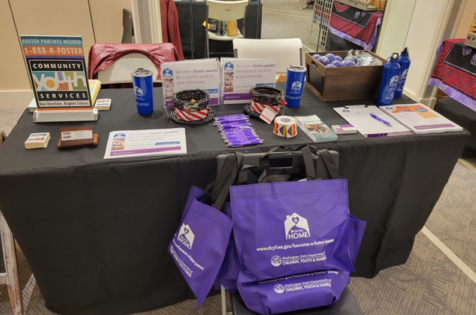
Our Region 5 Targeted Recruitment Specialist attended the Melanated Market, in Puyallup at the South Hill Mall. DCYF partnered with 4 Child Placing Agencies, Beautiful Birds, Community Youth Services, Lorene’s Place II, Youth Net, and Passion 2 Action. A big thanks to Charles Carson, Nathan Lachine, Jacqueline Tutt, Alex Seifert and Zematra Bacon who made this event a success by getting information out to the community about the need for foster families.
|
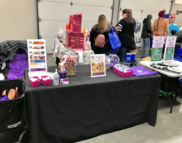
Our Region 2 Targeted Recruitment Specialist (TRS) attended Benton City Chamber of Commerce 18th Annual Winterfest event.
The community celebration included vendors, family activities, food, and entertainment. Our TRS had the opportunity to share resources, information on how to become a foster parent, and establish connections with local businesses and vendors.
DCYF looks forward to continued partnerships with the Benton City Chamber of Commerce and plans to continue participating in in-person recruitment events during the upcoming year.
|

The Targeted Recruitment Specialist are seeking community experts, foster parents, kinship caregivers, and DCYF staff to partner in our co-design groups.
Group members will share ideas, provide feedback, and collaborate in designing Foster Parent/Caregiver recruitment materials. Be a voice for your community!
If you are interested in joining one of the co-design groups below please reach out directly to:
chisana.white@dcyf.wa.gov -American Indian/Alaskan Native group
john.gonzales@dcyf.wa.gov -Latinx/Hispanic group
gabriela.mendez@dcyf.wa.gov -Teen/ILS group
We look forward to hearing from you!
|

New data from the Washington State Department of Health’s (DOH) behavioral health group indicates that more young people are seeking medical help in instances of emotional distress. State health officials are asking families, educators, mentors, and youth advocates to know the warning signs that signal when a child or teen is in crisis, and to talk with a healthcare or primary care provider for behavioral health support resources. This guidance comes at the heels of a public advisory and 53-page report from the U.S. surgeon general on the importance of protecting youth mental health, and the “devastating” mental health impacts as a result of the pandemic.
Based on early data gathered by DOH, the number of youth ranging in age from 5 – 17 seeking emergency medical assistance for suicidal ideation, suspected suicide attempts, psychological distress, and suspected overdoses has increased over the last several months. Syndromic surveillance data like this may not reflect the true magnitude and direction of behavioral health trends. However, it provides key insight toward current and future mental health trends for specific population groups in the state.
Emergency Departments (ED) across the state are also reporting that significant percentages of their ED capacity are for youth who are there for behavioral health crises. This includes youth in acute beds, creating flow and capacity issues for hospital systems. Further, because the delta variant triggered a repeat of the many impacts initially experienced at the start of the pandemic, we may be experiencing a “secondary disillusionment” phase over the next few months. For many children and youth specifically, the secondary disillusionment phase is occurring alongside significant school, family, and social stressors.
We all play a key role in supporting the behavioral and emotional wellbeing of our children and youth. Here are things you can do:
-
Check in with your friends and family members. It is a good idea to see how people are doing, and if you have the emotional capacity to support them, engage in active listening to learn more about how they are doing and what they are experiencing. Active listening is listening to another person for the purpose of understanding their experience and expressing care - you aren’t trying to fix anything or solve a problem. Start by asking opening ended questions (i.e. What emotions are coming up for you? How did that event make you feel?) and focus on increasing your understanding of their experiences.
-
Ask gently, but directly, about suicidal thinking or behaviors. Asking a youth doesn’t increase their risk but reduces their risk because it helps that person get the support they need.
-
Talk to your primary care provider. They can lead you into next steps as needed.
-
Adopt healthy habits. Support your youth or teen in adopting healthy sleep habits, good nutrition, and regular exercise.
-
Practice and encourage ‘active coping’. Avoiding things that make us anxious tends to make the anxiety worse. Work with children and youth to safely express their concerns. Start by supporting them in creating, and then using a list of ‘go-to’ coping skills that work for them. Examples can include spending time outside, baking, listening to music, watching a favorite show or doing something kind for a neighbor.
For more information, visit the DOH website.
|
Per the requirements of Title II of the Americans with Disabilities Act of 1990 and Section 504 of
the Rehabilitation Act of 1973, Washington State’s Department of Children, Youth, and Families (DCYF) will not discriminate against qualified individuals with disabilities on the basis of disability in its services, programs, or activities.
Effective Communication
DCYF will, upon request, provide appropriate aids and services in order to ensure effective communication for qualified persons with disabilities so they can participate equally in DCYF’s programs, services, and activities. Such aids and services may include qualified sign language
interpreters, documents in Braille, and other ways of making information and communications accessible to people who have speech, hearing, or vision impairments.
Modifications to Policies and Procedures
DCYF will make reasonable modifications to policies and programs to ensure that people with disabilities have an equal opportunity to participate in all DCYF programs, services, and activities. For example, individuals with service animals are welcomed in State offices, even where animals are generally prohibited.
Requesting an Aid or Service to Ensure
Effective Communication or a Modification Of Policies Anyone who requires an auxiliary aid or service for effective communication or a modification of policies or procedures to participate in a DCYF program, service, or activity, should notify one of the below staff members as soon as possible, preferably 48 hours in advance of the scheduled event:
1. A DCYF employee, or
2. The DCYF ADA Coordinator | dcyf.adaaccessibility@dcyf.wa.gov | Phone: (360) 480-7230, relay users dial 7-1-1
The ADA does not require DCYF to take any action that would fundamentally alter the nature of its
programs or services or impose an undue financial or administrative burden.
View the publication here.
|