Are You Ready to Celebrate Hispanic Heritage Month?
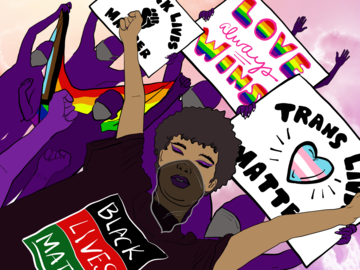
September 15 through October 15 is National Hispanic Heritage Month!
“Hispanic” heritage includes a diverse range of cultures, nationalities, histories, and identities. Read the full article by Stef Bernal-Martinez: Unmaking “Hispanic”: Teaching the Creation of Hispanic Identity
In the latest episode of MTV’s Decoded, comedian Franchesca Ramsey pairs up with fellow YouTube activist Kat Lazo to explain how answering that question is tricky, largely because of the ways Hispanic (and, likewise, Latino or the gender-neutral Latinx) identity is racialized in the U.S., even though these categories don’t actually refer to a race at all. Watch the video here.
|
Each week, DCYF ESIT Tribal Support Specialist Brian Frisina provides a key topic to help us get to know our Tribal Nations partners better.
This week’s terms is:
What is federal recognition?
Federal recognition is the “legal acknowledgement” of the sovereign and separate political status of tribal nations by the U.S. Federal government. It establishes a political and legal relationship between an Indian tribe and the U.S., which carries particular rights and responsibilities for both parties, potentially entitling tribes to certain federal resources that trigger the operation of an entire body of Federal law. These resources may include: health care, housing, and education services; the possibility of the recognized tribe’s implementing their own forms of economic development including gaming; establishing their own justice system; and eligibility for advancing repatriation claims under the Native American Graves Protection and Repatriation Act (NAGPRA).
Continue reading more about regulations for federal recognition: What is federal recognition?
There are currently 574 federally recognized American Indian and Alaska Native tribes and villages, 109 of those are in the state of California. In addition, many Native California tribes remain unacknowledged and are currently petitioning the US government for recognition. Unfortunately, in practice the current FAP functions as a barrier to federal recognition as much as a pathway to it. The process is long, taking over 30 years to consider some applications. Non-recognized tribes face the arduous task of submitting applications that satisfy the extensive and often confusing criteria demanded by the OFA, a process that is expensive and time consuming. In many instances, non-recognized tribes find it difficult or impossible to compile the historical data and “legitimate” evidence expected to supplement applications for acknowledgement. The FAP is widely understood to be dysfunctional – it has been the subject of over 30 Senate and House subcommittee hearings, and the regulations have been revised three times (in 1994, 2007, and 2015). The Office of Federal Acknowledgement was restructured and renamed twice, and 12 Secretaries of Indian Affairs have come and gone over time.
In the four decades since the FAP was established, 356 “groups” have sought federal acknowledgment. Of that number, 269 have not been able to submit documented petitions. Of the 87 that have submitted documented petitions, the agency has resolved 55. Only 18 have resulted in acknowledgement and only one tribe in CA has successfully secured federal recognition through 25 CFR Part 83.
UCLA Equity, Diversity & Inclusion, Native American and Indigenous Peoples FAQs, What is federal recognition?, © 2021.
|
The ESIT program is recruiting for the TA Specialist – Northwest position, please spread the word!
Please note that this person is required to live in the region. The TA Specialist – Northwest will support Clallam, Island, Jefferson, Kitsap, San Juan, Skagit, Whatcom counties; as well as the northern portion of Mason County on behalf of DCYF’s ESIT Program.
If you are interested in this opportunity, please submit an application by Oct. 17:
Technical Assistance Specialist
Questions? Please contact DCYF ESIT Technical Assistance Manager, Tatsuko Go Hollo, at tatsuko.gohollo@dcyf.wa.gov. Please do not forward any application materials, the only way to apply is by clicking the link above.

The October SICC meeting is just around the corner! Please join us virtually:
Wed., Oct. 20 | 9 a.m. – 3:30 p.m.
Click here to join
Dial: 253-215-8782
Meeting ID: 814 3033 7246
Passcode: 566827
Agenda
Questions? Please contact DCYF ESIT Partnership & Collaboration Manager, Will Moncrease, Jr., at will.moncrease@dcyf.wa.gov.
|
Free webinar available to learn strategies for finding staff during the early childhood education staffing crisis. While it's designed for child care providers, there may be helpful solutions for ESIT Provider Agencies.
Secrets to Finding Talent Amidst a ECE Staffing Crisis: Think Outside the Toybox
by Lauren Small and Virginia Marsh
Oct. 20 | 11 a.m. - 12:30 p.m.
Register here
Project ECHO is a participatory online cohort of Board Certified Behavior Analysts (BCBAs) and Early Intervention providers working with children with autism three and younger. Their goal is to increase collaboration and share expertise across service delivery systems.
Participants will present de-identified cases and engage in case consultation in a multi-disciplinary group of their peers and ECHO Hub Team members. Download flyer here.
12 – 1 p.m. | First and third Wednesday of each month
Session dates:
Nov. 3 & 17, 2021
Dec. 1 & 15, 2021
Jan. 5 & 19, 2022
Feb. 2 & 16, 2022
March 2, 16 & 30, 2022
April 13 & 27, 2022
To register or for more information, please contact Dr. Ashley Penney at aberger2@uw.edu.
For more updates, subscribe directly to these great newsletters:
-
DCYF ESIT Subscription List Sign-up: Get the latest communications by signing up for DCYF ESIT's subscriber lists and manage your subscriptions.
-
Brazelton Touchpoints Center (BTC): Together with families, providers, and communities, BTC develops and applies knowledge of early childhood development to practice and policy through professional and organizational development, evaluation, advocacy, and awareness. BTC also serves as a resource for proven practices. Learn more about BTC. To get the latest news, subscribe to BTC.
-
DCYF Office of Tribal Relations (OTR) Sign-up: Subscribe to DCYF's OTR newsletter, under "DCYF Leadership," for information, updates, learning opportunities, and upcoming events.
-
Stay up to date by subscribing to the Early Childhood Learning & Knowledge Center.
Join MyPeers, created by the Office of Head Start (OHS) to connect with Head Start and early childhood colleagues around the country on this and other topics. The Teacher Time community currently has more than 1,300 members who are networking, sharing, and learning from each other. Find it under "All Communities" and select the blue "Join" button.
-
Northwest Regional Telehealth Resource Center (NRTRC): Get the latest in your inbox by subscribing to the NRTRC mailing list.
-
Division for Early Childhood (DEC) Weekly Newsletter: If you're interested in receiving the latest news, offerings, and event updates from DEC, subscribe to the DEC newsletter.
-
Early Childhood Technical Assistance (ECTA) eNotes: ECTA eNotes newsletter shares the new resources from ECTA Center as well as news items related to early intervention and early childhood special education gathered from a variety of reliable sources. Subscribe to the ECTA newsletter.
-
Washington Hands and Voices: To get updates, subscribe to the
Washington Hands & Voices newsletter by clicking at the very top left of the screen, then scroll down to the quick sign-up on the bottom right of the screen.
-
Washington State Health Care Authority: Explore the Washington State Health Care Authority list to subscribe for updates or access your subscriber preferences.
|