|
“August being National Immunization Awareness Month reminds us this is a great time of year to make that vaccine appointment with your child’s provider and get them caught up,” Roberts added. “Providers are taking many precautions to keep families safe during preventive visits. It’s also convenient to protect your older ones against COVID-19 since kids who are 12 and up can get the COVID-19 vaccine at the same time as the rest of their vaccines. Let’s get everyone back to school safely after the disruption of the last two school years knowing we’re protecting them from outbreaks of many diseases.”
Here are some more resources for you this month:
You likely already received our latest communication regarding the Governor's vaccination orders on Aug. 9 and 18. You can read the entire email here. For questions, email home.visiting@dcyf.wa.gov.
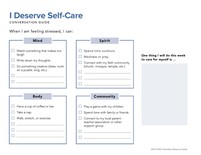
The U.S. Department of Health & Human Services has created a Protective Factors Conversation guide to help service providers engage caregivers in personalized conversations about the protective factors. Each set (one for each of the six protective factors) includes a guide for service providers and a worksheet for caregivers. These can be used one-on-one, as part of a structured activity for a larger group, or in in-person or virtual settings.
After a brief introduction about the protective factor, caregivers are encouraged to fill in each worksheet and relate the protective factor to their family's unique circumstances and goals. The complete sets are available in the 2021/2022 Prevention Resource Guide.
|
Reports were shared via your SFT account by close of business Aug. 20. These QA reports show your performance on the Aligned Measures and additional MIECHV Measures for those LIAs receiving MIECHV funding. Detailed individual client-level data are included for your review. Please use these reports to focus data cleanup and reporting no later than end of September to ensure complete and accurate reporting for SFY22-Q1 and for end of federal year MIECHV reporting. QA is a two-way street, providing opportunities for data collection and reporting improvements from LIAs and data processing improvements from DOH. Please reach out to DOH with any questions or concerns about the data shared and/or suggested improvements for these reports moving forward.
DOH is launching an updated consent reporting process for our NFP sites. As of Aug. 20, a new pre-populated file of consent status for enrolled clients will be posted to your SFT account, along with instructions for reviewing and submitting consent data. Please update all consent information no later than Sept. 9 to allow for the most complete data reporting for our annual child maltreatment measure.
Register Now: Perinatal Mental Health Training for Home Visitors
Perinatal Supports Washington will lead a six-part virtual training series that provides home visitors with a foundational understanding of perinatal mental health, including:
- Perinatal mood and anxiety disorders
- PHQ-9 screening and follow-up
- Providing referrals and ongoing support
- Crisis protocol
Dates: Wednesdays, Sept. 22 – Oct. 27, 1-4:30 p.m.
We have several open positions right now, please share these positions broadly.
Home Visiting Data Trainer | Project Health Services Consultant 2
Tumwater, WA
Closing: Aug. 29, 2021
DCYF Primary & Community Prevention Specialist (PS5) – Olympia
Statewide (one position – 27-36 month project)
Closing: Aug. 24, 2021
DCYF Home Visiting Program Specialist (PS5)
Olympia/statewide (two positions - permanent)
Closing: Aug. 24, 2021
Date: Aug. 26 (2:30 – 3:30 p.m.)
Topic: Home Visiting in a time of COVID – Where are we now
Peer connections provide a space for home visitors across Washington to connect with each other to share questions, strategies, and reflections on working with families.
July CQI Webinar – Growing, Maintaining, and Strengthening Teams
For this webinar, we reflected on team culture, the challenges that come with a virtual format, scheduling, and explored what has worked well to create a safe space for teams to connect and provide input to a discussion. Attendees were also introduced to the Stay Interview Tool. Often used to better understand causes of staff retention, prompts can also be integrated in ongoing team meetings to strengthen areas of improvement, identify what is working well and create value for input as a team.
CQI PDSA Log Change Ideas:
 Breakout Group Discussion
- What are things you've tried in the past to help new team members get to know everyone?
- Do you have a go-to set of activities to help new people build relationships with teams?
- Consider the Supervisor role vs. Team member (director, etc.) role and the contributions that each can make
- How would you describe your team culture?
- What are you doing now that's working to support a strong team culture?
- What could you do differently to allow HV and supervisors to flourish in this work?
- What can get in the way of a strong team culture?
- How do the roles for supervisors and HV differ when it comes to creating team culture?
July CQI Breakout Notes
July CQI Recording
Resources
Upcoming Dates:
CQI Webinars are Held Every Fourth Wednesday, From 1:30–2:30 p.m.
Wednesday, Aug. 25
Topic: CQI Refresher and FY22 Updates
To gauge any need for a new webinar date and time, please follow this link for a short survey response: FY22 CQI Webinar Feedback.
Updates and Reminders
CQI Reporting Changes in PSRS
To better understand your CQI activities and provide support, you will notice a change in the PSRS Monthly Reporting Questions as they relate to CQI. Effective September, the new CQI questions for Monthly Reporting for those with enrollment caseloads under 85% will be:
- Please explain Active Enrollment Caseload under 85%.
- Please describe PDSA cycles that address Active Enrollment Caseload and/or CQI strategies and approaches you are utilizing to address this.
- Would you like additional support from the Start Early CQI lead?
Likewise, a reminder that PDSA logs are no longer required to be submitted monthly. For additional information on these and other changes for FY22, please be sure to attend our August CQI Webinar or reach out to Camille Carlson.
New Supervisors: To receive the monthly calendar invite, updates, and access to Basecamp, reach out to rcontreras@startearly.org.
For questions or support with any of these tools or CQI please reach out to Camille Carlson, Manager of Quality Improvement and Innovation, ccarlson@startearly.org.
Tribal Term of the Month
Each month, DCYF ESIT Tribal Program Consultant Brian Frisina will provide a key topic to help support us all in getting to know our Tribal Nations partners better.
Guiding Principles in Indian Law
The long history of Supreme Court decisions in Indian law has cemented several guiding principles. First, Congress has plenary power in the exercise of its Indian affairs duties. Second, the United States owes a duty of protection to Indian nations and tribal members akin to a common law trust. Third, Indian nations retain inherent sovereign powers, subject to divestiture only by agreement or by Congress. Fourth, state law does not apply in Indian country absent authorization by Congress. Finally, Congress must clearly state its intention to divest tribal sovereignty.
Modern federal Indian law has given space for Indian nations to exercise self-governance and to preserve tribal lands, economies, and cultures. But for too long before the modern era, the Supreme Court ratified the mass dispossession of Indian lands, exploitation of Indian resources by outsiders, and attacks on tribal cultures, governments, and economies.
Until the Warren and Burger Court eras, the Supreme Court deferred absolutely to Congress and the executive branch prerogatives in setting federal Indian policy, which usually was designed to undermine tribal self-determination. However, during the Warren and Burger Court eras, the Court increasingly pushed back on bad federal policy and became a leader in modernizing federal Indian law. Strangely, despite congressional and executive branch support for tribal self-governance since the 1970s, the Supreme Court often has continued to resist federal Indian policy, undermining tribal governance.
Read more information on Marshall Trilogy.
Source: A Short History of Indian Law in the Supreme Court, by by Matthew L.M. Fletcher, Oct. 1, 2014. American Bar Association, americanbar.org, © ABA 2015.
Intergenerational Trauma: Residential Schools
According to the Truth and Reconciliation Commission of Canada, there are approximately 80,000 living Survivors of the Canadian residential school system. For many, the trauma of the mental, physical and sexual abuse they suffered at the schools hasn’t faded.
Watch to learn how the effects of residential schools continue to manifest into the present day:
Illustrations by Halie Finney. More educational content at The Canadian Encyclopedia.
Equity Resources to Start Conversations
John Oliver breaks down the long history of housing discrimination in the U.S., the damage it’s done, and, crucially, what we can do about it. Watch John Oliver's deep dive on housing discrimination.
A Kids Book About Trauma by Megan Bartlett: This book will help kids understand what trauma truly means, how it affects our minds and bodies, and how movement and relationships can help us on our paths to healing. Because no matter what traumas we may have lived, we all deserve to heal. Resource from a kids book about.
What Happened to You?
Through deeply personal conversations, Prevent Child Abuse America board member and renowned brain and trauma expert Dr. Bruce Perry and Oprah Winfrey offer a groundbreaking and profound shift from asking "What's wrong with you?" to "What happened to you?" Focusing on understanding people, behavior, and ourselves, this new book opens the door to resilience and healing in a proven, powerful way. Please join on Aug. 31 from 2-4 p.m., for a conversation between Prevent Child Abuse America president & CEO, Dr. Melissa Merrick and Dr. Perry, who will discuss the new book and dive into core issues of this important work for the prevention of child abuse and neglect. You can register here.
New AAP Policies on Preventing Toxic Stress and Promoting Trauma-Informed Care
|
When children lack safe, stable, and nurturing relationships, their response to stress over time can result in lifelong impairments in physical, mental, and relational health. Conversely, feeling connected and supported in the early years make children more likely to become healthy, competent, and educated citizens. In two new policy statements and a clinical report, the American Academy of Pediatrics (AAP), emphasizes the significance of safe, stable, and nurturing relationships and positive childhood experiences in preventing and healing toxic stress and building resilience.
Source: From the American Academy of Pediatrics.
Assistance with Internet Costs
|
The Washington Office of Broadband now has funds available to assist families with internet costs. The NRTRC hosted a webinar on how to apply for Emergency Broadband Benefit funds.
For more details on this and other programs hosted by the Office of Broadband, please read their 2020 report.
Rental and Utilities Assistance
Rental Assistance:
The Consumer Financial Protection Bureau (CFPB) has a new website (consumerfinance.gov/renthelp) that provides rental assistance information for renters and landlords in their local area. In addition, the CFPB website shares guidance for renters:
Utilities Assistance:
- The American Rescue Act Plan Act includes $4.5 billion in additional Low-Income Home Energy Assistance Program (LIHEAP) funding to help families with low incomes afford home heating and cooling costs and meet unpaid electric and natural gas bills.
The U.S. Department of Health and Human Services is administering more than $1 billion in funding to assist low-income households with drinking water and wastewater bills through the newly established Low-Income Household Water Assistance Program (LIHWAP). Visit https://www.acf.hhs.gov/ocs for additional information.
Supporting Prenatal to Three with Federal Funds
Curious about the variety of new funding in the federal relief funds? The National Collaborative for Infants and Toddlers’ new resource, Supporting Prenatal-to-Three with Federal Relief Funds, showcases how states and localities can use the nearly 30 federal relief funds to support infant-, toddler-, and family-well-being. This timely resource includes strategies to expand, improve, target, and make early care and education, family support, and maternal and infant/toddler health services more accessible and responsive.
|
|
|